
| Feature | Asexual Reproduction | Sexual Reproduction |
|---|---|---|
| Parents Involved | Single parent. | Two parents (male and female). |
| Gametes & Syngamy | No gamete formation or fertilization. | Haploid gametes fuse during fertilization to form a diploid zygote. |
| Genetic Makeup | Clones (genetically identical to parent). | Genetic variations produced via meiotic recombination. |
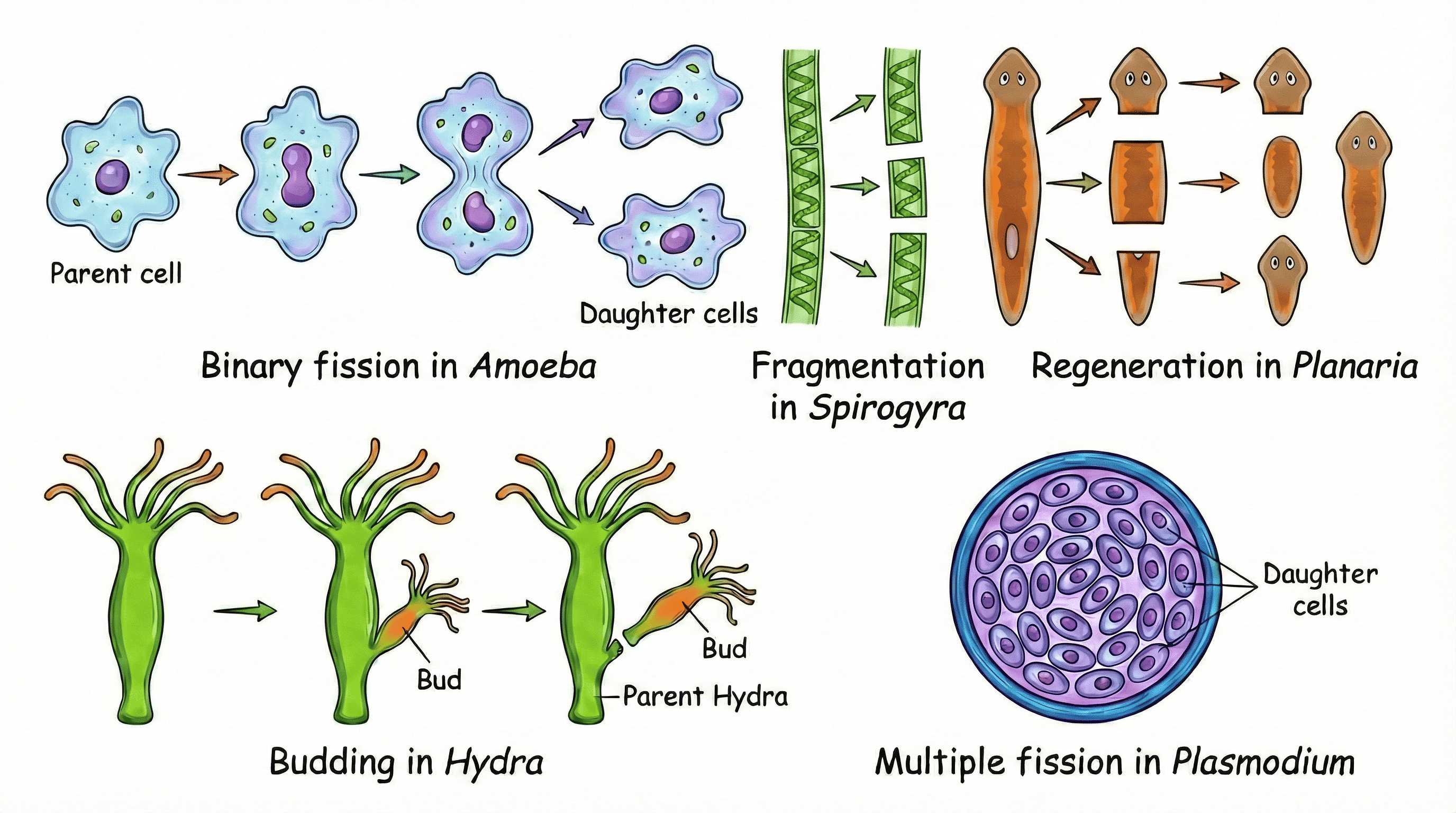
| Mode | Exam-Tested Mechanism | Core Examples |
|---|---|---|
| Binary Fission | Parent cell splits into two equal halves. Nuclear division is followed by cytoplasm division. | Amoeba (any plane), Leishmania (longitudinal along flagellum). |
| Multiple Fission | Parent divides into many daughter cells simultaneously inside a protective cyst during harsh conditions. | Plasmodium (Malarial parasite). |
| Budding | A small outgrowth (bud) develops by repeated mitotic cell division, matures, and detaches. | Hydra (multicellular), Yeast (unicellular). |
| Fragmentation | Simple multicellular body breaks into fragments upon maturity; each grows into a new organism. | Spirogyra. |
| Regeneration | Specialized cells divide and differentiate to reconstruct complete missing body parts if severed. | Planaria, Hydra. |
| Spore Formation | Thick-walled resistant spores formed inside sporangia on aerial hyphae burst and germinate in moisture. | Rhizopus (Bread mould). |
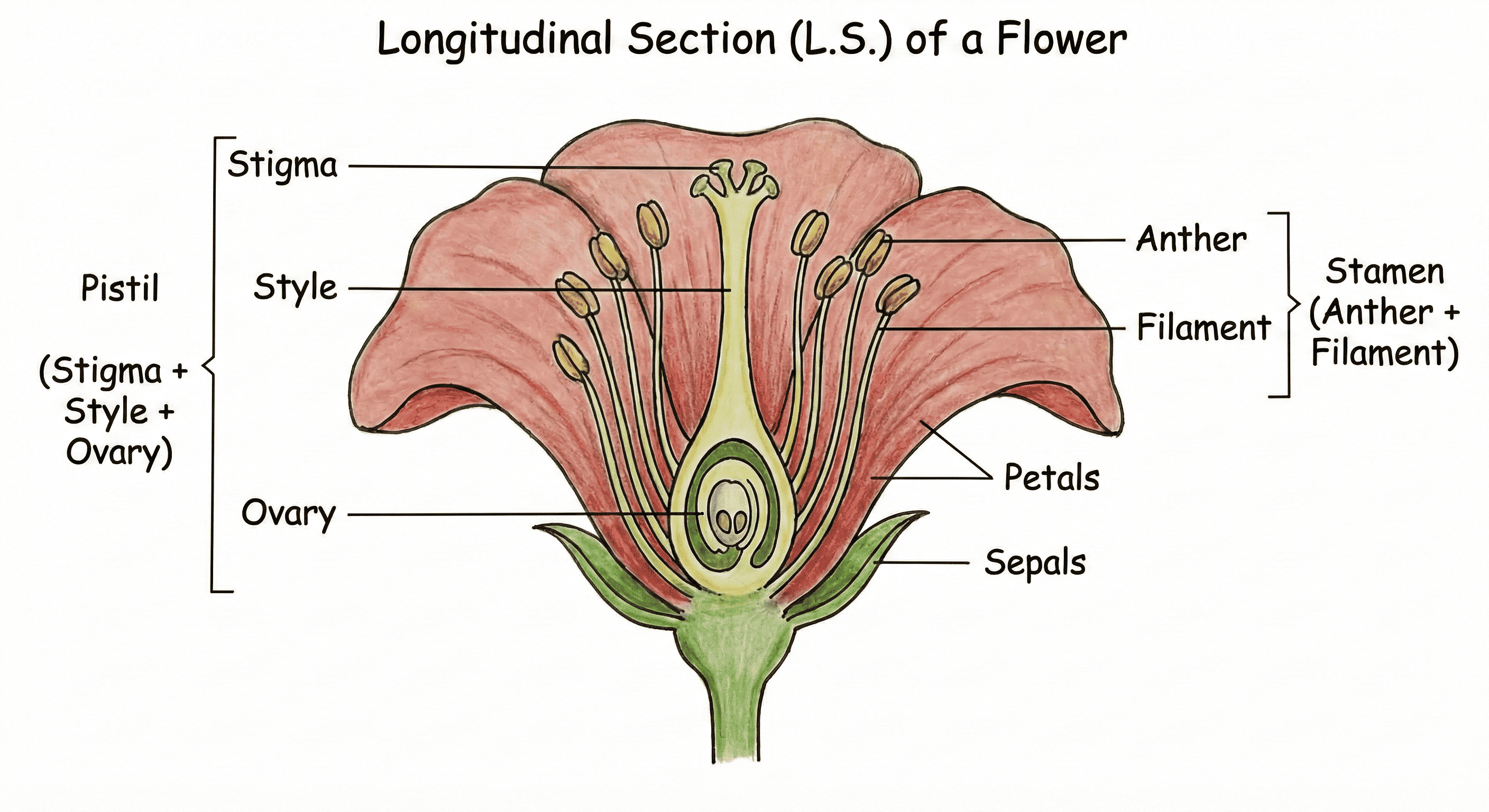
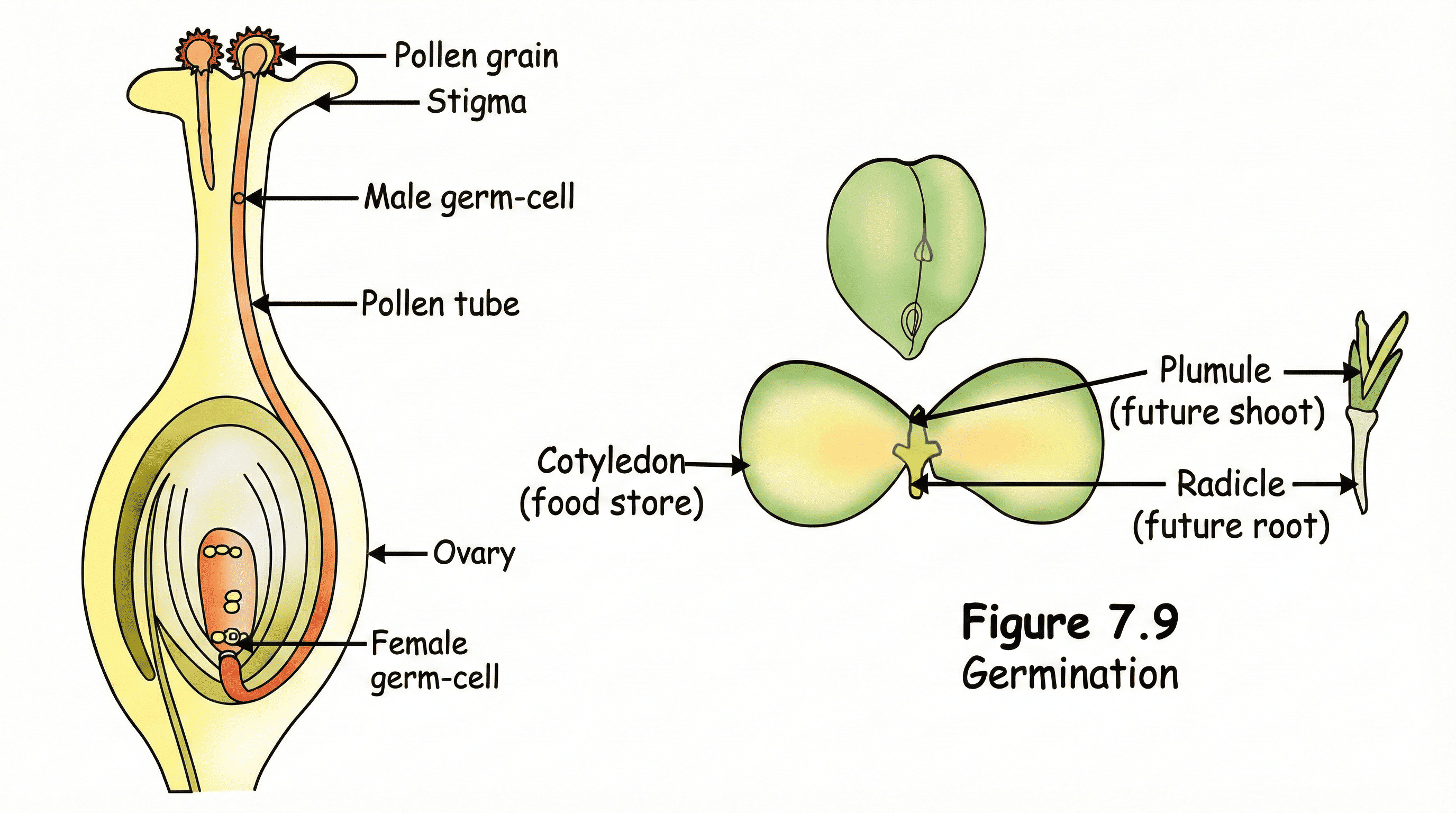
Pollination: Transfer of pollen grains from anther to stigma (Self-pollination vs Cross-pollination via wind, water, insects).
Post-Fertilization Fates: Ovule $\rightarrow$ Seed; Ovary $\rightarrow$ Fruit; Petals/Sepals wither and drop.
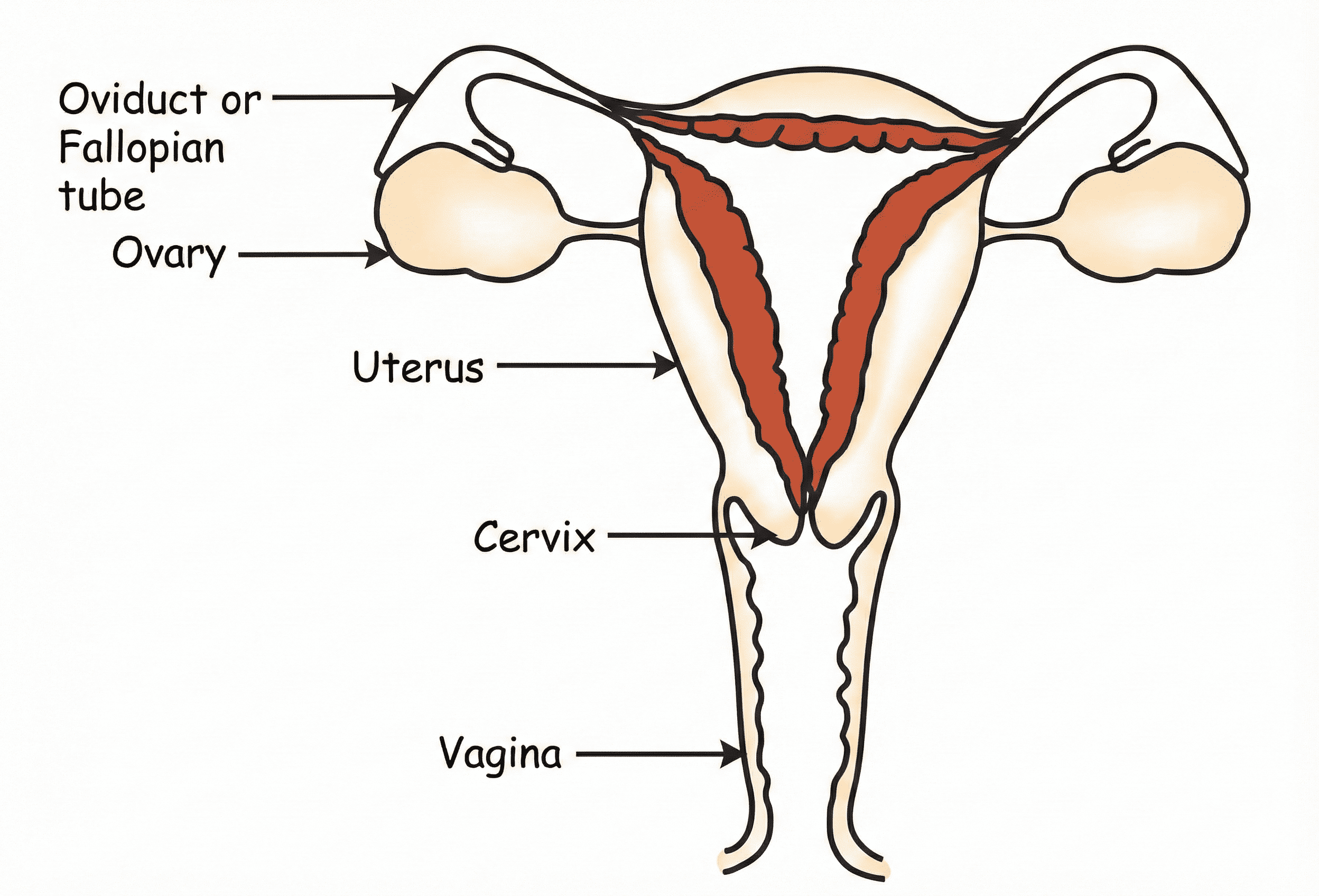
| Method | Mechanism of Action | Examples / Notes |
|---|---|---|
| Barrier Methods | Blocks sperm from reaching the ovum. | Condoms (prevent both pregnancy and STDs!), Diaphragms. |
| Chemical / Hormonal | Alters hormonal balance to prevent ovulation. | Oral contraceptive pills (may cause hormonal side effects). |
| IUDs (Intrauterine) | Inserted in uterus by doctor; prevents implantation. | Copper-T (releases copper ions to suppress sperm). |
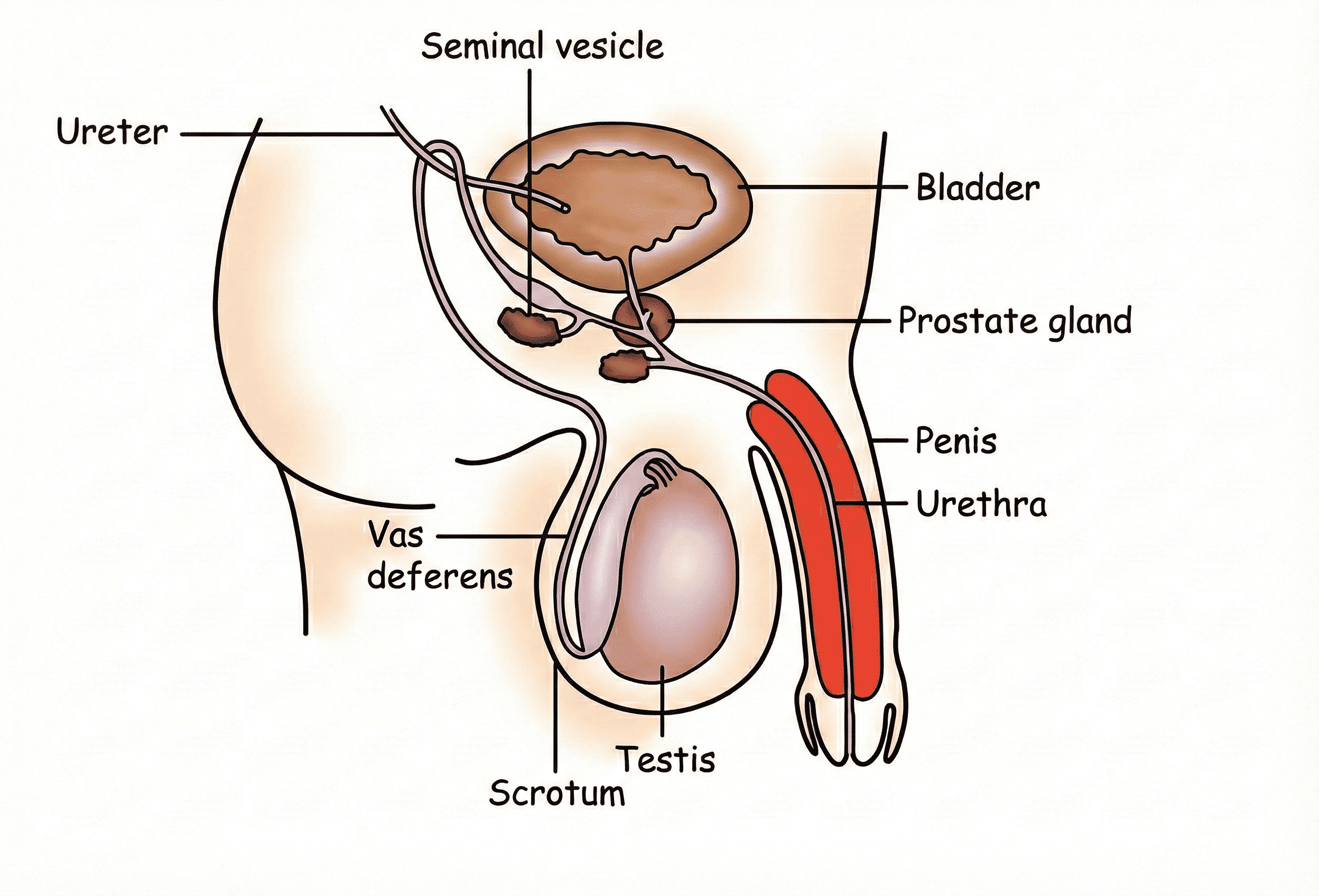
| Surgical (Permanent) | Blocks gamete transport pathways permanently. | Vasectomy (in males: vas deferens cut & tied). Tubectomy (in females: fallopian tubes cut & tied). |
Question 1: Why is DNA copying an essential step in reproduction? What happens if inaccuracies occur?
Model Answer: DNA contains genetic blueprints determining body structure and species characteristics. DNA must replicate so daughter cells inherit complete genetic instructions. Minor inaccuracies during copying introduce variations. In changing environments, variants possessing survival traits survive and reproduce, driving the evolution and preservation of the species.
Question 2: Why are testes located outside the abdominal cavity in the scrotum?
Model Answer: Human sperm production (spermatogenesis) requires an optimal temperature $2 - 2.5^\circ\mathrm{C}$ lower than normal core body temperature ($37^\circ\mathrm{C}$). The scrotum hangs outside the abdomen to maintain this cooler temperature required for producing healthy, motile sperm.
Question 3: What is Double Fertilization in angiosperms? State the post-fertilization changes in ovule and ovary.
Model Answer: The pollen tube releases two male gametes into the embryo sac. One male gamete fuses with the egg cell to form a diploid Zygote ($2n$) [Syngamy]. The second male gamete fuses with the two polar nuclei to form a triploid Primary Endosperm Nucleus ($3n$) [Triple Fusion]. Post-fertilization: the ovule develops into the seed, and the ovary ripens into the fruit.
Question 4: What is the placenta? Explain its two major functions during pregnancy.
Model Answer: The placenta is a temporary disc-shaped vascular tissue embedded in the uterine wall connecting the fetus to the maternal circulation via chorionic villi. Two major functions: (1) Nutrient and Gas Exchange: Supplies glucose, amino acids, and $\mathrm{O_2}$ from maternal blood to the fetus. (2) Waste Elimination: Removes fetal metabolic wastes ($\mathrm{CO_2}$, urea) into maternal blood for excretion.
Question 5: Differentiate between Vasectomy and Tubectomy. Why are barrier methods (condoms) emphasized in public health?
Model Answer: Vasectomy is the male surgical sterilization where both vas deferens are severed and ligated to prevent sperm release. Tubectomy is female sterilization where fallopian tubes are severed and ligated to prevent egg fertilization. Barrier methods (condoms) are uniquely emphasized because they are the only contraceptive devices that simultaneously prevent unwanted pregnancies AND block the transmission of deadly Sexually Transmitted Diseases (STDs), including HIV-AIDS and Syphilis.
 VARDAAN COMET