
The neuron is the structural and functional unit of the nervous system specialized to transmit electrical impulses.
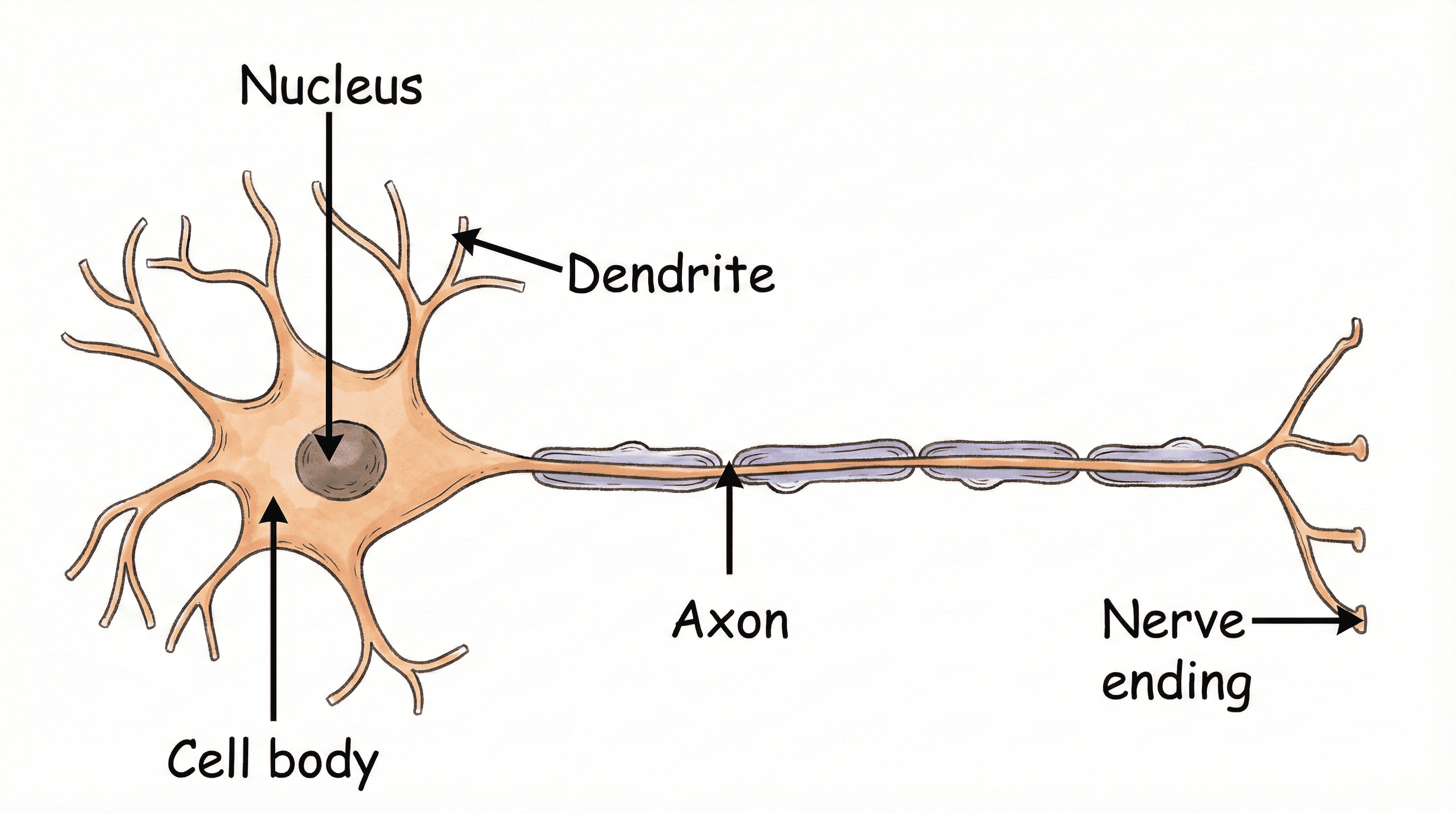
Core Anatomical Parts:
| Neuron Type | Direction of Transmission | Location |
|---|---|---|
| Sensory (Afferent) | Receptor $\longrightarrow$ Central Nervous System (CNS) | Sense organs to spinal cord/brain |
| Motor (Efferent) | Central Nervous System (CNS) $\longrightarrow$ Effector Organ | Brain/spinal cord to muscles or glands |
| Association (Relay) | Interconnects Sensory and Motor Neurons | Within gray matter of CNS |
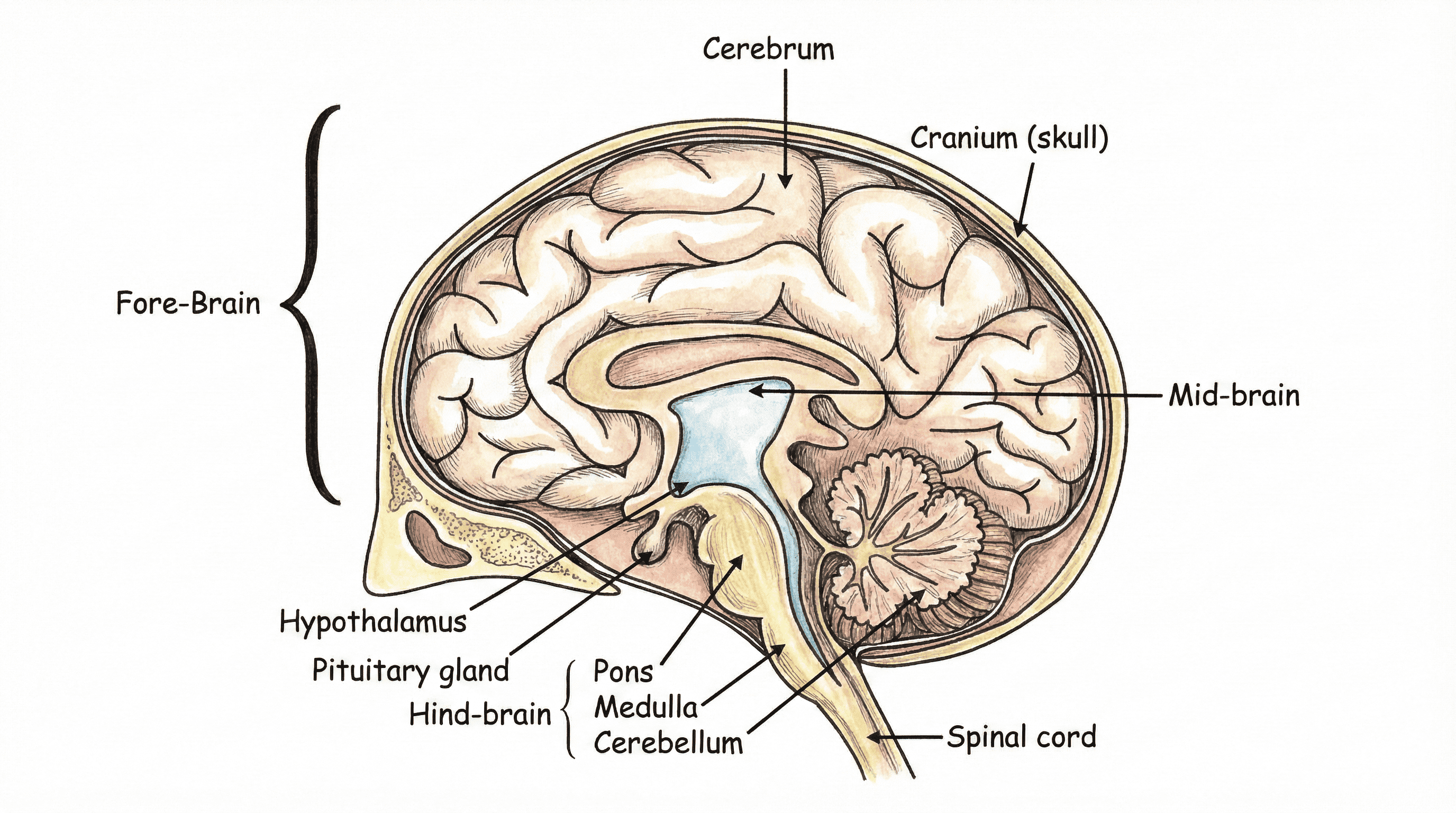
Brain Protection & Enclosures:
| Brain Region | Structural Features | Key Physiological Functions |
|---|---|---|
| Cerebrum (Forebrain) | Largest part; two hemispheres connected by Corpus Callosum; heavily convoluted (gyri and sulci). Outer = Gray matter (cell bodies); Inner = White matter (axons). | Seat of intelligence, reasoning, memory, planning, sensory perception, consciousness, and all voluntary motor decisions. |
| Cerebellum (Hindbrain) | Located beneath posterior cerebrum; has fine furrows; no gyri. | Coordinates voluntary muscle contractions, timing of movement, posture, and body balance. Impaired by alcohol consumption. |
| Medulla Oblongata (Hindbrain) | Base of brain connecting to spinal cord. | Controls involuntary vital visceral functions: heartbeat, breathing rate, blood pressure, peristalsis, swallowing, coughing. Damage is fatal. |
Spinal Cord Architecture:
A reflex action is a sudden, automatic, spontaneous, and involuntary response to a sensory stimulus controlled at the level of the spinal cord without initial brain involvement.
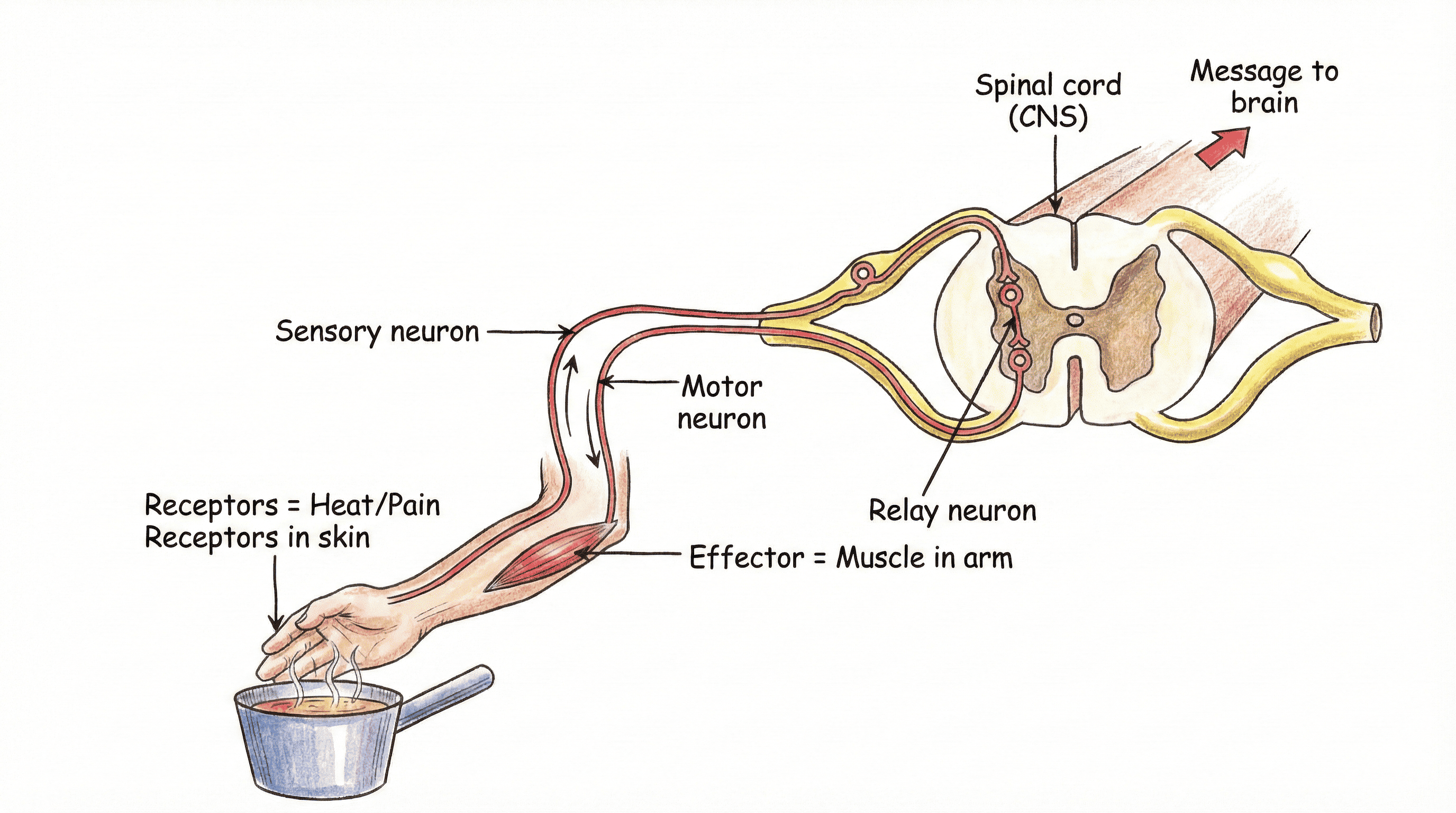
The Five Sequential Steps of a Reflex Arc:
| Natural (Inborn) Reflex | Conditioned (Acquired) Reflex |
|---|---|
| Inherited from birth; wired genetically without learning. | Acquired during lifetime through repetitive training/experience. |
| Spinal or brainstem level; no cerebral learning required. | Requires cerebral memory association and regular reinforcement. |
| Examples: Blinking, knee-jerk, pupil constriction in light, withdrawing hand from hot pan. | Examples: Salivation at smell of favourite food (Pavlov), playing guitar, cycling, applying brakes. |
| Target Organ | Sympathetic Division ("Fight or Flight") | Parasympathetic Division ("Rest and Digest") |
|---|---|---|
| Heart Rate | Accelerates rate and cardiac output. | Decelerates heart rate back to resting. |
| Pupils | Dilates pupils (mydriasis). | Constricts pupils (miosis). |
| Bronchioles | Dilates airways for maximum oxygen intake. | Constricts airways to normal caliber. |
| Digestion & Salivation | Inhibits peristalsis and salivary secretion. | Stimulates digestive enzymes and salivation. |
| Blood Glucose | Stimulates glycogen breakdown into glucose. | Promotes glucose uptake and storage as glycogen. |
Hormones are chemical messengers synthesized by ductless (endocrine) glands, secreted directly into blood, and transported to act on specific target organs.
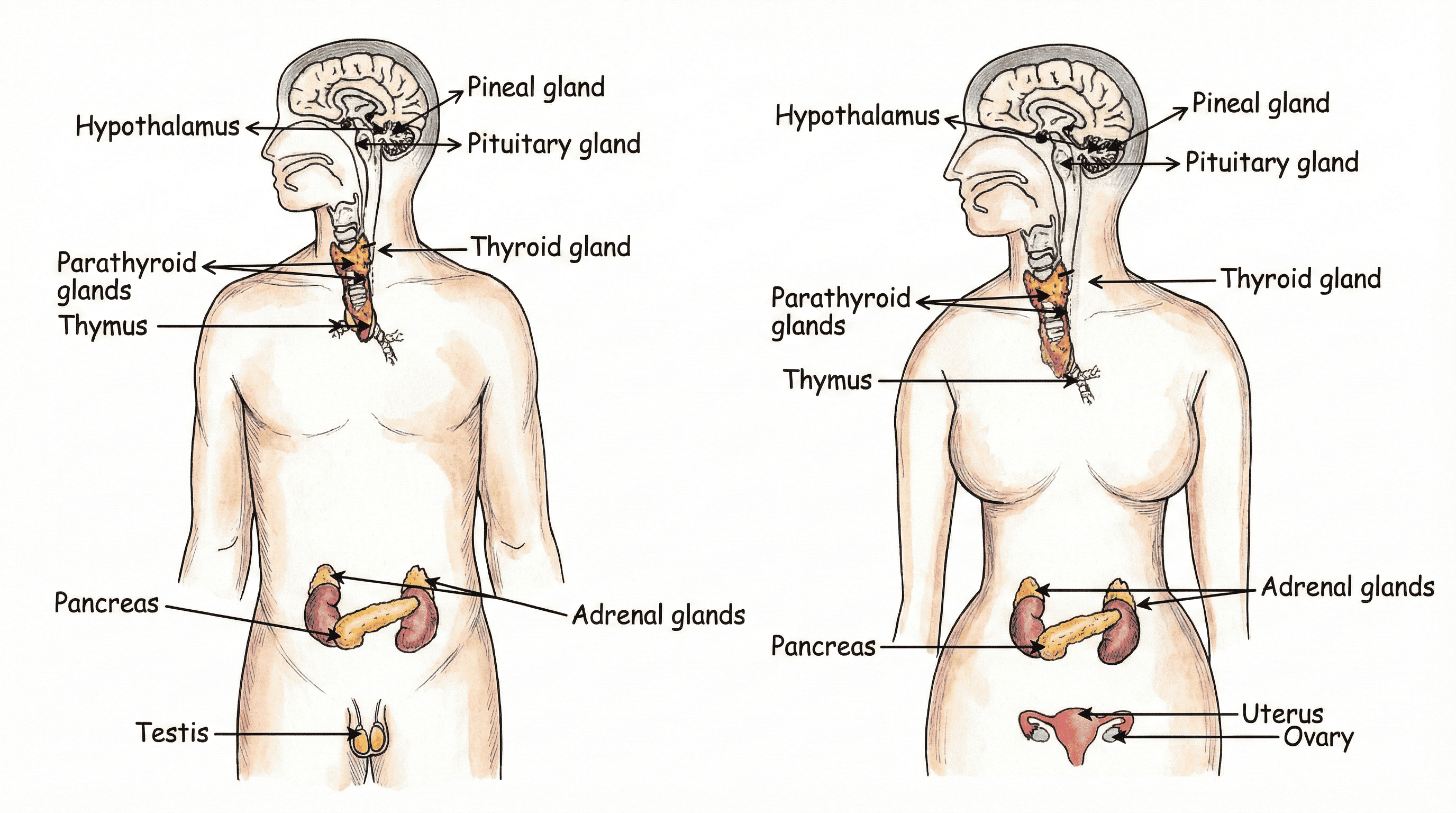
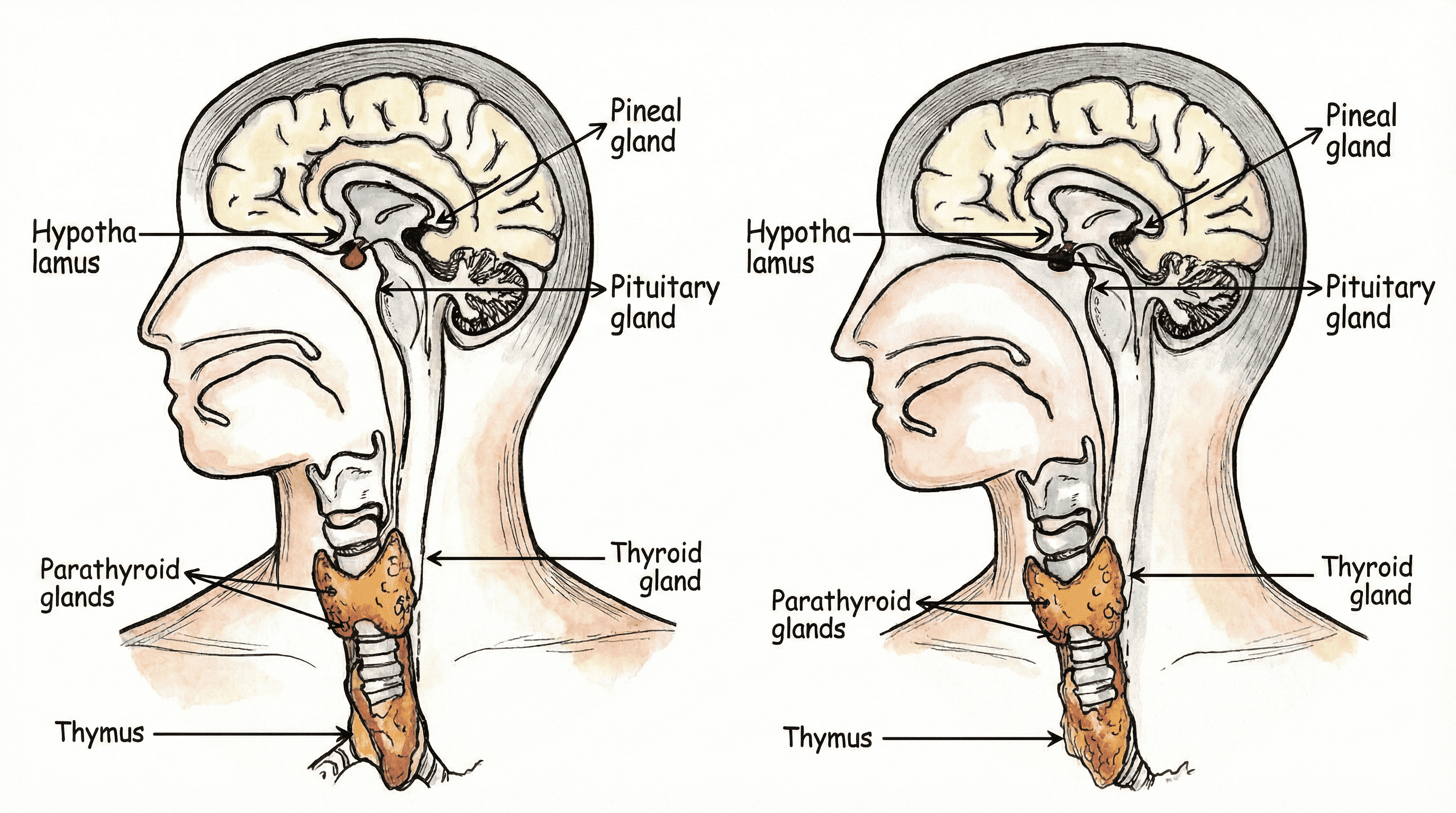
| Gland & Location | Hormone Secreted | Target & Function | Clinical Deficiency / Hyperactivity |
|---|---|---|---|
| Pituitary Gland (Base of brain; Master Gland) |
• Growth Hormone (GH / STH) • Gonad Stimulating Hormone (GSH) |
• Promotes bone elongation & body growth. • Stimulates gonads to produce sex hormones at puberty. |
• Dwarfism: Childhood GH deficiency. • Gigantism: Childhood GH hypersecretion. • Cushing's Disease: Hyperactivity causing hirsutism & sterility. |
| Thyroid Gland (Anterior neck) |
Thyroxine ($T_4$) (Requires dietary Iodine) |
Regulates Basal Metabolic Rate (BMR), carbohydrate/protein/fat metabolism, and tissue growth. | • Simple Goitre: Swelling of neck gland due to iodine deficiency. • Cretinism: Infantile thyroid deficiency causing dwarfism and mental retardation. |
| Pancreas (Islets of Langerhans) |
• Insulin ($\beta$-cells) • Glucagon ($\alpha$-cells) |
• Insulin lowers blood glucose levels. • Glucagon raises blood glucose levels. |
• Diabetes Mellitus: Insulin hyposecretion resulting in hyperglycemia and glucose in urine. |
| Adrenal Gland (Atop each kidney) |
Adrenaline (Epinephrine) | "Emergency hormone"; prepares body for fight-or-flight; elevates heart rate and blood sugar. | Impaired stress adaptation and blood pressure regulation. |
| Testes (Male) | Testosterone | Sperm production; male secondary sexual characteristics (deep voice, facial hair). | Failure of sexual maturation and spermatogenesis. |
| Ovaries (Female) | Estrogen & Progesterone | Ovum development, female secondary traits, menstrual cycle regulation, pregnancy maintenance. | Menstrual disruption and infertility. |
The 5 Major Phytohormones:
.png)
.png)
| Tropic Movement | Stimulus | Positive Response | Negative Response |
|---|---|---|---|
| Phototropism | Unidirectional Light | Stem shoots bend toward light | Roots grow away from light |
| Geotropism | Gravity | Primary roots grow downward into soil | Shoots grow upward against gravity |
| Hydrotropism | Water / Moisture | Roots grow toward water sources | - |
| Chemotropism | Chemical Gradient | Pollen tube grows toward ovule micropyle | - |
| Thigmotropism | Physical Touch | Tendrils coil around support | - |
 VARDAAN COMET