
In multicellular organisms, life cannot proceed through isolated metabolic reactions. Survival demands that trillions of specialized cells, tissues, and organ systems function in seamless harmony. Coordination is the process through which two or more bodily organs interact, harmonize, and complement the functions of one another to maintain dynamic internal homeostasis.
Fundamental Definitions:
| Comparative Parameter | Nervous Coordination | Hormonal / Endocrine Coordination |
|---|---|---|
| Nature of Signal | Electrochemical impulses along nerve fibres and neurotransmitters across synaptic gaps. | Chemical messenger compounds (proteins, peptides, modified amino acids, or steroids). |
| Pathway of Transmission | Specific, anatomically wired neurons and nerves directly innervating tissues. | Circulatory bloodstream; reaches all tissues but acts exclusively on target cells bearing specific receptor proteins. |
| Speed of Response | Extremely rapid (fractions of a millisecond to milliseconds). | Relatively slower (seconds, minutes, hours, or months). |
| Duration of Effect | Transient, immediate, and short-lived. | Sustained, prolonged, and persistent metabolic or developmental effects. |
The neuron (nerve cell) is the microscopic structural and functional unit of the nervous system. Neurons are the longest cells in the human body (some extending over a meter from the lumbar spinal cord down to the foot) and are specialized for excitability and conductivity.
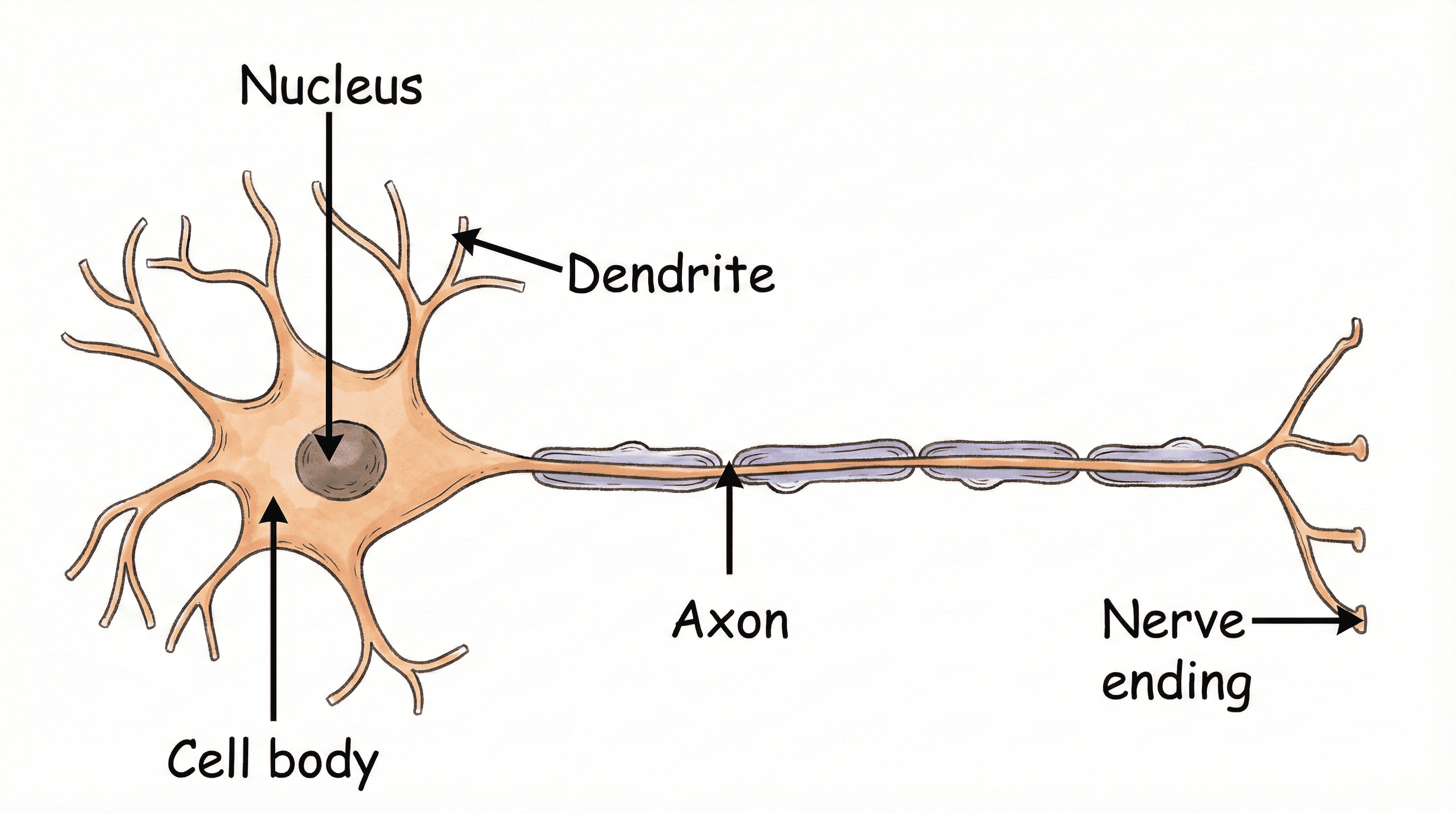
Communication between successive neurons occurs across specialized micro-junctions called synapses:
| Functional Class of Neuron | Origin & Receptor Connection | Destination & Function |
|---|---|---|
| Sensory Neurons (Afferent) | Connected to sensory receptors in sense organs (eyes, ears, skin, tongue, nose). | Conduct sensory impulses from periphery toward the Central Nervous System (brain and spinal cord). |
| Motor Neurons (Efferent) | Originate in the Central Nervous System (motor cortex or spinal ventral horn). | Conduct motor commands away from CNS toward effector organs (skeletal muscles or glands) to elicit responses. |
| Association / Relay Neurons (Interneurons) | Located entirely within the brain and spinal cord gray matter. | Form complex interconnecting networks linking sensory and motor neurons, processing and integrating information. |
A nerve is a macroscopic cable-like structure formed by thousands of individual nerve fibres (axons) bundled together and wrapped in tough protective connective tissue sheaths (epineurium, perineurium, and endoneurium). It functions identically to a multi-core underground electrical cable, where each individual wire conducts independently without interference due to lipid insulation.
The Central Nervous System (CNS) represents the master processing and command center of the organism. It consists of the brain encased within the skull and the spinal cord enclosed within the vertebral column.
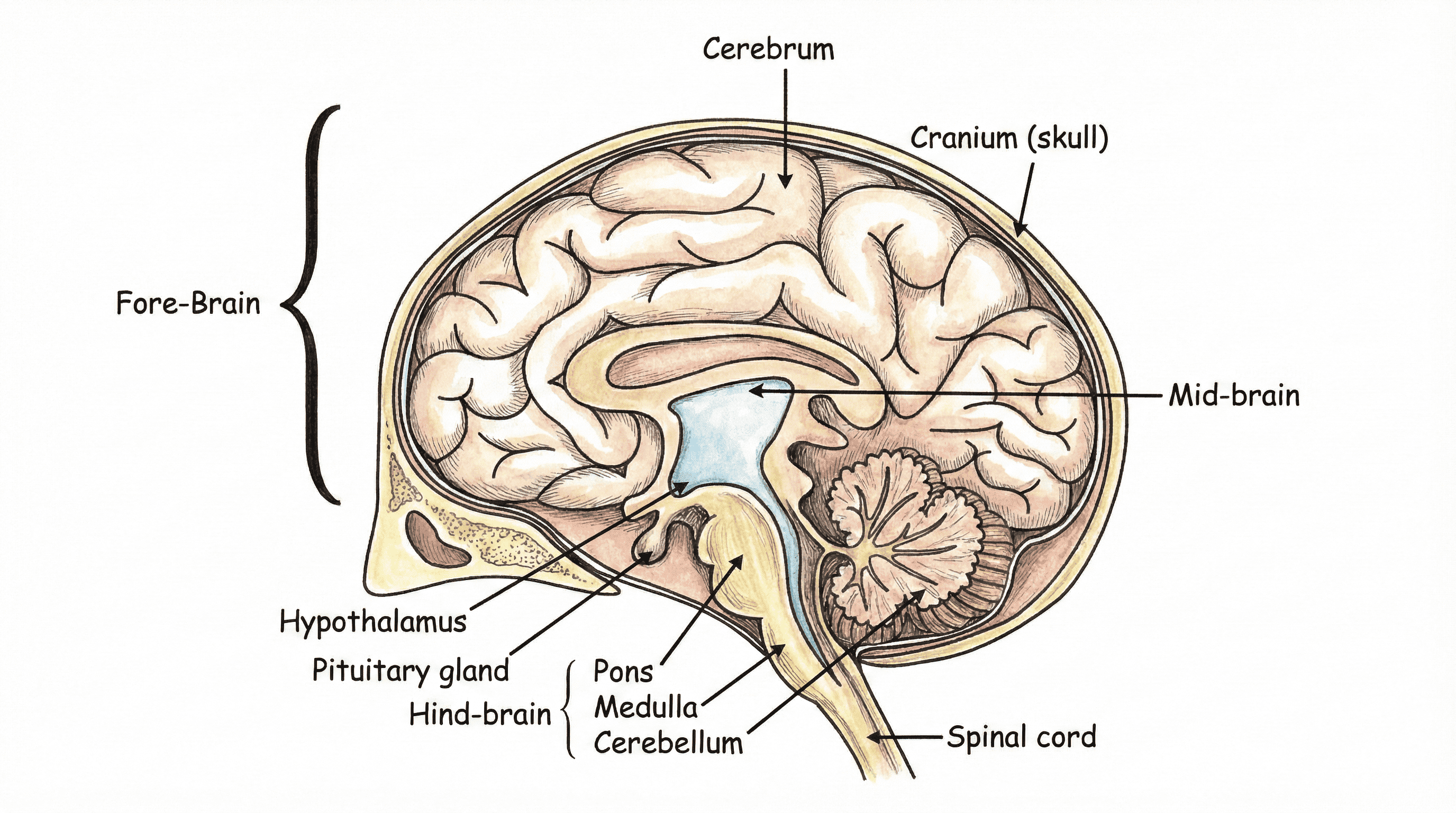
Clinical Note (Meningitis): An acute and potentially life-threatening inflammation of the meninges and cerebrospinal fluid caused by microbial infection (bacterial, viral, fungal, or amoebic). Symptoms include intense headache, high fever, severe neck stiffness (nuchal rigidity), photophobia, irritability, confusion, and seizures.
The human brain is anatomically divided into three primary subdivisions: Forebrain (Prosencephalon), Midbrain (Mesencephalon), and Hindbrain (Rhombencephalon).
| Brain Region | Anatomical Characteristics | Physiological Functions & Control Centers |
|---|---|---|
| Cerebrum (Forebrain) | Largest portion (constitutes nearly 80% of brain mass). Divided into right and left cerebral hemispheres by a deep longitudinal fissure, interconnected internally by a thick bridge of myelinated nerve fibres called the Corpus Callosum.
The outer surface is densely convoluted with elevated folds called gyri separated by shallow grooves called sulci, maximizing cortical surface area. Gray vs White Matter: • Outer cortex = Gray matter (densely packed neuron cell bodies, dendrites, and non-myelinated synapses). • Inner core = White matter (tracts of myelinated axons conveying signals to/from cortex). |
• Primary seat of intelligence, conscious thought, memory, reasoning, analytical planning, decision-making, and emotional will-power.
• Controls all voluntary motor activities through the motor cortex. • Primary sensory reception and interpretation areas for vision (occipital lobe), hearing (temporal lobe), taste, and touch/pain/temperature (parietal lobe). • Contains Broca's and Wernicke's areas responsible for articulate speech and linguistic comprehension. |
| Cerebellum (Hindbrain) | Second largest part, situated at the posterior base of the skull beneath the occipital lobes of cerebrum. Features a branched tree-like inner white matter pattern (arbor vitae) surrounded by an outer gray cortex with numerous shallow furrows (folia). | • Equilibrium & Posture: Integrates proprioceptive inputs from skeletal muscles, joints, and semicircular canals of the inner ear to maintain body balance and posture.
• Motor Coordination: Coordinates, smooths, and times voluntary muscular contractions initiated by the cerebrum (e.g., walking in a straight line, riding a bicycle, threading a needle, dancing). Clinical Correlation: Acute alcohol intoxication selectively suppresses cerebellar function, resulting in slurred speech, uncoordinated muscular twitches, and staggering, clumsy gait. |
| Medulla Oblongata (Hindbrain) | Lowest, conical portion of the brainstem resting on the base of the skull, connecting superiorly to the pons and continuing inferiorly through the foramen magnum as the spinal cord. | • Houses vital autonomic visceral reflex centers controlling cardiac rate (cardio-accelerator and inhibitory centers), respiration rate & depth (respiratory rhythmicity center), and arteriolar blood pressure (vasomotor center).
• Controls involuntary non-vital protective reflexes: swallowing (deglutition), salivation, peristalsis, coughing, sneezing, and vomiting. Clinical Alert: Mechanical trauma or injury to the medulla oblongata is instantly fatal due to abrupt cessation of spontaneous respiration and heartbeat. |
The spinal cord is a cylindrical bundle of nervous tissue extending downward from the medulla oblongata through the protective bony neural canal of the vertebral column (backbone), spanning from the base of the skull to the lower lumbar vertebrae.
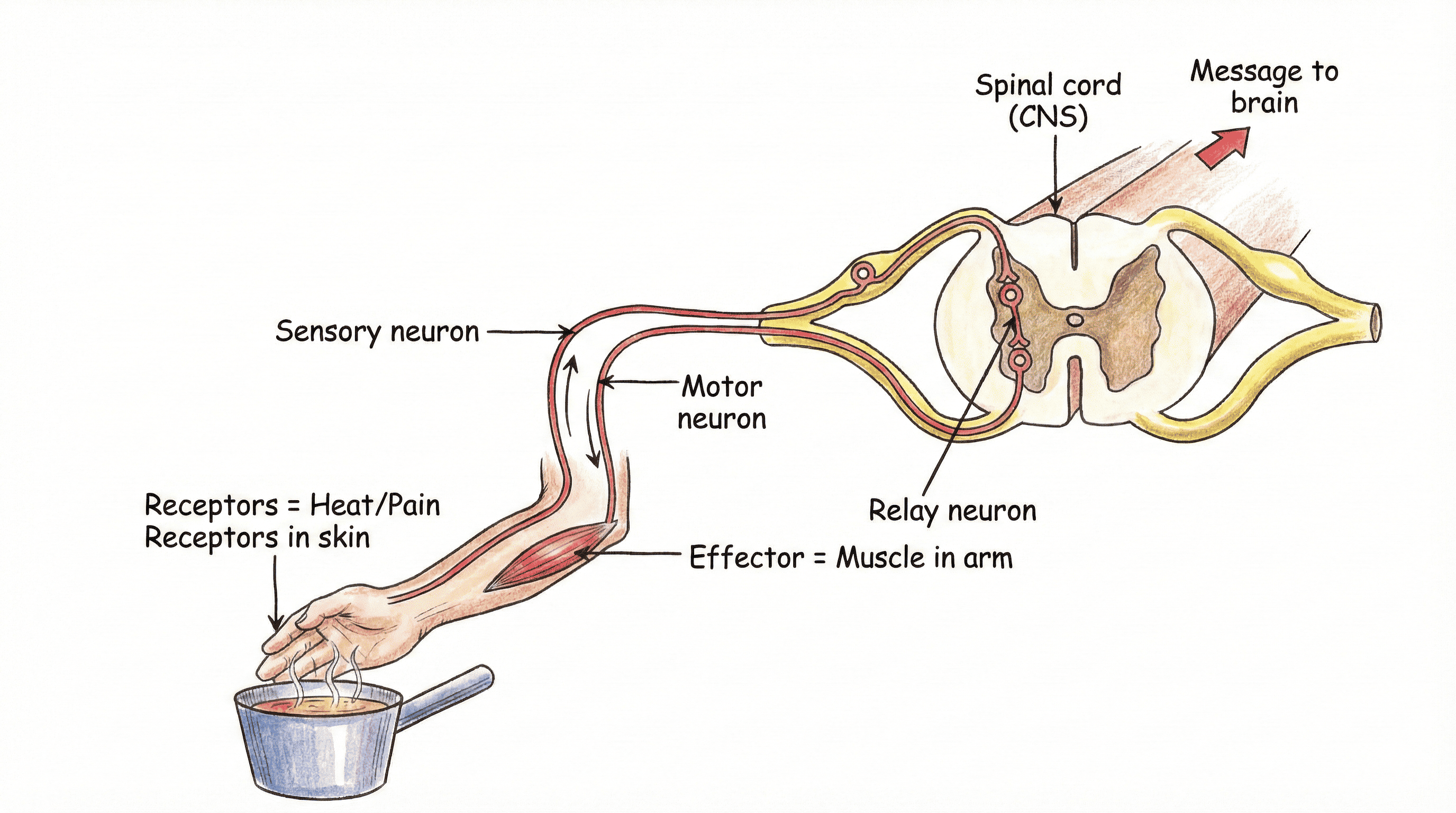
A Reflex Action is a rapid, automatic, spontaneous, and involuntary motor response elicited by a specific sensory stimulus without conscious intervention or delay by the cerebrum. The primary biological purpose of reflex actions is instant self-preservation in the face of imminent hazard.
The structural pathway traversed by nerve impulses during a reflex action is known as the reflex arc, composed of five mandatory components arranged in strict anatomical sequence:
THE REFLEX ARC IMPULSE SEQUENCE
$$\text{Stimulus} \;\longrightarrow\; \text{Receptor (Sense Organ)} \;\longrightarrow\; \text{Sensory Neuron} \;\longrightarrow\; \text{Spinal Cord (Interneuron)} \;\longrightarrow\; \text{Motor Neuron} \;\longrightarrow\; \text{Effector (Muscle)} \;\longrightarrow\; \text{Response}$$
| Parameter | Inborn (Natural / Unconditioned) Reflex | Conditioned (Acquired) Reflex |
|---|---|---|
| Definition | Inherited, congenital automatic responses present from birth without requiring prior experience or learning. | Learned physiological responses acquired during an individual's lifetime through repetitive training, practice, or conditioning. |
| Need for Prior Learning | No learning or conditioning required; wired genetically. | Requires prior sensory experience, memory association, and persistent reinforcement. |
| Involvement of Cerebrum | Mediated at the level of the spinal cord or brainstem without cerebral involvement. | Initiated and learned with initial cerebral participation, though execution becomes subconscious. |
| Examples | • Blinking of eyelids when an object approaches. • Knee-jerk reflex. • Pupillary constriction in intense light. • Instant withdrawal of hand from a burning iron. • Coughing when foreign particles irritate the trachea. |
• Salivation at the aroma or sight of delicious food (Pavlovian response). • Applying bicycle or car brakes automatically upon noticing an obstacle. • Typing or playing musical instruments effortlessly through muscle memory. • Swimming and bicycling balance. |
The Peripheral Nervous System (PNS) encompasses all nerve tissue lying outside the brain and spinal cord, linking the central processor to every sensory receptor, muscle, and visceral organ. It is subdivided into the Somatic Nervous System and the Autonomic Nervous System.
Monitors external stimuli and regulates voluntary contraction of skeletal muscles. Consists of two categories of peripheral nerves:
Regulates all automatic, involuntary physiological functions of visceral internal organs (heart muscle, smooth muscles of gastrointestinal tract, urinary bladder, bronchioles, and exocrine glands). The ANS consists of two anatomically and functionally complementary divisions that maintain homeostatic balance:
| Target Organ / Function | Sympathetic Nervous System (SNS) "Fight-or-Flight" (Emergency Division) |
Parasympathetic Nervous System (PNS) "Rest-and-Digest" (Recovery Division) |
|---|---|---|
| Eye (Pupil) | Dilates pupil (mydriasis) to maximize visual intake of threat. | Constricts pupil (miosis) to protect retina and adapt for near vision. |
| Heart Rate & Force | Accelerates heart rate; increases ventricular stroke volume and arterial blood pressure. | Decelerates heart rate to resting baseline; decreases arterial pressure. |
| Respiratory Bronchioles | Dilates bronchioles to maximize alveolar oxygen delivery. | Constricts bronchioles back to normal diameter. |
| Gastrointestinal Tract | Inhibits gastric motility, halts digestive enzyme secretion, and contracts sphincters. | Stimulates peristalsis, accelerates gastric emptying, and stimulates digestive secretions. |
| Salivary Glands | Inhibits secretion; causes dry mouth sensation under acute stress. | Stimulates copious watery saliva secretion to facilitate oral digestion. |
| Liver & Blood Glucose | Stimulates glycogenolysis (breakdown of glycogen to glucose) releasing energy. | Stimulates glycogenesis (storage of glucose as glycogen). |
| Urinary Bladder | Relaxes detrusor muscle and constricts internal urethral sphincter (inhibits urination). | Contracts detrusor muscle and relaxes internal sphincter (promotes urination). |
While the nervous system provides localized, split-second electrical communication, the endocrine system governs long-term metabolic homeostasis, physical growth, cellular differentiation, and reproductive maturation through chemical messengers called hormones.
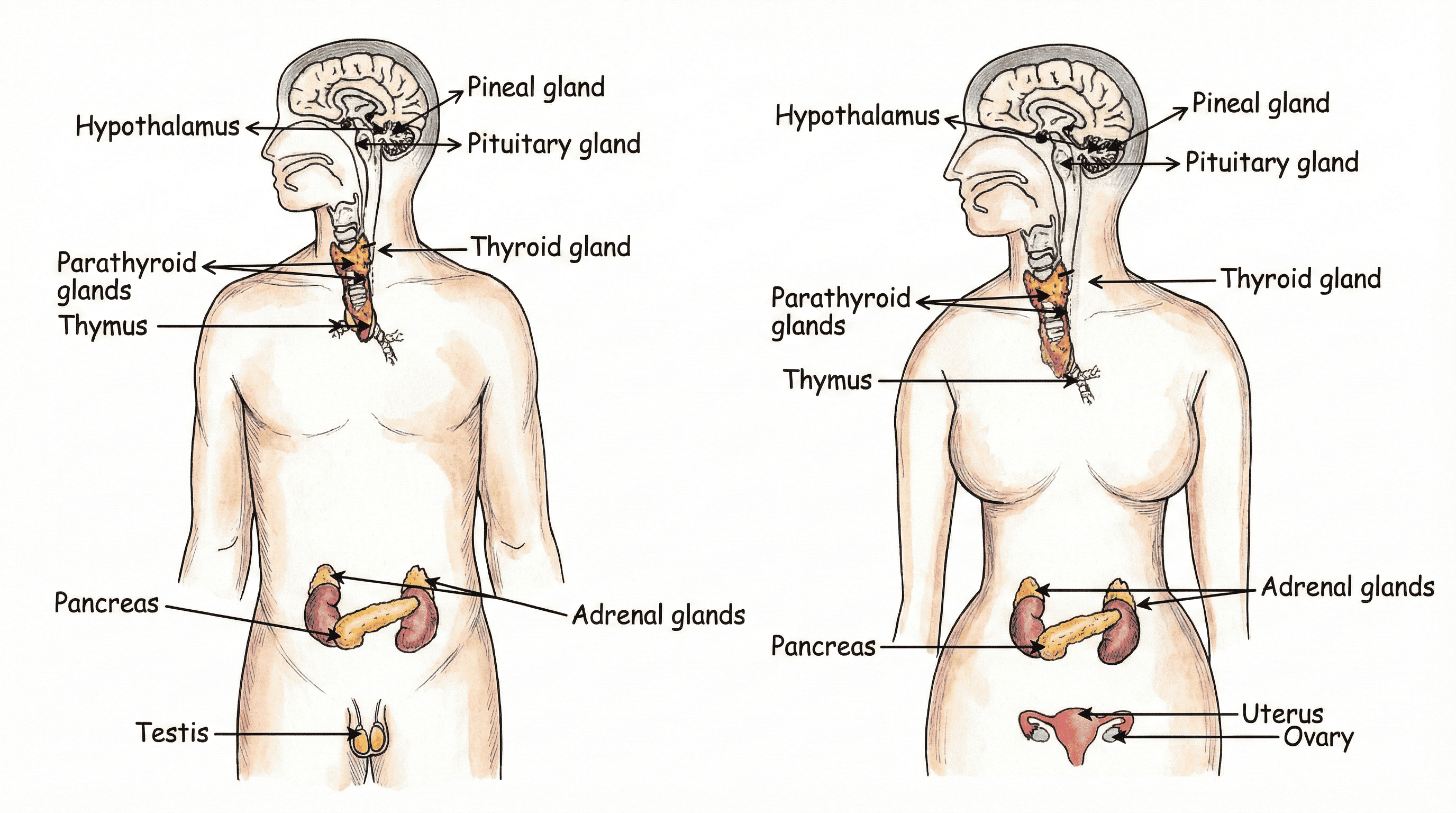
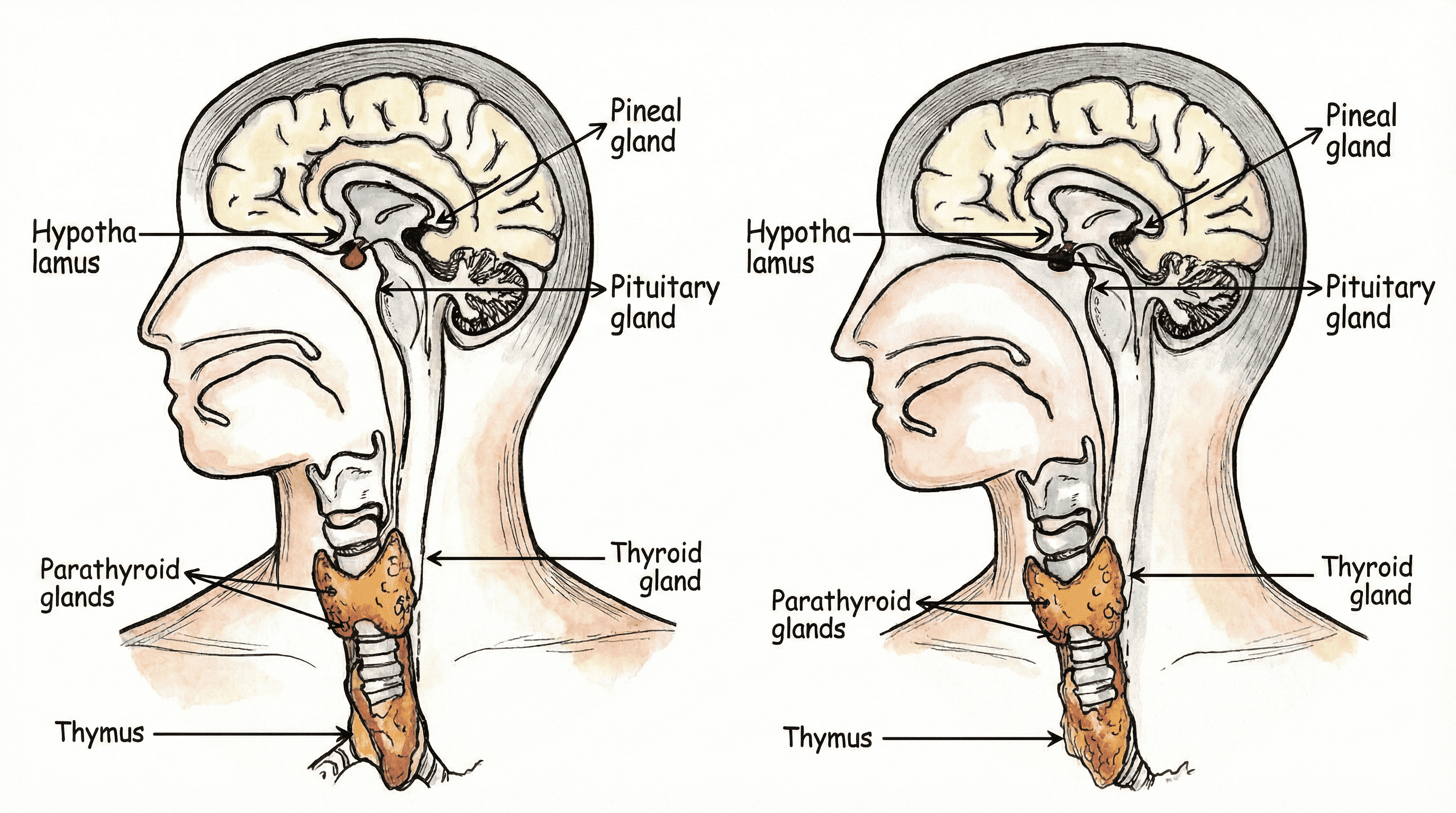
| Endocrine Gland & Location | Hormone(s) Produced | Major Physiological Functions | Clinical Disorders of Hypo- and Hyper-Secretion |
|---|---|---|---|
| Hypothalamus (Floor of Diencephalon, Forebrain) |
• Releasing Hormones (GHRH, TRH, GnRH) • Inhibiting Hormones (Somatostatin) • Synthesizes ADH (Vasopressin) & Oxytocin |
Acts as the supreme neuro-endocrine master integrator linking the central nervous system to the endocrine axis. Regulates pituitary hormone release. | Disruption leads to panhypopituitarism, central diabetes insipidus, and autonomic thermoregulatory failure. |
| Pituitary Gland (Base of brain in sella turcica of sphenoid bone; "Master Gland") |
• Growth Hormone (GH / STH - Somatotropin) • Gonad-Stimulating Hormones (GSH / FSH & LH) • TSH, ACTH, Prolactin |
• Promotes mitotic cellular division, elongation of long bones, muscle mass development, and protein synthesis. • Gonadotropins stimulate testes to secrete testosterone and ovaries to secrete estrogen/progesterone during puberty. |
• Dwarfism: Hyposecretion of GH during childhood results in stunted skeletal growth (short stature with normal proportions). • Gigantism: Hypersecretion of GH during childhood causes excessive lengthening of long bones ($>7\text{ to }8\text{ feet}$ height). • Acromegaly: Hypersecretion in adults causes disproportionate enlargement of facial bones, hands, and feet. • Cushing's Disease: Pituitary hyperactivation causing excessive hair growth (hirsutism), testicular atrophy in men, and sterility/facial hair growth in women. |
| Thyroid Gland (Anterior neck, bilobed over trachea) |
Thyroxine ($T_4$) & Triiodothyronine ($T_3$) (Requires dietary Iodine) |
Controls the Basal Metabolic Rate (BMR) of all body cells, regulates carbohydrate, lipid, and protein metabolism, generates body heat, and supports mental/physical development. | • Cretinism: Untreated congenital hypothyroidism in infants causing severe physical dwarfism, coarse skin, protruding tongue, and irreversible mental retardation. • Simple Goitre: Nutritional iodine deficiency prevents thyroxine synthesis, triggering compensatory enlargement and massive swelling of the thyroid gland in the neck. • Hyperthyroidism (Exophthalmic Goitre / Graves' Disease): Excess thyroxine causes elevated heart rate, severe weight loss, restlessness, tremors, and protruding eyeballs. |
| Pancreas (Islets of Langerhans) (Heterocrine gland behind stomach) |
• Insulin (produced by $\beta$-cells) • Glucagon (produced by $\alpha$-cells) |
• Insulin: Hypoglycemic hormone; lowers elevated blood glucose by promoting cellular uptake, muscle utilization, and glycogenesis in liver. • Glucagon: Hyperglycemic hormone; elevates blood glucose by accelerating liver glycogenolysis during fasting states. |
• Diabetes Mellitus: Absolute or relative hyposecretion of insulin results in persistent hyperglycemia (elevated blood glucose), glycosuria (glucose excretion in urine), polyuria (excess urination), polydipsia (excessive thirst), and ketosis. Managed via dietary control, oral hypoglycemics, and subcutaneous insulin injections. |
| Adrenal Glands (Suprarenals) (Cap-like atop each kidney) |
Adrenaline (Epinephrine) & Noradrenaline (secreted by Adrenal Medulla); Cortisol & Aldosterone (Cortex) | Known as the "Emergency Hormone" / "Fight-or-Flight Hormone". Discharged instantly into blood during acute fear, anger, shock, cold, or physical emergency. Increases heart rate, constricts peripheral arterioles, dilates coronary & skeletal vessels, dilates pupil, and elevates blood sugar. | • Hyposecretion of adrenal cortical steroids causes Addison's disease (bronze skin pigmentation, severe fatigue, hypotension). • Hypersecretion of cortical hormones causes Cushing's syndrome. |
| Testes (Male Gonads) (Inside scrotal sacs) |
Testosterone (secreted by interstitial Leydig cells) | Stimulates spermatogenesis, directs descent of testes, and stimulates male secondary sexual characteristics (deepening of voice, enlargement of penis, facial and pubic hair, muscular physique). | Hyposecretion leads to male eunuchoidism, impaired spermatogenesis, and lack of secondary sexual traits. |
| Ovaries (Female Gonads) (Lower pelvic cavity) |
• Estrogen (secreted by maturing ovarian follicles) • Progesterone (secreted by corpus luteum) |
• Estrogen: Stimulates oogenesis, regulates proliferative phase of menstrual cycle, develops female secondary sexual characteristics (breast development, widened pelvic girdle, subcutaneous fat). • Progesterone: Maintains secretory vascular endometrium, prepares uterus for blastocyst implantation, and maintains pregnancy. |
Deficiency results in menstrual irregularities, amenorrhea, infertility, and spontaneous miscarriages. |
Unlike animals, plants lack nervous systems, sense organs, and specialized contractile muscular tissues. Nevertheless, plants exhibit remarkable coordination and respond to environmental stimuli through chemical coordination mediated by plant hormones (phytohormones) and differential growth movements.
.png)
.png)
Plant movements are categorized into two distinct classes based on the directionality of the stimulus:
| Comparative Factor | Cerebrum | Cerebellum |
|---|---|---|
| Location & Size | Largest anterior part of forebrain filling upper cranial cavity. | Smaller posterior part of hindbrain located beneath cerebrum. |
| Surface Anatomy | Marked by prominent convolutions (gyri) and deep grooves (sulci). | No gyri; marked by numerous shallow, fine transverse furrows. |
| Voluntary Action Control | Initiates all voluntary conscious impulses, thoughts, plans, and decisions. | Does not initiate movement; coordinates, smooths, and times contractions. |
| Equilibrium & Posture | Has no direct regulatory role in body balance. | Primary center for maintaining physical equilibrium, balance, and posture. |
| Effect of Damage | Loss of memory, paralysis, intellectual impairment, or coma. | Ataxia, loss of muscular coordination, unsteady staggering gait, intention tremors. |
| Comparative Dimension | Sensory Nerves | Motor Nerves |
|---|---|---|
| Direction of Impulse | From peripheral sensory receptors toward the Central Nervous System (Afferent). | From the Central Nervous System toward peripheral effector organs (Efferent). |
| Axon Composition | Contain axons of sensory neurons exclusively. | Contain axons of motor neurons exclusively. |
| Functional Consequence of Severing | Complete loss of sensation (anesthesia) in the innervated region; voluntary movement remains intact. | Complete motor paralysis of the innervated muscle; sensory perception remains intact. |
| Representative Examples | Optic nerve (vision), Auditory nerve (hearing), Olfactory nerve (smell). | Oculomotor nerve (eyeball muscles), Hypoglossal nerve (tongue muscles). |
Question 1: Explain the electrochemical mechanism by which a nerve impulse crosses a chemical synapse. Why is synaptic transmission strictly unidirectional?
Model Answer:
Question 2: Trace the complete anatomical pathway of a reflex arc when a person accidentally steps on a sharp nail. Why does the withdrawal response precede conscious sensation of pain?
Model Answer:
Question 3: Differentiate between the physiological roles of the Cerebrum, Cerebellum, and Medulla Oblongata. What happens if the medulla oblongata suffers mechanical injury?
Model Answer:
Question 4: Why is dietary Iodine essential for human health? Name and explain the disease resulting from its deficiency in adults and infants.
Model Answer:
Question 5: How does the Autonomic Nervous System mediate the body's response to an acute threat? Compare the actions of the Sympathetic and Parasympathetic systems.
Model Answer:
 VARDAAN COMET