Vardaan Learning Institute
Class Notes • Science and Technology (212)
Chapter 22: Life Processes
1. Fundamentals of Life Processes
The 4 Vital Life Processes
- Nutrition: Process of intake and utilization of nutrients to obtain energy and raw materials for body repair.
- Respiration: Biochemical catabolism of glucose inside cells to liberate energy in the form of ATP.
- Transportation: Internal transit of oxygen, nutrients, water, and metabolic wastes between organs.
- Excretion: Removal of toxic nitrogenous metabolic wastes (urea, uric acid) from the body.
2. Nutrition: Modes and Mechanisms
| Feature |
Autotrophic Nutrition |
Heterotrophic Nutrition |
| Carbon Source |
Inorganic $\mathrm{CO_2}$ and $\mathrm{H_2O}$. |
Complex organic food from other organisms. |
| Chlorophyll |
Present (essential for trapping sunlight). |
Absent. |
| Examples |
Green plants, Cyanobacteria (blue-green algae). |
Animals, Fungi (moulds, yeasts), Protozoa. |
A. Photosynthesis & Stomatal Mechanism
Photosynthesis Balanced Equation:
$$6\mathrm{CO_2} + 12\mathrm{H_2O} \;\underset{\text{Sunlight}}{\overset{\text{Chlorophyll}}{\longrightarrow}}\; \mathrm{C_6H_{12}O_6} + 6\mathrm{O_2} + 6\mathrm{H_2O}$$
3 Sequential Events of Photosynthesis
- Absorption: Chlorophyll traps solar light energy in chloroplasts.
- Photolysis of Water: Water is split into protons, electrons, and oxygen ($2\mathrm{H_2O} \rightarrow 4\mathrm{H^+} + 4\mathrm{e^-} + \mathrm{O_2}\uparrow$). All oxygen liberated originates from water, NOT carbon dioxide.
- Reduction: Hydrogen reduces $\mathrm{CO_2}$ to form glucose ($\mathrm{C_6H_{12}O_6}$), stored as starch in plants.
 vs Closed (Flaccid).png)
Figure 22.1: Stomatal Pore — Open (Turgid Guard Cells) vs Closed (Flaccid Guard Cells)
Stomatal Guard Cell Mechanism
- Opening (Turgid State): Water enters guard cells $\rightarrow$ cells swell $\rightarrow$ thin outer walls bulge outward $\rightarrow$ thick inner walls pull apart $\rightarrow$ pore opens.
- Closing (Flaccid State): Water leaves guard cells $\rightarrow$ cells shrink $\rightarrow$ thick inner walls straighten back $\rightarrow$ pore closes.
- Desert Plants: Stomata open at night to absorb $\mathrm{CO_2}$ (stored as malic acid) to prevent water loss during the day.
B. Nutrition in Amoeba
.png)
Figure 22.2: Stages of Phagocytosis and Intracellular Digestion in Amoeba
5 Stages of Holozoic Nutrition in Amoeba
- Ingestion: Amoeba projects finger-like pseudopodia around the food particle to form a food vacuole.
- Digestion: Lysosomal digestive enzymes break complex food into soluble substances inside the vacuole.
- Absorption: Digested nutrients diffuse directly from the food vacuole into the cytoplasm.
- Assimilation: Absorbed food is utilized for energy release and growth.
- Egestion: The undigested residue is moved to the cell membrane surface, which ruptures to cast it outside.
C. Human Digestive System
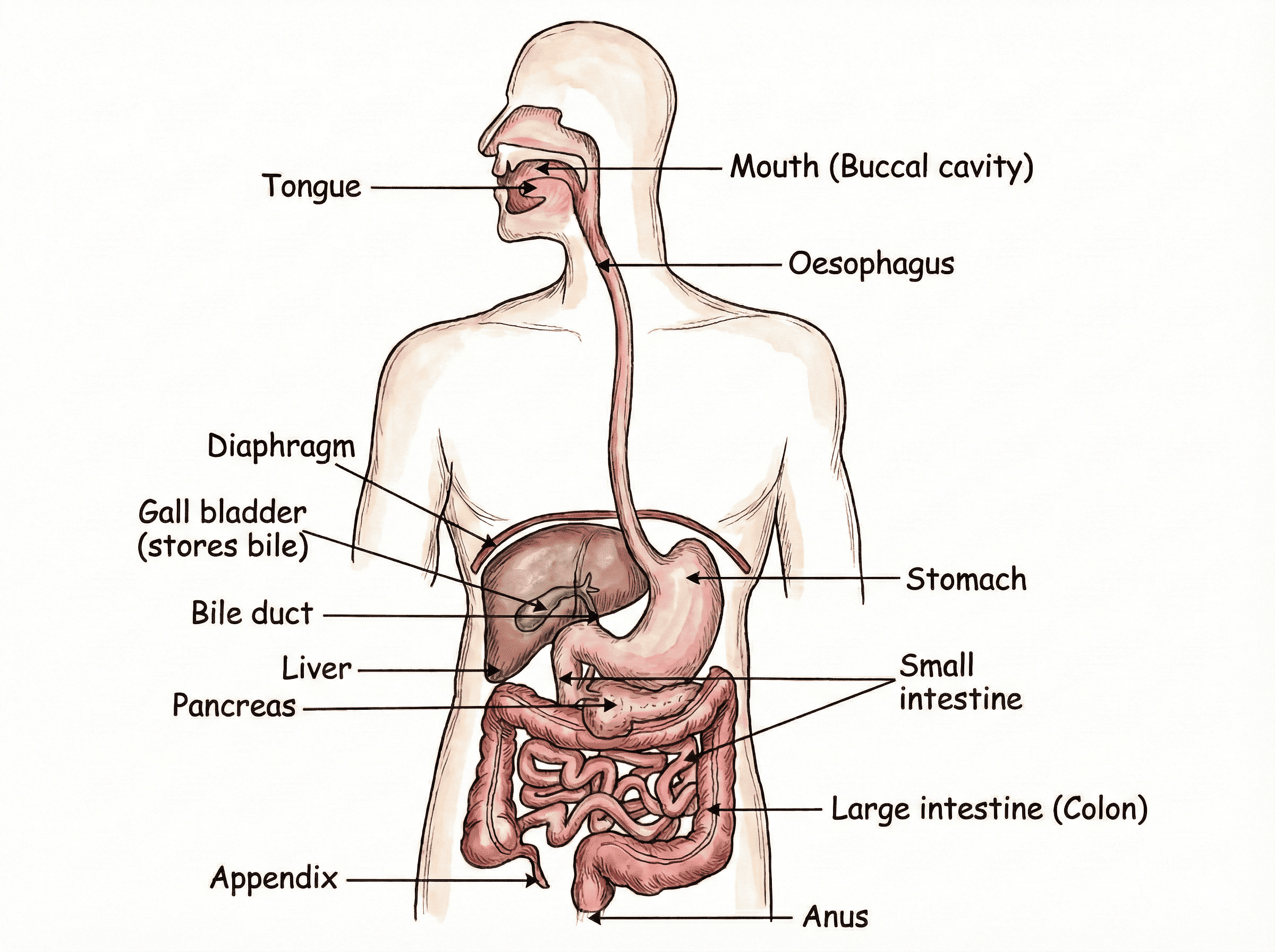
Figure 22.3: Anatomical Layout of the Human Alimentary Canal and Glands
| Organ / Gland |
Enzyme / Secretion |
Direct Biochemical Action |
| Mouth |
Salivary Amylase (Ptyalin) |
Starch $\rightarrow$ Maltose ($\text{pH} \approx 6.8$). |
| Stomach |
$\mathrm{HCl}$ |
Acidifies chyme ($\text{pH} 1.5-2.5$), activates pepsinogen to pepsin, kills microbes. |
| Pepsin |
Proteins $\rightarrow$ Peptones (active in acidic medium). |
| Mucus |
Shields stomach wall from excoriation by $\mathrm{HCl}$. |
| Liver |
Bile Juice (No enzymes) |
Emulsification: Breaks large fat globules into tiny droplets; provides alkaline medium. |
| Pancreas |
Trypsin |
Proteins/peptones $\rightarrow$ Peptides (active in alkaline medium). |
| Pancreatic Lipase |
Emulsified fats $\rightarrow$ Fatty Acids + Glycerol. |
| Small Intestine |
Villi & Intestinal Enzymes |
Villi maximize absorptive surface area; blood capillaries absorb glucose and amino acids; lacteals absorb fats. |
3. Respiration: Pathways and Human Respiratory Tract
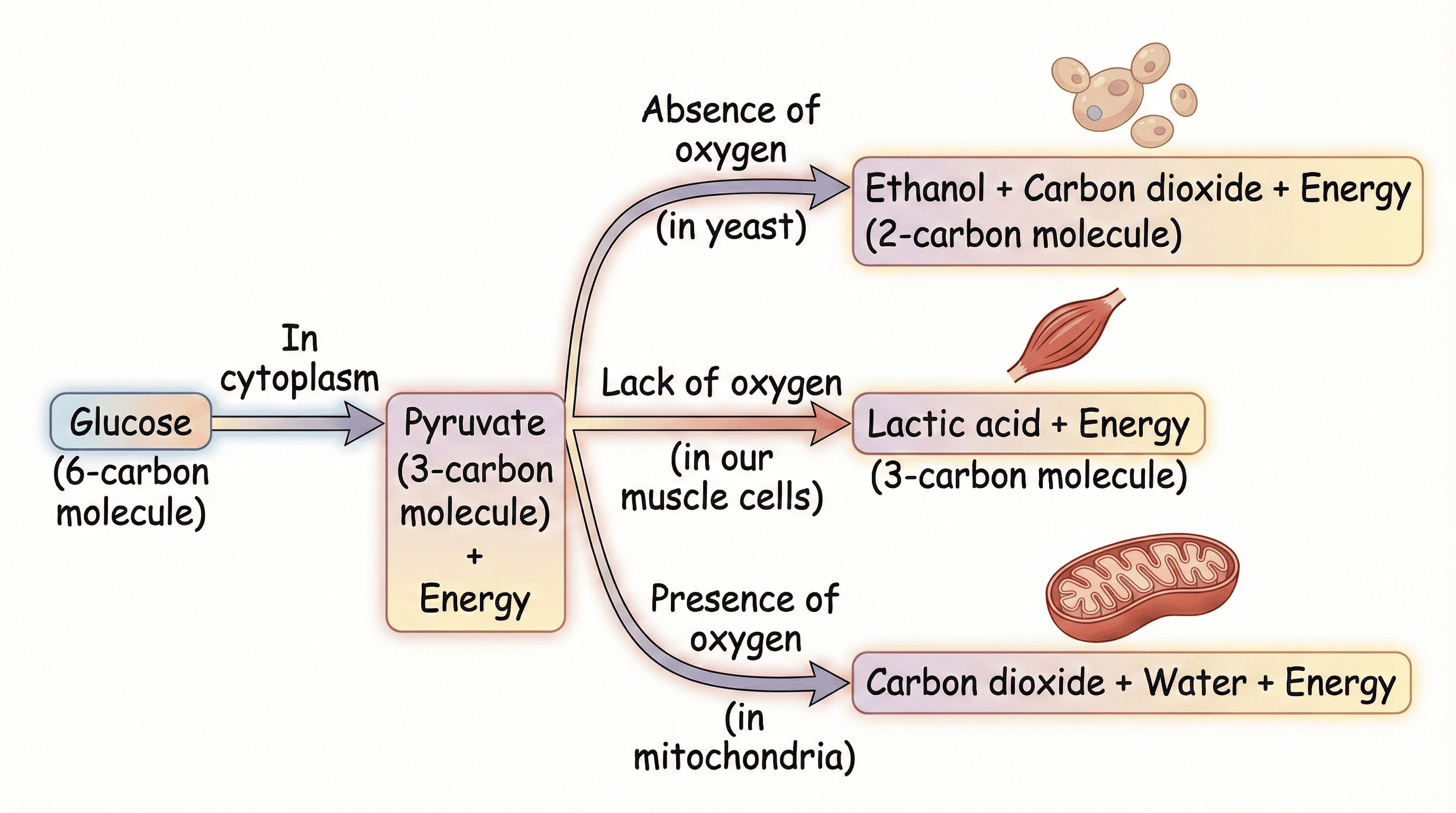
Figure 22.4: The Three Major Metabolic Fates of Pyruvate
Summary of Pyruvate Breakdown
Initial Step (in Cytoplasm): 1 Glucose (6-C) $\xrightarrow{\text{Glycolysis}}$ 2 Pyruvate (3-C) + 2 ATP.
- 1. Yeast (Fermentation): Absence of $\mathrm{O_2} \rightarrow$ Ethanol + $\mathrm{CO_2}$ + 2 ATP.
- 2. Human Muscle Cells: Lack of $\mathrm{O_2}$ during vigorous sprint $\rightarrow$ Lactic Acid + 2 ATP. (Lactic acid accumulation causes muscle cramps!)
- 3. Mitochondria (Aerobic): Presence of $\mathrm{O_2} \rightarrow$ $6\mathrm{CO_2} + 6\mathrm{H_2O} + 36-38\text{ ATP}$.
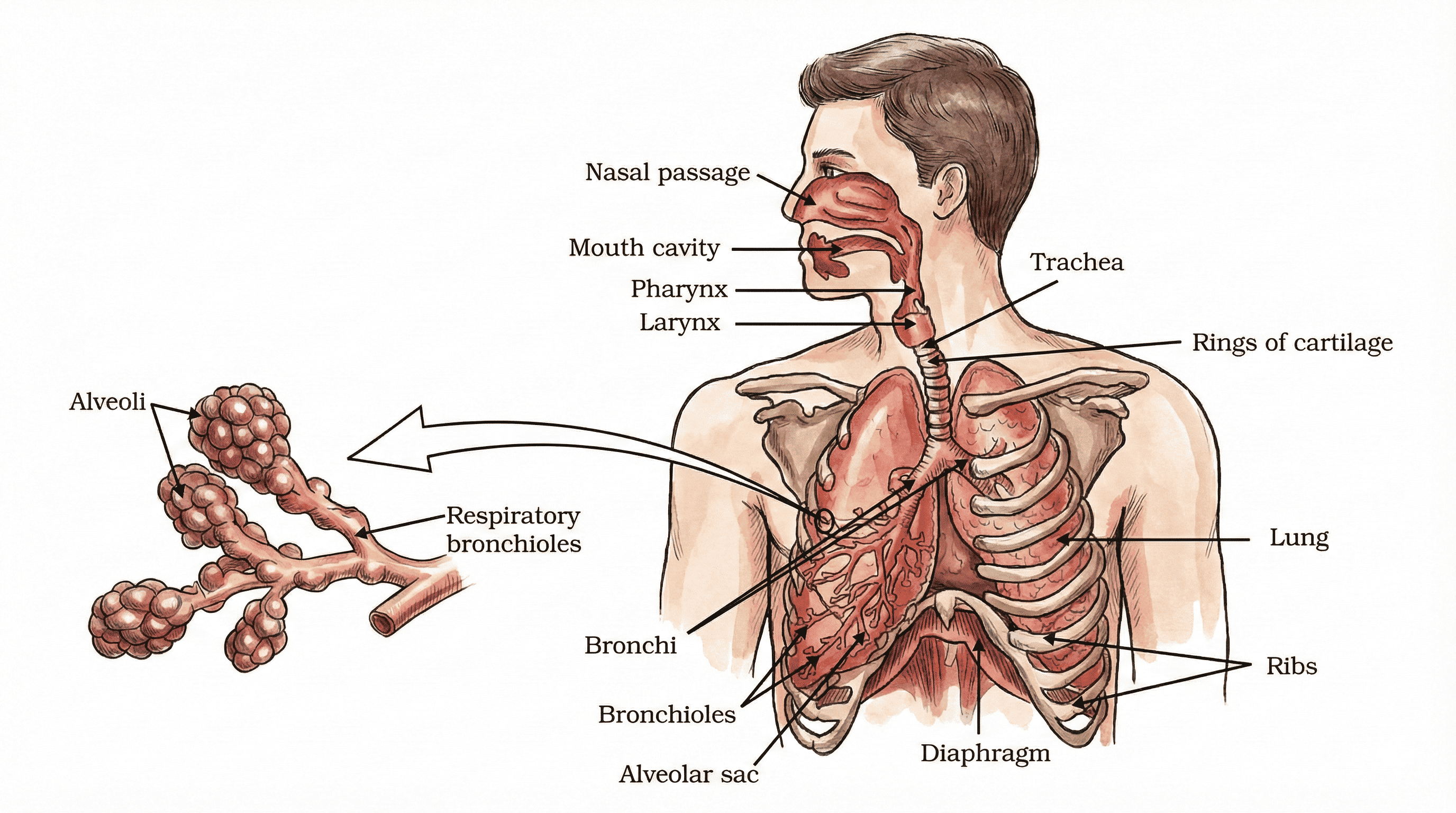
Figure 22.5: Structural Anatomy of the Human Respiratory Tract and Alveoli
Respiratory Tract Features & Breathing Mechanics
- Tracheal C-Rings: C-shaped hyaline cartilage rings keep the windpipe permanently open and prevent airway collapse under negative thoracic pressure.
- Alveoli: Thin-walled balloon sacs wrapped in capillaries. Vast surface area ($\approx 80\,\text{m}^2$) allows rapid diffusion of $\mathrm{O_2}$ and $\mathrm{CO_2}$.
- Inhalation: Diaphragm contracts and flattens; rib cage moves upward and outward $\rightarrow$ Thoracic volume increases $\rightarrow$ Air pressure drops $\rightarrow$ Air rushes into lungs.
- Exhalation: Diaphragm relaxes into its upward dome shape; rib cage moves downward and inward $\rightarrow$ Thoracic volume decreases $\rightarrow$ Air forced out.
- Hemoglobin ($\mathrm{Hb}$): Respiratory pigment in RBCs with high chemical affinity for $\mathrm{O_2}$. $\mathrm{CO_2}$ is transported mainly dissolved in plasma as bicarbonate ions.
4. Transportation in Animals and Plants
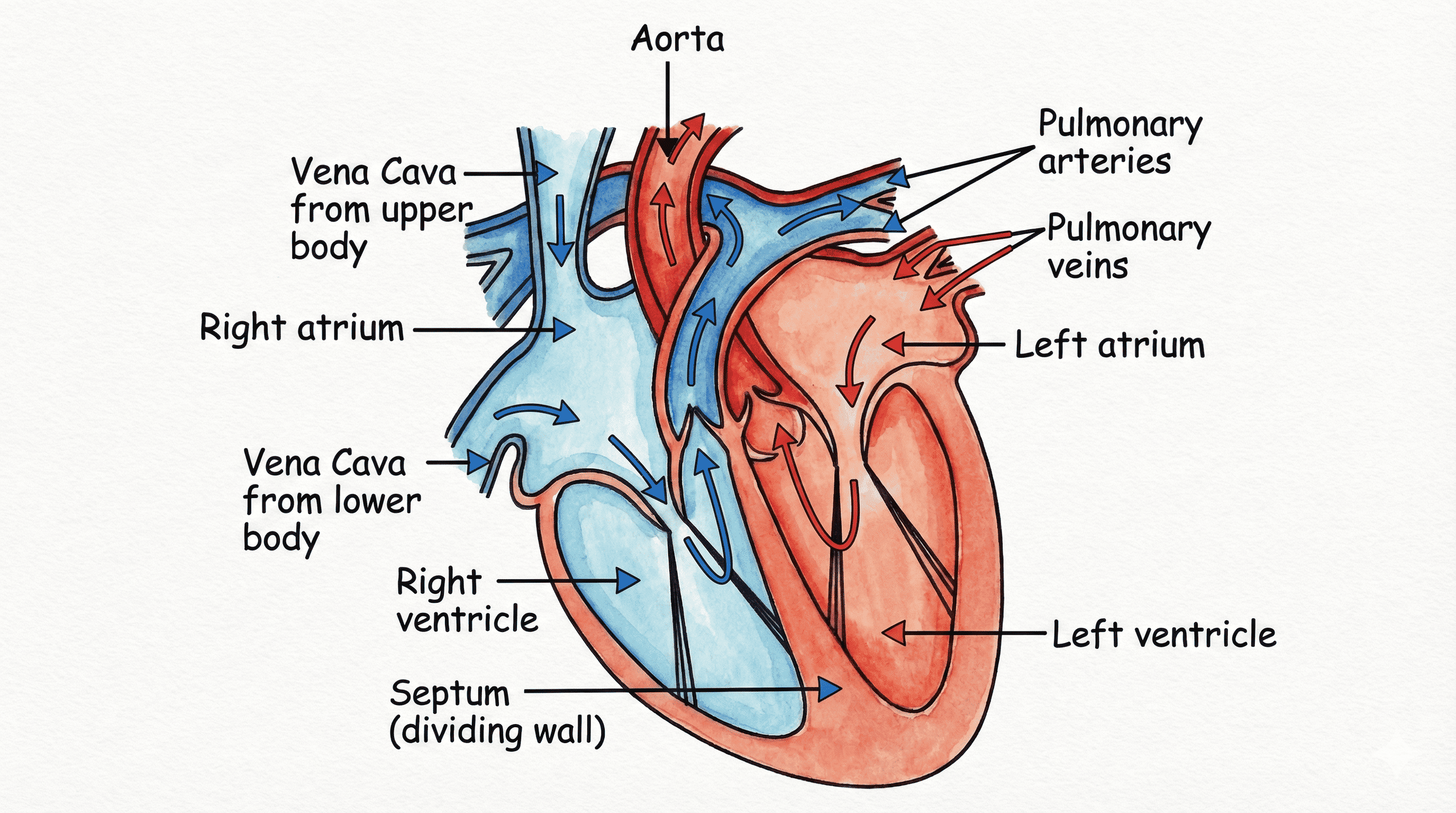
Figure 22.6: Sectional View and Four-Chambered Anatomy of the Human Heart
Cardiac Anatomy & Mechanics
- Four Chambers: Right Atrium and Right Ventricle handle deoxygenated blood; Left Atrium and Left Ventricle handle oxygenated blood.
- Interventricular Septum: Completely separates oxygenated and deoxygenated blood, preventing mixing and maintaining the high metabolic efficiency needed for warm-blooded homeothermy ($37^\circ\text{C}$).
- Ventricular Wall Thickness: Ventricles have significantly thicker muscular walls than atria because they must pump blood under high pressure across distant systemic organs and lungs.
- Valves: Tricuspid and Bicuspid/Mitral valves prevent backflow of blood into atria during ventricular contraction.
.png)
Figure 22.7: Complete Circuit of Double Circulation in Humans
Double Circulation Pathways
- Pulmonary Circuit: Right Ventricle $\rightarrow$ Pulmonary Artery $\rightarrow$ Lungs (Oxygenated) $\rightarrow$ Pulmonary Veins $\rightarrow$ Left Atrium.
- Systemic Circuit: Left Ventricle $\rightarrow$ Aorta $\rightarrow$ Body Tissues $\rightarrow$ Vena Cava $\rightarrow$ Right Atrium.
| Feature |
Arteries |
Veins |
| Direction of Flow |
Carry blood away from heart. |
Carry blood towards heart. |
| Nature of Blood |
Oxygenated (Except Pulmonary Artery). |
Deoxygenated (Except Pulmonary Vein). |
| Walls & Valves |
Thick, elastic walls; No valves. |
Thin walls; Valves present to prevent backflow. |
Vascular Transport in Plants: Xylem vs. Phloem
- Xylem: Transports water and minerals unidirectionally (roots $\rightarrow$ leaves) through dead tracheids and vessels. Driven by physical forces: Root Pressure (dominant at night) and Transpiration Pull (dominant daytime suction). Consumes NO ATP.
- Phloem: Transports synthesized sucrose and amino acids bidirectionally from source leaves to sinks through living sieve tubes and companion cells (Translocation). Driven actively using ATP to build osmotic pressure.
5. Excretion and Osmoregulation
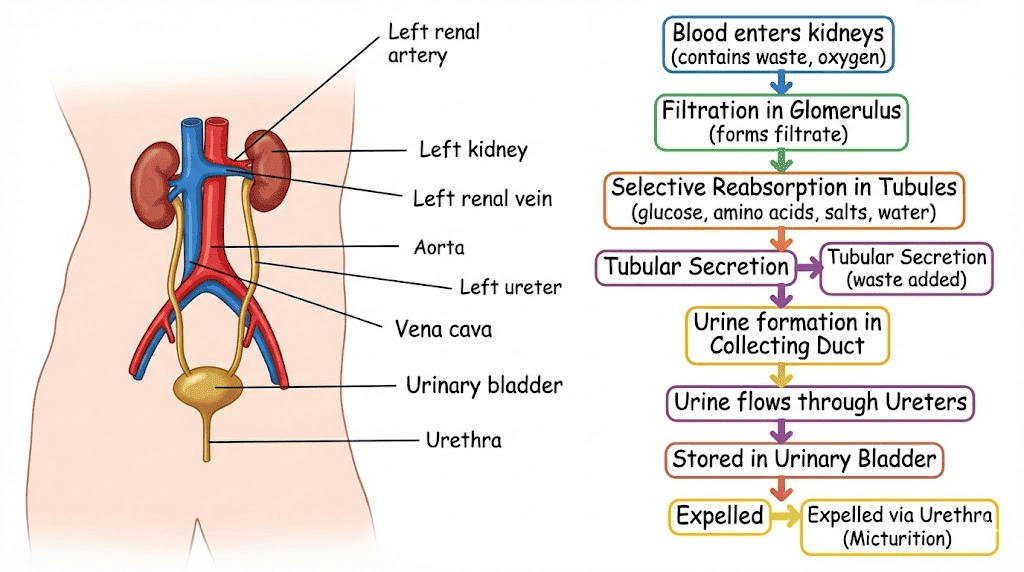
Figure 22.8: Gross Anatomical Architecture of the Human Excretory System
Organs of Excretion
- Kidneys: Pair of bean-shaped organs in the abdomen that filter nitrogenous wastes from blood.
- Ureters: Pair of tubes conducting urine from kidneys to the urinary bladder.
- Urinary Bladder: Muscular reservoir storing urine until micturition.
- Urethra: Terminal canal expelling urine out of the body.
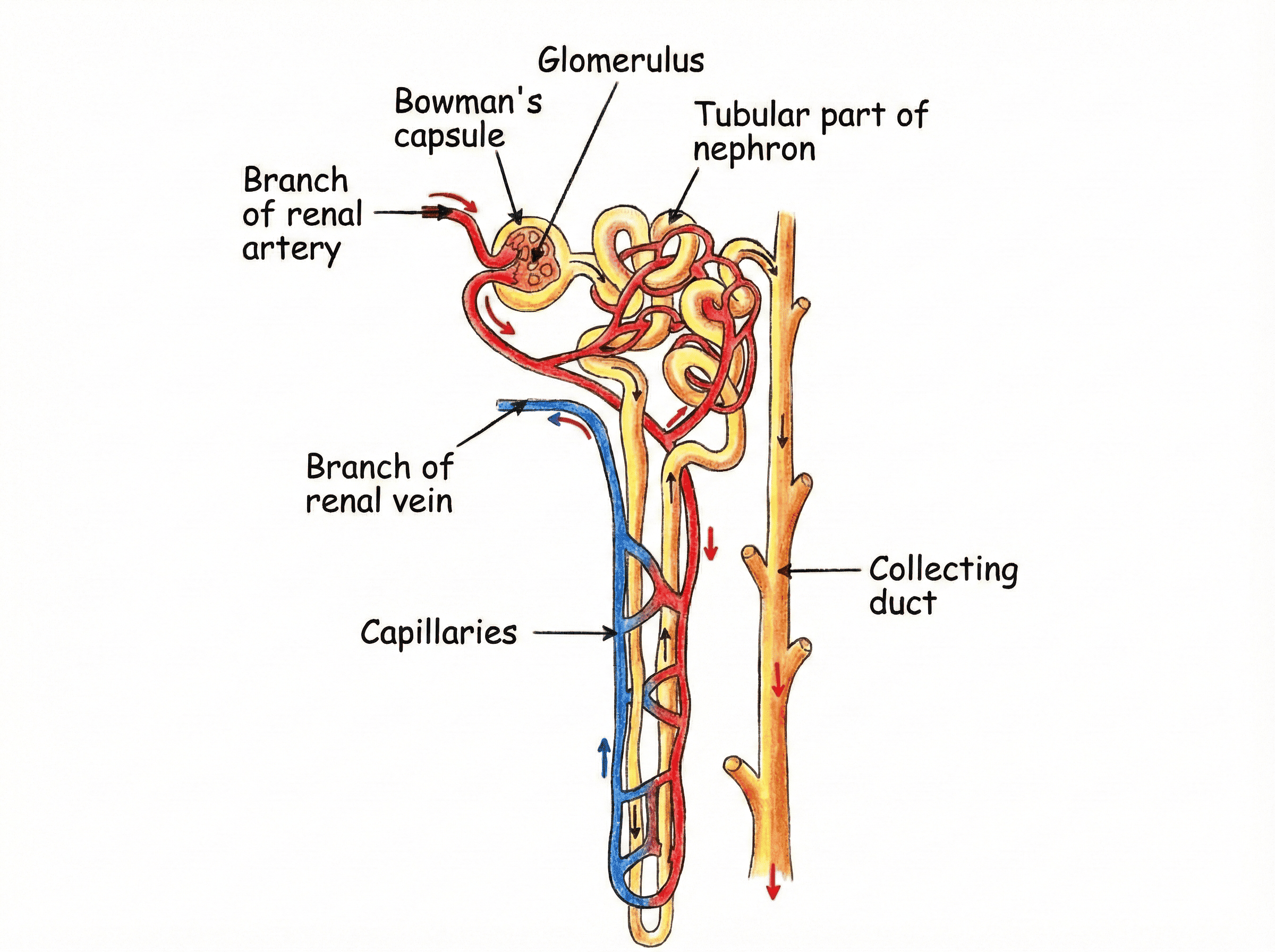
Figure 22.9: Microscopic Functional Structure of a Nephron
The 3 Steps of Urine Formation in Nephrons
- Glomerular Ultrafiltration: High pressure forces water, glucose, amino acids, urea, and salts from the Glomerulus into Bowman's Capsule. Initial filtrate = $180\,\text{L/day}$!
- Selective Tubular Reabsorption: Along PCT and Henle's Loop, all glucose, amino acids, and $99\%$ of water are reabsorbed into surrounding capillaries. Excreted urine volume = only $1.5 - 2\,\text{L/day}$!
- Tubular Secretion: Surplus $\mathrm{H^+}$, $\mathrm{K^+}$, and ammonium ions are actively secreted into the tubule to regulate blood $\text{pH}$ and electrolyte balance.
Hemodialysis (Artificial Kidney): Removes toxic urea across semi-permeable cellophane tubes into dialyzing fluid by diffusion. Unlike natural kidneys, hemodialysis performs NO selective reabsorption.
Excretion in Plants
- Gaseous Wastes: Excess $\mathrm{O_2}$ and $\mathrm{CO_2}$ diffuse through stomata and lenticels.
- Excess Water: Eliminated via transpiration.
- Solid & Soluble Wastes: Stored in cellular vacuoles, shedding aging leaves, dead bark, and as gums and resins in old non-functional xylem.
6. Important Review Questions & Model Answers
Question 1: Why is the breathing rate of aquatic animals much faster than terrestrial animals?
Model Answer: Terrestrial organisms breathe atmospheric air containing approximately $21\%$ oxygen. Aquatic organisms extract dissolved oxygen from water, where solubility of oxygen is very low. To acquire enough oxygen for cellular metabolism, aquatic organisms (like fish) must pump water across their gills much more rapidly, resulting in a significantly faster breathing rate.
Question 2: Why do ventricles have thicker muscular walls than atria?
Model Answer: Atria only receive blood and push it down into adjacent ventricles under low pressure. Ventricles must contract with high force to pump blood across great distances against high resistance: the right ventricle to the lungs, and the left ventricle to the entire systemic body. The thicker muscular myocardium prevents ventricular rupture under high hydrostatic pressure.
Question 3: What causes muscle cramps during severe sprinting?
Model Answer: During sudden vigorous exercise, cellular oxygen demand exceeds cardiovascular delivery. Muscle cells switch temporarily to anaerobic glycolysis, converting pyruvate into lactic acid. Accumulation of lactic acid in muscle fibers produces acute fatigue and cramps.
Question 4: What is the role of Bile Juice if it contains no digestive enzymes?
Model Answer: (1) Emulsification of Fats: Bile salts mechanically break large fat globules into minute droplets, vastly multiplying the surface area for pancreatic lipase to act. (2) Alkaline Medium: Contains sodium bicarbonates that neutralize acidic gastric chyme, creating the alkaline $\text{pH}$ ($\approx 7.8-8.4$) required for pancreatic enzymes (trypsin and lipase) to function.
Question 5: How do plants excrete their waste products?
Model Answer: (1) Gaseous wastes ($\mathrm{O_2, CO_2}$) diffuse through stomata and lenticels. (2) Excess water is eliminated through transpiration. (3) Wastes are stored in central vacuoles of cells. (4) Wastes accumulate in aging leaves and dead bark that are periodically shed. (5) Insoluble gums and resins are sequestered inside old, non-conducting xylem vessels.

 VARDAAN COMET