Vardaan Learning Institute
Atomic Structure and Chemical Bonding
Student Quick Revision Focus
High-yield exam revision guide for ICSE Class 9 Chemistry. Master subatomic particles ($e^-, p^+, n^0$), cathode & canal rays, Thomson, Rutherford & Bohr atomic models, Atomic Number ($Z$), Mass Number ($A$), Bohr-Bury electronic configurations ($2n^2$ rule), Isotopes, Isobars, and Electrovalent vs Covalent chemical bonding!
1. Fundamental Concepts & Dalton's Atomic Theory
1.1 Historical Perspective
- Maharshi Kanada (6th Century B.C., India): Proposed that matter is composed of tiny indivisible particles called paramanu.
- Democritus (Greek Philosopher): Named these indivisible particles "atomos" (meaning uncuttable / indivisible).
- John Dalton (1808): Formulated the first scientific Atomic Theory.
Dalton's Postulates vs Modern Atomic Theory
- Dalton's View: Atoms are indivisible, indestructible particles of an element.
- Modern Atomic Theory: Atoms are divisible into subatomic particles (electrons, protons, neutrons). Atoms of the same element may differ in mass (Isotopes), and atoms of different elements may have identical mass (Isobars).
2. Discovery of Subatomic Particles
2.1 Discovery of Electrons (Cathode Rays)
Discovered by J.J. Thomson (1897) using a discharge tube at high voltage ($10,000\text{ V}$) and low pressure ($0.01\text{ mm Hg}$).
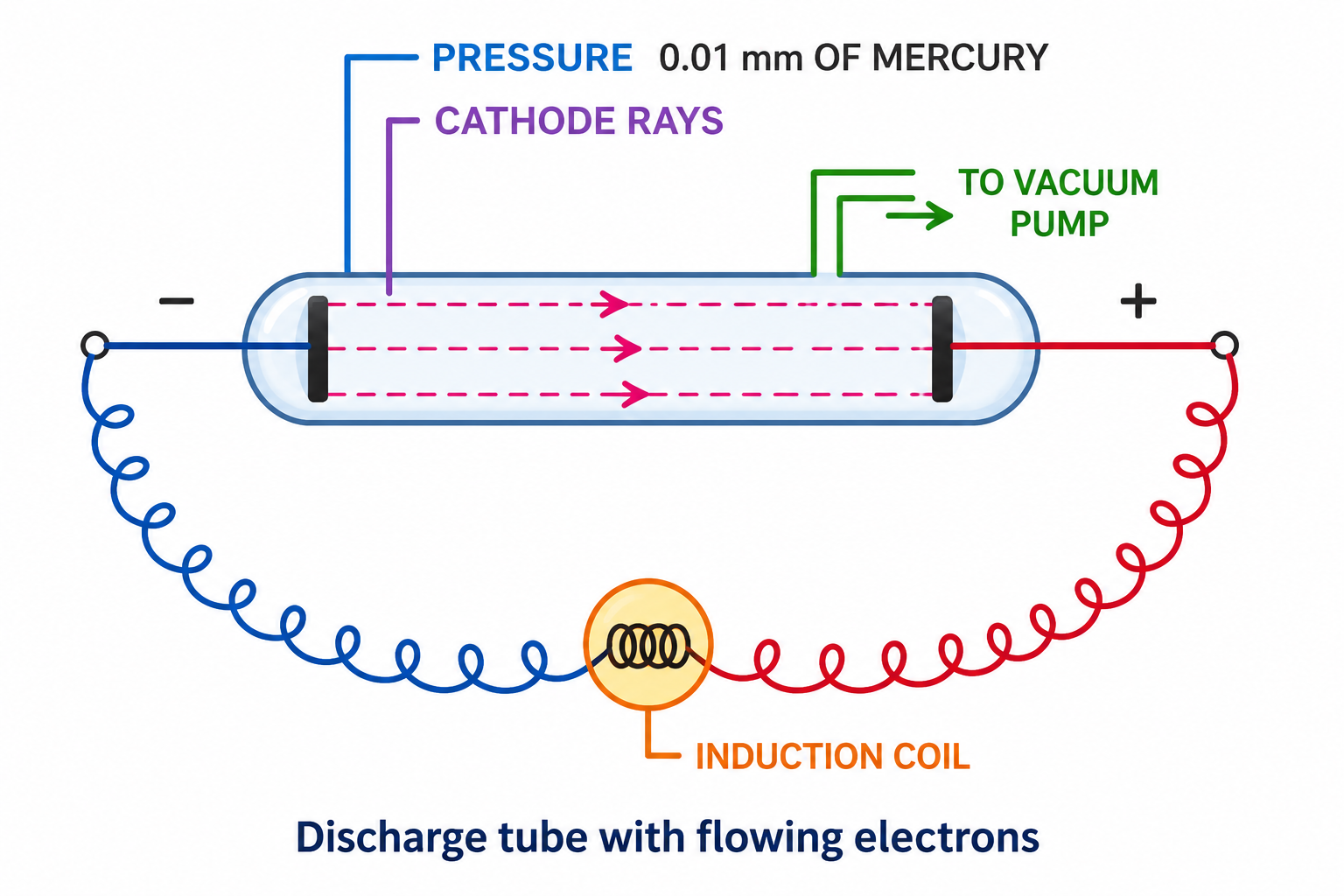
Fig 4.1: Discharge tube experiment for production of Cathode Rays
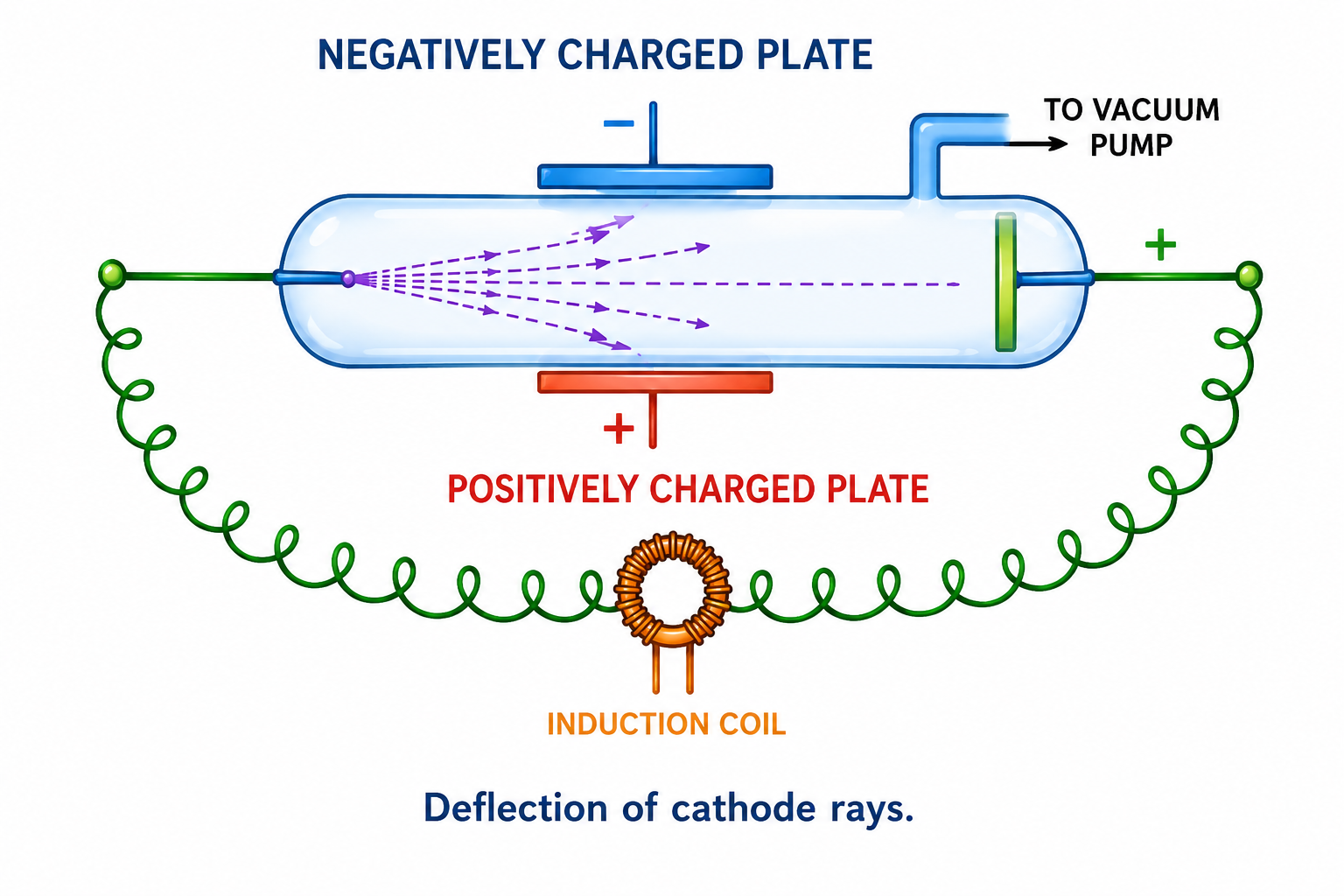
Fig 4.2: Deflection of Cathode Rays toward positive plate in Electric Field
- Properties: Travel in straight lines, carry negative charge (deflected toward positive plate), cause fluorescence, spin light paddle wheels (possess kinetic energy & momentum).
- Electron Properties: Charge $= -1.602 \times 10^{-19}\text{ C}$, Mass $= 9.108 \times 10^{-31}\text{ kg} = \frac{1}{1837}\text{ mass of H-atom}$.
2.2 Discovery of Protons (Anode / Canal Rays)
Discovered by Eugen Goldstein using a discharge tube with a perforated cathode.
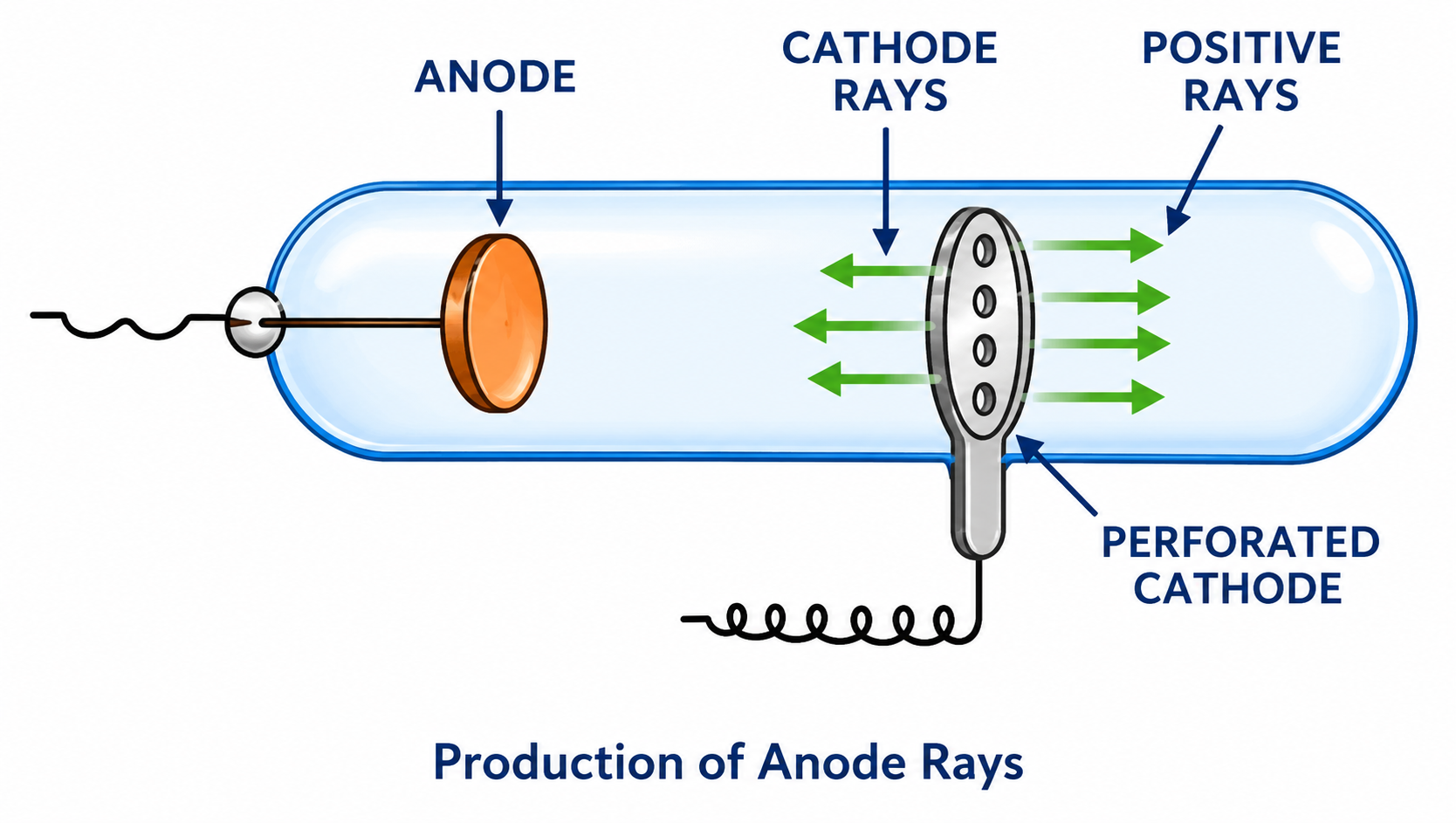
Fig 4.3: Production of Anode (Canal) Rays passing through perforated cathode
- Properties: Positively charged particles originating from ionized gas molecules. Their $e/m$ ratio depends on the nature of gas in the tube (maximum for Hydrogen gas $\rightarrow$ bare proton $p^+$).
- Proton Properties: Charge $= +1.602 \times 10^{-19}\text{ C}$, Mass $= 1.672 \times 10^{-27}\text{ kg} = 1\text{ amu}$.
2.3 Discovery of Neutrons
Discovered by James Chadwick (1932) by bombarding Beryllium sheet with $\alpha$-particles:
$${}_4^9\text{Be} + {}_2^4\text{He} \longrightarrow {}_6^{12}\text{C} + {}_0^1\text{n}$$
- Neutral particle (charge $= 0$), Mass $= 1.676 \times 10^{-27}\text{ kg} \approx 1\text{ amu}$.
Comparison of Fundamental Subatomic Particles
| Particle |
Symbol |
Relative Charge |
Absolute Charge (C) |
Mass (amu) |
Mass (kg) |
Discoverer |
| Electron |
${}_{-1}^0e$ or $e^-$ |
$-1$ |
$-1.602 \times 10^{-19}$ |
$\frac{1}{1837} \approx 0.00055$ |
$9.108 \times 10^{-31}$ |
J.J. Thomson |
| Proton |
${}_1^1p$ or $p^+$ |
$+1$ |
$+1.602 \times 10^{-19}$ |
$1.00727 \approx 1$ |
$1.672 \times 10^{-27}$ |
E. Goldstein |
| Neutron |
${}_0^1n$ or $n^0$ |
$0$ |
$0$ |
$1.00866 \approx 1$ |
$1.676 \times 10^{-27}$ |
James Chadwick |
3. Atomic Models & Structure of the Atom
3.1 Thomson's Plum-Pudding Model
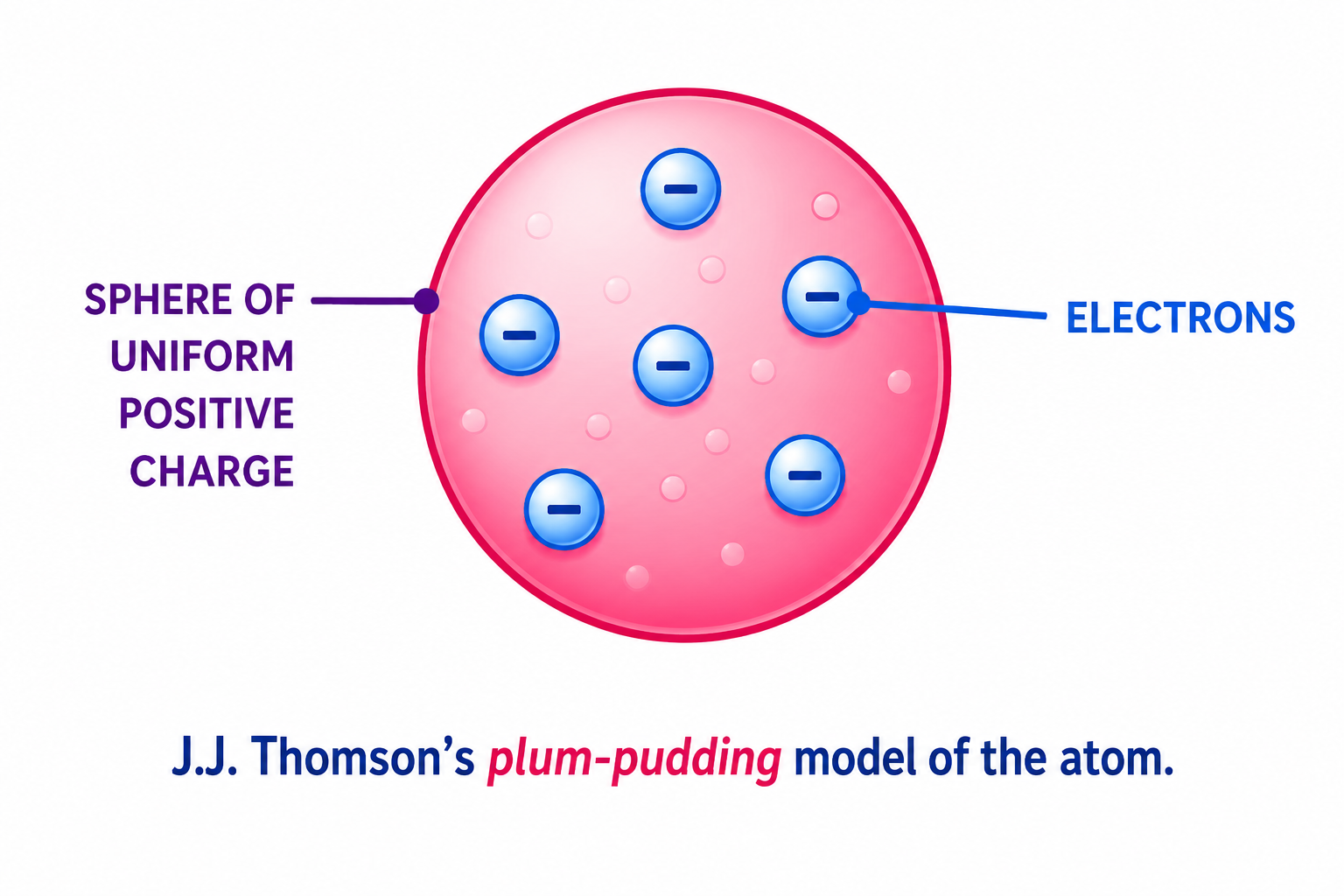
Fig 4.4: J.J. Thomson's Plum-Pudding Model of the Atom
Atom is a positively charged sphere with electrons embedded like raisins in a pudding. Limitation: Failed to explain $\alpha$-scattering results.
3.2 Rutherford's $\alpha$-Particle Scattering Experiment
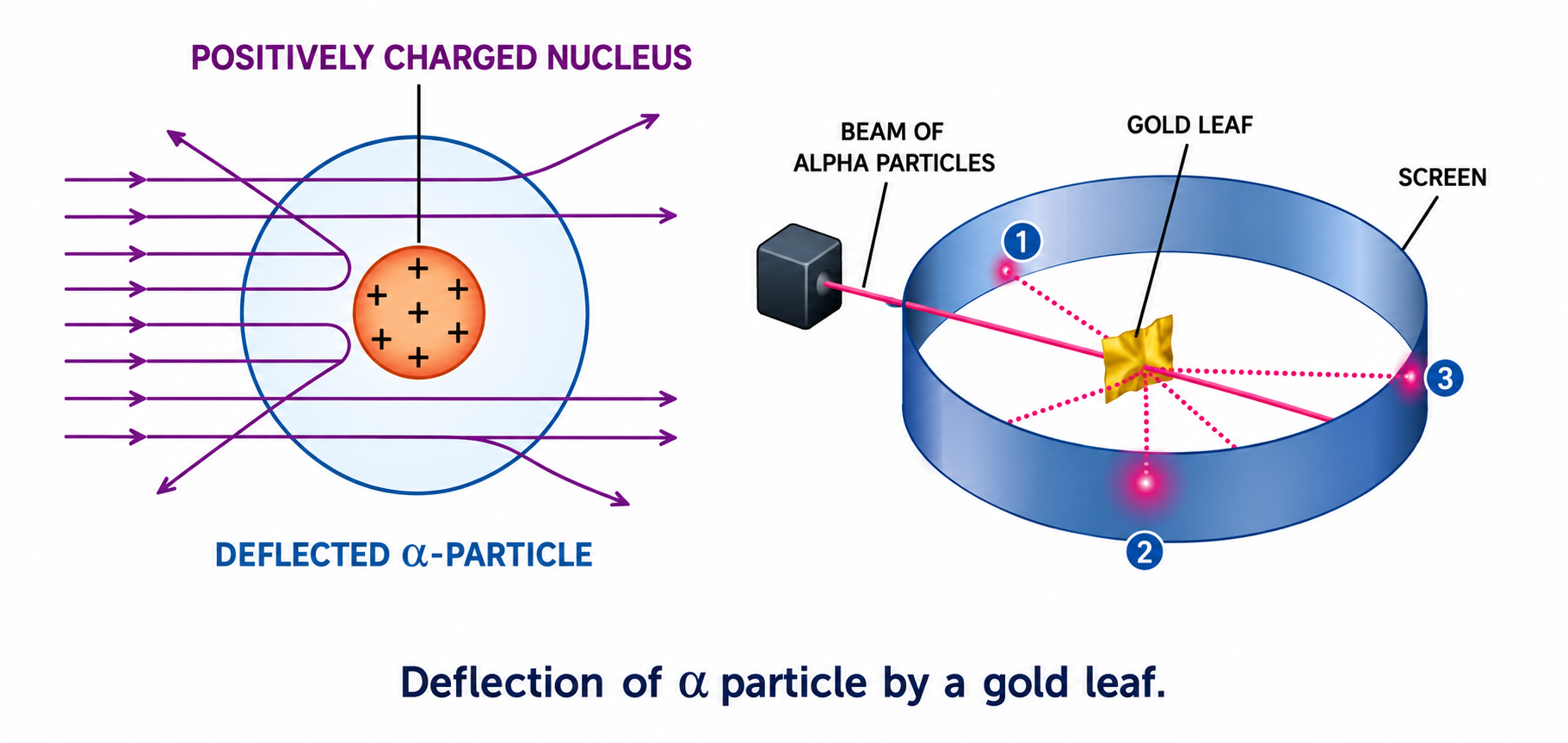
Fig 4.5: Deflection of $\alpha$-particles by gold foil in Rutherford's experiment
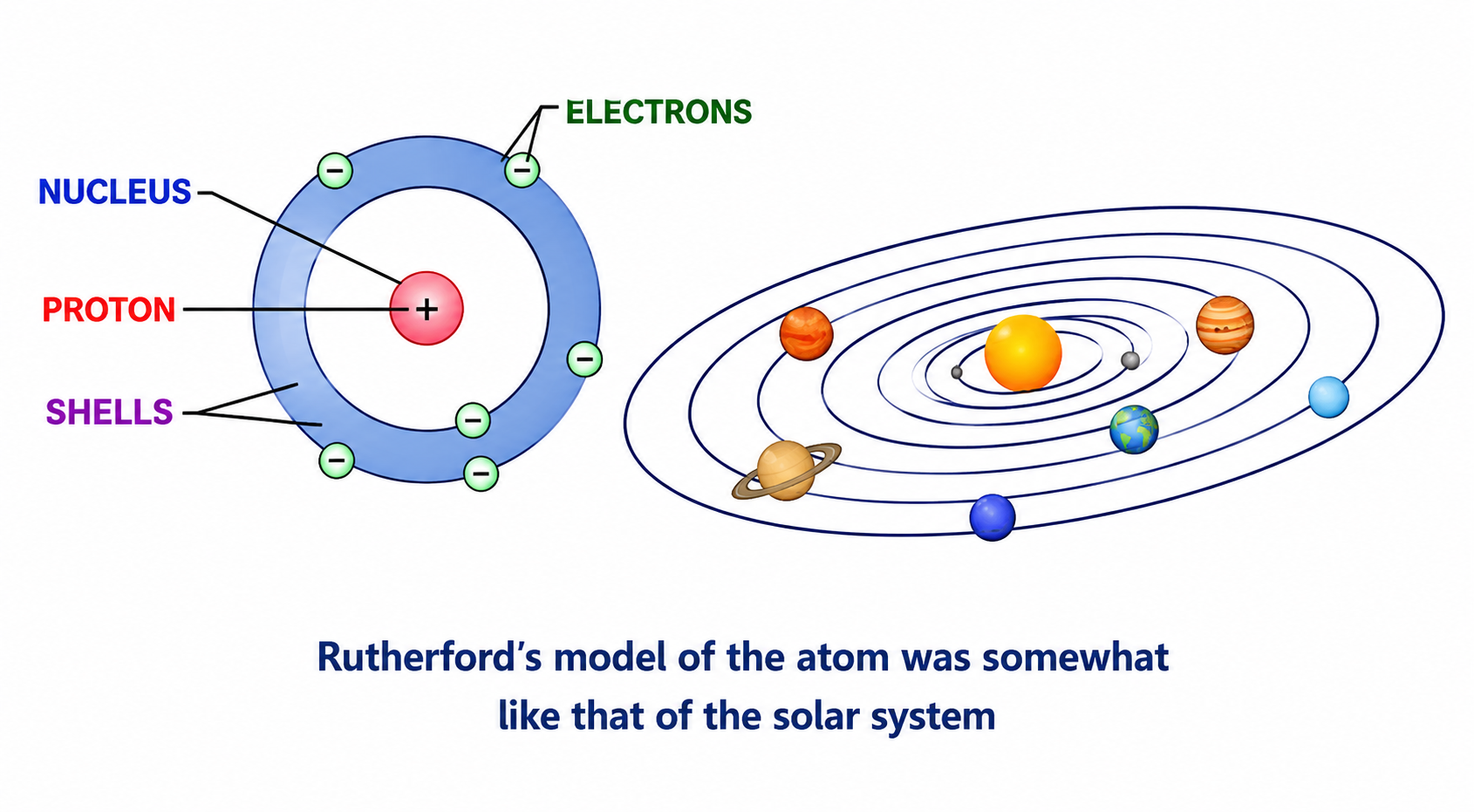
Fig 4.6: Rutherford's Nuclear Planetary Model of the Atom
- Observations: Most $\alpha$-particles passed straight; a few deflected by small angles; $1$ in $10,000$ bounced back by $180^\circ$.
- Nuclear Model: Extremely small, dense, positively charged Nucleus at center containing almost all mass; electrons revolve in orbits.
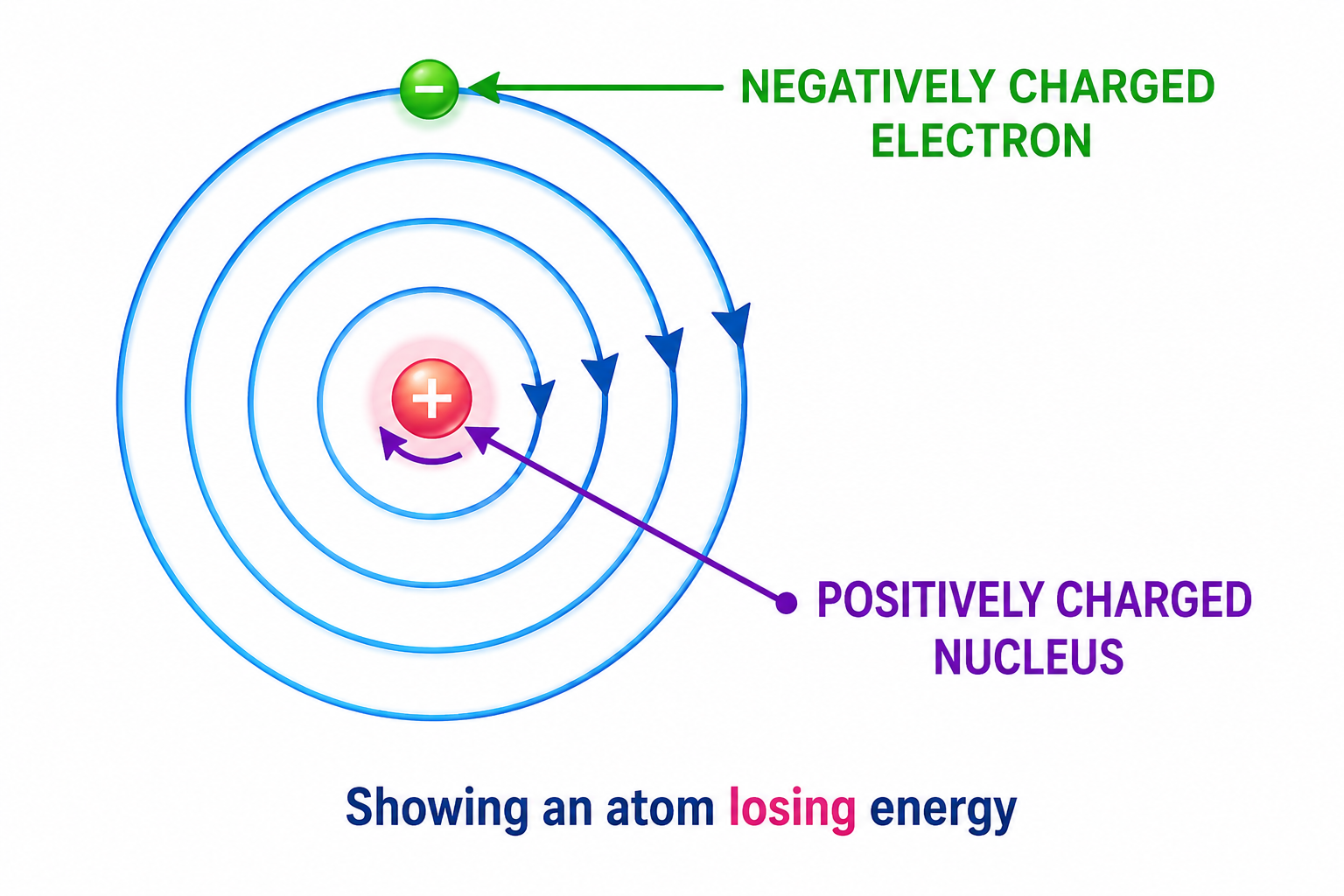
Fig 4.7: Drawback - Accelerating electron radiates energy and spirals into nucleus
Drawback of Rutherford's Model
According to Maxwell's classical electrodynamics, a revolving accelerated electron must continuously emit energy, spiral inwards, and collapse into the nucleus. Rutherford could not explain atomic stability!
3.3 Bohr's Atomic Model
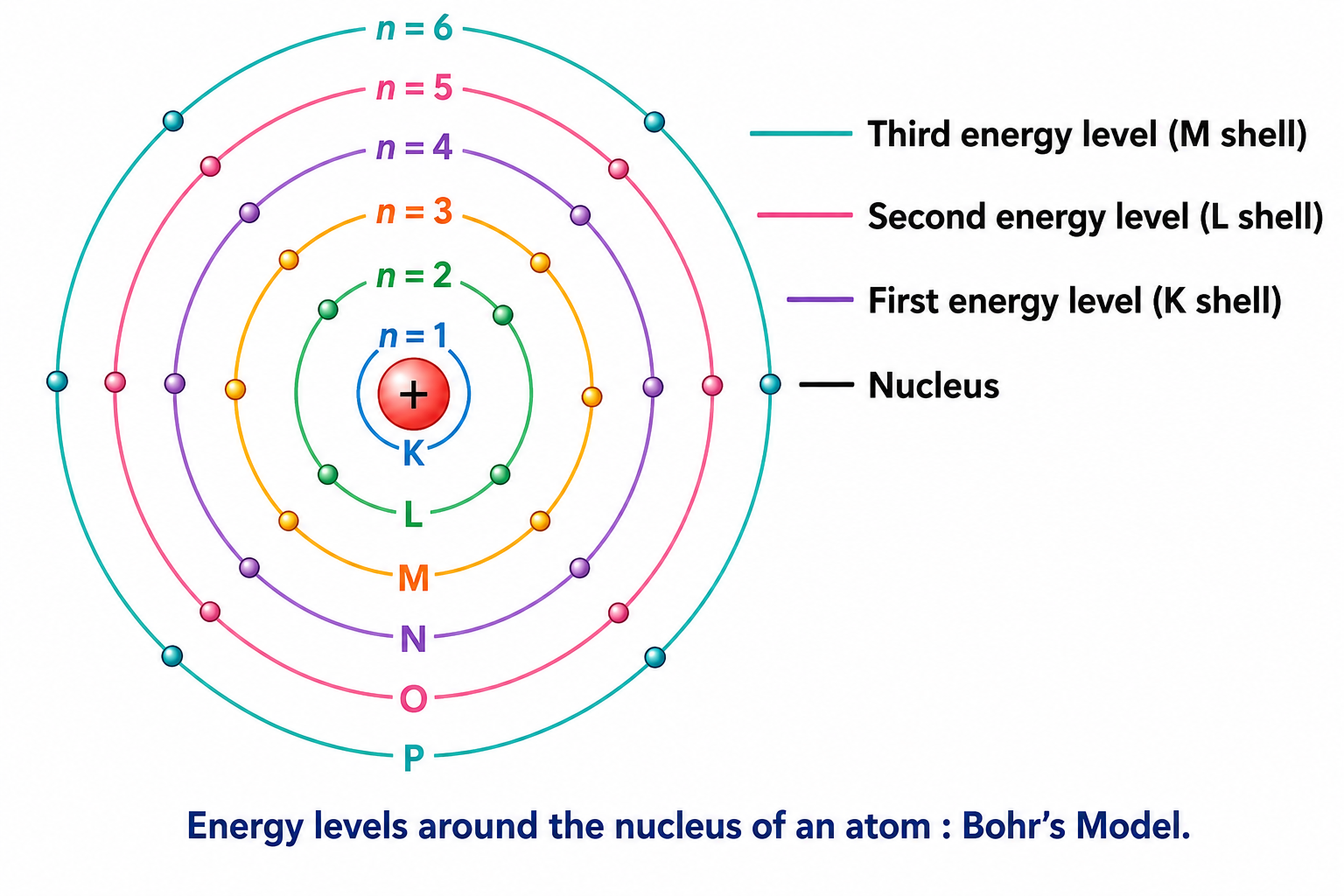
Fig 4.8: Energy levels (K, L, M, N shells) around nucleus in Bohr's Model
Bohr's Postulates
1. Electrons revolve only in non-radiating, fixed circular paths called stationary orbits / energy levels (K, L, M, N or $n=1, 2, 3, 4$).
2. While revolving in a stationary orbit, the electron neither emits nor absorbs energy.
3. Energy is absorbed or emitted only when an electron jumps from one energy level to another.
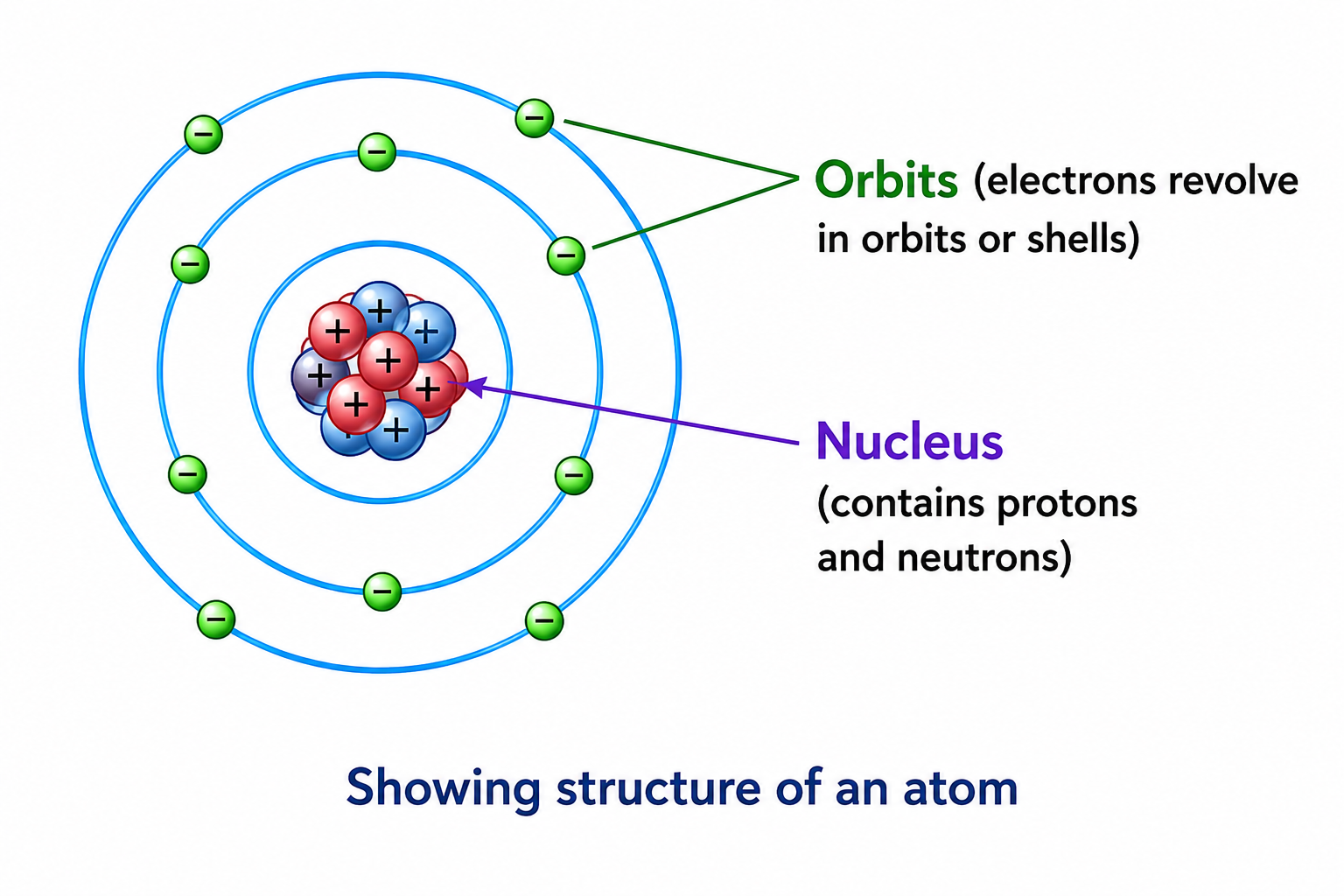
Fig 4.9: Structural components of an atom (Nucleus containing Nucleons & Outer Orbits)
4. Atomic Number, Mass Number & Electronic Configuration
Core Formulas
$$\mathbf{Z = \text{Atomic Number} = \text{Protons } (p^+) = \text{Electrons } (e^-) \quad (\text{neutral atom})}$$
$$\mathbf{A = \text{Mass Number} = \text{Protons } (p^+) + \text{Neutrons } (n^0)}$$
$$\mathbf{\text{Number of Neutrons } (n^0) = A - Z}$$
Symbolic Representation: $\mathbf{{}_Z^A\text{X}}$ (e.g. ${}_{17}^{35}\text{Cl} \rightarrow Z=17, A=35, n=18$).
4.1 Bohr-Bury Rules for Electronic Configuration
- Maximum Shell Capacity ($2n^2$):
• K Shell ($n=1$): Max $2 \times 1^2 = \mathbf{2 e^-}$
• L Shell ($n=2$): Max $2 \times 2^2 = \mathbf{8 e^-}$
• M Shell ($n=3$): Max $2 \times 3^2 = \mathbf{18 e^-}$
• N Shell ($n=4$): Max $2 \times 4^2 = \mathbf{32 e^-}$
- Octet Rule: Outermost shell cannot hold more than 8 electrons (duplet rule: max 2 for K shell).
- Stepwise Filling: Inner shells must be completely filled before outer shells begin filling.
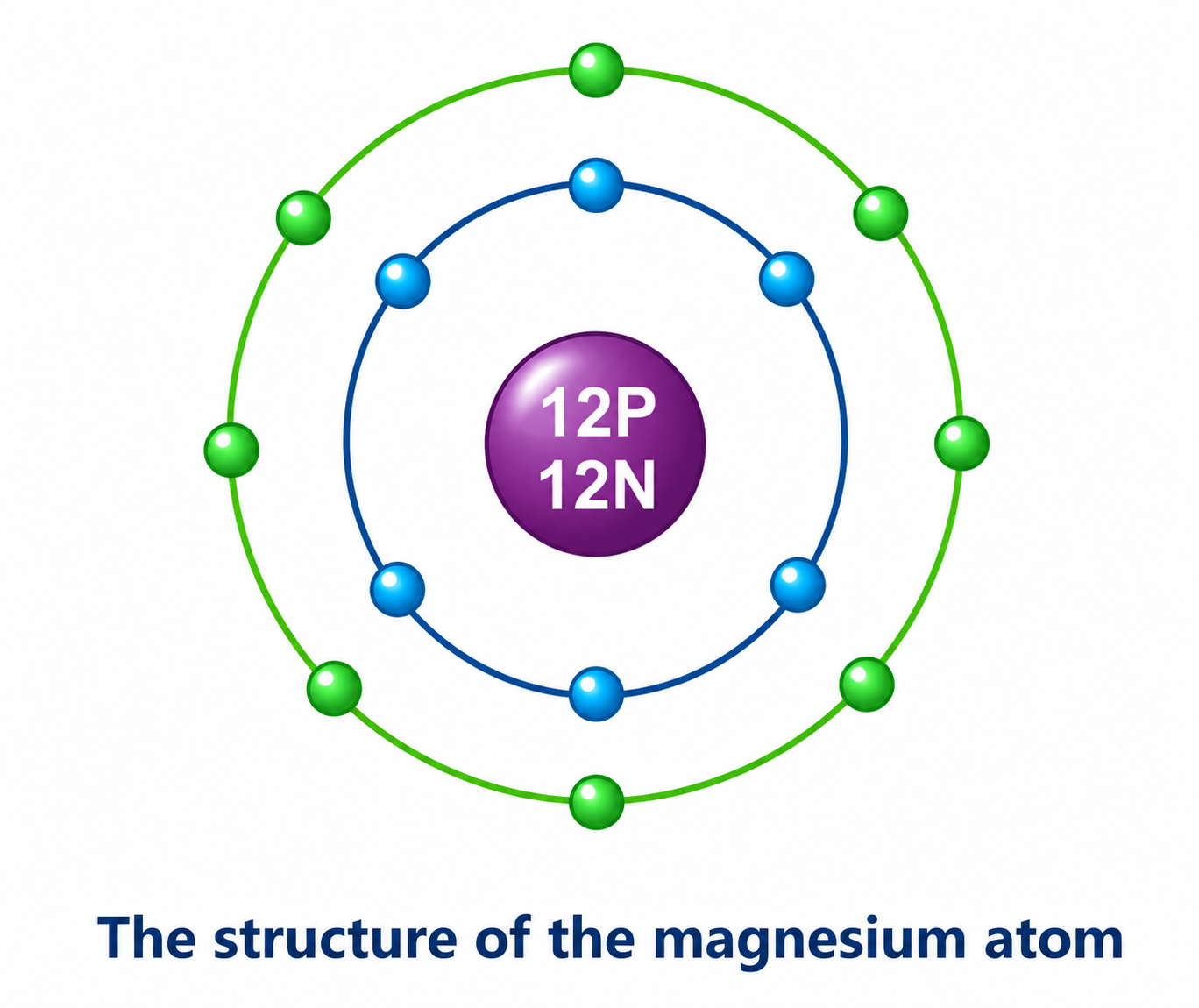
Fig 4.10: Atomic orbit diagram of Magnesium atom ($Z=12$, Config: 2, 8, 2)
Electronic Configurations of First 20 Elements (H to Ca)
| Element | Symbol | Atomic Number ($Z$) | Protons ($p^+$) | Neutrons ($n^0$) | Configuration (K, L, M, N) | Valency |
| Hydrogen | H | 1 | 1 | 0 | 1 | 1 |
| Helium | He | 2 | 2 | 2 | 2 | 0 |
| Lithium | Li | 3 | 3 | 4 | 2, 1 | 1 |
| Beryllium | Be | 4 | 4 | 5 | 2, 2 | 2 |
| Boron | B | 5 | 5 | 6 | 2, 3 | 3 |
| Carbon | C | 6 | 6 | 6 | 2, 4 | 4 |
| Nitrogen | N | 7 | 7 | 7 | 2, 5 | 3 |
| Oxygen | O | 8 | 8 | 8 | 2, 6 | 2 |
| Fluorine | F | 9 | 9 | 10 | 2, 7 | 1 |
| Neon | Ne | 10 | 10 | 10 | 2, 8 | 0 |
| Sodium | Na | 11 | 11 | 12 | 2, 8, 1 | 1 |
| Magnesium | Mg | 12 | 12 | 12 | 2, 8, 2 | 2 |
| Aluminium | Al | 13 | 13 | 14 | 2, 8, 3 | 3 |
| Silicon | Si | 14 | 14 | 14 | 2, 8, 4 | 4 |
| Phosphorus | P | 15 | 15 | 16 | 2, 8, 5 | 3, 5 |
| Sulfur | S | 16 | 16 | 16 | 2, 8, 6 | 2 |
| Chlorine | Cl | 17 | 17 | 18 | 2, 8, 7 | 1 |
| Argon | Ar | 18 | 18 | 22 | 2, 8, 8 | 0 |
| Potassium | K | 19 | 19 | 20 | 2, 8, 8, 1 | 1 |
| Calcium | Ca | 20 | 20 | 20 | 2, 8, 8, 2 | 2 |
5. Isotopes, Isobars & Chemical Bonding Overview
Definitions & Examples
- Isotopes: Atoms of the same element having the same atomic number ($Z$) but different mass numbers ($A$) due to different number of neutrons.
• Hydrogen: Protium (${}_1^1\text{H}$), Deuterium (${}_1^2\text{H}$), Tritium (${}_1^3\text{H}$).
• Chlorine: ${}_{17}^{35}\text{Cl}$ and ${}_{17}^{37}\text{Cl}$ (ratio $3:1$, average atomic mass $= 35.5\text{ amu}$).
- Isobars: Atoms of different elements having the same mass number ($A$) but different atomic numbers ($Z$).
• Example: ${}_{18}^{40}\text{Ar}$ and ${}_{20}^{40}\text{Ca}$.
- Isotones: Atoms of different elements having the same number of neutrons ($n = A - Z$).
• Example: ${}_6^{14}\text{C}$ ($n=8$) and ${}_8^{16}\text{O}$ ($n=8$).
5.1 Fundamentals of Chemical Bonding
Atoms combine to achieve a stable octet (8 valence electrons) or duplet (2 valence electrons) inert gas configuration.
Types of Chemical Bonds
- Electrovalent (Ionic) Bond: Formed by complete transfer of electrons from a metal to a non-metal cation and anion formation held by strong electrostatic forces (e.g. $\text{NaCl}, \text{MgCl}_2, \text{CaO}$).
- Covalent Bond: Formed by mutual sharing of electron pairs between non-metal atoms (e.g. $\text{H}_2, \text{O}_2, \text{N}_2, \text{H}_2\text{O}, \text{CH}_4$).
Student ICSE Exam Practice Set
Q1 (ICSE Board): Calculate the number of protons, neutrons, and electrons in ${}_{19}^{39}\text{K}^+$.
Solution:
• Protons $= Z = \mathbf{19}$.
• Neutrons $= A - Z = 39 - 19 = \mathbf{20}$.
• Electrons (since $+1$ charge) $= 19 - 1 = \mathbf{18}$.
Q2 (ICSE Board): State the maximum number of electrons that can be accommodated in the M-shell.
Solution: Formula $= 2n^2$. For M-shell ($n=3$), Max capacity $= 2 \times (3)^2 = \mathbf{18\text{ electrons}}$.

 VARDAAN COMET