
Light has the maximum speed in vacuum ($3 \times 10^8 \text{ m s}^{-1}$) and it travels with different speeds in different media. It travels faster in air than in water or glass. The speed of light is constant in a transparent homogeneous medium.
While passing from one medium to the other, if light slows down, the second medium is said to be optically denser than the first medium, and if light speeds up, the second medium is said to be optically rarer than the first medium. For example, water and glass are optically denser than air.
When a ray of light travelling in one transparent medium strikes obliquely at the surface of another transparent medium, a part of light comes back to the same medium obeying the laws of reflection (called reflected light). The remaining part passes into the other medium and travels in a straight path different from its initial direction (called refracted light).
Definition: The change in direction of the path of light, when it passes from one transparent medium to another transparent medium, is called refraction. The refraction of light is essentially a surface phenomenon.
(1) Rarer to Denser Medium: When a ray of light travels from a rarer medium to a denser medium (e.g., air to glass), it bends towards the normal (i.e., angle r < angle i). The deviation of the ray is $\delta = i - r$.
(2) Denser to Rarer Medium: When a ray of light travels from a denser medium to a rarer medium (e.g., glass to air), it bends away from the normal (i.e., angle r > angle i). The deviation of the ray is $\delta = r - i$.
(3) Normal Incidence: The ray of light incident normally on the surface separating the two media passes undeviated (i.e., such a ray suffers no bending at the surface). Here, angle of incidence $i = 0$, so angle of refraction $r = 0$. The deviation is zero.
Fig. 4.1, 4.2 & 4.3 Refraction Cases
When a ray of light passes from one medium to another, its direction (or path) changes because of the change in speed of light in going from one medium to another. In passing from one medium to another, if light slows down, it bends towards the normal and if light speeds up, it bends away from the normal.
The refraction of light obeys two laws of refraction given by the Dutch scientist Willebrod Snell (known as Snell's laws):
This constant is called the refractive index of the second medium with respect to the first medium.
The speed of light in vacuum is maximum and is equal to $c = 3 \times 10^8 \text{ m s}^{-1}$. In any other transparent media, the speed of light $V$ is less than that in vacuum.
Absolute Refractive Index: The refractive index of a medium defined with respect to vacuum (or air) is called the absolute refractive index ($\mu$) of the medium.
$$ \mu = \frac{\text{Speed of light in vacuum or air } (c)}{\text{Speed of light in that medium } (V)} $$Since the speed of light in any medium is always less than that in vacuum ($V < c$), the refractive index of a transparent medium is always greater than 1.
Relative Refractive Index: The refractive index of the second medium with respect to the first medium is related to the speed of light in the two media as follows:
Alternatively, using absolute refractive indices:
$$ {}_1\mu_2 = \frac{V_1}{V_2} = \frac{c/V_2}{c/V_1} = \frac{\mu_2}{\mu_1} $$A ray of light passes undeviated from medium 1 to medium 2 in either of the following two conditions:
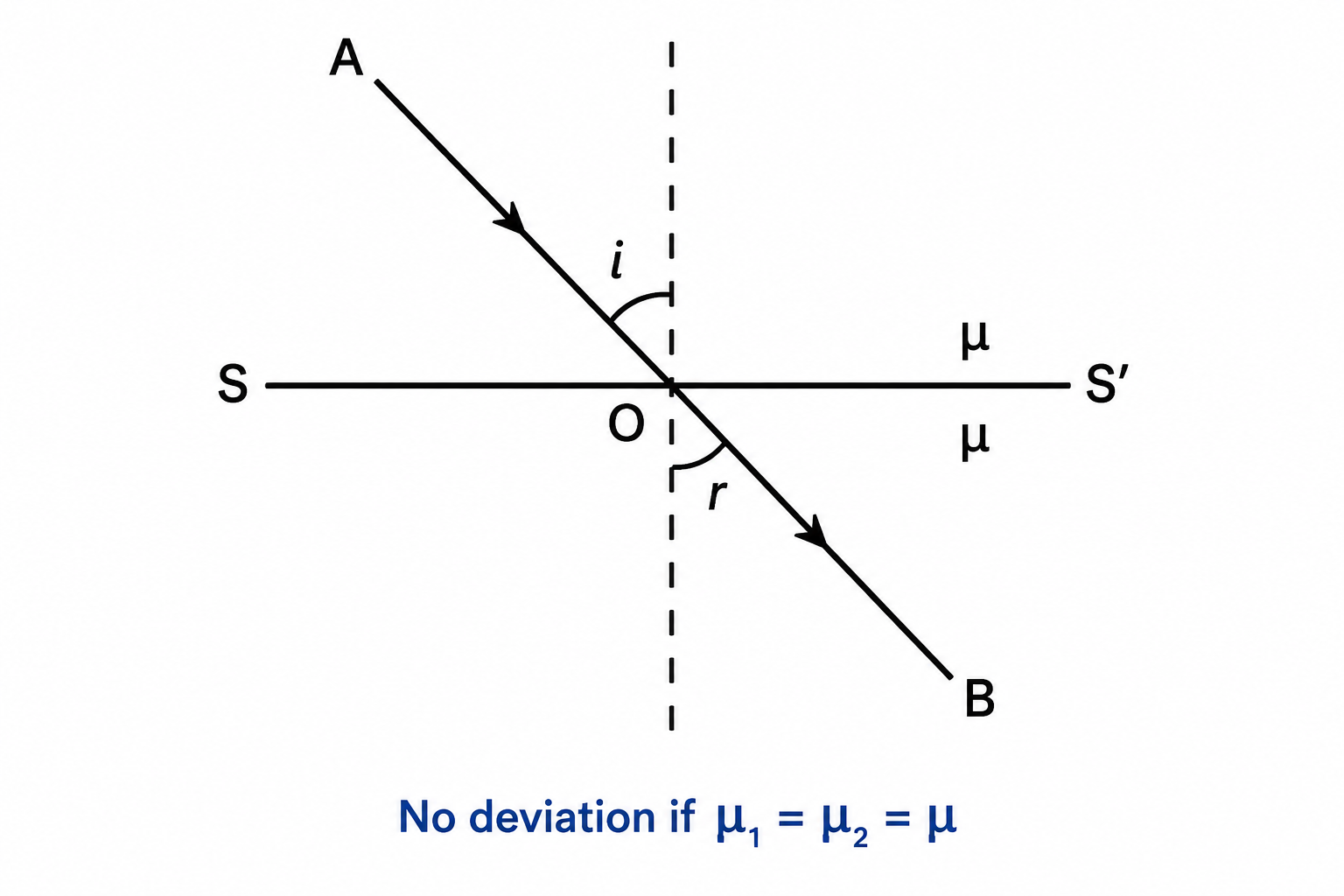
Fig. 4.4 No deviation if refractive indices are equal
According to this principle, the path of a light ray is reversible.
If a ray travels from medium 1 to medium 2, then ${}_1\mu_2 = \frac{\sin i}{\sin r}$. By reversibility, if it travels from medium 2 to medium 1 along the same path, then ${}_2\mu_1 = \frac{\sin r}{\sin i}$.
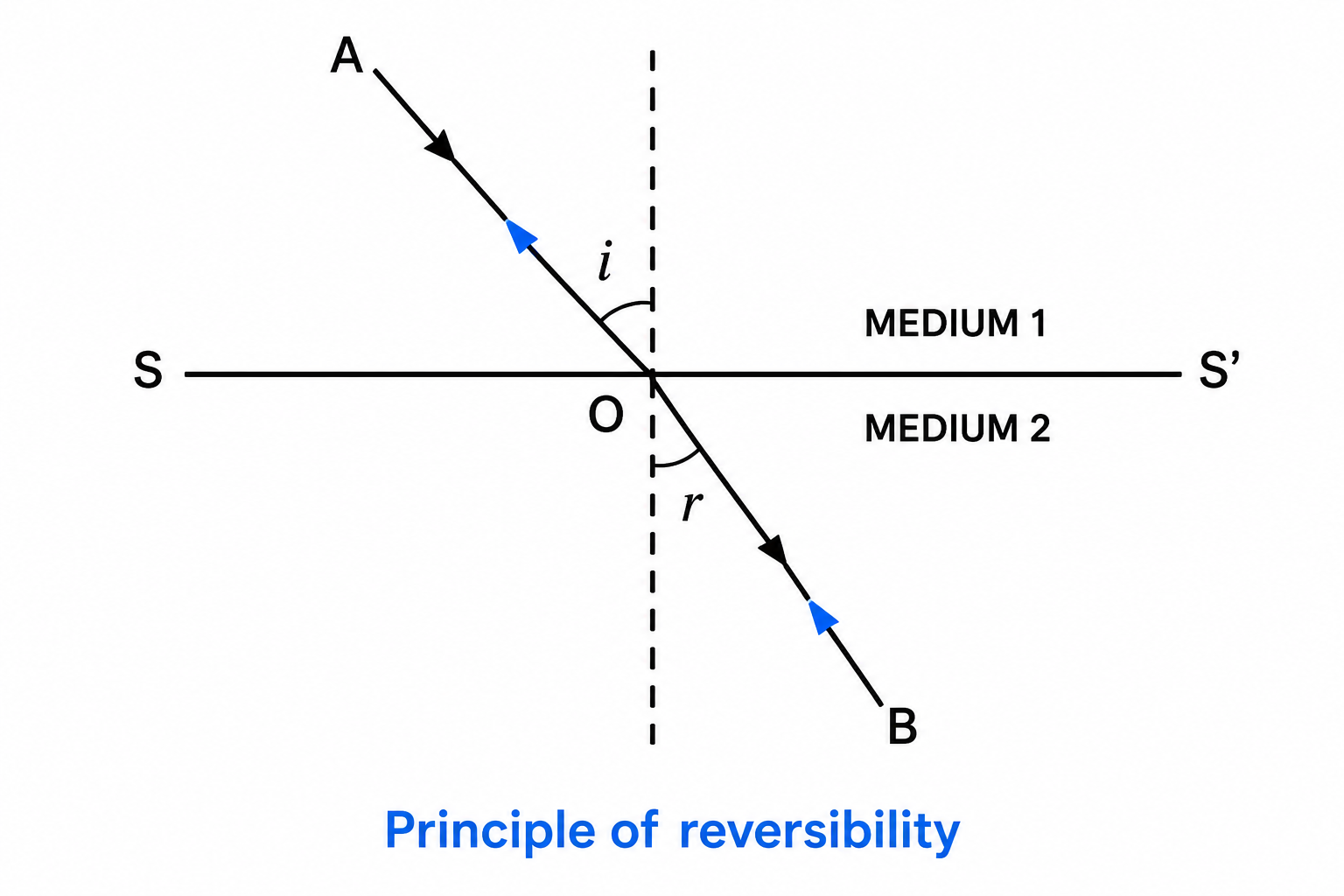
Fig. 4.5 Principle of reversibility
Example: If refractive index of glass with respect to air is ${}_a\mu_g = \frac{3}{2}$, then refractive index of air with respect to glass will be ${}_g\mu_a = \frac{2}{3}$.
We can verify the laws of refraction using a rectangular glass block, drawing pins, and a drawing board. By measuring the angle of incidence $i$ and angle of refraction $r$ for different incident rays, we find that the ratio $\frac{\sin i}{\sin r}$ comes out to be constant for the given glass block, which verifies Snell's law. Also, the incident ray, refracted ray, and the normal are found to lie in the same plane (plane of the paper).
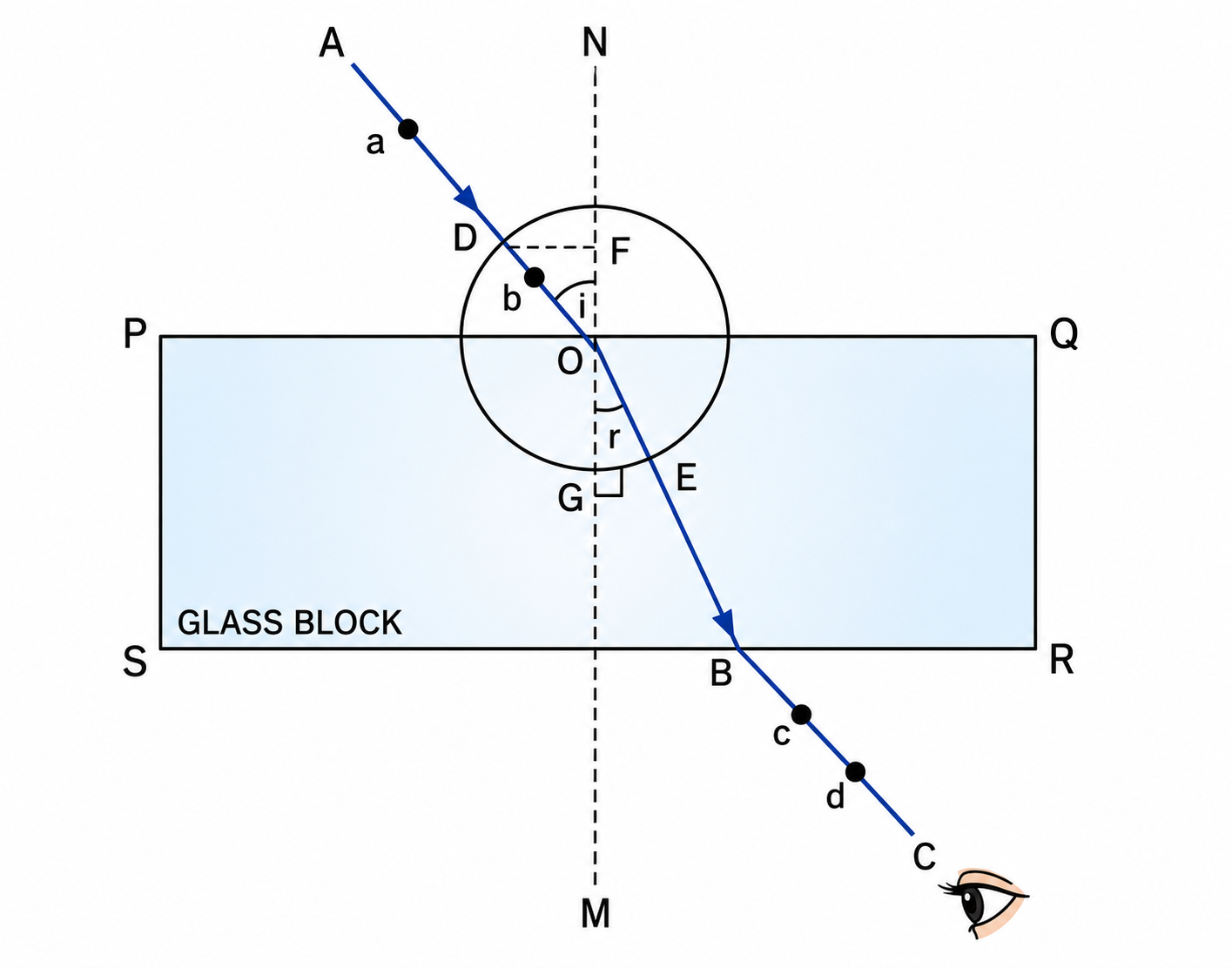
Fig. 4.6 Verification of laws of refraction
When a light ray passes through a parallel-sided rectangular glass block, refraction occurs at two parallel surfaces. At the first surface (air to glass), it bends towards the normal. At the second surface (glass to air), it bends away from the normal.
By the principle of reversibility, the angle of emergence $e$ is equal to the angle of incidence $i$. Therefore, the emergent ray is parallel to the incident ray.
Although the emergent ray is parallel to the incident ray, it is shifted sideways. The perpendicular distance between the path of the emergent ray and the direction of the incident ray is called lateral displacement.
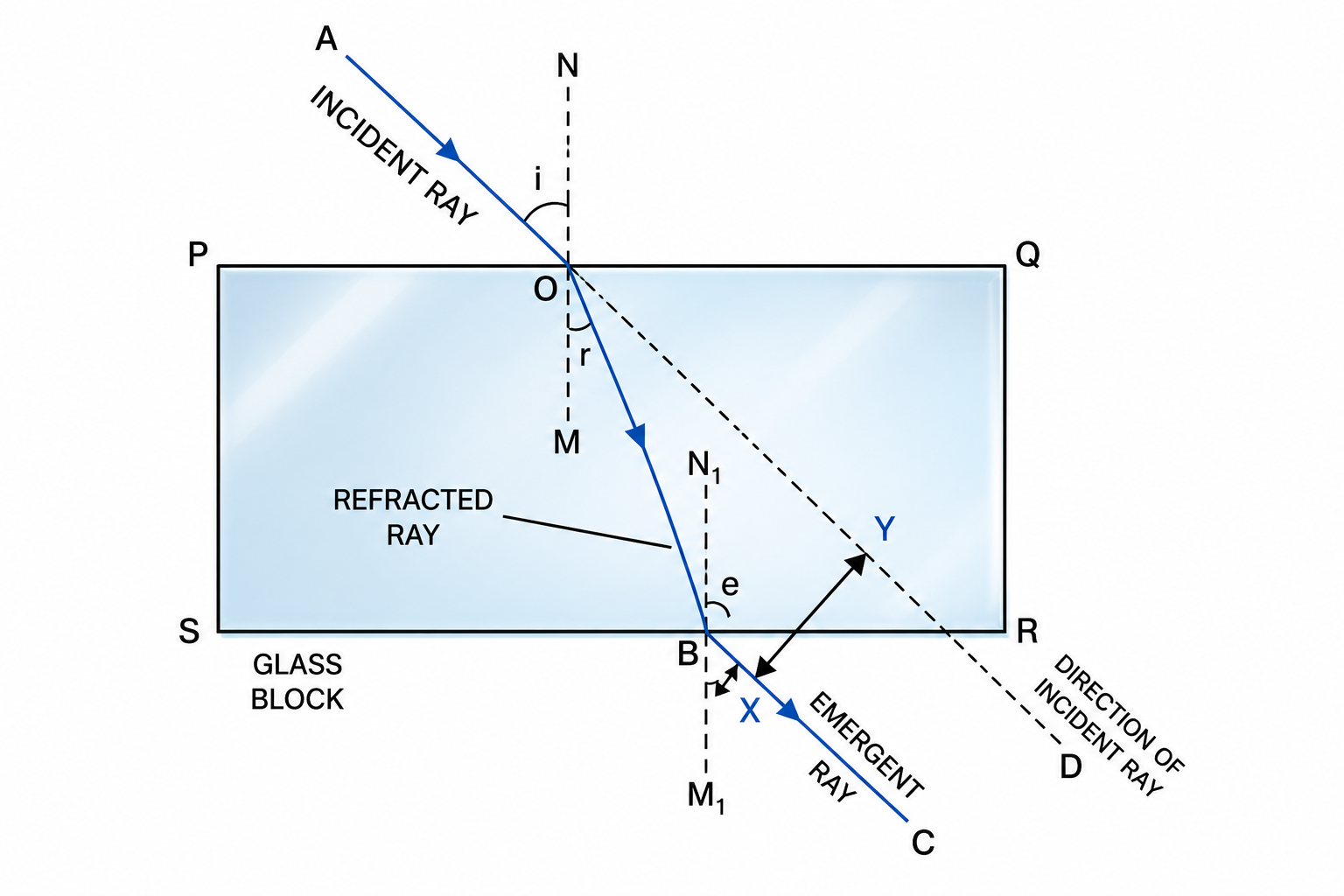
Fig. 4.7 Refraction through a rectangular glass block
Factors on which lateral displacement depends:
If a pin (or an illuminated object) is placed in front of a thick plane glass plate or a thick mirror and is viewed obliquely, a number of images are seen. Out of these images, the second image is the brightest, while others are of decreasing brightness.
Reason: When light falls on the unsilvered front surface, a small part (nearly 4%) is reflected forming a faint first virtual image. A large part (nearly 96%) is refracted inside the glass. This ray strikes the silvered back surface and is strongly reflected back. When it emerges out into air, it forms the second virtual image. This image is the brightest because it is due to strong reflection at the silvered surface. Further multiple internal reflections give rise to multiple images of gradually decreasing brightness.
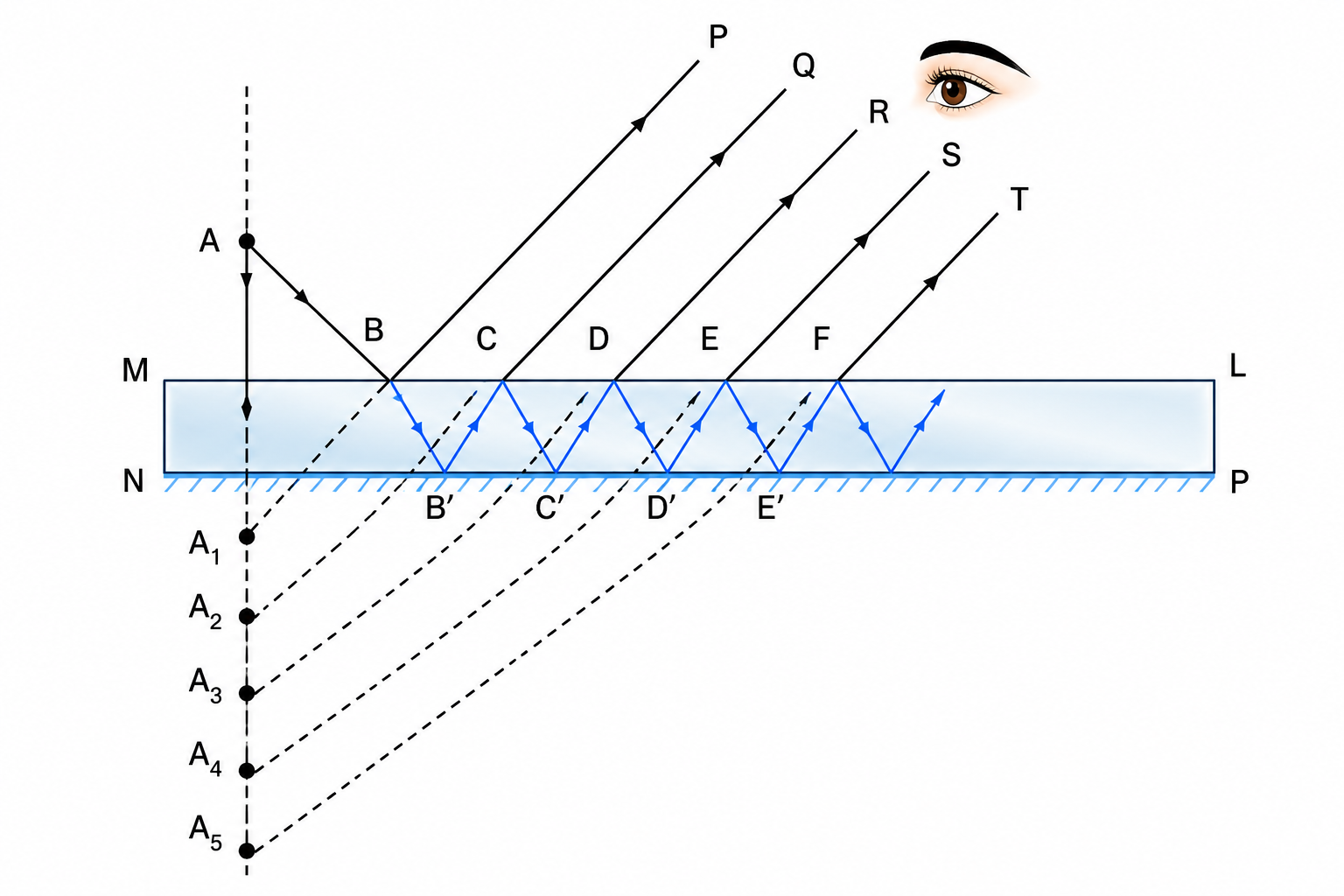
Fig. 4.8 Multiple reflections in a thick mirror
A prism is a transparent refracting medium bounded by five plane surfaces with a triangular cross section. Two opposite surfaces of a prism are identical parallel triangles, while the other three surfaces are rectangular and inclined on each other.
The two rectangular surfaces which are polished are called refracting surfaces. The angle between them is called the angle of prism (A). The line of intersection of the two refracting surfaces is called the refracting edge. The rectangular surface opposite to the refracting edge is the base of the prism.
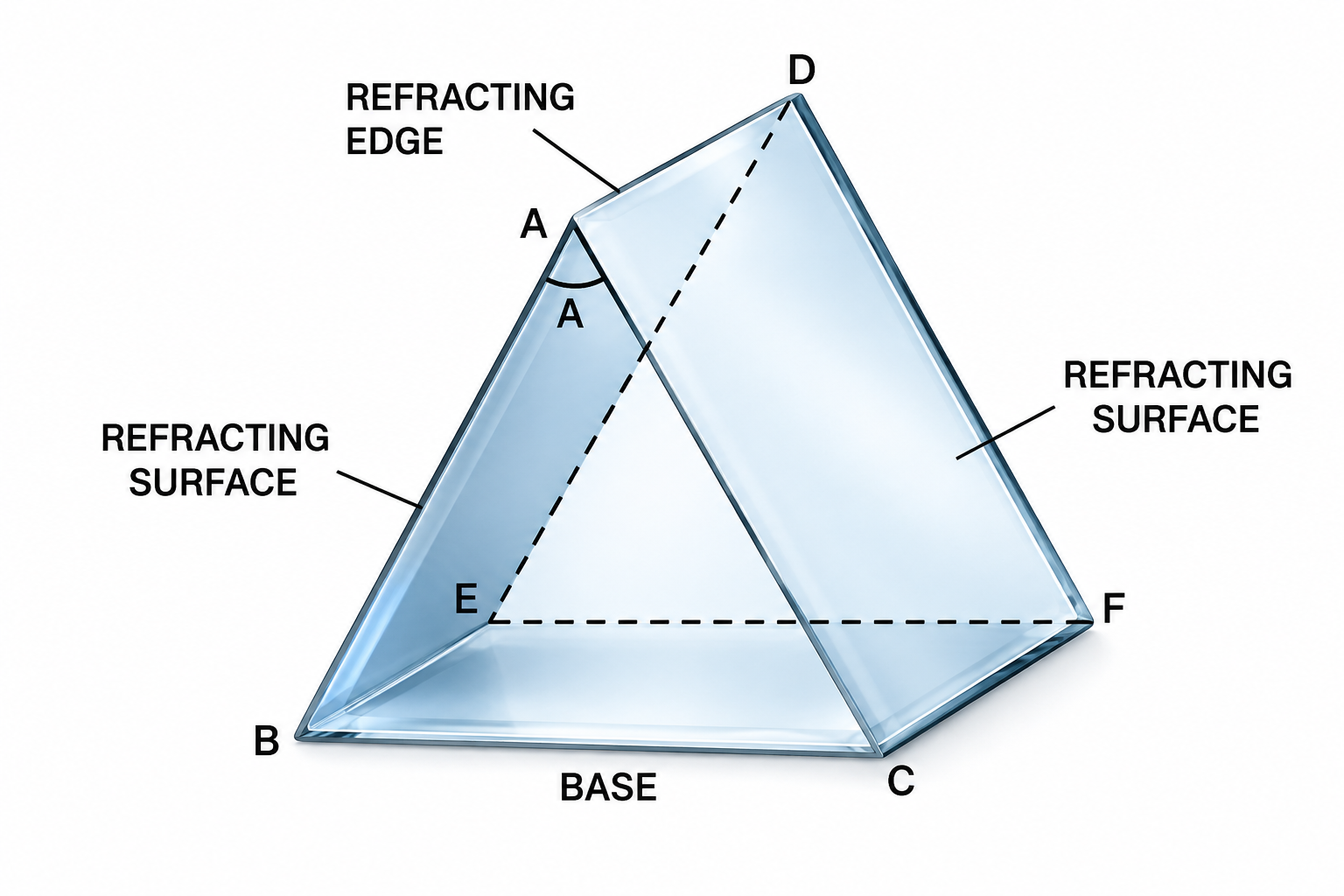
Fig. 4.22 Prism
When a monochromatic ray of light strikes the face of a prism, it suffers refraction. At the first face, it travels from a rarer medium (air) to a denser medium (glass), so it bends towards the normal. It travels inside the prism and strikes the second face. Here it travels from a denser medium to a rarer medium, so it bends away from the normal.
Angle of Deviation ($\delta$): The angle between the direction of incident ray (produced forward) and the emergent ray (produced backward) is called the angle of deviation.
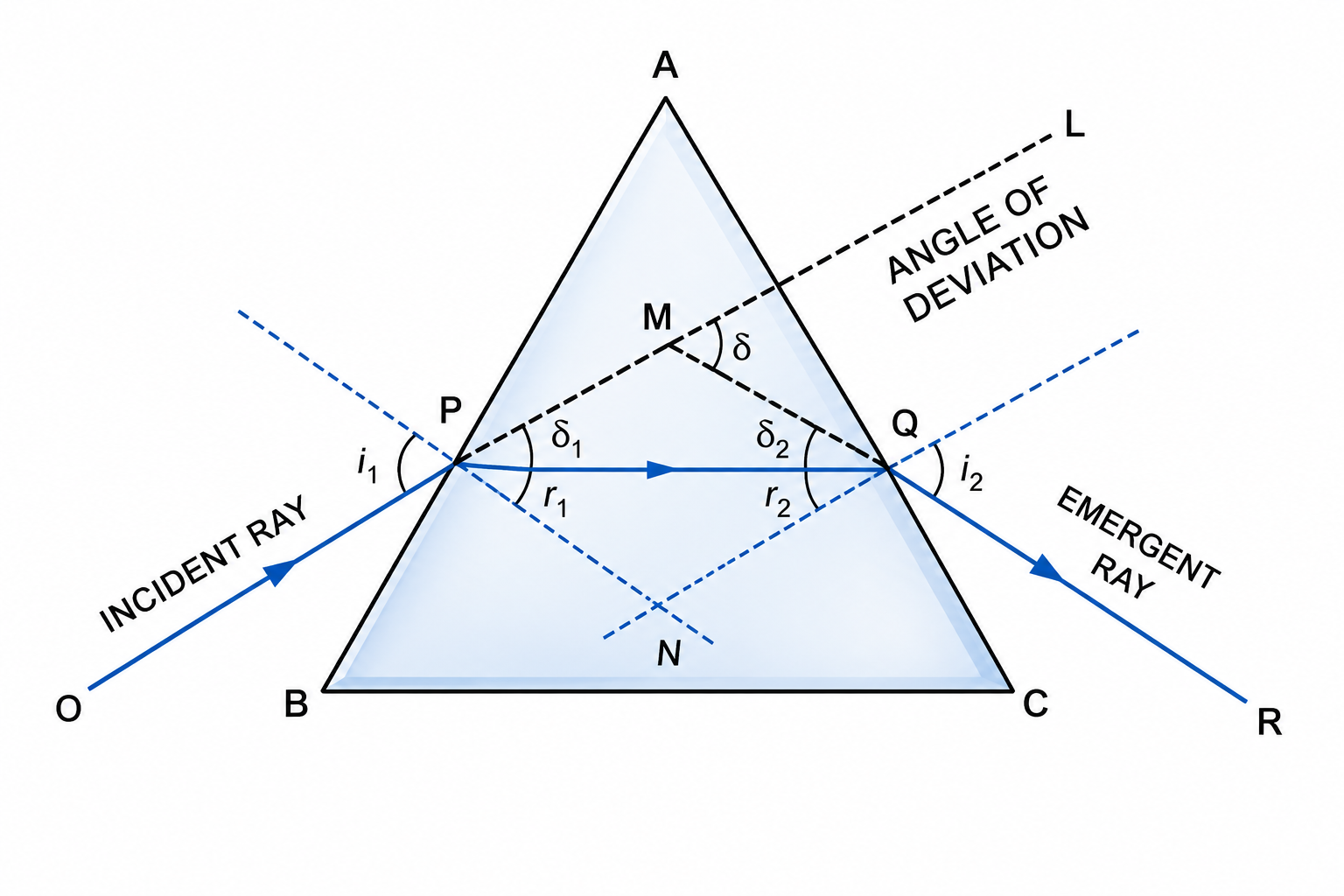
Fig. 4.23 Deviation by a prism
In a quadrilateral formed by the prism apex and the normals, we can derive the relation between angle of prism (A), angle of deviation ($\delta$), angle of incidence ($i_1$), and angle of emergence ($i_2$):
$$ i_1 + i_2 = A + \delta $$Also, inside the prism:
$$ r_1 + r_2 = A $$Hence, $\delta = (i_1 + i_2) - (r_1 + r_2) = (i_1 + i_2) - A$.
The angle of deviation $\delta$ produced by a prism depends on the following four factors:
(1) Dependence on the angle of incidence ($i$):
It is experimentally observed that as the angle of incidence increases, the angle of deviation first decreases, reaches a minimum value ($\delta_{\text{min}}$) for a certain angle of incidence, and then on further increasing the angle of incidence, the angle of deviation begins to increase.
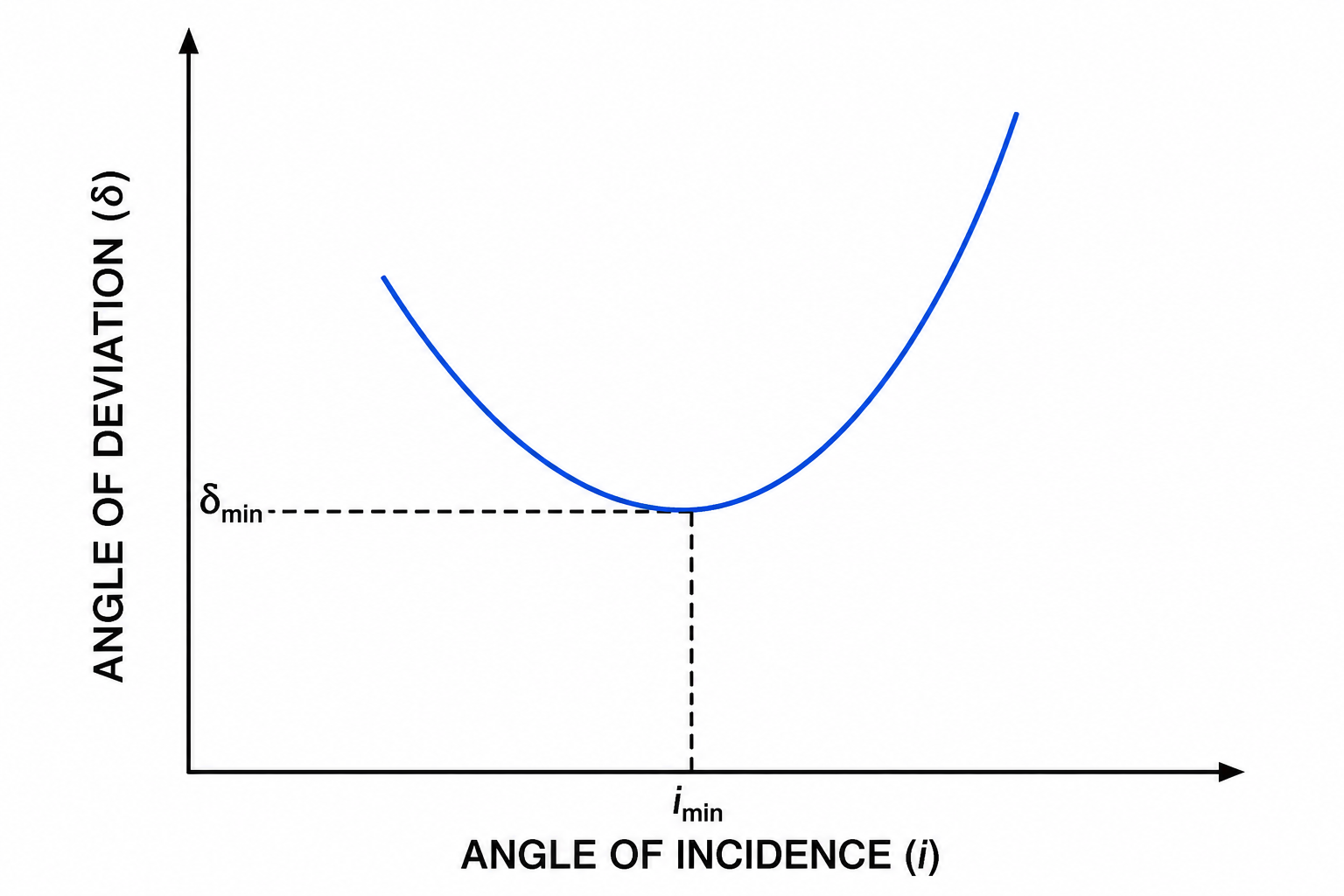
Fig. 4.24 i-$\delta$ curve
(2) Dependence on the material of prism (Refractive index):
For a given angle of incidence, the prism with a higher refractive index produces a greater deviation. For example, a flint glass prism produces more deviation than a crown glass prism of the same refracting angle since $\mu_{\text{flint}} > \mu_{\text{crown}}$.
(3) Dependence on the angle of prism ($A$):
The angle of deviation increases with the increase in the angle of prism ($A$).
(4) Dependence on the colour (or wavelength) of light:
The refractive index decreases with the increase in the wavelength of light. Thus, refractive index is maximum for violet light and minimum for red light. Consequently, a given prism deviates violet light the most and red light the least ($\delta_{\text{violet}} > \delta_{\text{red}}$).
An object placed in a denser medium when viewed from a rarer medium, appears to be at a depth lesser than its real depth. This is because of refraction of light.
Consider a point object kept at the bottom of a transparent medium (like water or glass). A ray of light starting from the object and going normally to the surface passes undeviated. Another oblique ray bends away from the normal on entering air. When viewed from above, these rays appear to come from a point higher up. Thus, the object appears raised.
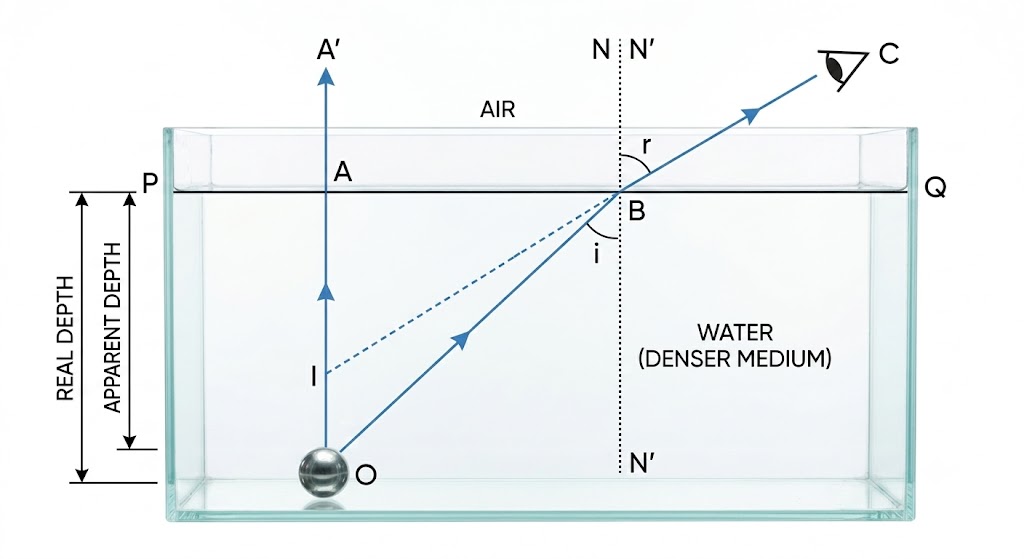
Fig. 4.36 Real and apparent depth
The shift by which the object appears to be raised is:
$$ \text{Shift} = \text{Real depth} - \text{Apparent depth} = \text{Real depth} \times \left(1 - \frac{1}{\mu}\right) $$A straight stick placed obliquely in water appears to be shortened and raised up. This is due to refraction of light from water to air. The rays of light coming from the tip of the stick bend away from the normal and appear to be coming from a virtual point which is higher than the actual tip.
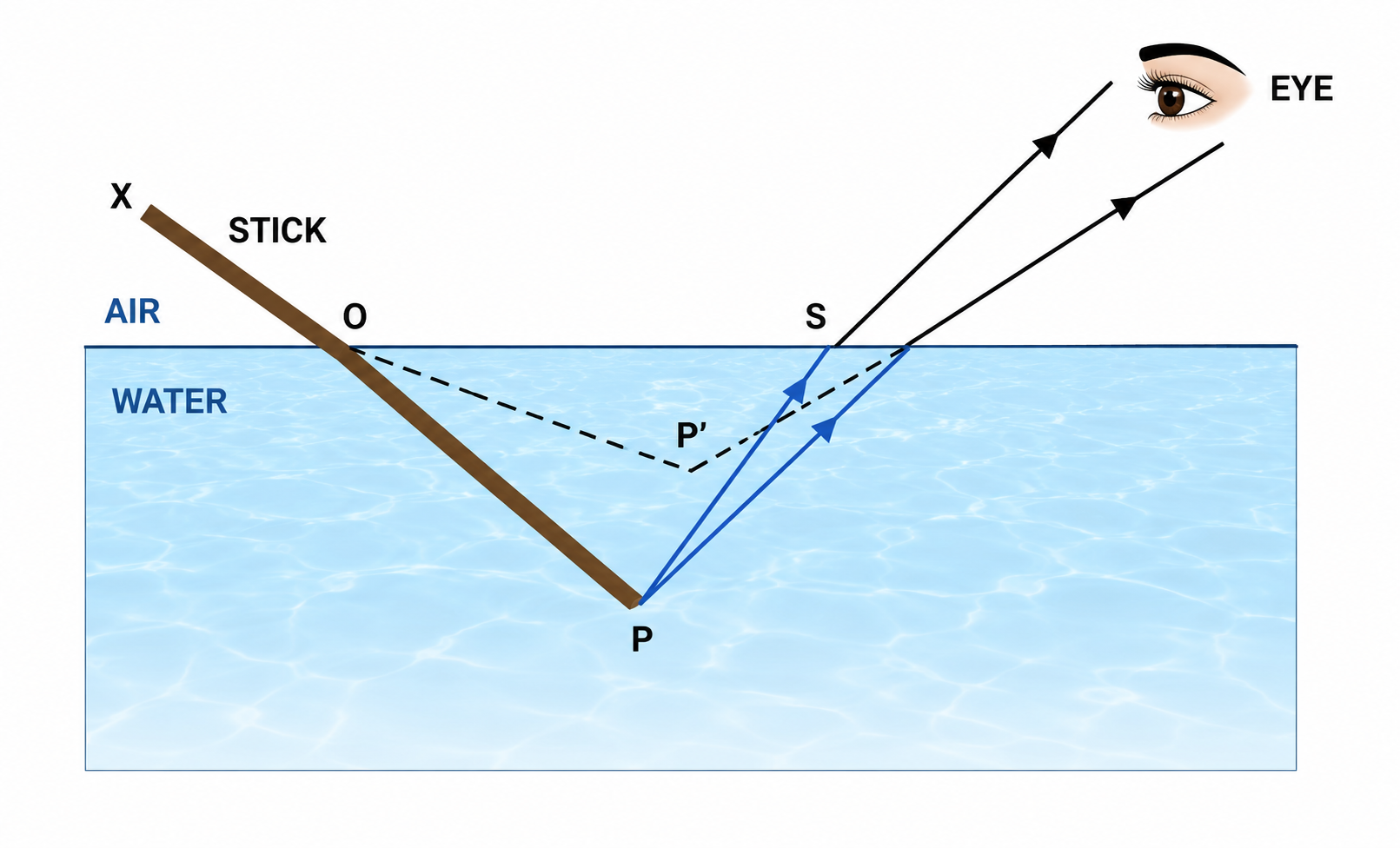
Fig. 4.37 Bending of stick due to refraction
In our daily life we come across many phenomena which are caused by the refraction of light. Some of these are given below:
A coin kept inside water ($\mu = 4/3$) when viewed from air in a vertical direction, appears to be raised by $2.0 \text{ mm}$. Find the depth of the coin in water.
Given: $\mu = 4/3$, shift = $2.0 \text{ mm}$
Solution:
Let real depth be $x \text{ mm}$.
Apparent depth = $\frac{x}{\mu} = \frac{x}{4/3} = \frac{3}{4}x$
Shift = Real depth - Apparent depth = $x - \frac{3}{4}x = \frac{1}{4}x$
So, $\frac{1}{4}x = 2.0 \text{ mm} \implies x = 8.0 \text{ mm}$
Thus depth of coin in water = $8.0 \text{ mm}$.
When a light ray travels from a denser medium to a rarer medium, it bends away from the normal. As the angle of incidence ($i$) increases, the angle of refraction ($r$) also increases.
Case (i) when $i < C$: The ray is partly reflected and partly refracted. The refracted ray bends away from the normal.
Case (ii) when $i = C$ (Critical angle): The angle of refraction becomes $90^\circ$. The refracted ray travels along the interface of the two media. This angle of incidence is called the critical angle ($C$).
Case (iii) when $i > C$ (Total Internal Reflection): No refracted ray is obtained and the incident ray is totally reflected back into the denser medium. This is called Total Internal Reflection.
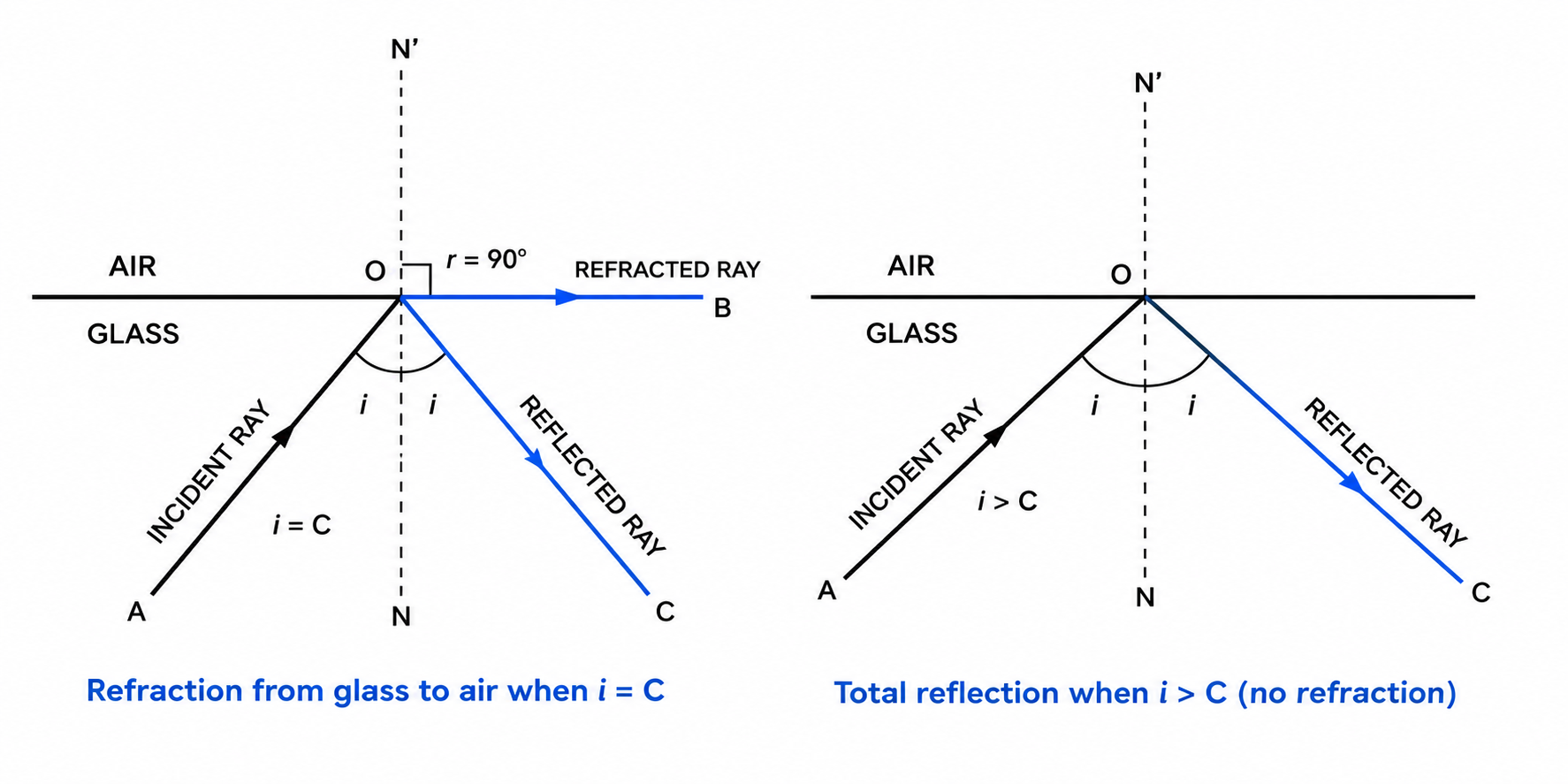
Fig. 4.43 & 4.44 Total Internal Reflection Cases
Critical angle is the angle of incidence in the denser medium corresponding to which the angle of refraction in the rarer medium is $90^\circ$.
By Snell's law, when light goes from glass to air at $i = C$, then $r = 90^\circ$.
$$ {}_g\mu_a = \frac{\sin C}{\sin 90^\circ} = \sin C $$But the refractive index of glass with respect to air is ${}_a\mu_g = \frac{1}{{}_g\mu_a}$. Therefore:
Examples:
Definition: When a ray of light travelling in a denser medium, is incident at the surface of a rarer medium at the angle of incidence greater than the critical angle for the pair of media, the ray is totally reflected back into the denser medium. This phenomenon is called total internal reflection.
A prism having an angle of $90^\circ$ between its two refracting surfaces and the other two angles each equal to $45^\circ$ is called a total reflecting prism. Due to total internal reflection, it is used for three purposes:
(a) To deviate a ray of light through $90^\circ$ (Used in Periscope):
A beam of light is incident normally on one of the faces containing the right angle. It passes undeviated, strikes the hypotenuse face at $45^\circ$ (which is greater than critical angle $42^\circ$ for glass), and suffers total internal reflection, getting deviated by $90^\circ$.
(b) To deviate a ray of light through $180^\circ$ (Used in Binoculars and Cameras):
A beam of light is incident normally on the hypotenuse face. It enters undeviated, strikes a shorter face at $45^\circ$, suffers TIR, strikes the other shorter face at $45^\circ$, suffers TIR again, and emerges out of the hypotenuse face, deviating by $180^\circ$ in total.
(c) To erect the inverted image without deviation (Used in Slide Projector):
The beam of light is incident parallel to the hypotenuse face. It suffers refraction on entering, strikes the hypotenuse face at an angle greater than $C$, suffers TIR, and refracts again upon emerging. The emergent beam is parallel to the incident beam but the image becomes erect.
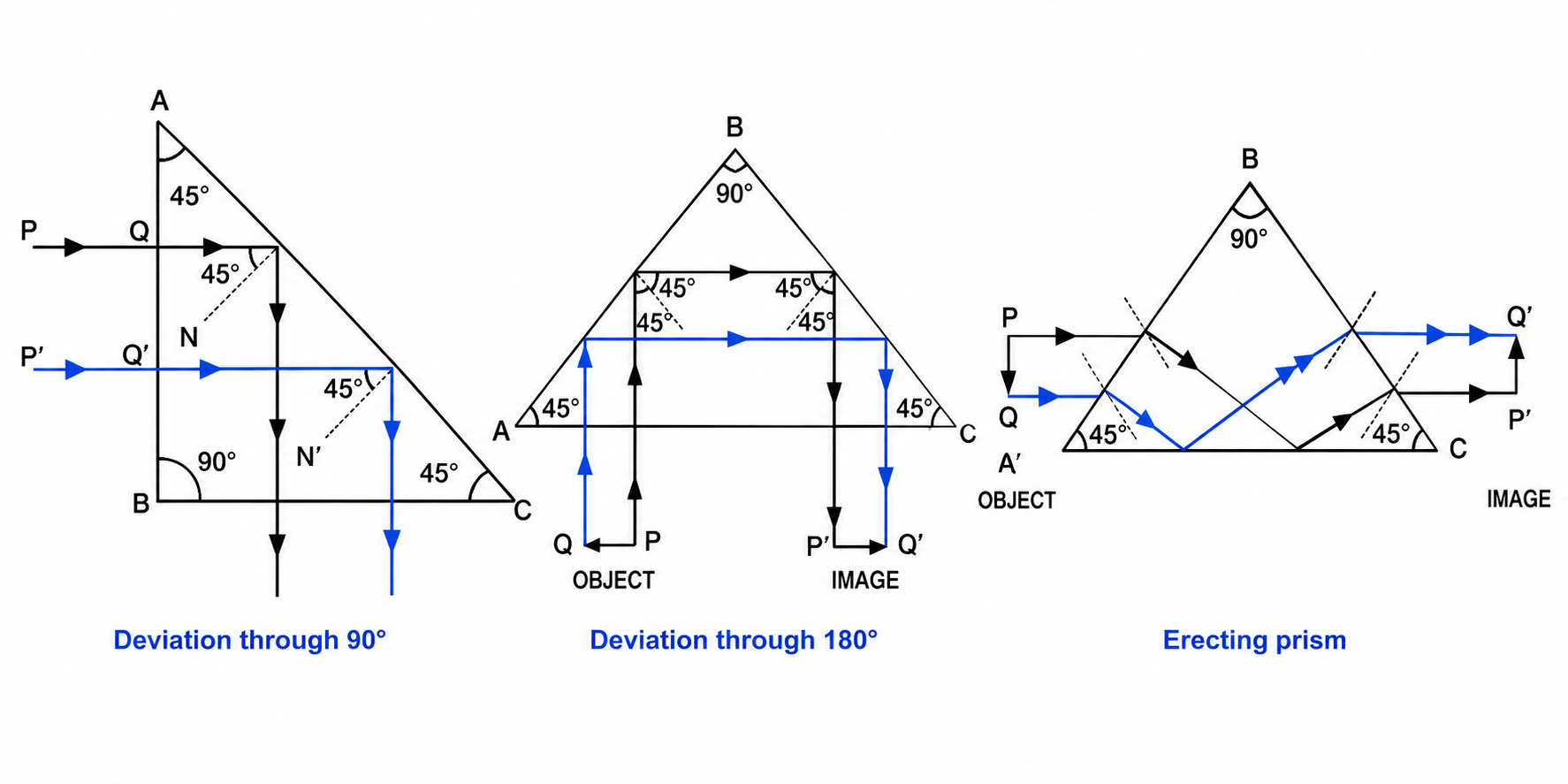
Fig. 4.47, 4.48 & 4.49 TIR Prism Applications
 VARDAAN COMET