
Endocrine System: General study of the following glands — Adrenal, Pancreas, Thyroid and Pituitary. Differences between Endocrine and Exocrine glands. Hormones — definition, general properties, and functions of Adrenaline, Insulin, Glucagon, Thyroxine, TSH, GH, ADH, and Oxytocin. Effects of hypo and hyper secretion of hormones — Dwarfism, Gigantism, Acromegaly, Simple Goitre, Exophthalmic Goitre, Cretinism, Myxoedema, Addison's Disease, Adrenal Virilism, Diabetes Mellitus, and Diabetes Insipidus.
The activities in our body are highly complex and they need to be so regulated that every activity takes place at a proper time and in a correct sequence. This regulation is done by the nervous system and by chemical regulators called hormones (horma: to stir up / to excite / to put into action).
| Hormonal control | Nervous control |
|---|---|
| 1. Usually slow. | 1. Immediate/Rapid. |
| 2. Transmitted chemically through blood. | 2. Transmitted electro-chemically through the nerve fibres and chemically across synapses. |
| 3. Affects different organs (widespread in body). | 3. Affects only the particular muscles or the gland (local). |
| 4. Effect is short term or long-lasting. | 4. Effect only short-lived. |
| 5. Can affect growth. | 5. Cannot affect growth. |
| 6. Can bring about specific chemical changes and regulates metabolism. | 6. Does not influence chemical changes and cannot regulate metabolism. |
| 7. Cannot be modified by learning from previous experience. | 7. Can be modified to some extent by learning from previous experience. |
Hormone: A hormone is a secretion from some glandular part of the body, which is poured into blood and which acts on the target organs or cells of the same individual, bringing about coordination between distant parts of the body.
Endocrine glands are glands which secrete hormones. They are called ductless glands because their secretions are poured directly into the blood and not through any special duct.
The principal endocrine glands in the human body included in the syllabus are:
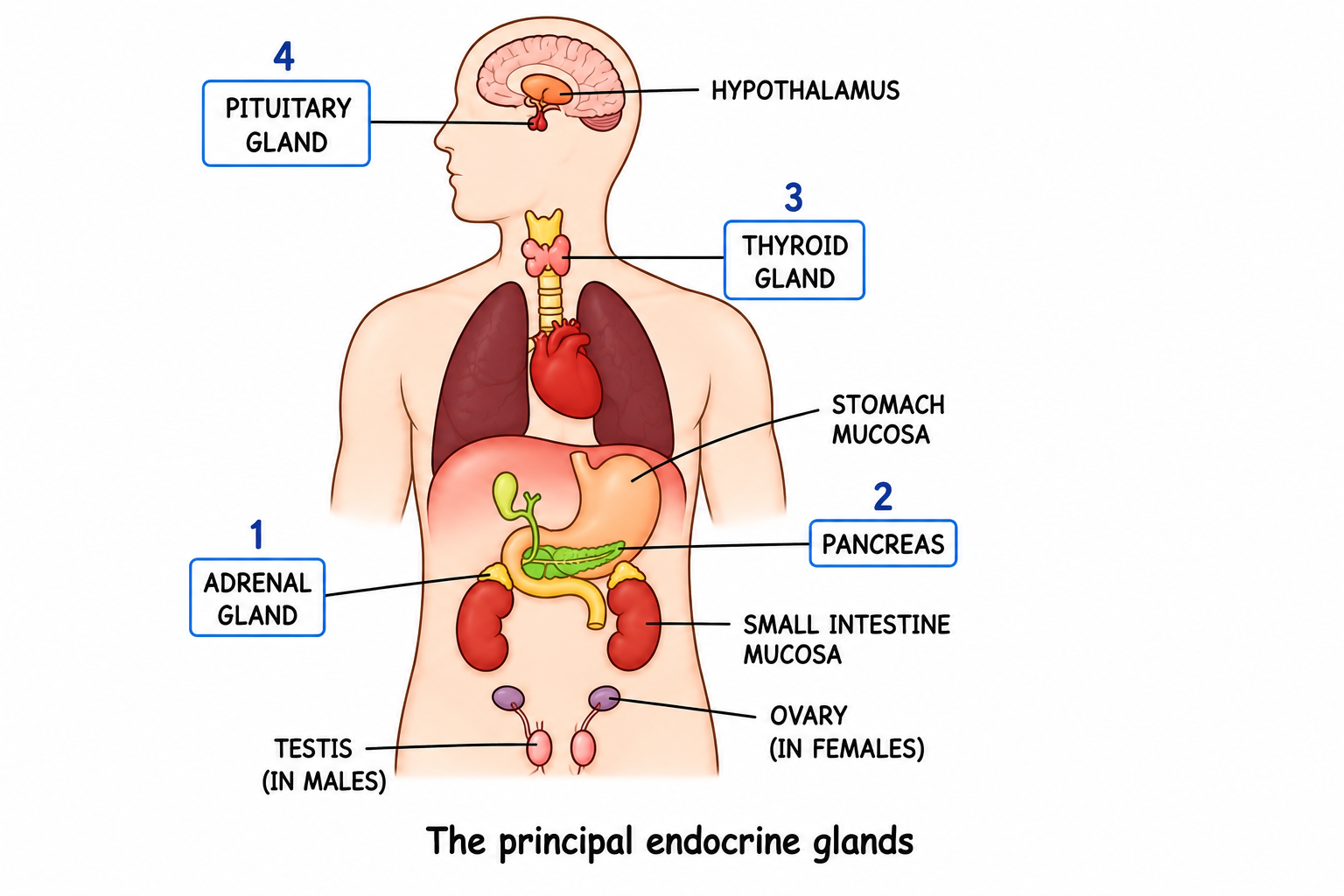
The adrenal glands are like caps above the kidneys (ad: near, renal: kidney). Each adrenal gland consists of two parts — (i) a central medulla and (ii) a peripheral cortex.

Secretes adrenaline (also called epinephrine and noradrenaline). Adrenaline is a hormone which prepares the body to meet any emergency situation, for "fight" i.e. to face danger or for "flight", to run away from it. Extra energy and strength is provided to the body in that situation.
| Body part | Effects of adrenaline | Biological advantage |
|---|---|---|
| Heart | Beats faster Blood pressure increases |
Sends more glucose and oxygen to the muscles |
| Breathing centre of the brain | Faster and deeper breathing | Increased oxygenation of the blood; rapid removal of carbon dioxide |
| Arterioles of the skin | Constricts them | Less blood going to the skin means more is available to the muscles |
| Arterioles of the digestive system | Constricts them | Less blood for the digestive system, allows more to reach the muscles |
| Muscles of body | Tenses them | Ready for immediate action |
| Liver | Conversion of glycogen to glucose | Glucose available in blood for energy production |
Secretes many hormones but the best known hormone is cortisone (which suppresses inflammation).
The cortical hormones are categorised as:
Women with beard & Men with breasts!
If there is an overgrowth of adrenal cortex in a mature woman, she develops certain male characteristics, such as a beard, moustaches and deep male voice. The condition is known as adrenal virilism. If the overgrowth occurs in mature men, they may develop some feminine characteristics, such as enlargement of breasts.
Pancreas is both a duct gland as well as a ductless gland. As a duct gland, its secretion (pancreatic juice) is poured into the duodenum for digestion. As a ductless gland, it has special groups of hormone-secreting cells called Islets of Langerhans, which are scattered in the entire gland. The islet cells produce three hormones — insulin, glucagon and somatostatin from three different kinds of cells called beta, alpha and delta cells respectively. (Note: Somatostatin from Delta cells is excluded from syllabus).
| Hormone | Source | Action |
|---|---|---|
| 1. Insulin | beta cells |
- Promotes glucose uptake by body cells - Stimulates deposition of extra glucose (as glycogen) in liver and muscles |
| 2. Glucagon | alpha cells | Stimulates liver to convert glycogen into glucose |
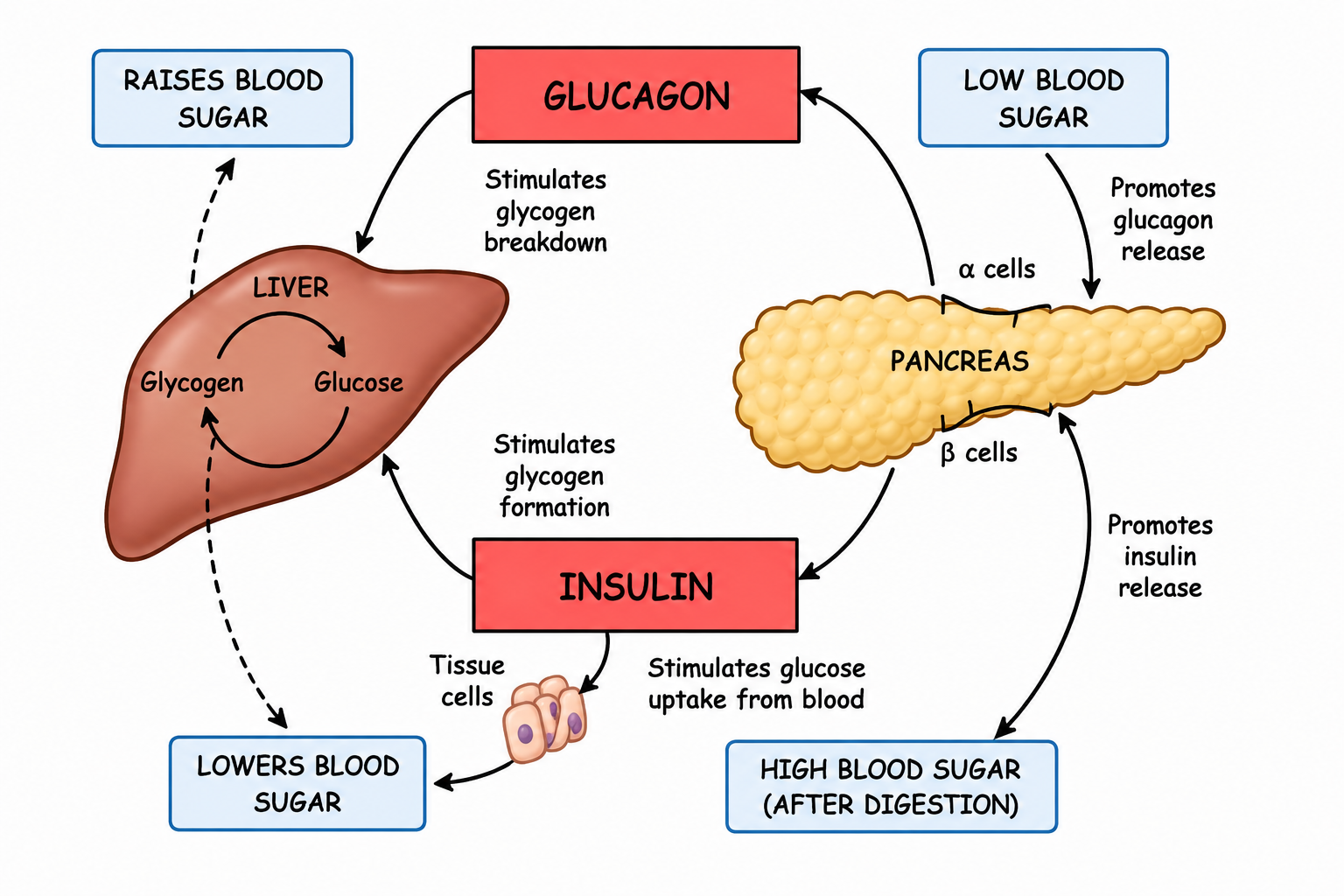
Insufficient secretion (Hyposecretion) causes diabetes (more correctly diabetes mellitus or hyperglycemia). The word "mellitus" means honey, referring to the passage of sugar (glucose) in urine.
A diabetic person:
Over-secretion of insulin (or insulin shock): Sugar level in the blood is lowered (hypoglycemia). Brain may enter a state of coma if the level becomes too low. A prompt bite of sweet biscuits or sugar candy is helpful.
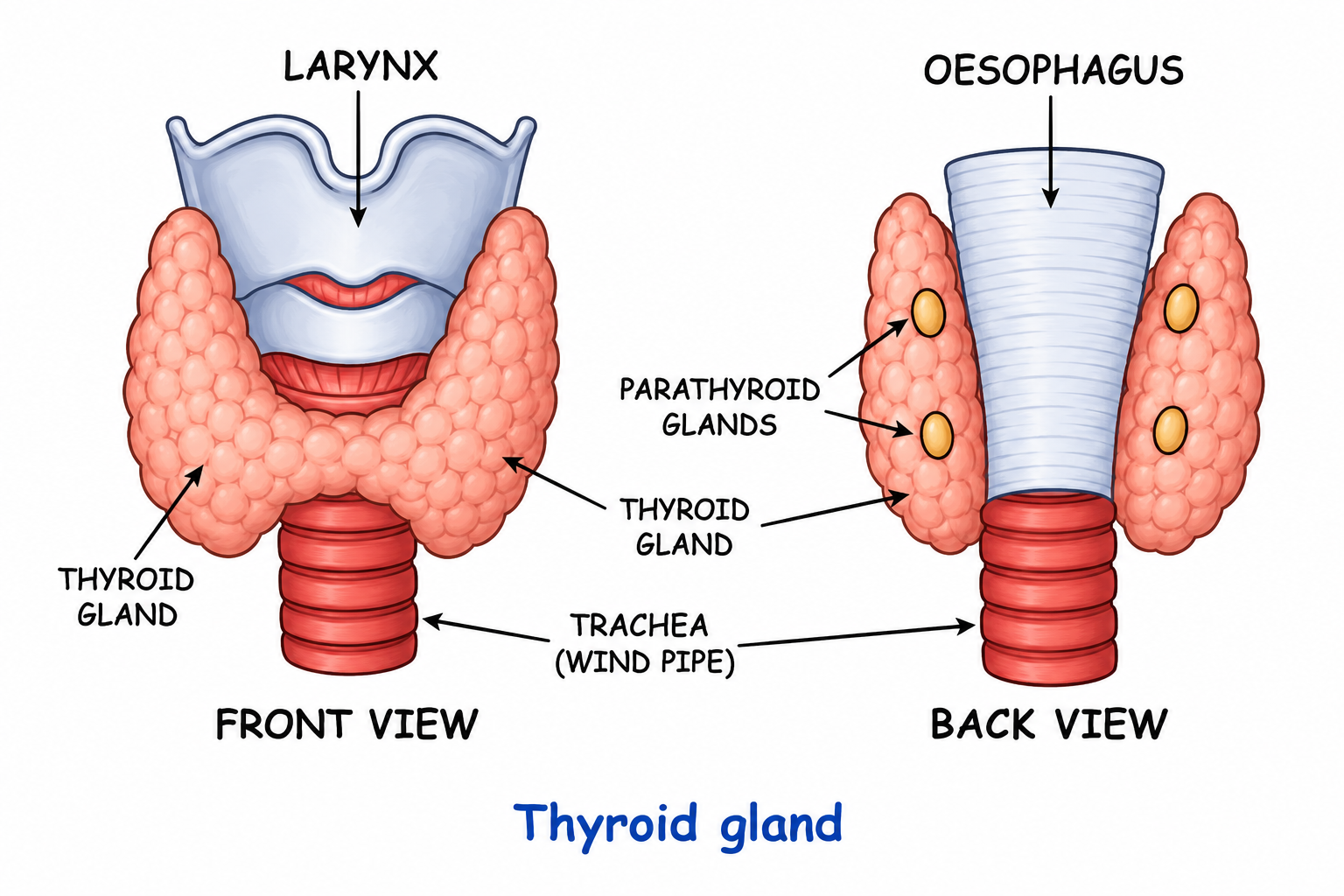
The thyroid is a bilobed (butterfly-shaped) structure situated in front of the neck just below the larynx. The two lobes are joined by a narrow isthmus. It secretes two hormones thyroxine and calcitonin. [Note : Calcitonin is not included in the syllabus].
Thyroxine regulates the basal metabolism, i.e., the rate of cellular oxidation resulting in heat production at rest. It also influences the general growth of the body, ossification of bones, body temperature, mental development, etc.
A. Undersecretion (Hypothyroidism): Insufficient secretion of thyroxine may lead to three conditions:
B. Oversecretion (Hyperthyroidism): Excess of thyroxine secretion may cause a kind of goitre called exophthalmic goitre (exo: outward, ophthalmos: eye). A person has a marked increase in metabolic rate, rapid heart beat, shortness of breath, protruding eyes, and forms a goitre in the neck.
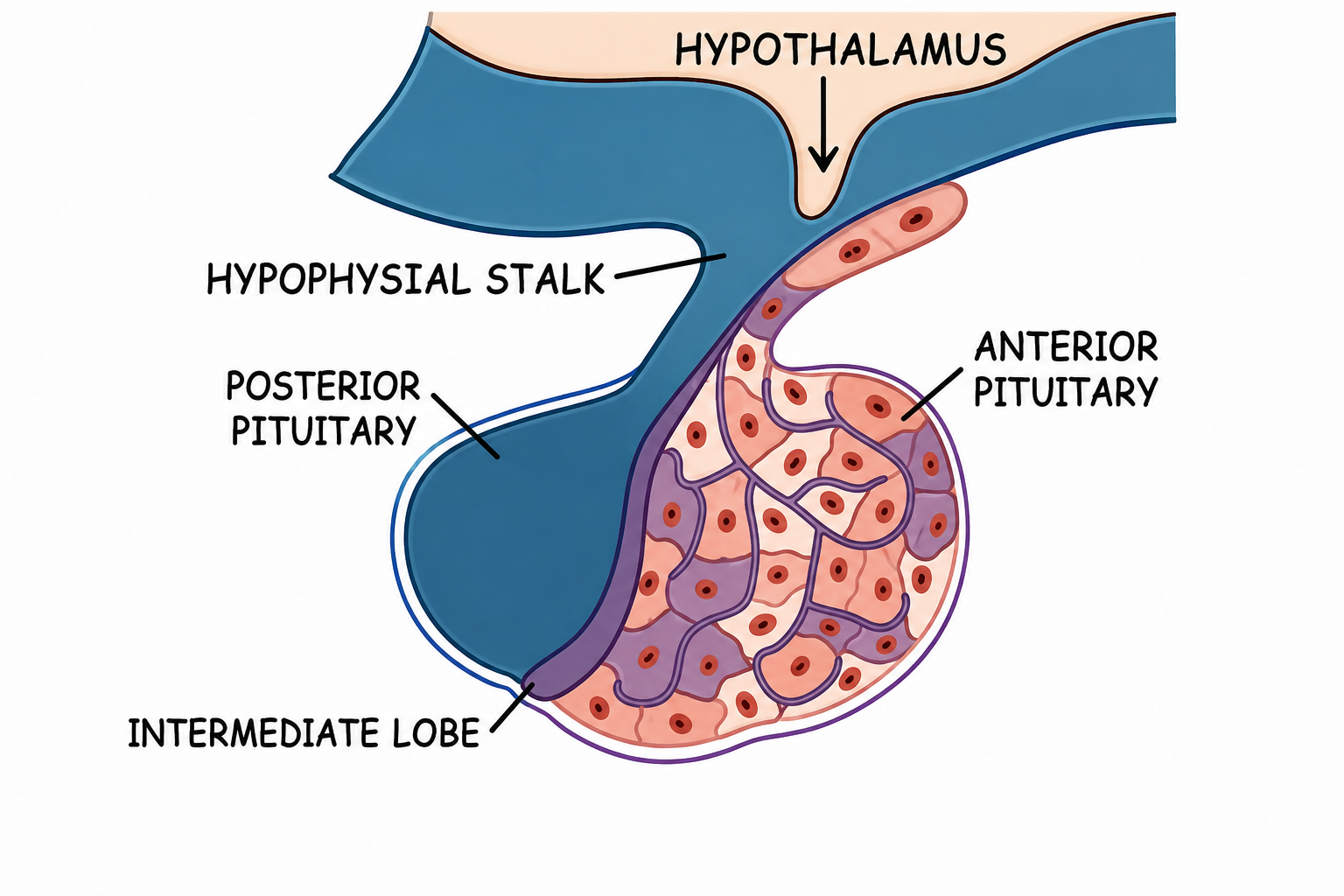
The pituitary gland is a small projection (about the size of a pea) which hangs from the base of the mid-brain below hypothalamus. It is popularly called the master gland because it seems to control practically all other endocrine glands.
"Diabetes" means passing out excessive amounts of urine.
The two types of "diabetes" : In diabetes mellitus, the urine contains sugar caused due to insufficient insulin, but in diabetes insipidus, there is no sugar in urine. ("Insipid" means tasteless, "melli" means honey/sweet).
The body has mechanisms to maintain a normal state. Whenever there is a change in this state there are "messages" through the body systems to "increase" if there is a fall below the normal, or to "decrease" if there is a rise above the normal. This kind of ordering for the opposite is "negative feedback".
Most feedback mechanisms in our body are of this negative type (Example : Blood sugar level). Positive feed-back mechanisms are very few (Example : uterine contractions during child birth).
| Endocrine Gland | Hormones Secreted | Principal Actions | Disorders (Undersecretion / Oversecretion) |
|---|---|---|---|
| 1. Adrenals (i) Cortex |
i. Mineralocorticosteroids ii. Glucocorticoids |
Regulate plasma sodium & potassium Regulate carbohydrate/lipid metabolism |
Addison's disease / Adrenal virilism |
| (ii) Medulla | Adrenaline | Prepares body for any emergency | - |
| 2. Pancreas (Islets of Langerhans) |
i. Insulin ($\beta$ cells) ii. Glucagon ($\alpha$ cells) |
Lowers blood sugar level Raises blood sugar level |
Diabetes mellitus / - |
| 3. Thyroid | Thyroxine | Promotes tissue metabolism, growth and differentiation | Simple goitre, cretinism, myxoedema / Exophthalmic goitre |
| 4. Pituitary (i) Anterior |
i. Growth hormone (GH) ii. TSH iii. ACTH |
Body growth Stimulates thyroxine secretion Stimulates secretion from adrenal cortex |
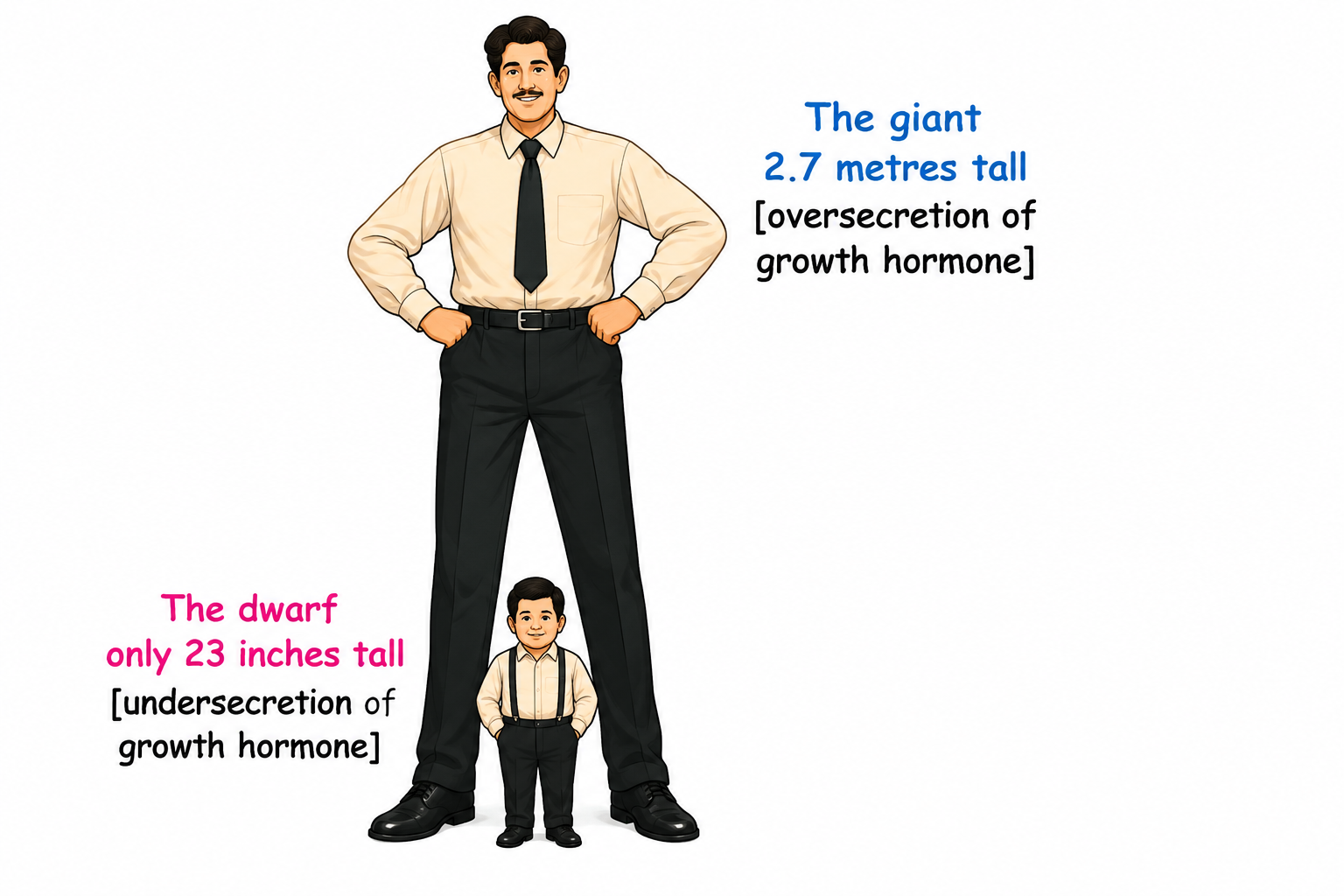
Dwarfism / Gigantism, acromegaly |
| (ii) Posterior | i. Vasopressin (ADH) ii. Oxytocin |
Increases reabsorption of water from kidneys Causes contraction of uterine muscle |
Diabetes insipidus / - |
 VARDAAN COMET
© Vardaan Learning Institute. All rights reserved. Authorized for academic student use.