Transpiration
ICSE Class 10 Biology • Chapter 05 • Detailed Master Notes
Transpiration is a highly useful process for plants primarily for two
reasons: one, it creates a
suction force in the stem to enable
the roots to absorb water and mineral nutrients, and two, for
cooling the plant in hot weather. Only about 2% of the
water absorbed is used by the plant in photosynthesis and other
activities; the rest is lost to the atmosphere.
5.1 What is Transpiration?
Transpiration: Transpiration is the evaporative loss
of water from the aerial parts (leaves and stem) of the plant.
Or alternatively: Transpiration is the loss of water in the
form of water vapour from the leaves and aerial parts of the plant.
5.2 Demonstration of Transpiration
Transpiration can be easily demonstrated by several simple experiments.
Experiment 1: Bell Jar Experiment
Take a small, well-watered potted plant, preferably one with broad
leaves. Enclose the pot completely within a polythene bag and tie it
securely around the base of the stem (this prevents the escape of water
vapour from the soil). Cover the entire plant under a glass bell jar and
keep it in sunlight for an hour or two.
Observation: Drops of water appear on the inner surface
of the bell jar. This water vapour has condensed from the air inside,
which came from the leaves due to transpiration.
Control Setup: A similar empty bell jar without the
plant should be set up side-by-side. No water drops will appear in it.
Experiment 2: Cobalt Chloride Paper Test
Set up the same bell jar experiment, but this time, keep a piece of dry
Cobalt Chloride paper alongside the
plant inside the bell jar. Dry cobalt chloride paper is
blue in colour. When exposed to moisture, it turns
pink.
Observation: The blue cobalt chloride paper turns pink,
chemically proving that the droplets appearing on the bell jar are
indeed water.
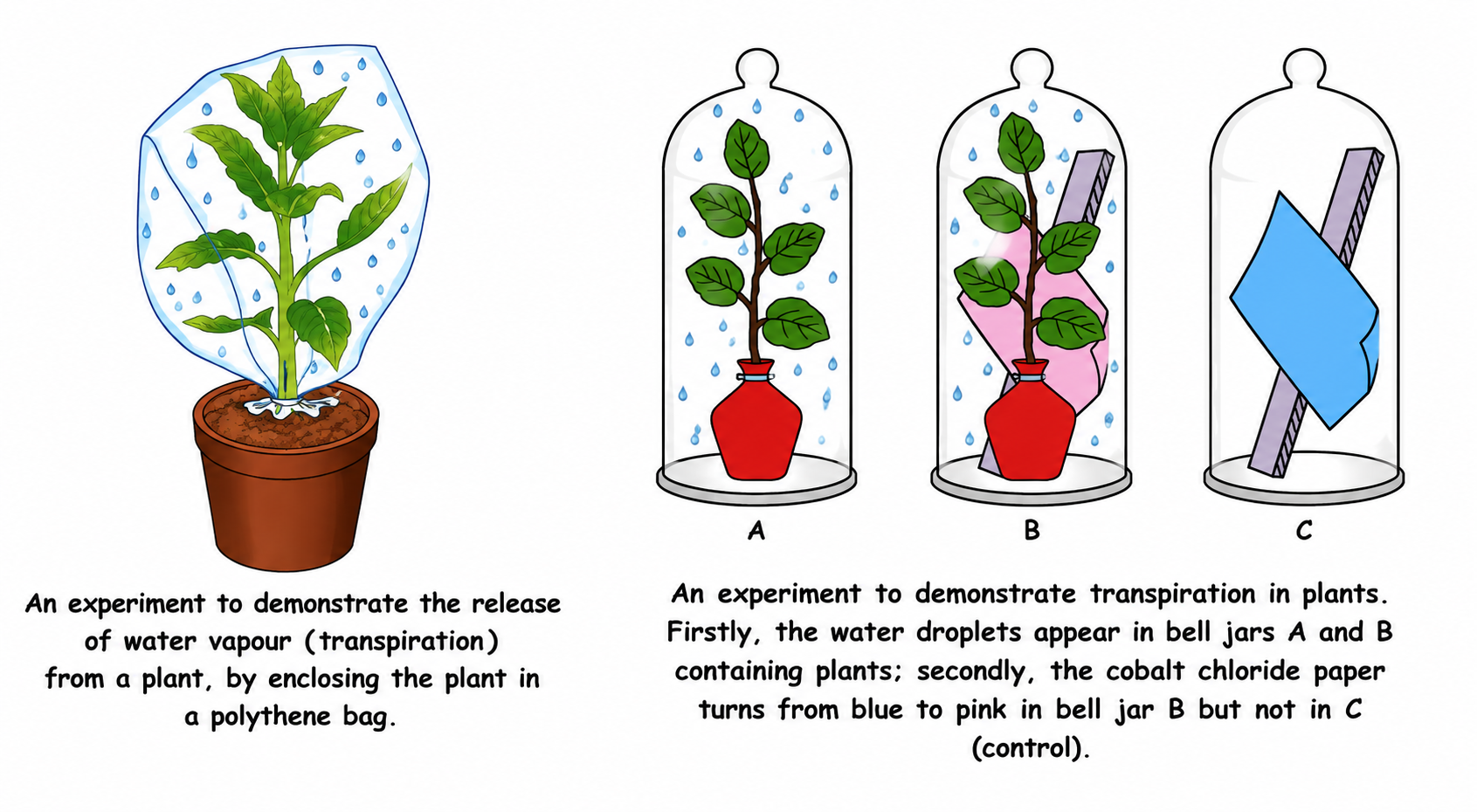
Fig. 5.1 & 5.2: Demonstration of Transpiration. A potted plant covered
by a bell jar shows condensed water drops. Cobalt chloride paper
inside turns from blue to pink.
5.3 Measurement of Transpiration
The rate of transpiration can be measured using different methods:
1. Weighing Methods
-
Method A: A small lightweight potted plant can be
weighed before and after a certain period of time. The soil surface is
covered to prevent direct evaporation. The loss in weight corresponds
to the amount of water lost by transpiration.
-
Method B: Using a test tube filled with water and a
leafy shoot. A few drops of oil are added on the water surface to
prevent evaporation. The test tube is weighed. The difference in
weight after a few hours indicates transpiration loss.
2. Potometer Method (Ganong's Potometer)
Potometer: A device that measures the rate of
water uptake by a cut shoot. Since water uptake is almost
equal to the water lost through transpiration, it is used to measure
the rate of transpiration.
In Ganong's potometer, a twig is fitted into a water-filled apparatus.
An air bubble is introduced into the horizontal graduated capillary
tube. As water is lost by transpiration, the shoot absorbs water,
pulling the air bubble forward. The volume of water lost is measured by
reading the movement of the air bubble on the scale.
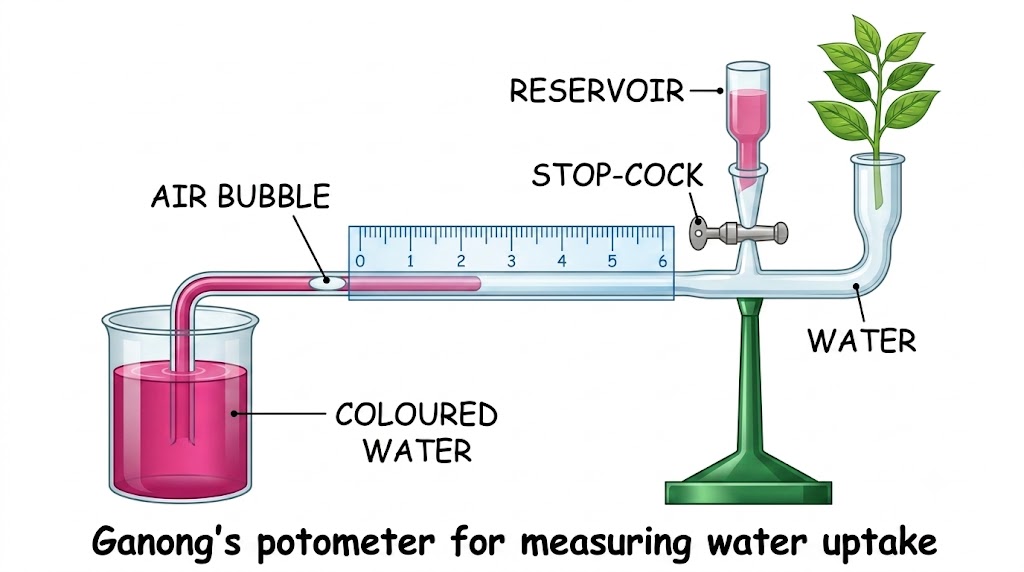
Fig. 5.4: Ganong's Potometer for measuring the rate of water uptake.
Note the graduated capillary tube, the air bubble, and the water
reservoir used to reset the bubble.
Limitations of Ganong's Potometer (ICSE Frequent Question)
- Introducing the air bubble is not very easy.
- The twig may not remain fully alive for a long time.
-
Any slight change in the outside air temperature may affect the
position of the air bubble in the capillary tube.
5.4 Kinds of Transpiration
Transpiration from the aerial parts of a plant occurs in three ways:
-
Stomatal transpiration: Occurs through the stomata
present mostly on leaves. It accounts for the maximum water loss
(about 90%).
-
Cuticular transpiration: Occurs directly from the
surface of the leaves and stems through the cuticle.
-
Lenticular transpiration: Occurs from the lenticels,
which are minute openings on the surface of old woody stems and twigs.
Mechanism of Stomatal Transpiration
Leaves have numerous minute openings called stomata on
their lower surface (in dicots). Inside the leaf, there is a large
amount of spongy mesophyll tissue with interconnected intercellular
spaces.
Water absorbed by roots rises up through the xylem and reaches the
mesophyll cells. Water evaporates from the damp surfaces of these cells
into the intercellular spaces as water vapour. From here, the vapour
diffuses out into the atmosphere through the stomata.
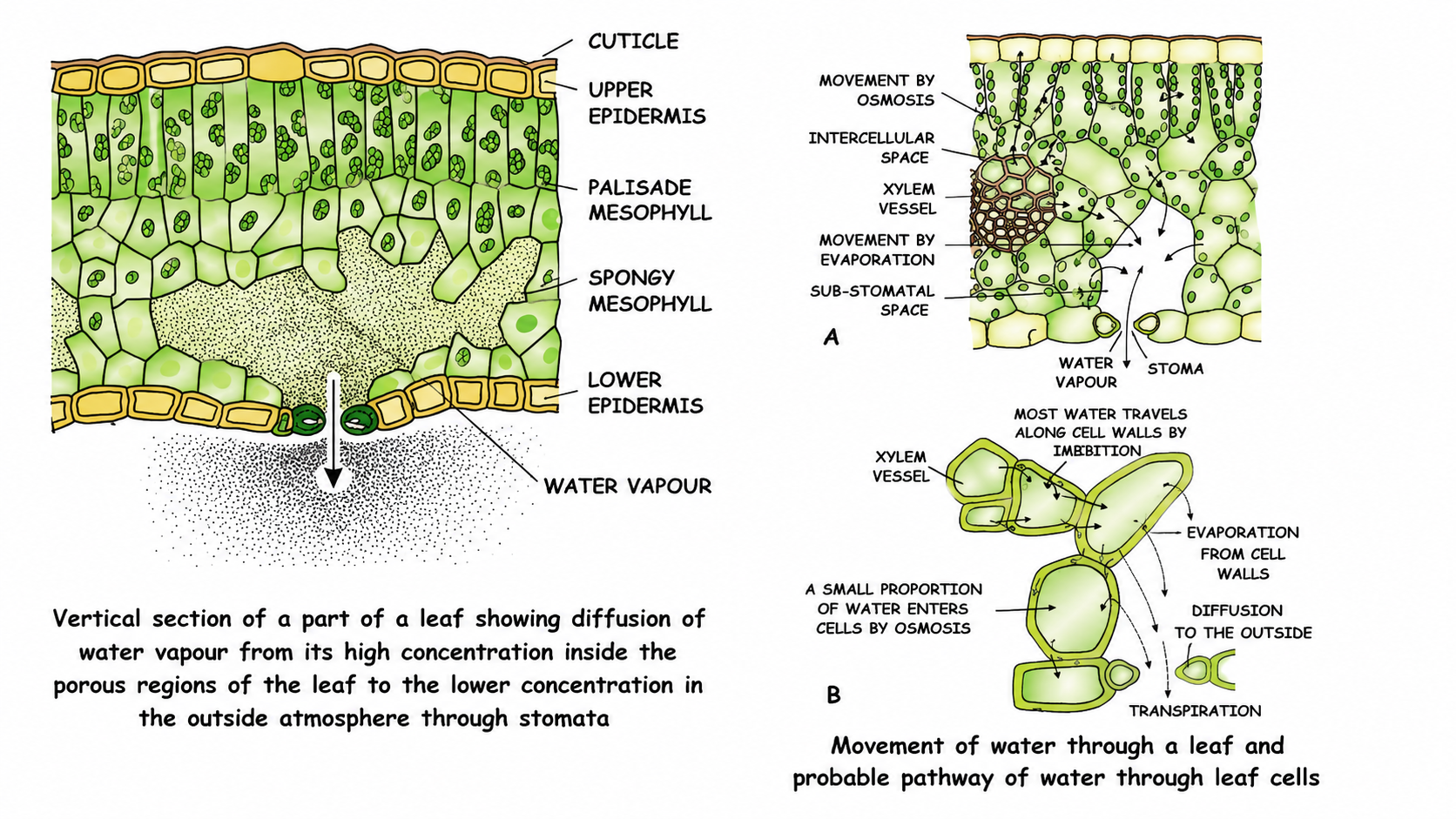
Fig. 5.5: Vertical section of a leaf showing the pathway of water.
Xylem → Mesophyll cells → Intercellular spaces (as vapour)
→ Stomata.
Stomatal Regulation (Opening and Closing)
The stomata are regulated by two bean-shaped
guard cells. The inner walls of the guard cells (facing
the pore) are thick and stiff, while the outer walls are thin and
elastic.
-
During the day: Guard cells photosynthesise, produce
glucose, and their cell sap becomes hypertonic. They absorb water from
adjacent cells by endosmosis and become
turgid. The thin outer walls bulge
out, pulling the thick inner walls apart, thereby
opening the stoma.
-
During the night: Glucose is used up or converted to
starch, the cell sap becomes hypotonic, and water leaves the guard
cells by exosmosis. They become
flaccid, and the inner walls
straighten, thereby closing the stoma.
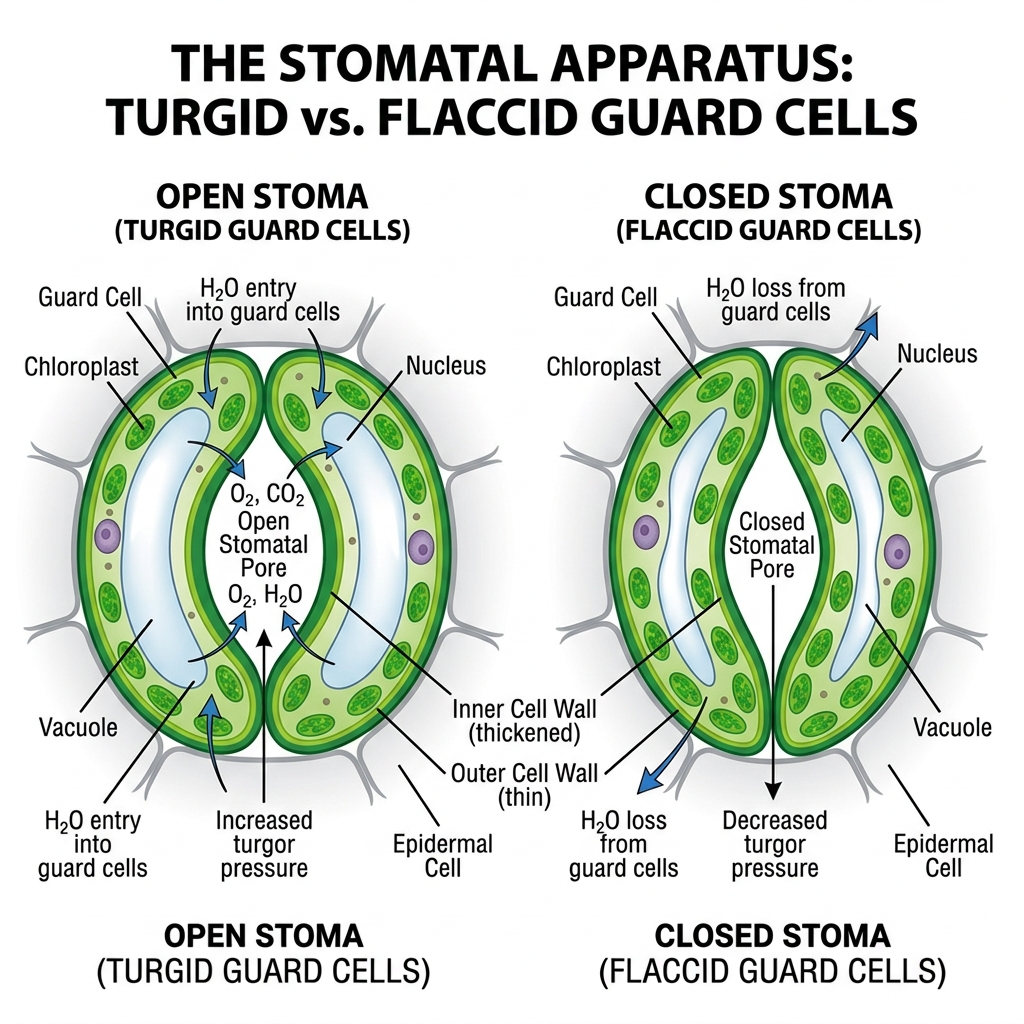
Fig. 5.6: Stomatal apparatus. Left: Turgid guard cells (Stoma open).
Right: Flaccid guard cells (Stoma closed). Note the chloroplasts
inside the guard cells.
Experiment: Unequal Transpiration in a Dicot Leaf
If you tie pieces of dry cobalt chloride paper on both the upper and
lower surfaces of a dicot leaf using glass slides and clips, the paper
on the lower surface turns pink much faster. This
proves that transpiration is more rapid on the lower surface because
there are more stomata on the lower epidermis of a dicot leaf.
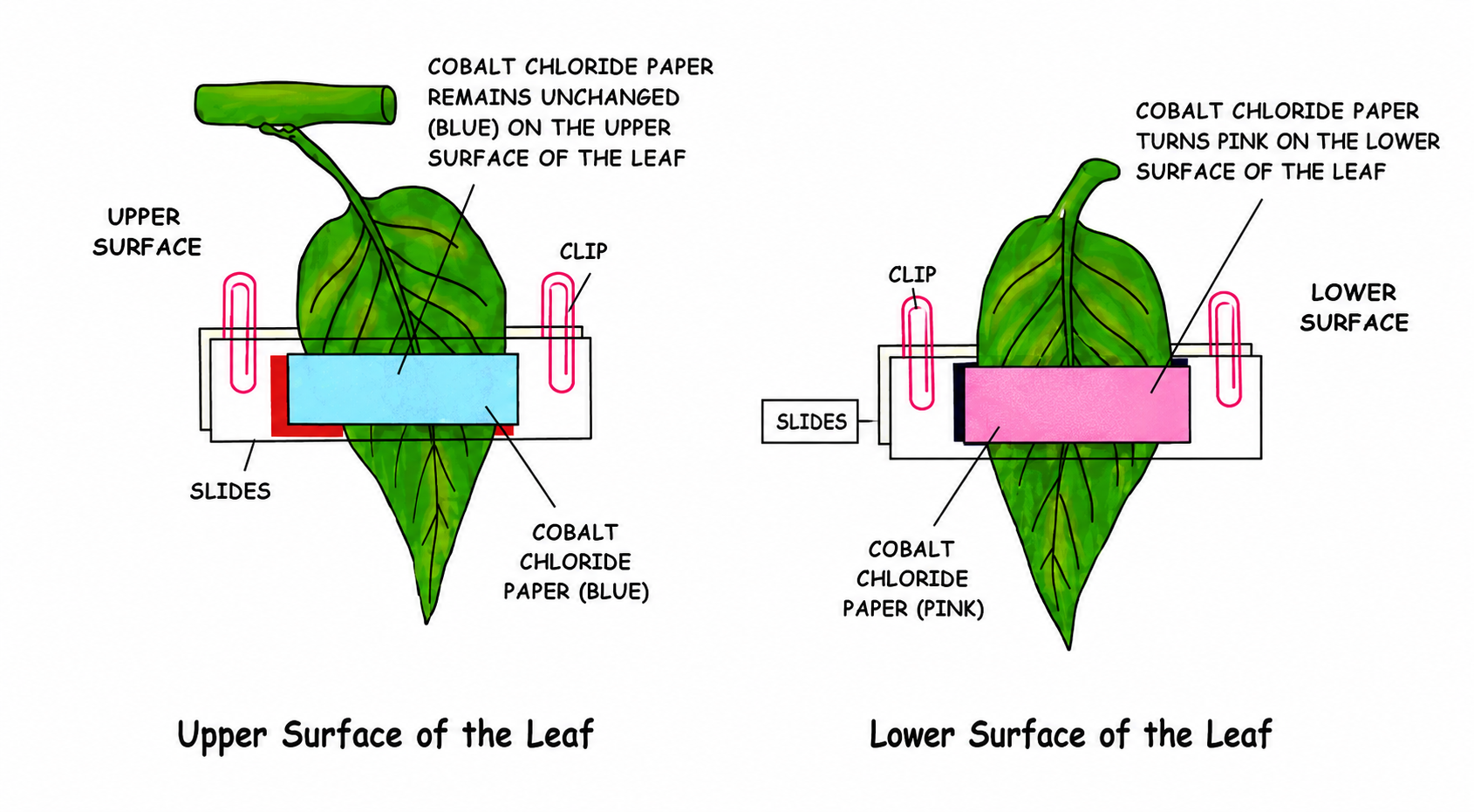
Fig. 5.8: Experiment to show unequal transpiration from the two
surfaces of a dorsiventral leaf using cobalt chloride paper, glass
slides, and clips.
5.5 Factors Affecting Transpiration
A. External Factors
| Factor |
Effect on Transpiration Rate |
Reason |
| Sunlight |
Increases |
Stomata open in light and close in darkness. High light intensity
also increases leaf temperature.
|
| Temperature |
Increases |
Higher temperature increases the rate of evaporation of water from
cell surfaces.
|
| Velocity of Wind |
Increases |
Wind blows away water vapour surrounding the leaves, preventing
air saturation and speeding up evaporation.
|
| Humidity |
Decreases |
If the outside air is already humid (saturated with moisture), it
cannot easily hold more water vapour.
|
| Carbon dioxide |
Decreases |
An increase in $CO_2$ concentration in the outside air causes
stomata to close.
|
| Atmospheric Pressure |
Increases (at low pressure) |
As atmospheric pressure decreases (like at high altitudes), the
rate of evaporation and transpiration increases.
|
B. Internal Factors
-
Water content of the leaves: If the water content
decreases due to insufficient absorption by roots, the leaves wilt,
stomata close, and transpiration drops.
5.6 Adaptations in Plants to Reduce Transpiration
Plants living in dry climates (Xerophytes) evolve special adaptations to
conserve water:
-
Sunken stomata: Stomata are hidden in pits (e.g.,
Nerium) preventing direct exposure to wind.
-
Fewer stomata: The absolute number of stomata is
reduced.
-
Narrow leaves: Leaves become narrower (e.g., Pine)
or turn into spines (e.g., Cactus) to reduce surface area.
-
Thick cuticle: Leaves are covered by a thick waxy
cuticle (e.g., Banyan).
-
Loss of leaves: In some cases, leaves drop off, or
are entirely absent, and the stem becomes flattened, green, and
photosynthetic (e.g., Cactus).
5.7 Significance of Transpiration
-
Cooling Effect: Evaporation reduces temperature. The
latent heat of evaporation provides a cooling effect to the plant
body, preventing heat injury under the hot sun.
-
Suction Force (Transpiration Pull): As water
evaporates from leaves, a suction force is created at the top of the
plant. This "transpiration pull" acts as a major force drawing water
and minerals upwards from the roots (Ascent of sap).
-
Distribution of Water and Minerals: It helps
distribute water and dissolved mineral salts uniformly to all parts of
the plant.
Transpiration vs Evaporation
Evaporation is a purely physical process that occurs
from any free water surface and cannot be controlled.
Transpiration is a physiological process that occurs
only from living plants and is controlled by internal factors like the
opening and closing of stomata.
5.8 Guttation and Bleeding
Guttation
In certain plants (like tomato, grass, banana, nasturtium), the root
pressure is very high and transpiration is very low (especially during
early, humid mornings or nights). The excess water is forced out in the
form of liquid droplets along the margins of the leaves.
These droplets escape from special pore-bearing structures called
Hydathodes. This process of losing
water in liquid form is called Guttation.
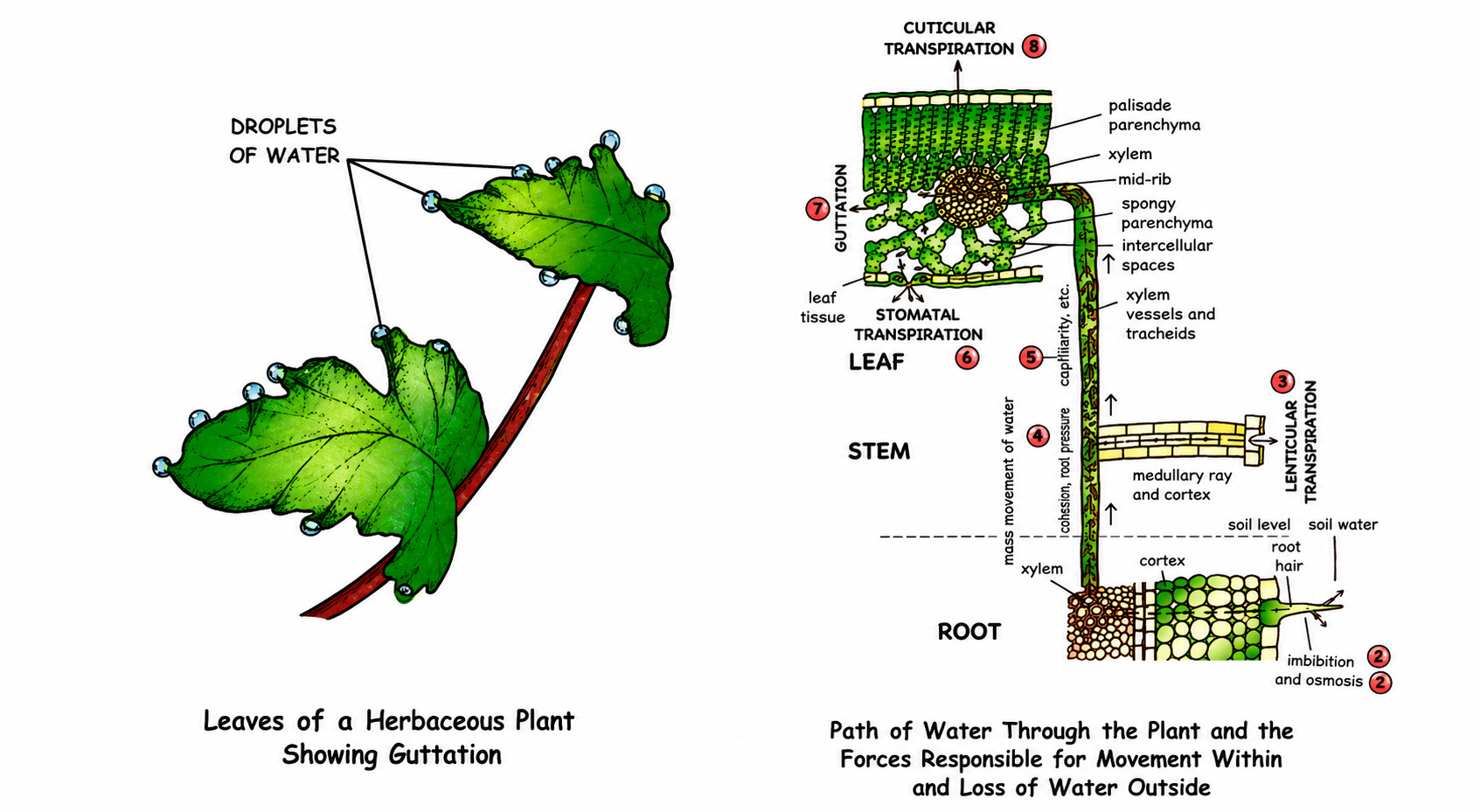
Fig. 5.10: Guttation in a leaf. Note the water droplets exclusively at
the margins (hydathodes), not the entire surface.
Bleeding
The exudation of plant sap from any cut or injured part of a plant (like
a broken stem) is called Bleeding. It happens due to
high root pressure pushing the sap upwards.
Exam Practice Questions (ICSE PYQ Trends)
ICSE FAVOURITE
Based on the Ganong's Potometer diagram:
-
What does the apparatus measure?
Ans: It measures the rate of water uptake by a cut
shoot.
-
Why is a cut shoot used?
Ans: To allow direct continuous uptake of water
from the apparatus to observe the movement of the air bubble.
-
How is the air bubble introduced into the capillary tube?
Ans: By lifting the bent capillary tube above the
coloured water for a moment to let a small amount of air enter, and
dipping it back.
-
What is the function of the reservoir?
Ans: Opening the stopcock of the reservoir allows
water to flow into the capillary tube, pushing the air bubble back
to its starting position for a new reading.
REASONING Answer the following:
-
Why do some plants wilt during midday even when soil has plenty
of water?
Ans: During midday, the rate of transpiration
exceeds the rate of absorption of water by the roots. The cells lose
turgidity, causing wilting. They recover in the evening when
transpiration reduces.
-
Why is it better to water plants in the evening?
Ans: Transpiration is low in the evening, so water
absorbed by roots helps the plant retain turgidity overnight.
-
Why is a drop of oil placed over water in the test tube
experiment for transpiration?
Ans: To prevent any physical evaporation of water
directly from the surface, ensuring the loss in weight is solely due
to physiological transpiration by the shoot.
DIFFERENCES Differentiate between the
following pairs:
-
Transpiration and Guttation: Transpiration is loss
of water as vapour, occurs mostly through stomata during the day.
Guttation is loss of water as liquid droplets, occurs through
hydathodes at leaf margins, mainly during night or early morning.
-
Stomata and Lenticels: Stomata are found mainly on
the epidermis of leaves and open/close based on turgidity of guard
cells. Lenticels are minute permanent openings found on older woody
stems and never close.
