
Class 10 Science • Chapter 10 (Deep Detail)
The human eye is one of the most valuable and sensitive sense organs. It enables us to see the wonderful world and colours around us. It is like a camera with a lens system that forms an image on a light-sensitive screen called the retina.
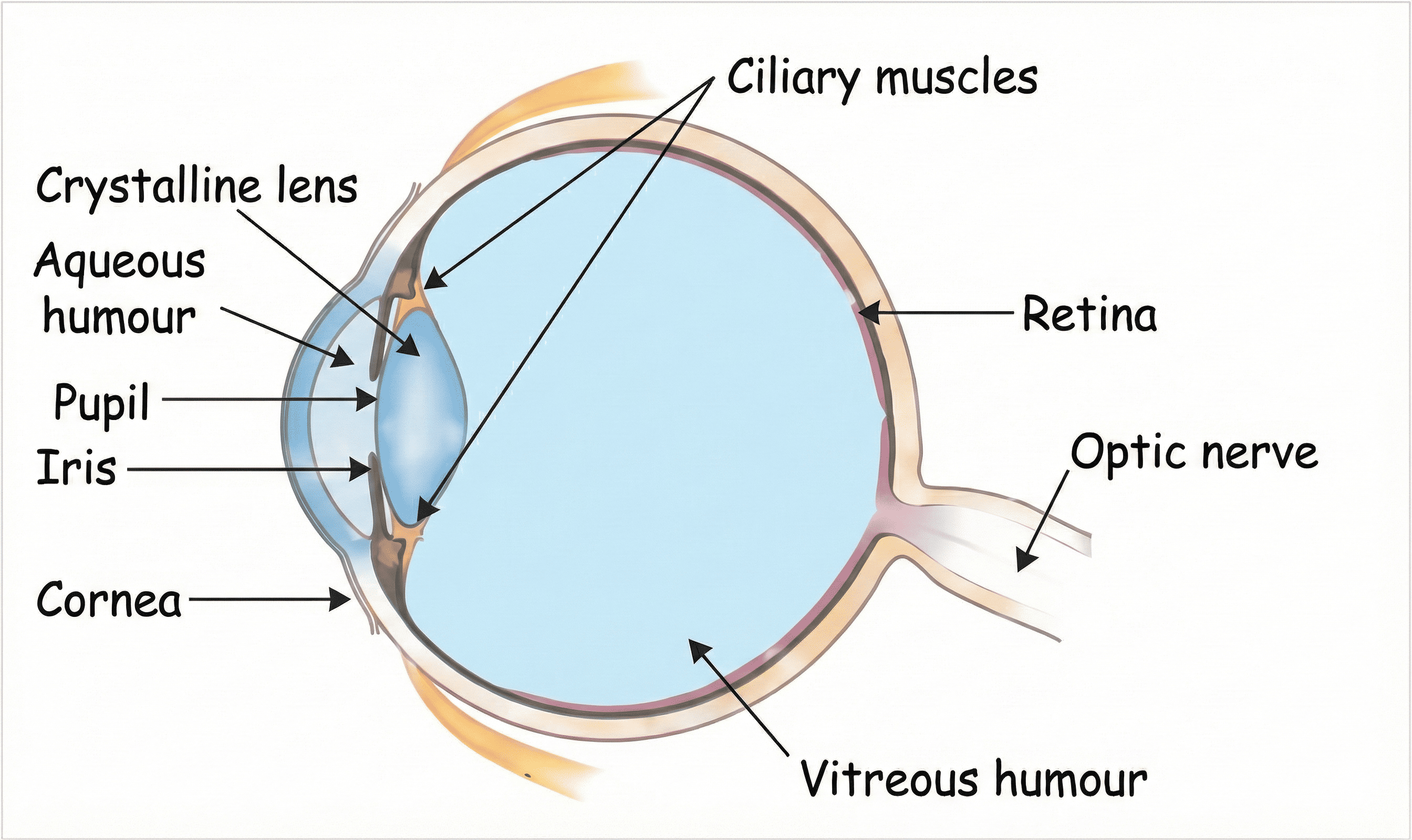 Figure 1: Structure of the Human Eye
| Part | Function |
|---|---|
| Cornea | Transparent front part; refracts light entering the eye. |
| Iris | Coloured diaphragm; controls the size of the pupil. |
| Pupil | Opening in the centre of the iris; regulates the amount of light entering the eye. |
| Ciliary Muscles | Hold the eye lens; adjust its curvature and focal length (accommodation). |
| Eye Lens | Convex lens; focuses light onto the retina. |
| Retina | Light-sensitive screen; contains rods (dim light) and cones (bright light & colour). |
| Optic Nerve | Transmits electrical signals from the retina to the brain. |
| Aqueous Humour | Watery fluid between cornea and lens; nourishes and maintains pressure. |
| Vitreous Humour | Jelly-like fluid filling the eyeball; maintains shape and supports retina. |
| Sclera | Outer white protective layer of the eyeball. |
| Choroid | Middle layer; supplies blood to the retina and absorbs stray light. |
The ability of the eye lens to adjust its focal length to see objects clearly at different distances is called accommodation.
The minimum distance at which the eye can see objects clearly without strain is called the near point (or least distance of distinct vision), which is 25 cm for a normal eye. The far point for a normal eye is infinity.
Sometimes, the eye may lose its power of accommodation due to various reasons, leading to defects of vision. The three common defects are Myopia, Hypermetropia, and Presbyopia.
A person with myopia can see near objects clearly but cannot see distant objects distinctly.
Causes:
Due to these, the image of a distant object is formed in front of the retina.
Correction: A concave lens (diverging lens) of appropriate power is used to correct this defect. The concave lens diverges the light rays before they reach the eye lens, allowing the image to form on the retina.
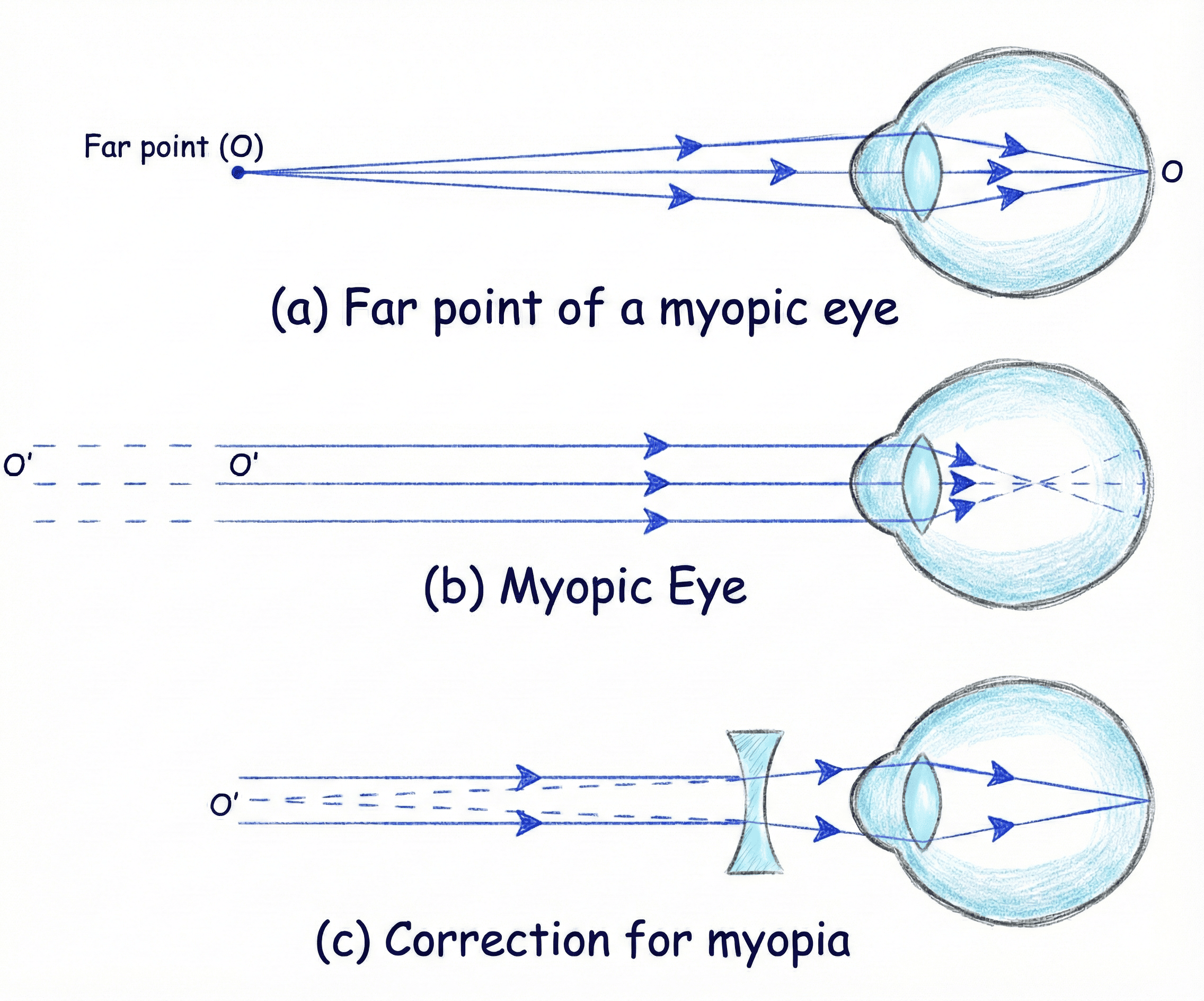 Figure 2: Myopia — Image forms in front of retina; corrected by Concave
Lens.
Figure 2: Myopia — Image forms in front of retina; corrected by Concave
Lens.
A person with hypermetropia can see distant objects clearly but cannot see near objects distinctly.
Causes:
Due to these, the image of a near object is formed behind the retina.
Correction: A convex lens (converging lens) of appropriate power is used to correct this defect. The convex lens converges the light rays before they reach the eye lens, allowing the image to form on the retina.
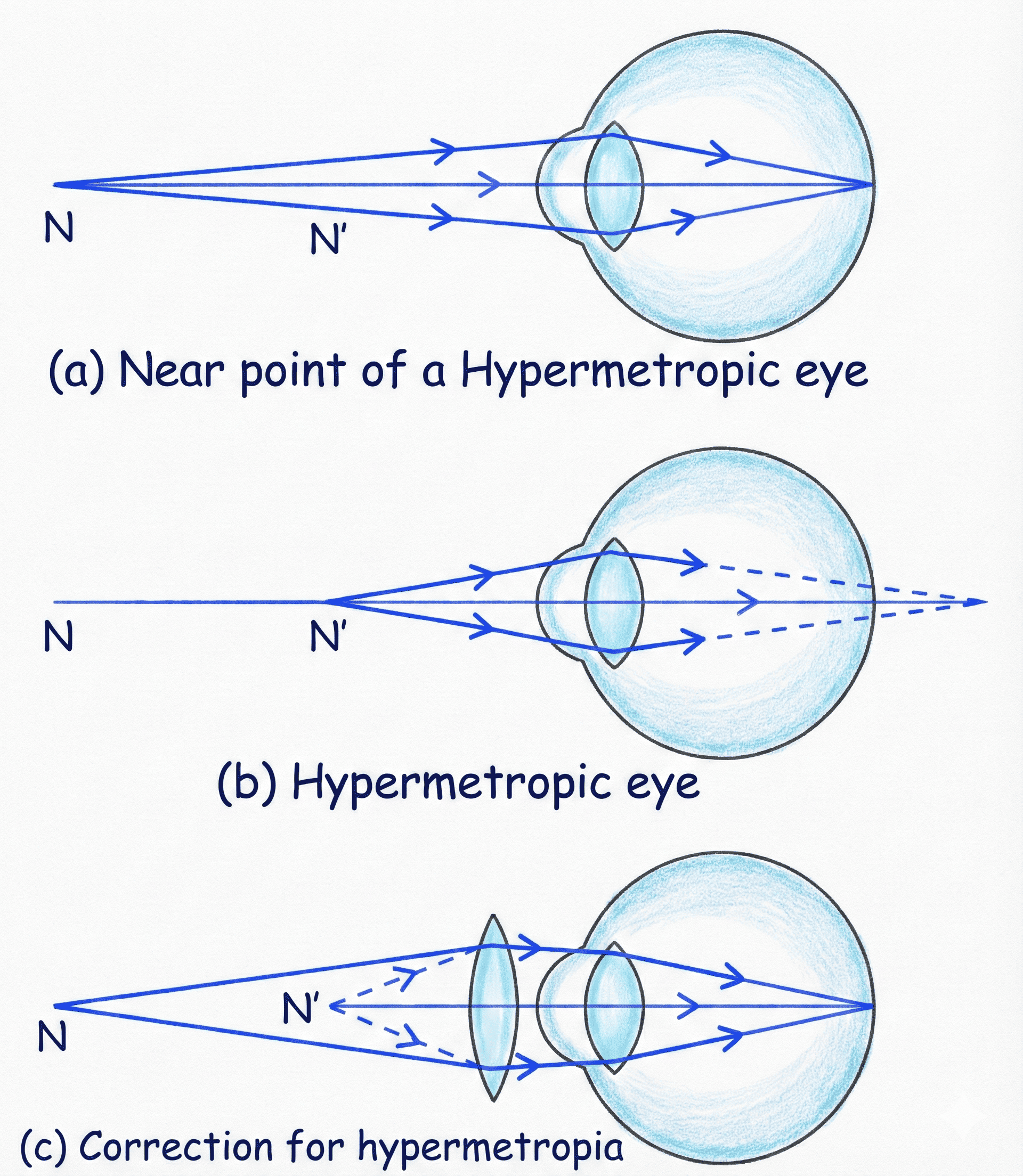 Figure 3: Hypermetropia — Image forms behind retina; corrected by Convex
Lens.
Figure 3: Hypermetropia — Image forms behind retina; corrected by Convex
Lens.
This defect arises due to the gradual weakening of the ciliary muscles and the decreasing flexibility of the eye lens with age. It causes difficulty in seeing near objects comfortably and distinctly. Sometimes, people suffer from both myopia and hypermetropia. Such people often require bifocal lenses. The upper part is a concave lens (for distant vision), and the lower part is a convex lens (for near vision).
A prism is a transparent optical element with flat, polished surfaces that refract light. When a ray of light passes through a prism, it deviates from its original path.
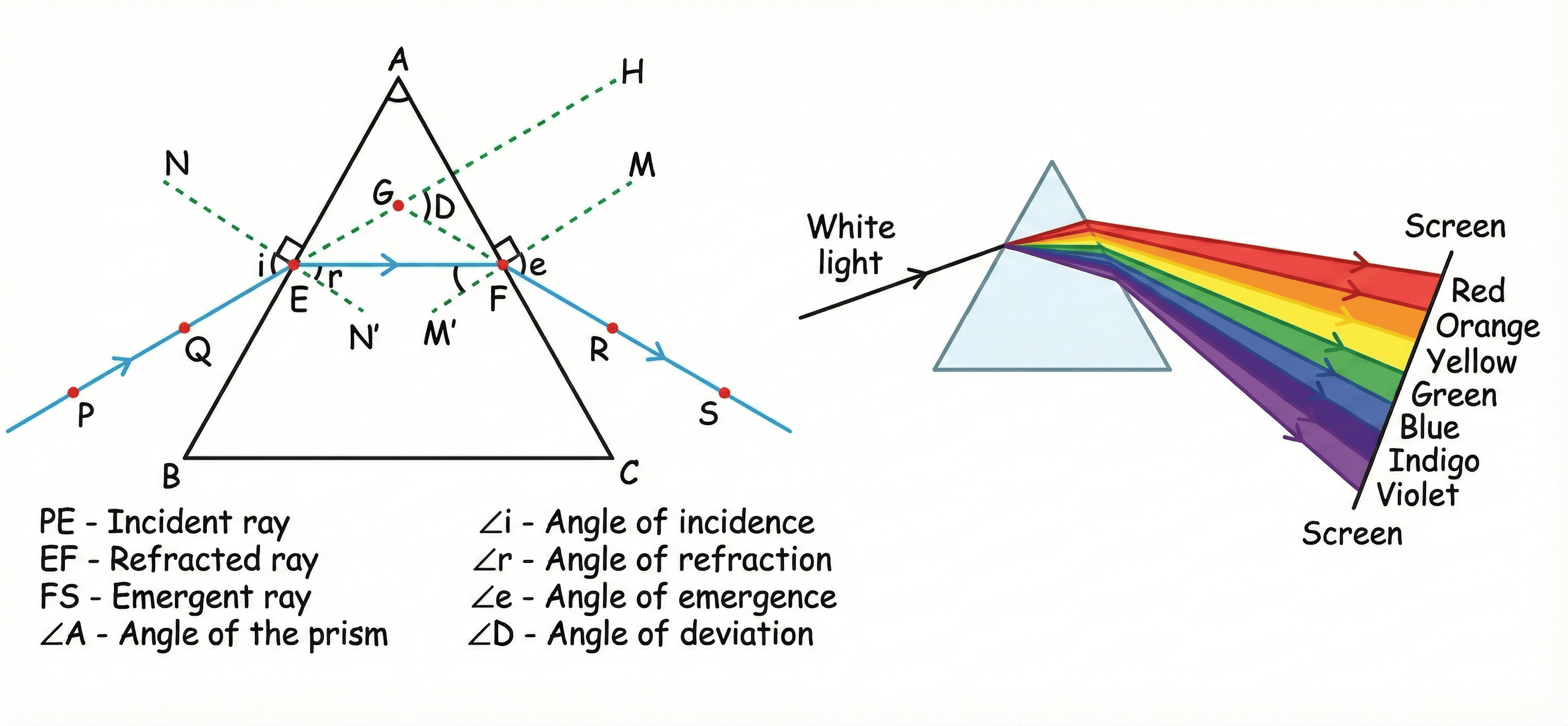 Figure 4: Refraction and Dispersion through a Glass Prism
When white light passes through a glass prism, it splits into its constituent seven colours (VIBGYOR). This phenomenon is called dispersion of light. The sequence of colours is Violet, Indigo, Blue, Green, Yellow, Orange, and Red.
This happens because different colours of light travel at different speeds through the prism, causing them to refract at different angles. Violet light deviates the most, and red light deviates the least.
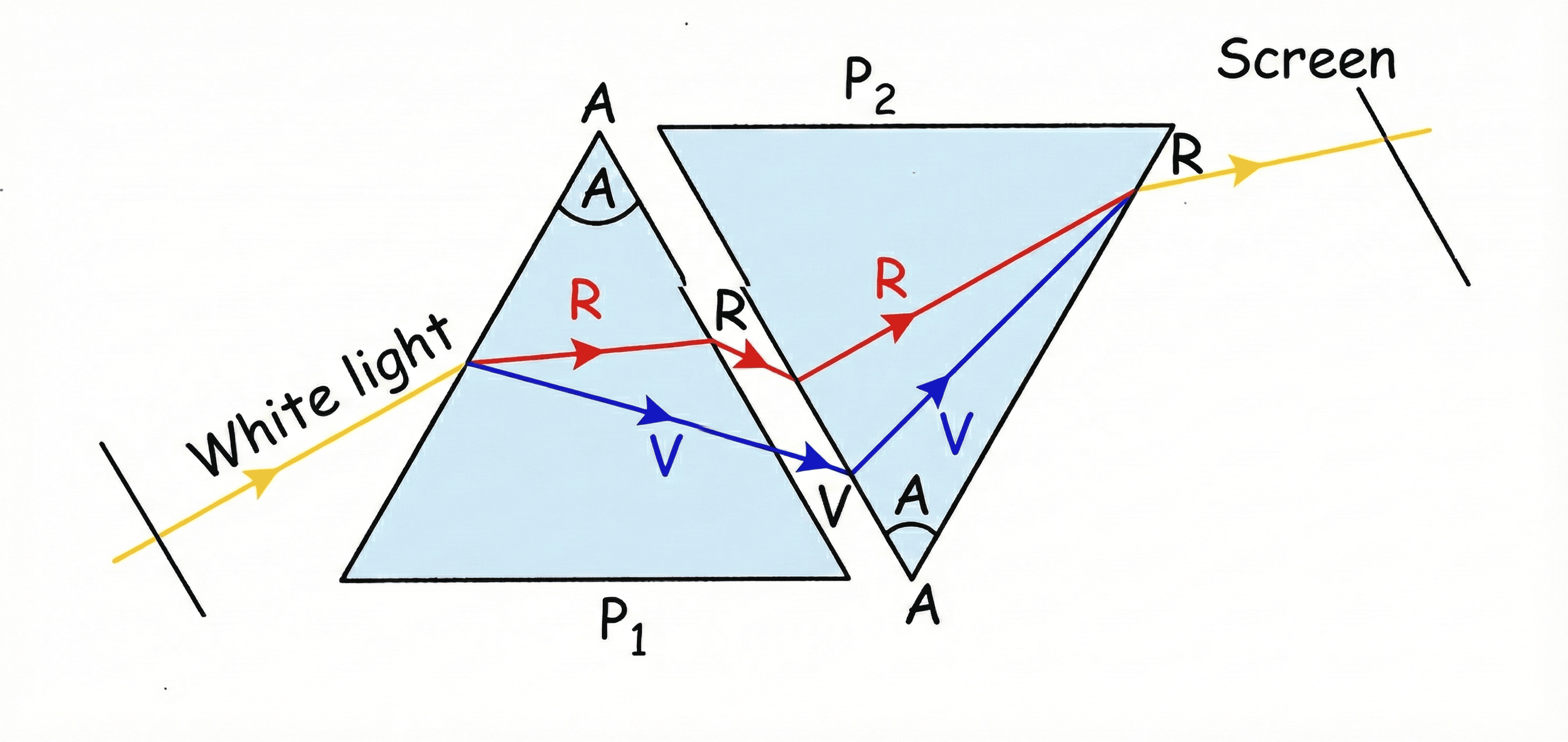 Figure 5: Recombination — Inverted 2nd Prism Reforms White Light from Spectrum
Isaac Newton was the first to show that if a second identical prism is placed in an inverted position with respect to the first prism, the seven colours of the spectrum recombine to form white light. This demonstrates that white light is composed of seven colours.
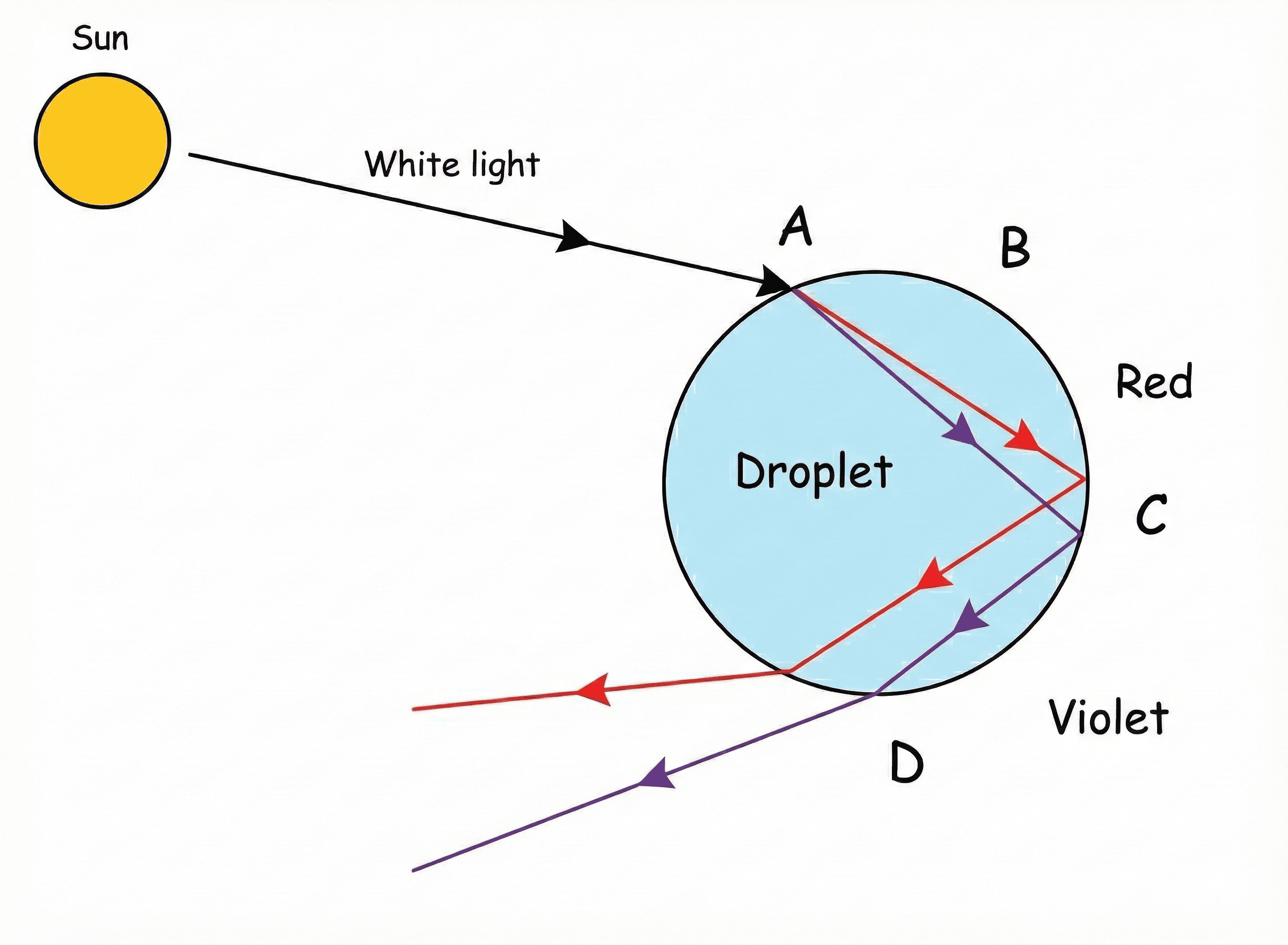 Figure 6: Rainbow Formation — Dispersion + Internal Reflection + Refraction in Water
Droplets
Figure 6: Rainbow Formation — Dispersion + Internal Reflection + Refraction in Water
Droplets
The refraction of light by the Earth's atmosphere is called atmospheric refraction. The refractive index of the atmosphere varies with altitude, being higher near the surface and gradually decreasing upwards.
Stars twinkle due to atmospheric refraction. As starlight enters the Earth's atmosphere, it undergoes continuous refraction due to varying refractive indices of different layers of air. This causes the apparent position of the star to fluctuate rapidly, and the amount of light reaching our eyes also varies, leading to the twinkling effect.
Stars: Act as point-sized sources of light. The path of light from a point source varies slightly due to atmospheric turbulence, causing the apparent position and brightness to fluctuate, hence twinkling.
Planets: Are much closer to Earth and appear as extended sources (a collection of many point sources). The variations in light from individual point sources average out to zero, so the net intensity of light reaching our eyes remains constant. Thus, planets do not twinkle.
The Sun is visible to us about 2 minutes before the actual sunrise and about 2 minutes after the actual sunset due to atmospheric refraction. When the Sun is slightly below the horizon, the light rays from the Sun travel through denser layers of the atmosphere, bending downwards towards the observer. This makes the Sun appear higher than its actual position.
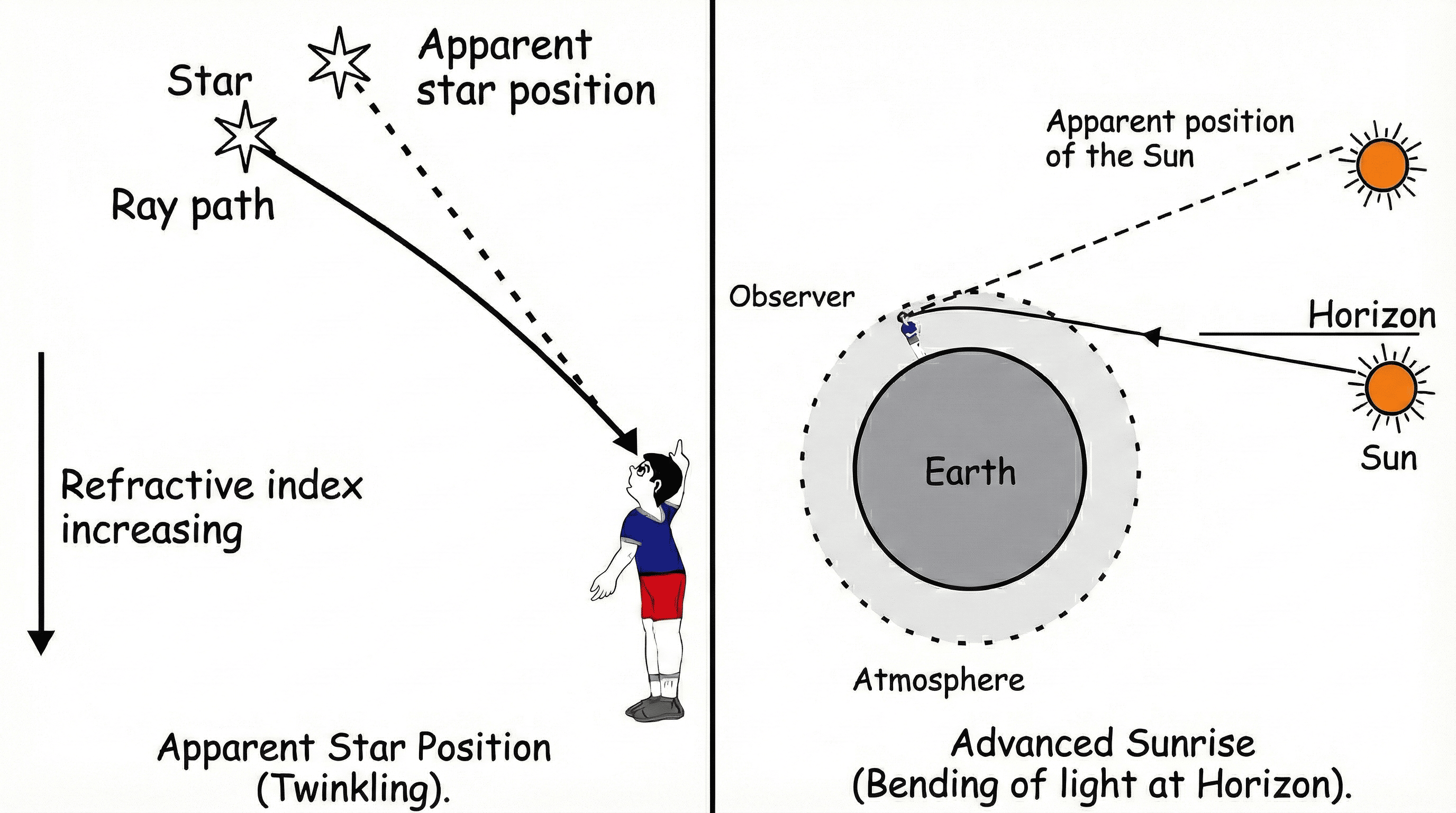 Figure 7: Atmospheric Refraction — Twinkling Stars & Advance Sunrise / Delayed
Sunset
Figure 7: Atmospheric Refraction — Twinkling Stars & Advance Sunrise / Delayed
Sunset
The phenomenon in which light rays are deflected from their straight path on striking an obstacle (like dust particles, air molecules, water droplets, etc.) is called scattering of light. The amount of scattering depends on the wavelength of light and the size of the scattering particles.
The scattering of light by colloidal particles (or very fine suspended particles) is known as the Tyndall effect. For example, when a beam of light enters a smoky room through a small hole, its path becomes visible due to the scattering of light by smoke particles.
The molecules of air and other fine particles in the atmosphere have a size smaller than the wavelength of visible light. These particles scatter blue light (shorter wavelength) more effectively than red light (longer wavelength). When sunlight passes through the atmosphere, the blue light is scattered in all directions, making the sky appear blue.
At sunrise and sunset, the Sun's rays have to travel a longer distance through the atmosphere. Most of the blue light and shorter wavelengths are scattered away by the atmospheric particles. The light that reaches our eyes is predominantly red and orange, which are scattered the least. Hence, the Sun appears reddish at sunrise and sunset.
Why Red for Danger? Red light has the longest wavelength among visible colours. It is scattered the least by fog, smoke, or dust particles in the atmosphere. Therefore, red light can travel the farthest without being significantly scattered, making it visible from a maximum distance and suitable for danger signals.