 ← Back to Practice Arena
Vardaan Learning Institute
vardaanlearning.com | 9508841336
Detailed Solutions: How Do Organisms Reproduce?
Topic 1: DNA Copying and Importance of Variation
1.
Ans: The basic event in reproduction is the creation of a DNA copy.
Biochemical Importance: DNA (Deoxyribonucleic acid) located in cell chromosomes contains all the biological blueprints and hereditary information needed to design and construct an organism. When a cell reproduces, it must duplicate its DNA so that both resulting daughter cells receive identical sets of genetic instructions, ensuring that they develop into the same species and maintain parental characteristics.
Biochemical Importance: DNA (Deoxyribonucleic acid) located in cell chromosomes contains all the biological blueprints and hereditary information needed to design and construct an organism. When a cell reproduces, it must duplicate its DNA so that both resulting daughter cells receive identical sets of genetic instructions, ensuring that they develop into the same species and maintain parental characteristics.
2.
Ans: DNA copying is accompanied by the creation of an additional cellular apparatus (organelles like mitochondria, ribosomes, ER, etc.) because a DNA molecule by itself cannot carry out life processes or survive.
Consequence: If a bare DNA molecule is transferred into another cell without any supporting cellular structure, the new cell's metabolic enzymes will not recognize it, and it will be degraded or fail to transcribe. A DNA molecule requires the entire surrounding cellular machinery to replicate, synthesize proteins, and maintain life.
Consequence: If a bare DNA molecule is transferred into another cell without any supporting cellular structure, the new cell's metabolic enzymes will not recognize it, and it will be degraded or fail to transcribe. A DNA molecule requires the entire surrounding cellular machinery to replicate, synthesize proteins, and maintain life.
3.
Ans: DNA copying is a complex biochemical reaction that is not 100% accurate because no biochemical reaction is completely flawless. The replication process has a tiny margins of error, which escape proofreading mechanisms.
Biological Consequence: These minor replication errors introduce small structural changes in the DNA sequence, leading to variations in the offspring. These variations are the primary source of diversity and evolution in living populations.
Biological Consequence: These minor replication errors introduce small structural changes in the DNA sequence, leading to variations in the offspring. These variations are the primary source of diversity and evolution in living populations.
4.
Ans: Variation refers to the differences in genetic and physical traits among individuals of the same species.
Importance: Environmental conditions (climate, temperature, water availability) change drastically over time. If a population of organisms is genetically identical (no variation) and a severe environmental change occurs, the entire species could be wiped out. Variations ensure that at least a few individuals possess traits that allow them to survive the change, preventing species extinction.
Importance: Environmental conditions (climate, temperature, water availability) change drastically over time. If a population of organisms is genetically identical (no variation) and a severe environmental change occurs, the entire species could be wiped out. Variations ensure that at least a few individuals possess traits that allow them to survive the change, preventing species extinction.
5.
Ans: Consider a population of bacteria living in temperate waters.
If the water temperature rises drastically due to global warming, most of these heat-sensitive bacteria will die. However, if there are a few individual bacteria in the population that carry a genetic variation allowing them to withstand higher heat, they will survive, multiply, and pass on this heat-resistant trait. The species is thus saved from total extinction, showcasing the survival value of variation.
If the water temperature rises drastically due to global warming, most of these heat-sensitive bacteria will die. However, if there are a few individual bacteria in the population that carry a genetic variation allowing them to withstand higher heat, they will survive, multiply, and pass on this heat-resistant trait. The species is thus saved from total extinction, showcasing the survival value of variation.
6.
Ans: The differences are:
- Asexual Reproduction: Involves a single parent; offspring are genetically identical clones showing no variation; highly rapid and energy-efficient.
- Sexual Reproduction: Involves two parents contributing gametes; offspring show distinct genetic variations due to genetic recombination; relatively slow and energy-intensive.
7.
Ans: A niche is a specific habitat and functional role that a species occupies within an ecosystem.
The consistency of DNA copying ensures that the body design, physical organs, and physiological capabilities of a species remain stable over generations, allowing them to continue occupying their specific ecological niche successfully. If DNA copying fluctuated widely, body designs would alter too rapidly, and the species would lose its adaptation to its niche.
The consistency of DNA copying ensures that the body design, physical organs, and physiological capabilities of a species remain stable over generations, allowing them to continue occupying their specific ecological niche successfully. If DNA copying fluctuated widely, body designs would alter too rapidly, and the species would lose its adaptation to its niche.
8.
Ans: Offspring of asexual reproduction are genetically identical because they are formed from a single parent through mitotic division, involving no gametic fusion or mixing of DNA.
Offspring of sexual reproduction show distinct variations because they are formed by the fusion of two different gametes (sperm and egg) from two parents. During the formation of gametes (meiosis), homologous chromosomes cross over and assort independently, generating unique genetic combinations.
Offspring of sexual reproduction show distinct variations because they are formed by the fusion of two different gametes (sperm and egg) from two parents. During the formation of gametes (meiosis), homologous chromosomes cross over and assort independently, generating unique genetic combinations.
Topic 2: Modes of Asexual Reproduction
9.
Ans: Fission is the division of a parent unicellular body into two or more independent daughter cells.
Differences:
Differences:
- Binary Fission: The parent cell divides into exactly two equal halves. E.g., Amoeba, Paramecium.
- Multiple Fission: The parent cell divides inside a protective cyst into many daughter cells simultaneously. E.g., Plasmodium (malarial parasite).
10.
Ans: The differences are:
- Amoeba: Has an irregular shape and lacks definite orientation structures. Binary fission can occur in any plane (horizontal, vertical, oblique).
- Leishmania: Causes kala-azar. It has a whip-like structure called a flagellum at one end. Binary fission occurs strictly in a longitudinal (vertical) plane relative to the flagellum to ensure both daughter cells receive a flagellar structure.
11.
Ans: Fragmentation is the splitting of a simple multicellular body into multiple fragments upon reaching maturity, with each fragment growing into a complete individual.
Why simple vs complex: Simple plants like Spirogyra consist of chains of uniform cells with minimal cell specialization. Complex organisms (like humans) have cells organized into tissues, organs, and organ systems. A single cell or fragment of human tissue lacks the specialized regenerative cells and complex genetic coding to construct an entire skeleton, muscle system, or brain from scratch.
Why simple vs complex: Simple plants like Spirogyra consist of chains of uniform cells with minimal cell specialization. Complex organisms (like humans) have cells organized into tissues, organs, and organ systems. A single cell or fragment of human tissue lacks the specialized regenerative cells and complex genetic coding to construct an entire skeleton, muscle system, or brain from scratch.
12.
Ans: Regeneration is the ability of an organism to regrow lost or damaged body parts, or reconstruct a whole body from a small cut piece.
Mechanism: Organisms like Planaria have specialized, proliferating stem cells (neoblasts). When cut, these cells divide rapidly, forming a mass of cells (blastema) that differentiates into various tissues (eyespots, pharynx) to complete the body.
Not a true method: True reproduction is a deliberate, natural developmental pathway. Regeneration is an accidental event�an animal does not rely on being cut into pieces as its primary method of multiplication.
Mechanism: Organisms like Planaria have specialized, proliferating stem cells (neoblasts). When cut, these cells divide rapidly, forming a mass of cells (blastema) that differentiates into various tissues (eyespots, pharynx) to complete the body.
Not a true method: True reproduction is a deliberate, natural developmental pathway. Regeneration is an accidental event�an animal does not rely on being cut into pieces as its primary method of multiplication.
13.
Ans: In Hydra, budding occurs due to active cell divisions at a specific site.
Mechanism: A small bulbous outgrowth called a bud forms on the lower body wall due to rapid mitotic divisions of regenerative cells. This bud grows continuously, developing tiny tentacles and a mouth at its tip. Once fully formed and capable of feeding, the base of the bud constricts, detaching it from the parent body to live as an independent Hydra.
Mechanism: A small bulbous outgrowth called a bud forms on the lower body wall due to rapid mitotic divisions of regenerative cells. This bud grows continuously, developing tiny tentacles and a mouth at its tip. Once fully formed and capable of feeding, the base of the bud constricts, detaching it from the parent body to live as an independent Hydra.
14.
Ans: The differences are:
- Yeast Budding: Occurs in a unicellular organism. The parent cell forms a small cytoplasmic projection. The nucleus divides mitotically, and one daughter nucleus moves into the bud. The bud is small and may form a chain of buds before separating.
- Hydra Budding: Occurs in a multicellular animal. The bud is a complex, tissue-level structure containing specialized ectodermal and endodermal cell layers, which detaches only after developing mature tentacles and a digestive cavity.
15.
Ans: Vegetative propagation is an asexual method where new plants are grown from vegetative parts like roots, stems, or leaves of the parent plant.
Artificial Methods:
Artificial Methods:
- Cutting: A small stem piece with buds is cut and planted in soil (e.g., rose, sugarcane).
- Layering: A lower branch is bent down and covered with soil to develop roots while still attached to the parent (e.g., jasmine, lemon).
- Grafting: The cut stem of one plant (scion) is joined to the rooted stem of another (stock) so they grow as a single plant (e.g., mango, apple).
16.
Ans: The key advantages are:
- Cloning: Offspring are genetically identical to the parent, preserving desirable qualities (e.g., fruit sweetness, disease resistance).
- Speed: Plants grown via vegetative propagation flower and bear fruit much earlier than those grown from seeds.
- Survival: It bypasses the delicate, high-mortality seed germination stage, ensuring higher propagation success.
17.
Ans: Seedless plants cannot produce viable seeds due to genetic mutations or triploid chromosome numbers. Because they cannot undergo sexual reproduction to form seeds, they rely entirely on vegetative propagation (like stem cuttings or grafting) to multiply and preserve their variety.
18.
Ans: Tissue Culture is a modern micropropagation method where plant cells or tissues are grown in an artificial nutrient medium under sterile conditions.
Steps: (1) A small tissue piece (explant) is removed from the growing tip. (2) It is placed in a nutrient agar medium containing hormones to stimulate rapid division, forming a cell mass called a callus. (3) The callus is transferred to a medium with differentiation hormones to form plantlets. (4) Plantlets are potted in soil.
Benefits: (1) Thousands of disease-free plants can be grown from a single explant. (2) Highly efficient for rare and slow-growing ornamental plants.
Steps: (1) A small tissue piece (explant) is removed from the growing tip. (2) It is placed in a nutrient agar medium containing hormones to stimulate rapid division, forming a cell mass called a callus. (3) The callus is transferred to a medium with differentiation hormones to form plantlets. (4) Plantlets are potted in soil.
Benefits: (1) Thousands of disease-free plants can be grown from a single explant. (2) Highly efficient for rare and slow-growing ornamental plants.
19.
Ans: In Rhizopus (bread mold), thread-like structures called hyphae develop erect branches with tiny, black, spherical structures called sporangia at their tips.
Mechanism: Inside each sporangium, the cytoplasm divides into hundreds of tiny, unicellular spores. Each spore is covered by a thick, protective wall that prevents water loss. When the sporangium matures, its wall ruptures, releasing the spores into the air. When these spores land on a moist food source, they germinate into new hyphae.
Mechanism: Inside each sporangium, the cytoplasm divides into hundreds of tiny, unicellular spores. Each spore is covered by a thick, protective wall that prevents water loss. When the sporangium matures, its wall ruptures, releasing the spores into the air. When these spores land on a moist food source, they germinate into new hyphae.
20.
Ans: Spore formation is highly advantageous because spores are extremely lightweight and can be dispersed long distances by wind or water. Furthermore, their thick, protective outer walls protect the delicate cellular material inside from harsh conditions like extreme heat, dryness, or lack of nutrients, allowing them to remain dormant for years until favorable conditions return.
21.
Ans: A diagram of binary fission in Amoeba demonstrates:
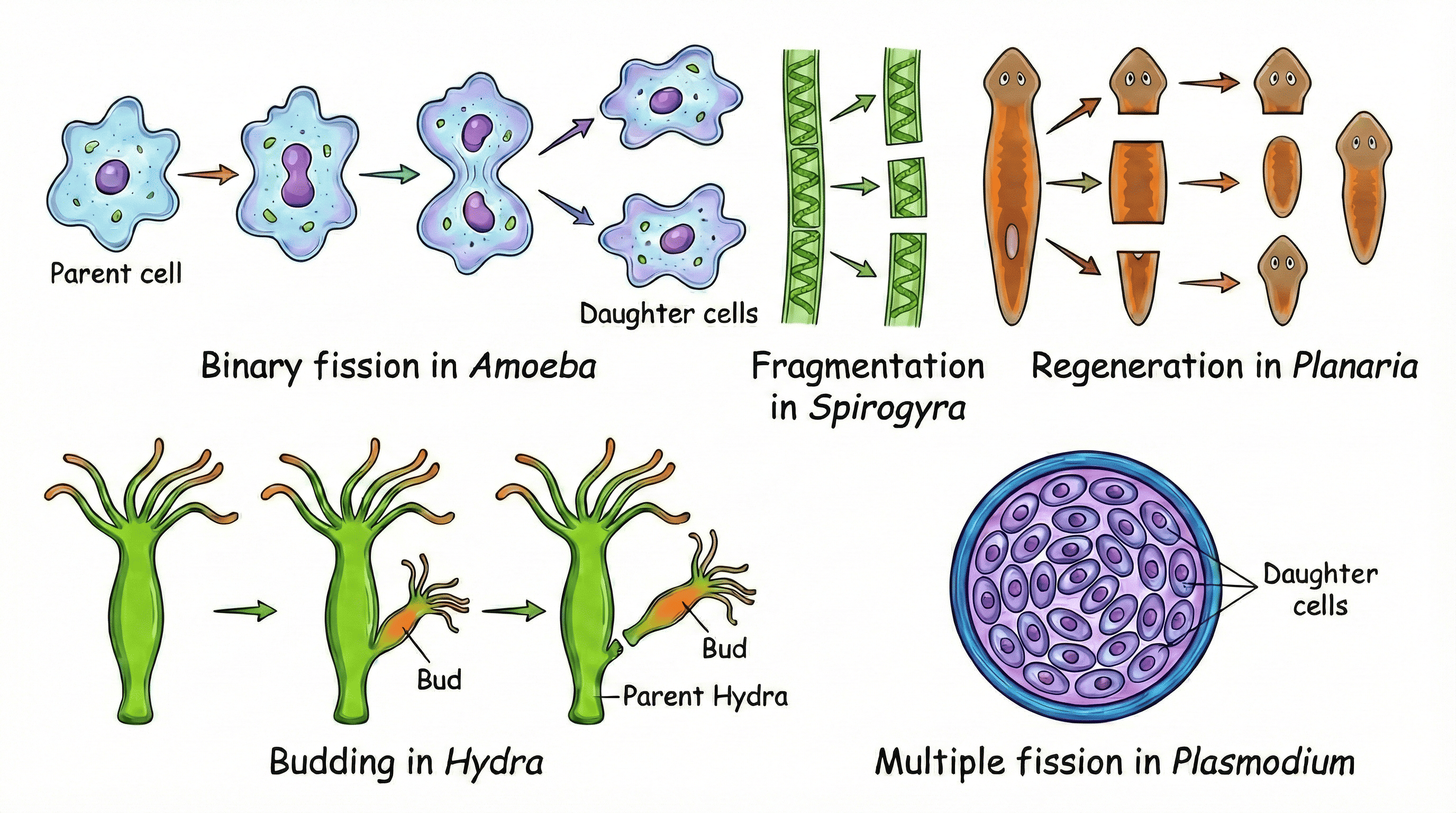
- Parent Amoeba with a single nucleus.
- Karyokinesis: The nucleus elongates and pinches in the middle.
- Cytokinesis: The cytoplasm begins to constrict.
- Splitting of the cytoplasm to form two separate, equal-sized daughter Amoeba cells.
22.
Ans: The differences are:
- Fragmentation: A natural, deliberate reproduction method in simple organisms with uniform cells. The body breaks naturally at maturity.
- Regeneration: An accidental survival mechanism in more complex organisms. It occurs only when the animal is cut or injured, and relies on specialized, localized stem cells.
23.
Ans: The modes of reproduction are:
- Plasmodium: Multiple Fission.
- Rhizopus: Spore Formation.
- Spirogyra: Fragmentation.
- Bryophyllum: Vegetative Propagation (via leaves).
Topic 3: Sexual Reproduction in Flowering Plants
24.
Ans: An angiosperm flower consists of:
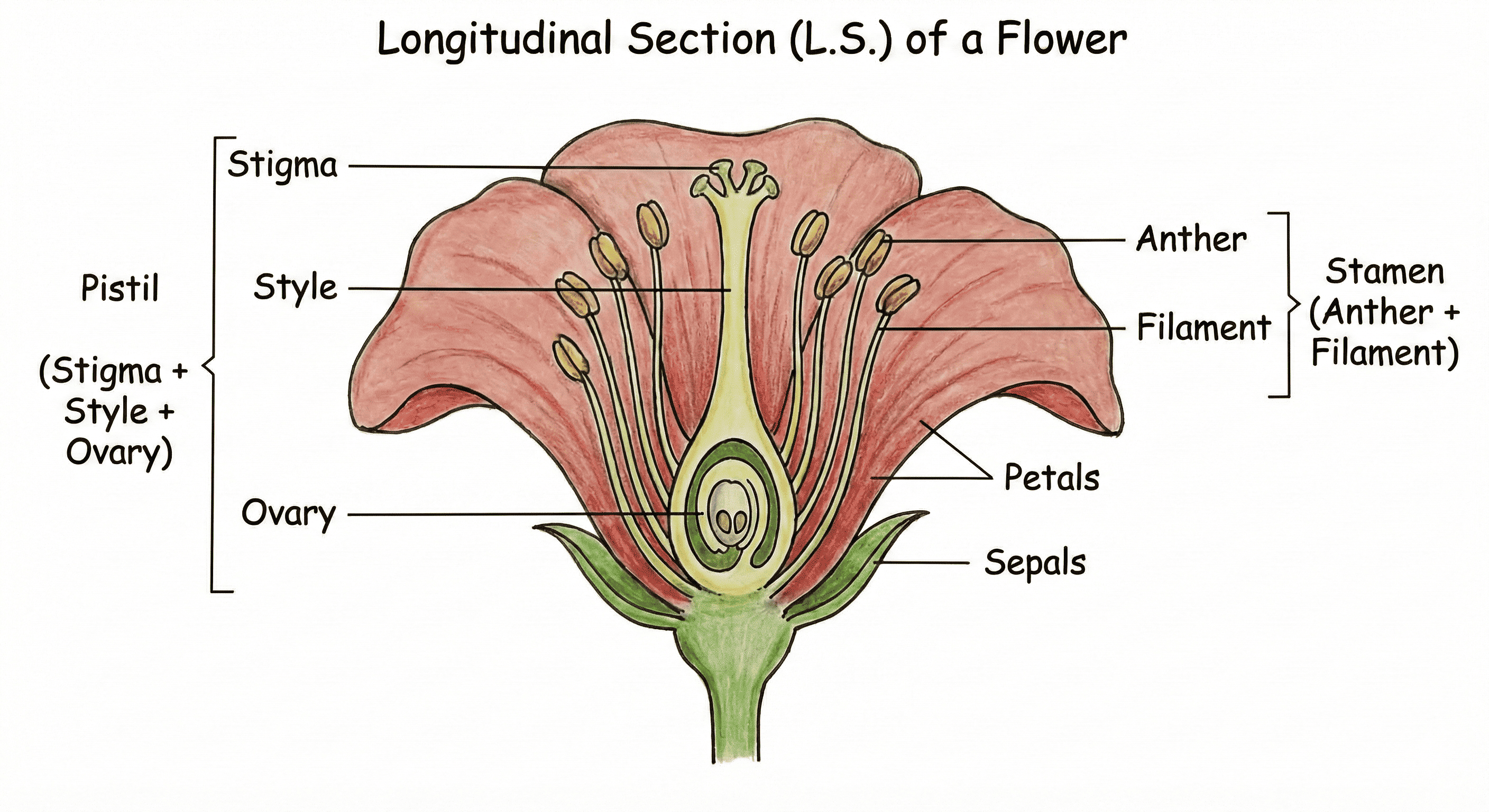
- Sepals: Green outer leaf-like structures; protect the flower bud.
- Petals: Brightly coloured; attract insect pollinators.
- Stamens (Male Part): Made of Anther (produces pollen grains) and Filament (supporting stalk).
- Pistil/Carpel (Female Part): Made of Stigma (sticky landing pad for pollen), Style (elongated tube), and Ovary (swollen base containing ovules/eggs).
25.
Ans: The differences are:
- Unisexual Flowers: Contain either stamens or carpels, but not both. E.g., papaya, watermelon.
- Bisexual Flowers: Contain both stamens and carpels in the same flower. E.g., hibiscus (china rose), mustard.
26.
Ans: Pollination is the transfer of pollen grains from the anther to the stigma of a flower.
Differences:
Differences:
- Self-pollination: Pollen is transferred to the stigma of the same flower or another flower on the same plant.
- Cross-pollination: Pollen is transferred to the stigma of a flower on a different plant of the same species.
27.
Ans: The external agents of cross-pollination are:
- Wind: Abiotic agent; blows light, powdery pollen grains (e.g., in maize).
- Water: Abiotic agent; carries pollen in aquatic plants (e.g., in Vallisneria).
- Insects/Animals: Biotic agents (bees, butterflies, birds); pollen sticks to their bodies as they visit flowers for nectar (e.g., in hibiscus).
28.
Ans: When a compatible pollen lands on the stigma, it absorbs sugary moisture and germinates.
Mechanism: The pollen grain grows a long pollen tube down through the style to reach the ovary. The pollen tube carries two male gametes. It enters the ovary and penetrates the ovule through a tiny opening called the micropyle. Inside the ovule, the male gametes are released to fertilize the female egg cell.
Mechanism: The pollen grain grows a long pollen tube down through the style to reach the ovary. The pollen tube carries two male gametes. It enters the ovary and penetrates the ovule through a tiny opening called the micropyle. Inside the ovule, the male gametes are released to fertilize the female egg cell.
29.
Ans: Double fertilization is a unique process in angiosperms involving two distinct fusion events:
- Syngamy: One male gamete ($n$) fuses with the female egg cell ($n$) to produce a diploid zygote ($2n$), which develops into the embryo.
- Triple Fusion: The second male gamete ($n$) fuses with two haploid polar nuclei ($2n$) in the center of the embryo sac to produce a triploid Primary Endosperm Nucleus (PEN) ($3n$), which develops into nutrient-rich endosperm tissue.
30.
Ans: A detailed diagram of pollen tube growth shows:
- Sticky stigma surface with germinated pollen grains.
- A pollen tube growing vertically down through the style tissue.
- The ovary containing an ovule with the embryo sac (egg cell, polar nuclei, synergids).
- Entry of the pollen tube through the micropyle of the ovule.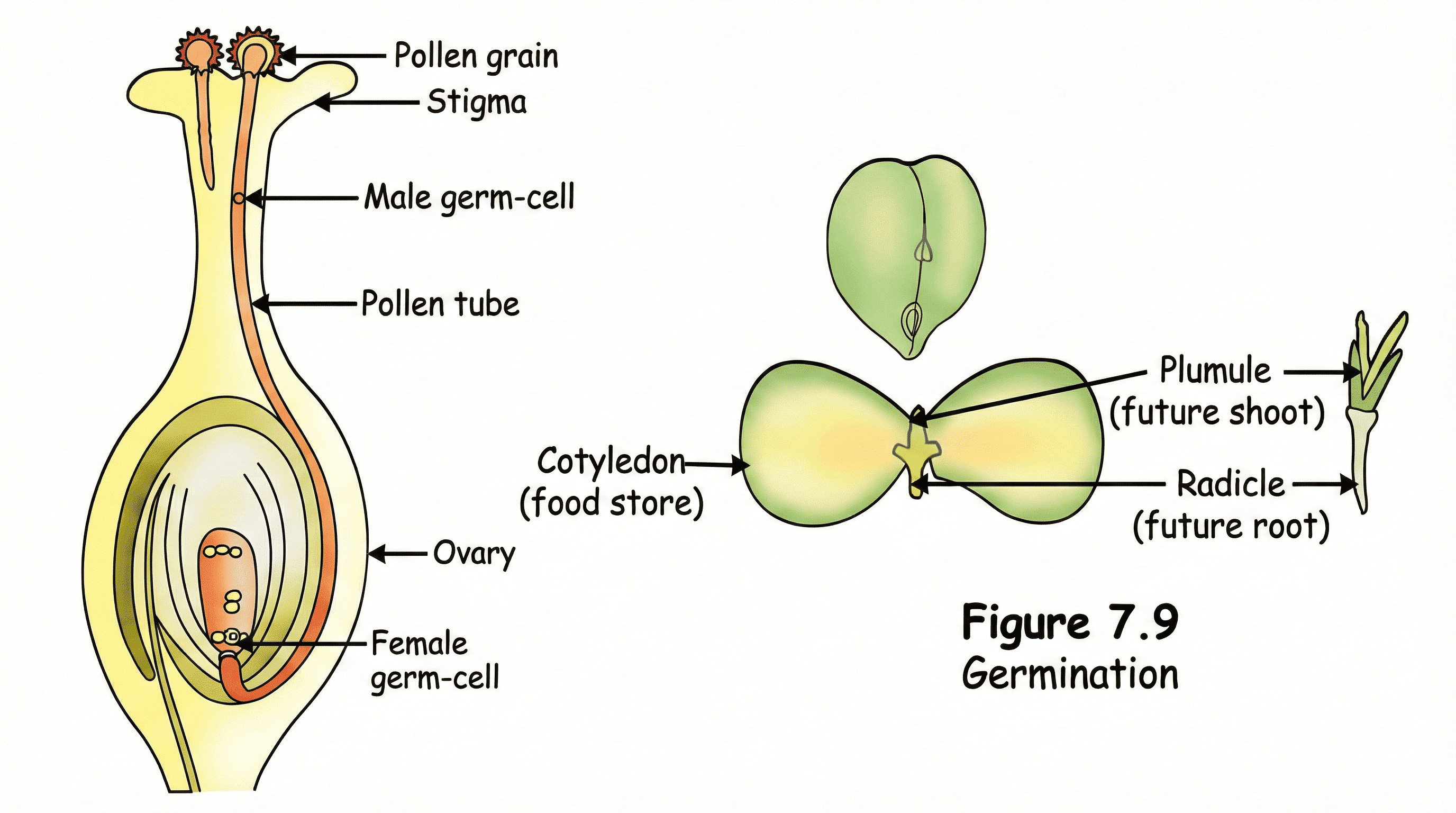
31.
Ans: After fertilization, the flower petals, sepals, stamens, style, and stigma wither and fall off.
Post-fertilisation developments:
Post-fertilisation developments:
- The zygote divides repeatedly to form an embryo inside the seed.
- The ovule develops a tough outer coat and converts into a seed.
- The ovary grows rapidly, ripens, and converts into a fruit (which protects the seeds).
32.
Ans: A seed is the mature fertilised ovule containing an embryo and stored food.
Dicot Seed Parts & Functions:
Dicot Seed Parts & Functions:
- Cotyledons (Seed Leaves): Large, fleshy structures that store food for the developing embryo until it can photosynthesize.
- Plumule: The embryonic shoot; grows upward to form the stem and leaves.
- Radicle: The embryonic root; grows downward into the soil to form the root system.
33.
Ans: Germination is the process by which the dormant embryo inside a seed becomes active and grows into a seedling under favorable conditions.
Primary Conditions: (1) Water: Rehydrates cells and activates metabolic enzymes. (2) Oxygen: Required for aerobic respiration to generate ATP. (3) Suitable Temperature: Crucial for optimal enzyme activity.
Primary Conditions: (1) Water: Rehydrates cells and activates metabolic enzymes. (2) Oxygen: Required for aerobic respiration to generate ATP. (3) Suitable Temperature: Crucial for optimal enzyme activity.
34.
Ans: Plant seeds contain stored food (in cotyledons) because once germinated, the seedling is anchored in soil and cannot move to search for food. It must rely on its stored starch reserves until it grows leaves to perform photosynthesis.
Animal embryos, however, do not need large, dry seed-like stores because they either absorb nutrients continuously from the mother's blood via the placenta, or are housed in eggs with liquid yolk in highly mobile parental habitats.
Animal embryos, however, do not need large, dry seed-like stores because they either absorb nutrients continuously from the mother's blood via the placenta, or are housed in eggs with liquid yolk in highly mobile parental habitats.
Topic 4: Sexual Reproduction in Human Beings
35.
Ans: Puberty is the stage of adolescence when reproductive organs mature, gamete production begins, and boys and girls become sexually mature.
Common Changes: (1) Appearance of hair in the armpits and pubic region, (2) Sudden increase in height and weight, (3) Increased activity of sebaceous (oil) glands, leading to acne.
Triggers: Triggered by the secretion of pituitary gonadotropins, which stimulate the release of sex hormones: testosterone in boys and estrogen in girls.
Common Changes: (1) Appearance of hair in the armpits and pubic region, (2) Sudden increase in height and weight, (3) Increased activity of sebaceous (oil) glands, leading to acne.
Triggers: Triggered by the secretion of pituitary gonadotropins, which stimulate the release of sex hormones: testosterone in boys and estrogen in girls.
36.
Ans: The male reproductive system consists of:
- Testes: Produce sperm and testosterone.
- Scrotum: External sac housing testes.
- Vas Deferens: Sperm duct that transports sperm.
- Prostate & Seminal Vesicles: Glands secreting seminal fluid.
- Urethra: Common passage for both urine and semen.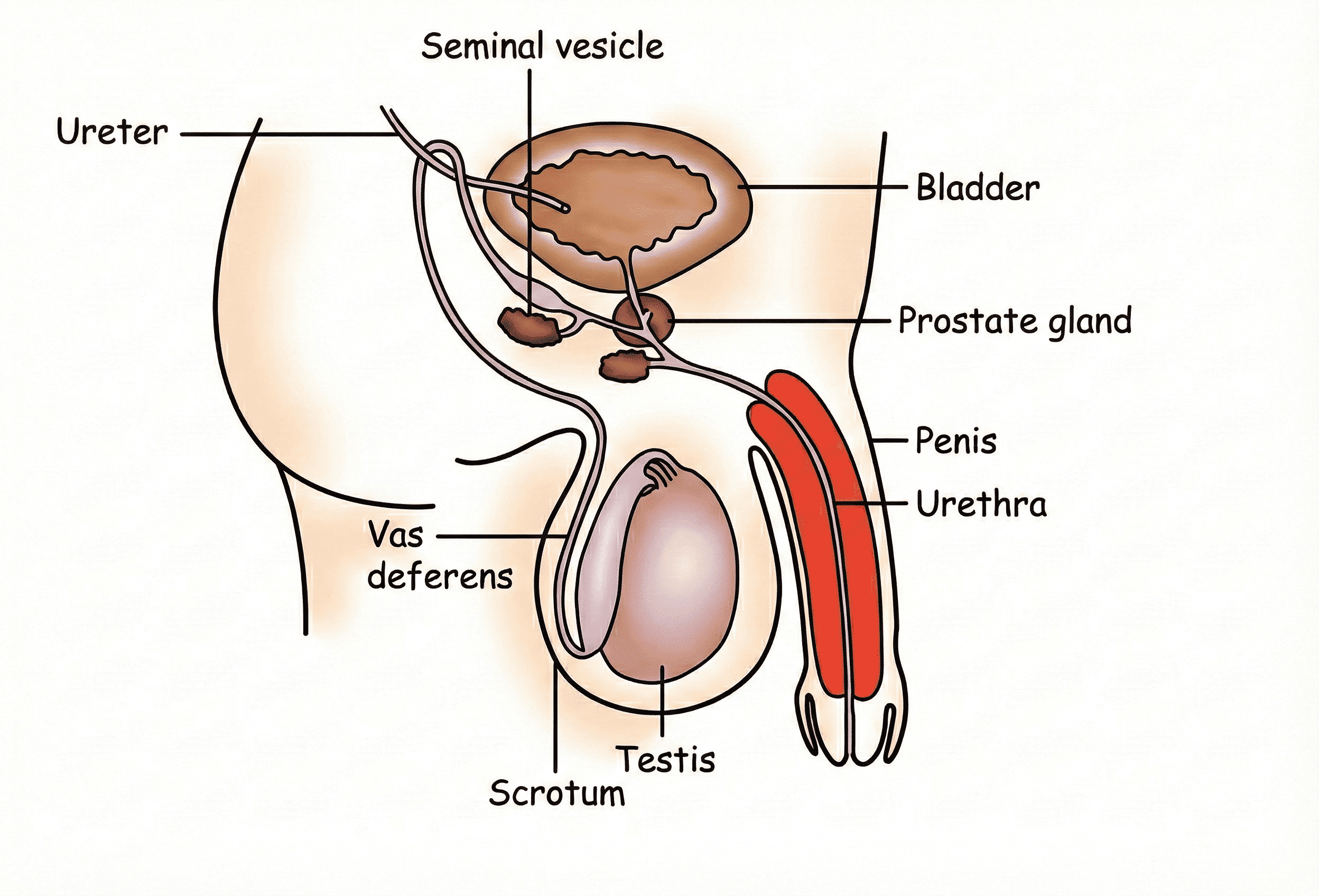
37.
Ans: Sperm production (spermatogenesis) requires a temperature that is 2 to 2.5 �C lower than the normal human core body temperature ($37\text{ �C}$).
If the testes were located inside the abdominal cavity, the high temperature would inhibit sperm formation, leading to infertility. Housing the testes externally in the scrotum keeps them cooler, allowing healthy sperm production.
If the testes were located inside the abdominal cavity, the high temperature would inhibit sperm formation, leading to infertility. Housing the testes externally in the scrotum keeps them cooler, allowing healthy sperm production.
38.
Ans: These accessory glands secrete fluids that form semen when mixed with sperm:
- Seminal Vesicles: Secrete a viscous, alkaline fluid rich in fructose (which provides energy to help sperm swim).
- Prostate Gland: Secretes a thin, milky alkaline fluid containing citric acid and enzymes, which neutralizes the acidity of the male urethra and female vagina, keeping sperm active.
39.
Ans: The female reproductive system consists of:
- Ovaries: Produce ova (eggs) and estrogen/progesterone.
- Fallopian Tubes (Oviducts): Site of fertilisation; carry eggs to the uterus.
- Uterus (Womb): Site of embryo implantation and fetal development.
- Cervix & Vagina: Act as the birth canal.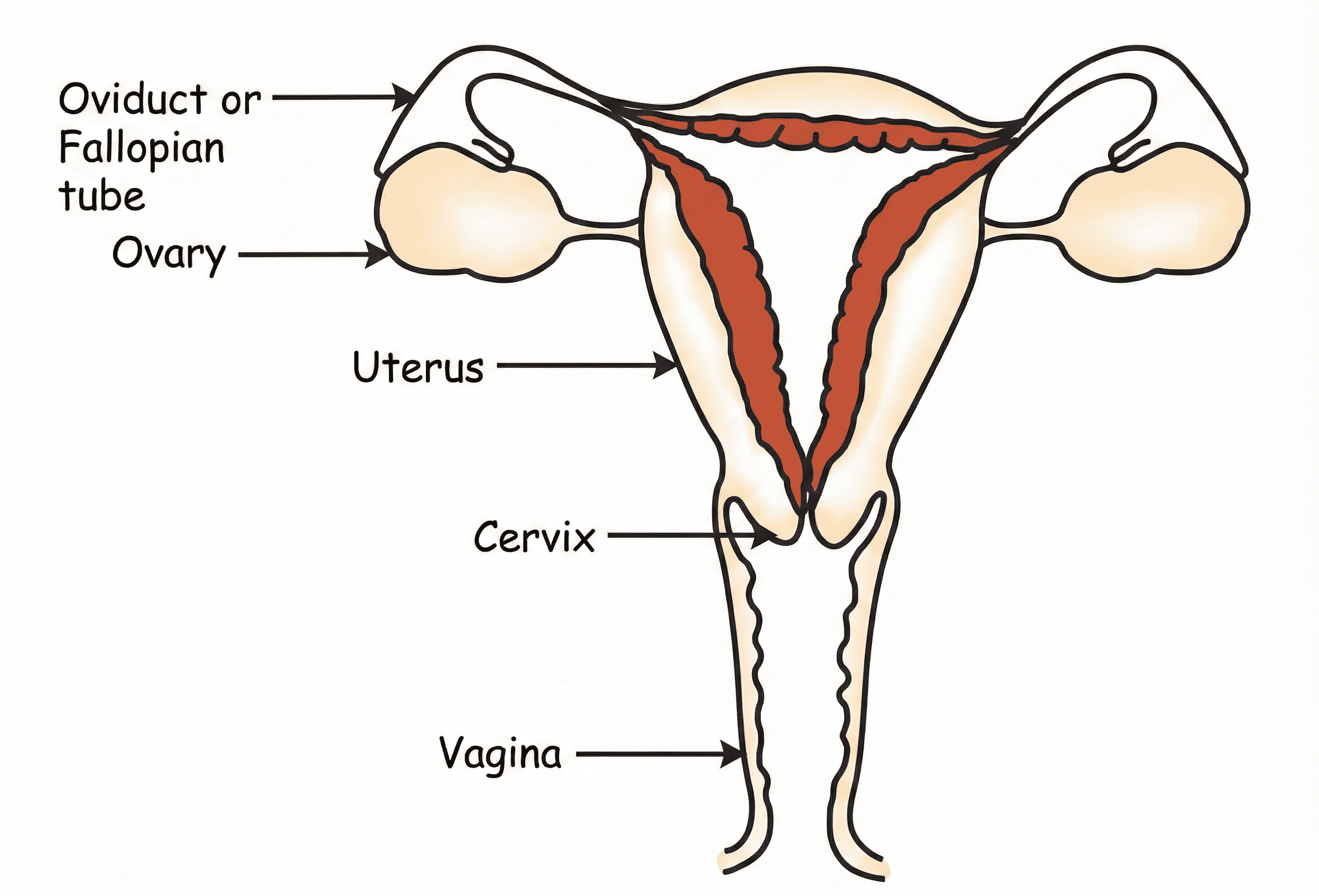
40.
Ans: Fertilisation occurs in the fallopian tubes (oviducts).
Zygote Development: Once fertilised, the single-celled zygote moves towards the uterus. As it travels, it undergoes rapid mitotic divisions (cleavages), forming a hollow ball of cells called a blastocyst. About 7 days after fertilisation, the blastocyst embeds itself in the thick, vascular lining of the uterus, a process called implantation.
Zygote Development: Once fertilised, the single-celled zygote moves towards the uterus. As it travels, it undergoes rapid mitotic divisions (cleavages), forming a hollow ball of cells called a blastocyst. About 7 days after fertilisation, the blastocyst embeds itself in the thick, vascular lining of the uterus, a process called implantation.
41.
Ans: The placenta is a specialized, disc-like organ that connects the developing fetus to the uterine wall.
Structure: It contains finger-like projections called villi on the fetal side, which project into large, blood-filled spaces on the maternal side.
Dual Role: (1) Nutrition: Provides a massive surface area for the diffusion of oxygen, glucose, and nutrients from the mother's blood into the fetal blood. (2) Excretion: Allows the fetus to transfer waste carbon dioxide and urea back into the mother's blood for clearance.
Structure: It contains finger-like projections called villi on the fetal side, which project into large, blood-filled spaces on the maternal side.
Dual Role: (1) Nutrition: Provides a massive surface area for the diffusion of oxygen, glucose, and nutrients from the mother's blood into the fetal blood. (2) Excretion: Allows the fetus to transfer waste carbon dioxide and urea back into the mother's blood for clearance.
42.
Ans: The gestation period is the duration of pregnancy, from fertilisation to the birth of the child.
Duration: Approximately 9 months (280 days) in humans.
Birth Initiation: Coordinated by endocrine signals. When the fetus is fully developed, the pituitary gland releases the hormone oxytocin, which triggers powerful, rhythmic contractions of the uterine muscles (labor), pushing the baby out through the vagina (birth).
Duration: Approximately 9 months (280 days) in humans.
Birth Initiation: Coordinated by endocrine signals. When the fetus is fully developed, the pituitary gland releases the hormone oxytocin, which triggers powerful, rhythmic contractions of the uterine muscles (labor), pushing the baby out through the vagina (birth).
43.
Ans: If the released egg is not fertilized, the corpus luteum in the ovary degenerates after 14 days, causing a sharp drop in progesterone and estrogen levels.
Without progesterone, the thick, vascular uterine lining (endometrium) cannot be maintained. The lining breaks down, and its blood vessels rupture. The blood, mucus, and degenerated egg tissue are discharged through the vagina, a process called menstruation, which lasts 3 to 5 days. This occurs in a monthly cycle of approximately 28 days.
Without progesterone, the thick, vascular uterine lining (endometrium) cannot be maintained. The lining breaks down, and its blood vessels rupture. The blood, mucus, and degenerated egg tissue are discharged through the vagina, a process called menstruation, which lasts 3 to 5 days. This occurs in a monthly cycle of approximately 28 days.
44.
Ans: The differences are:
- Sperm: Smallest cell in the male body; highly motile with a flagellum (tail); contains either an X or Y chromosome; produced in millions daily.
- Ovum: Largest cell in the female body; non-motile (carried by ciliary currents in the oviduct); contains only an X chromosome; typically only one is released per month.
45.
Ans: In sexually reproducing organisms, gametes are produced through a special cell division called meiosis (reduction division).
Meiosis halves the chromosome number from diploid ($2n = 46$ in humans) to haploid ($n = 23$). When the haploid sperm ($n=23$) fuses with the haploid egg ($n=23$) during fertilization, the resulting zygote receives a complete diploid set ($2n=46$). This restores the chromosome number in the offspring.
Meiosis halves the chromosome number from diploid ($2n = 46$ in humans) to haploid ($n = 23$). When the haploid sperm ($n=23$) fuses with the haploid egg ($n=23$) during fertilization, the resulting zygote receives a complete diploid set ($2n=46$). This restores the chromosome number in the offspring.
Topic 5: Reproductive Health & Family Planning
46.
Ans: Reproductive health is a state of complete physical, mental, and social well-being in all matters relating to the reproductive system and its functions.
It is essential because it prevents unwanted pregnancies, reduces maternal and infant mortality, protects individuals from STDs, and empowers couples to raise families responsibly, contributing to a healthier society.
It is essential because it prevents unwanted pregnancies, reduces maternal and infant mortality, protects individuals from STDs, and empowers couples to raise families responsibly, contributing to a healthier society.
47.
Ans: Family planning helps couples limit and space their children, ensuring they can provide adequate food, education, and healthcare.
Consequences: Rapid population growth strain public resources, leading to crowded schools, high unemployment, and environmental degradation, which hinders economic growth.
Consequences: Rapid population growth strain public resources, leading to crowded schools, high unemployment, and environmental degradation, which hinders economic growth.
48.
Ans: The four main contraceptive categories are:
- Barrier Methods: Physical barriers like condoms or diaphragms prevent sperm from meeting the egg.
- Chemical Methods: Oral pills contain hormones that inhibit ovulation, preventing egg release.
- Intrauterine Devices (IUDs): Devices like Copper-T are inserted in the uterus to block sperm motility and prevent implantation.
- Surgical Methods: Vasectomy (blocking vas deferens in males) or Tubectomy (blocking fallopian tubes in females) permanently blocks gamete transport.
49.
Ans: Sexually Transmitted Diseases (STDs) are infectious diseases transmitted through sexual contact.
Classification:
Classification:
- Bacterial: E.g., Gonorrhoea, Syphilis.
- Viral: E.g., Genital Warts, HIV-AIDS.
50.
Ans:
- Vasectomy: A small incision is made in the scrotum, and the vas deferens is cut and tied to prevent sperm from leaving the testes.
- Tubectomy: The fallopian tubes are cut and tied to prevent the egg from meeting sperm.
Hormonal effect: These procedures do not affect hormone production or sex drive, as the testes and ovaries continue to produce and release hormones directly into the bloodstream.
Hormonal effect: These procedures do not affect hormone production or sex drive, as the testes and ovaries continue to produce and release hormones directly into the bloodstream.
51.
Ans: Female foeticide is the illegal practice of aborting a female fetus after determining its sex.
Ban: Banned under the PCPNDT Act to prevent gender-selective abortions.
Social Consequences: A declining child sex ratio leads to a gender imbalance, which can increase crime against women, human trafficking, and social instability.
Ban: Banned under the PCPNDT Act to prevent gender-selective abortions.
Social Consequences: A declining child sex ratio leads to a gender imbalance, which can increase crime against women, human trafficking, and social instability.
52.
Ans: Oral contraceptive pills contain synthetic estrogen and progesterone. They work by altering the body's hormone levels to inhibit ovulation (egg release) and thicken cervical mucus, which blocks sperm.
Side Effect: Regular use can disrupt the body's natural endocrine balance, leading to weight gain, mood swings, or an increased risk of cardiovascular issues.
Side Effect: Regular use can disrupt the body's natural endocrine balance, leading to weight gain, mood swings, or an increased risk of cardiovascular issues.
53.
Ans: The Copper-T is a T-shaped intrauterine device (IUD).
Mechanism: It continuously releases copper ions, which are toxic to sperm, reducing their motility and viability. It also causes a local inflammatory reaction in the uterine lining, preventing a fertilized egg from implanting.
Insertion: It is inserted into the uterus by a trained doctor or healthcare professional.
Mechanism: It continuously releases copper ions, which are toxic to sperm, reducing their motility and viability. It also causes a local inflammatory reaction in the uterine lining, preventing a fertilized egg from implanting.
Insertion: It is inserted into the uterus by a trained doctor or healthcare professional.
Topic 6: Competency-Based Case Studies & Integrated Questions
Case Study 1: The Bread Mold Experiment
54.
Ans:
- The organism is Rhizopus (bread mold), a fungus. Its asexual method of reproduction is spore formation.
- The sporangia produce and house hundreds of asexual spores. The spores are designed for dispersal and have thick, protective walls that protect them from drying out until they find a suitable surface.
- Fungal spores require moisture, warm temperatures, and nutrients to germinate. Dry bread lacks the water needed to activate enzymes, and direct sunlight can damage the cells, preventing growth.
Case Study 2: The Yeast Budding Demonstration
55.
Ans:
- The method is budding. A small bulbous outgrowth (bud) forms on the parent cell wall, the nucleus divides mitotically, and one nucleus moves into the bud, which then pinches off.
- Under favorable, nutrient-rich conditions, yeast cells divide rapidly. The buds do not immediately detach; instead, they remain attached and begin forming their own buds, creating a chain.
- In Yeast budding, the cytoplasm divides unequally, leaving a large parent cell and a small bud. In Amoeba binary fission, the cytoplasm divides equally, yielding two identical daughter cells.
Case Study 3: The Bryophyllum Leaf Propagation
56.
Ans:
- Bryophyllum reproduces vegetatively through adventitious leaf buds.
- The buds are located in the notches along the leaf margin. When the leaf falls onto moist soil, the contact triggers these buds to grow into plantlets with roots, which can then grow independently.
- (a) Stems: Potato (tubers), Ginger (rhizomes). (b) Roots: Sweet potato, Dahlia.
Case Study 4: The Pollen Tube Challenge
57.
Ans:
- The stigma surface has a biochemical recognition system. If a foreign species' pollen lands, it cannot absorb water or stimulate tube growth, preventing cross-species fertilization.
- The pollen tube grows through the transmitting tissue of the style, secreting enzymes (pectinases) to digest style cells for nutrients and path clearance.
- The directional growth of the pollen tube towards the ovule is called chemotropism.
Case Study 5: The Placenta Design Study
58.
Ans:
- The organ is the placenta. On the fetal side, it has finger-like villi. On the maternal side, it consists of blood spaces in the uterine lining.
- The maternal and fetal blood systems remain separated by a thin membrane. This barrier protects the fetus from maternal blood pressure, immune attacks, and certain pathogens, while still allowing nutrient exchange.
- Metabolic wastes (urea, carbon dioxide) diffuse across the placenta into the mother's blood, which carries them to her kidneys and lungs for excretion.
Competency Check: The Contraceptive Graph Analysis
59.
Ans:
- Surgical methods permanently block the passage of sperm or eggs, eliminating the risk of human error or device failure, which gives them the highest efficacy rate.
- Although less effective than surgery, condoms are highly recommended because they act as a physical barrier that prevents fluid exchange, protecting individuals from both unwanted pregnancy and STDs (like HIV).
- They create a physical sheath over the penis, trapping semen and preventing sperm from entering the female reproductive tract.
Integrated Puzzle: The Floral Formula 'F'
60.
Ans:
- Flower 'F' is a female flower. It lacks stamens (powdery sacs/anther) and contains a pistil: 'A' is the ovary, 'B' is the style, and 'C' is the stigma.
- Part 'A' (ovary) produces the female gamete (egg cell/ovum). The male gamete is produced in the anthers of a male flower on another plant.
- Part 'A' (ovary) will ripen and develop into a fruit.
61.
Ans: Tissue Culture involves:
- Cutting a small tissue explant from the growing tip of a plant.
- Sterilizing the tissue and placing it in a nutrient agar medium with auxins, which stimulates division to form a cell mass called a callus.
- Transferring the callus to a differentiation medium with cytokinins to develop shoots and roots.
- Planting the resulting plantlets in soil inside a greenhouse.
62.
Ans:
- In binary fission (Amoeba), the parent cell divides symmetrically into two equal halves, and the parent cell ceases to exist as it becomes the offspring.
- In budding (Yeast), the parent cell divides asymmetrically, forming a small bud while the parent cell remains intact and can continue budding.
63.
Ans: Sexual reproduction accelerates evolution because it introduces diverse variations through:
- Crossing Over: During prophase-I of meiosis, homologous chromosomes exchange genetic segments, creating new gene combinations.
- Independent Assortment: Chromosomes distribute randomly into gametes.
- Random Fertilisation: Fusion of genetically unique gametes.
64.
Ans: Progesterone maintains the thick, vascular lining of the uterus for potential embryo implantation.
If fertilisation does not occur, the corpus luteum degenerates, and progesterone levels drop sharply. Without progesterone, the uterine lining cannot be maintained, causing it to shed and result in menstruation.
If fertilisation does not occur, the corpus luteum degenerates, and progesterone levels drop sharply. Without progesterone, the uterine lining cannot be maintained, causing it to shed and result in menstruation.
65.
Ans: High population density strains a family's resources, making it harder to provide quality nutrition and education for each child.
Providing access to reproductive health education and family planning empowers women, reduces early pregnancies, and allows families to invest more in each child's health and education, improving gender equality and community well-being.
Providing access to reproductive health education and family planning empowers women, reduces early pregnancies, and allows families to invest more in each child's health and education, improving gender equality and community well-being.