Vardaan Learning Institute
How Do Organisms Reproduce?
1. Asexual Reproduction (One Parent)
Production of offspring from a single parent without gametes.
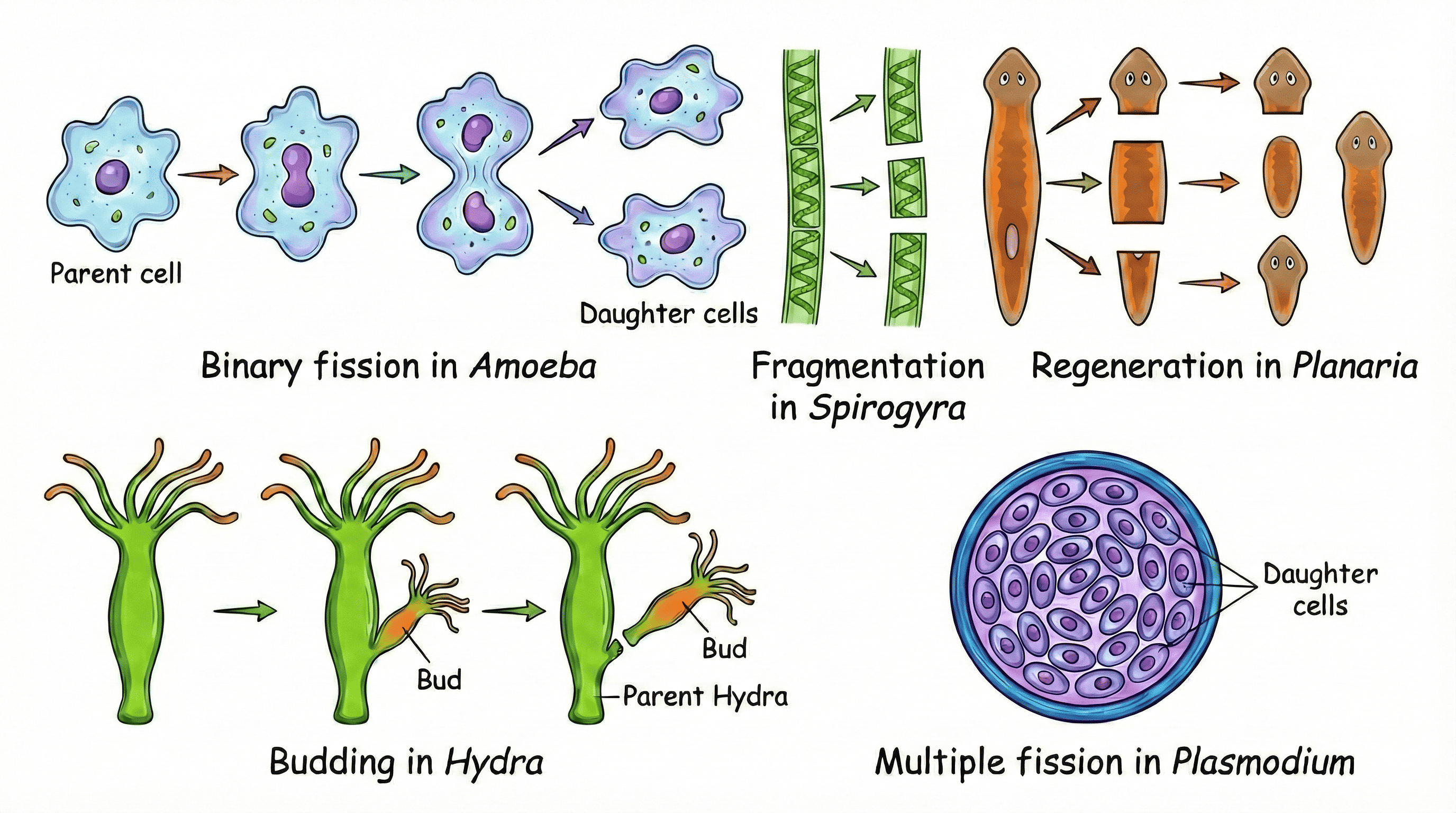
Figure 3.1: Modes of Asexual Reproduction
| Mode |
Definition & Examples |
| Fission |
Cell divides into offspring.
• Binary: Amoeba (any plane), Leishmania (specific
plane).
• Multiple: Plasmodium (Malaria parasite) - one cell divides into
many.
|
| Fragmentation |
Multicellular organism breaks into pieces; each grows into new individual.
Example: Spirogyra (Algae).
|
| Regeneration |
Regrowth of lost parts or whole organism from cut parts via specialized
cells.
Example: Planaria, Hydra.
|
| Budding |
Outgrowth (bud) forms due to repeated cell division at one site.
Example: Hydra (External), Yeast.
|
| Vegetative Propagation |
New plants from root, stem, leaf.
• Leaf: Bryophyllum.
• Artificial: Layering (Jasmine), Grafting (Rose), Tissue Culture.
|
| Spore Formation |
Reproductive parts (Sporangia) burst releasing spores.
Example: Rhizopus (Bread Mould).
|
Why can't complex organisms (Humans/Dogs) reproduce by Regeneration?
Complex organisms are not just a collection of random cells. They have organized tissues and organs. A
piece
of skin cannot grow into a whole human because it lacks the specialized stem cells and organization
required
to form all other organs. Regeneration is meant for repair, not reproduction in higher animals.
Advantages of Vegetative Propagation:
1. Plants that have lost capacity to produce seeds (Banana, Orange, Rose) can reproduce.
2. Genetically identical offspring (clones).
3. Bear flowers and fruits earlier than seed-grown plants.
Tissue Culture: New plants are grown by removing tissue or separating cells from the
growing tip of a plant. The cells are placed in an artificial medium where they divide rapidly to form a
small group of cells or callus. The callus is transferred to another medium containing hormones for
growth
and differentiation.
2. Sexual Reproduction in Flowering Plants
A. Structure of a Flower
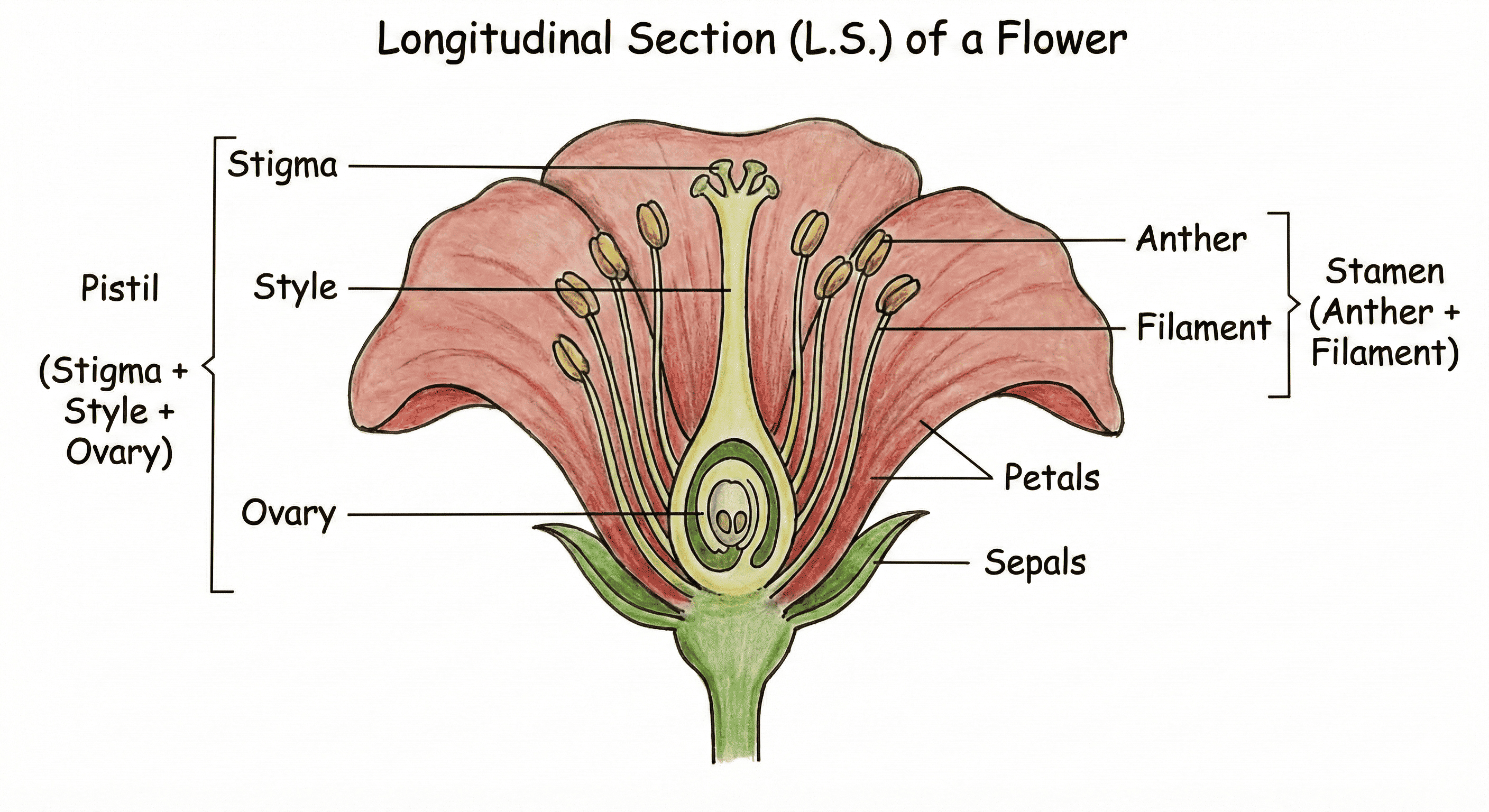
Figure 3.2: L.S. of a Flower
- Stamen (Male): Filament + Anther (Produces Pollen Grains/Yellow powder).
- Pistil/Carpel (Female):
• Stigma: Sticky tip to receive pollen.
• Style: Tube leading down.
• Ovary: Swollen base containing Ovules (Egg).
B. Process of Seed Formation
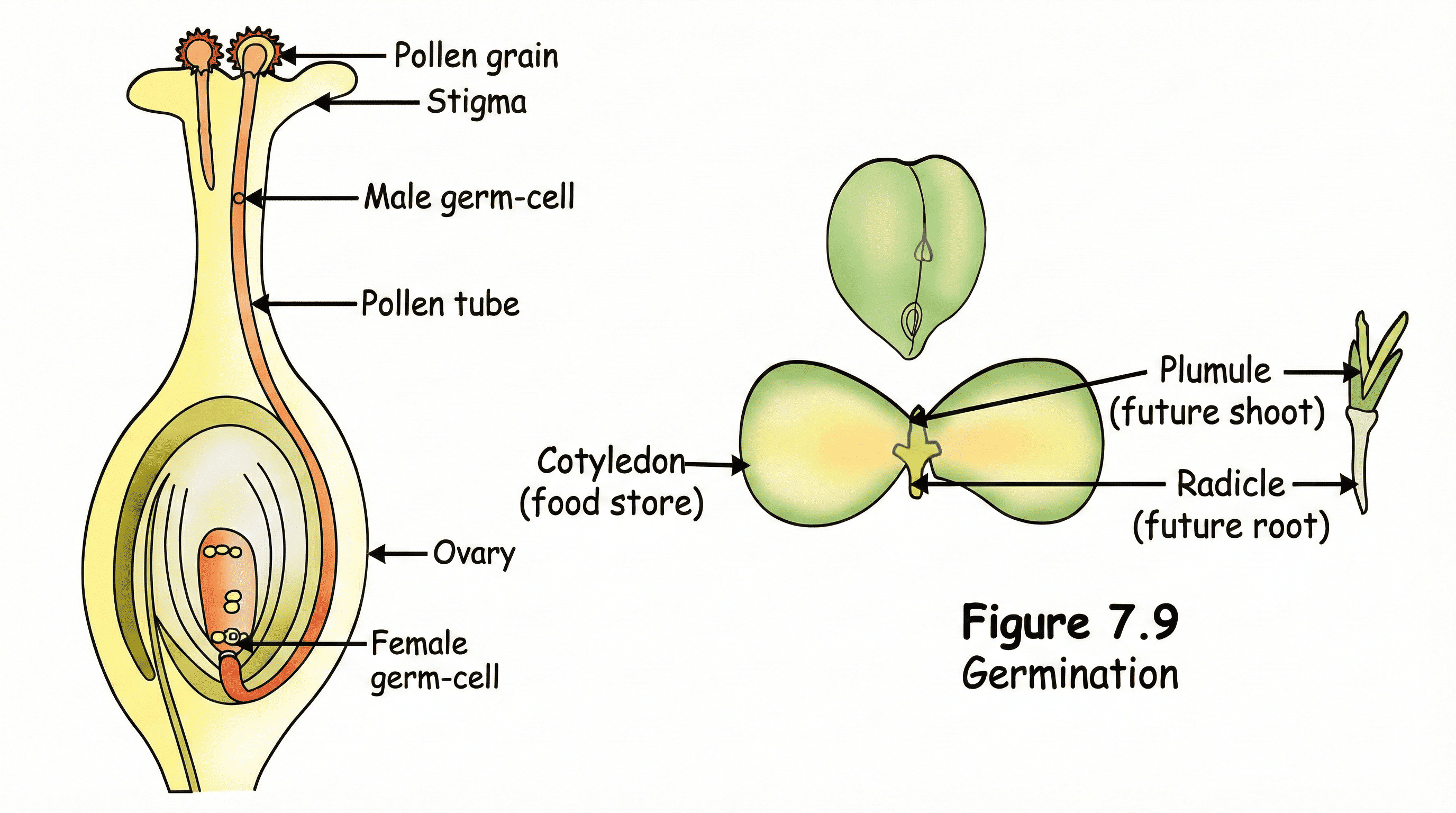
Figure 3.3: Germination of Pollen on Stigma
- Pollination: Transfer of pollen from Anther to Stigma.
• Self: Same flower.
• Cross: Different flower (Agents: Wind, Water, Bees).
- Fertilization: Pollen tube grows through style to ovary. Male germ cell enters
ovule.
• Male gamete (n) + Female gamete (n) → Zygote (2n).
- Post-Fertilization Changes:
• Zygote → divides to form Embryo.
• Ovule → hardens to form Seed.
• Ovary → ripens to form Fruit.
• Petals/Sepals wither and fall off.
Structure of a Seed (Germination):
Comparison of parts:
• Cotyledon: Food Store.
• Plumule: Future Shoot.
• Radicle: Future Root.
Conditions for Germination:
1. Water (Moisture): To soften seed coat and activate enzymes.
2. Air (Oxygen): For respiration.
3. Warmth (Temperature): Optimum temperature for enzymes.
Steps of Germination:
1. Seed absorbs water (swells up).
2. Seed coat bursts.
3. Radicle comes out first (Functions as Root).
4. Plumule comes out next (Functions as Shoot).
Note on Cotyledons:
• Monocots: One Cotyledon (e.g., Maize, Wheat).
• Dicots: Two Cotyledons (e.g., Gram, Pea, Bean). (Gram seeds are used in lab
activities).
3. Human Reproduction
Humans use sexual reproduction. Puberty is the age when reproductive maturity begins.
A. Male Reproductive System
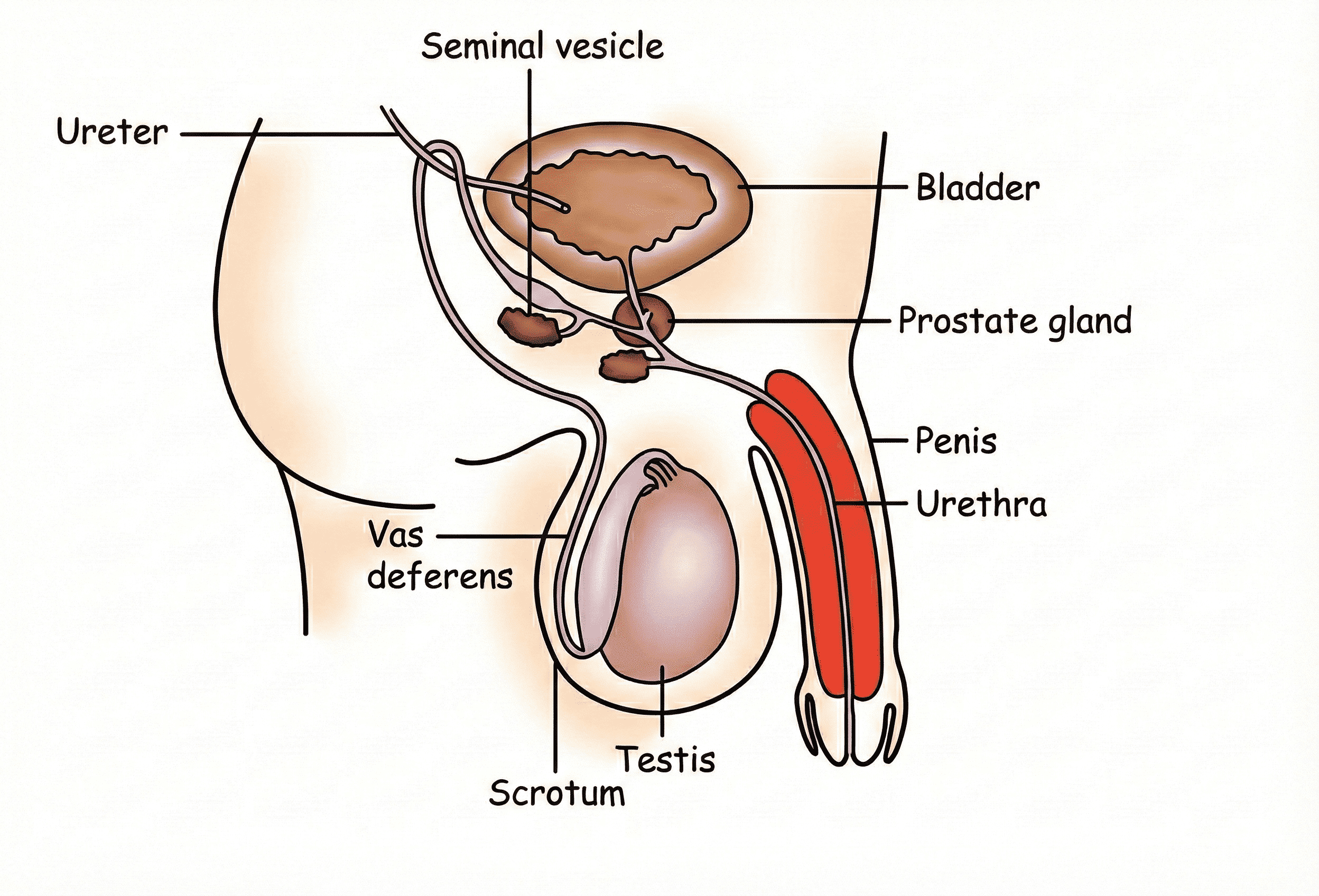
Figure 3.4: Male Reproductive System
| Part |
Function |
| Testes (Pair) |
1. Produce Sperms.
2. Secrete Testosterone (Puberty changes). |
| Scrotum |
Pouch outside body. Keeps testes temp 2-3°C lower than body temp (Required
for
sperm formation). |
| Vas Deferens |
Tube carrying sperm from testes to urethra. |
| Prostate & Seminal Vesicles |
Secrete fluids that:
1. Provide nutrition to sperms.
2. Make
transport
easier (Fluid medium). |
B. Female Reproductive System
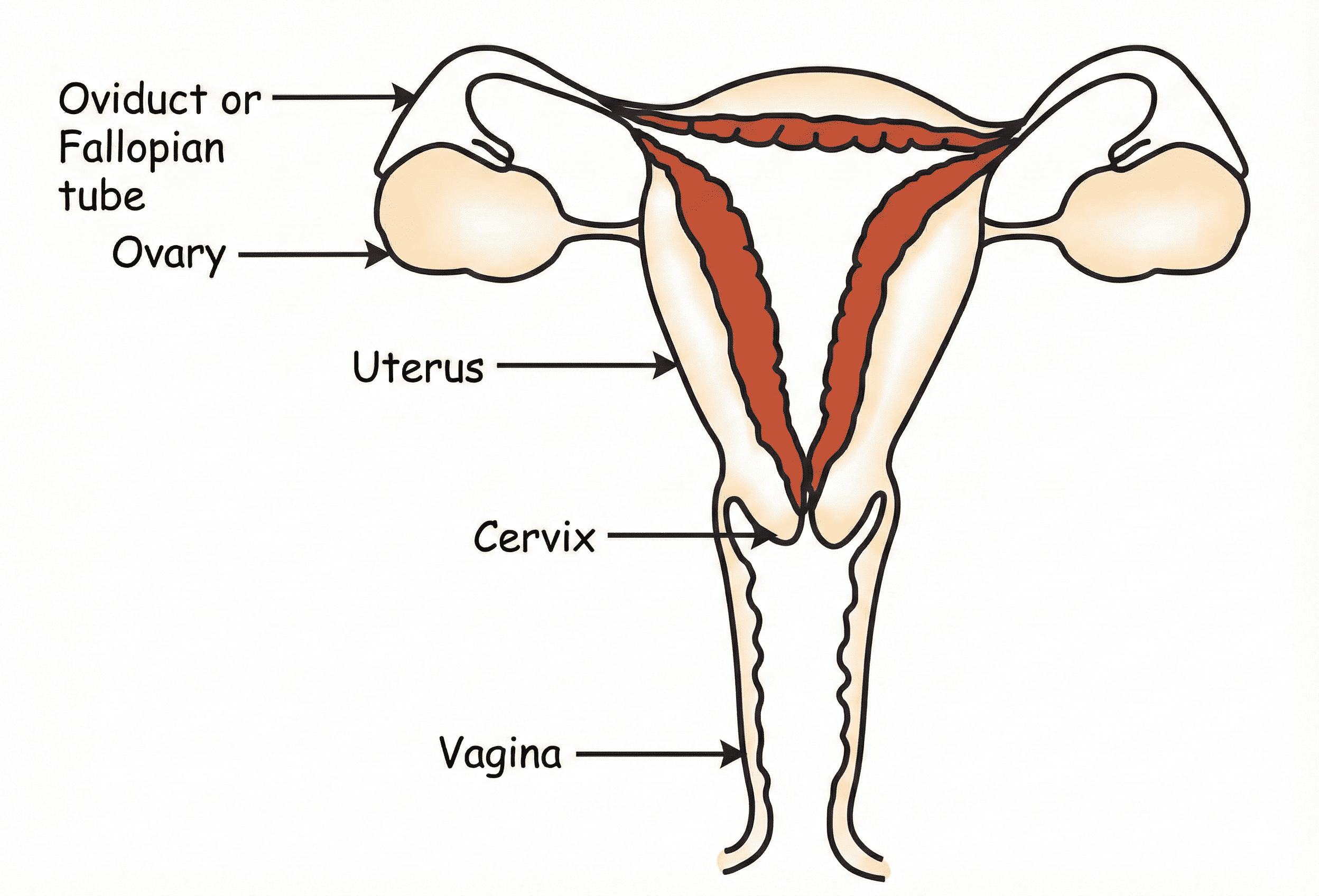
Figure 3.5: Female Reproductive System
| Part |
Function |
| Ovary (Pair) |
1. Produce Eggs (Ova).
2. Secrete Oestrogen/Progesterone. |
Oviduct
(Fallopian Tube) |
Site of Fertilization (Sperm meets Egg here). Carries egg to uterus. |
| Uterus (Womb) |
Bag-like structure where baby grows (Implantation). |
C. The Placenta (Very Important PYQ)
Structure: A disc-embedded special tissue in the uterine wall.
• Embryo side: Contains Villi (Finger-like projections).
• Mother side: Blood spaces surrounding villi.
Function: Provides large surface area for:
1. Glucose & Oxygen to pass from Mother → Embryo.
2. Wastes to pass from Embryo → Mother.
D. Menstruation (What if fertilization fails?)
The uterus prepares itself every month with a thick, spongy lining rich in blood to nourish a potential
embryo.
If no fertilization: The lining breaks down and comes out through the vagina as blood
and
mucus. This cycle takes ~28 days.
4. Reproductive Health
A. Sexually Transmitted Diseases (STDs)
- Bacterial: Gonorrhoea, Syphilis.
- Viral: Warts, HIV-AIDS.
B. Contraception (Avoiding Pregnancy)
| Method |
Example |
Pros/Cons |
| Mechanical Barrier |
Condoms, Diaphragm |
Prevents sperm meeting egg. Condoms also prevent STDs. |
| Chemical |
Oral Pills |
Change hormonal balance so egg is not released. Side effects possible. |
| IUCD |
Copper-T |
Placed in uterus. Prevents implantation. |
| Surgical |
Vasectomy (Male)
Tubectomy (Female) |
Blocking Vas Deferens/Fallopian Tube. Permanent. |
-
Why is the use of a condom considered better than oral pills or Copper-T?
Hint: Condoms are the ONLY method that protects against STDs (like
HIV/Syphilis).
-
A flower is pollinated but seeds are not formed. Where did the process likely fail?
Hint: Failure of the Pollen Tube to reach the Ovary or failure of gamete
fusion (Fertilization).
-
If a woman undergoes tubectomy, will menstruation stop? Explain.
Hint: No. Menstruation depends on the Uterus lining and Hormones
(Ovary),
which are still active. Tubectomy only blocks the egg from meeting sperm.
🧪 NCERT EXPERIMENT ZONE (Reproduction)
1. Budding in Yeast:
• Observation under Microscope: Small protuberance (bud) appears on parent cell.
Nucleus
divides. Bud detaches to form new cell.
2. Spore Formation (Rhizopus):
• Observation: Cottony white mass on wet bread slice. Black dots (Sporangia) contain
spores.
• Condition: Moisture and warmth favor fungal growth.
3. Binary Fission in Amoeba:
• Observation: Nucleus elongates → Nucleus divides (Karyokinesis) → Cytoplasm
constricts →
Two daughter cells formed (Cytokinesis).
4. Parts of a Dicot Seed (Gram/Pea):
• Procedure: Soak seeds overnight. Peel off seed coat.
• Observation:
- Cotyledons: Fleshy part (food store).
- Plumule: Future Shoot.
- Radicle: Future Root.

 VARDAAN COMET