Vardaan Watermark

Nationalism in India

Class 10 History • Chapter 02

1. The First World War and Its Impact

WW1 (1914-1918) created a new economic and political situation in India:

2. The Idea of Satyagraha

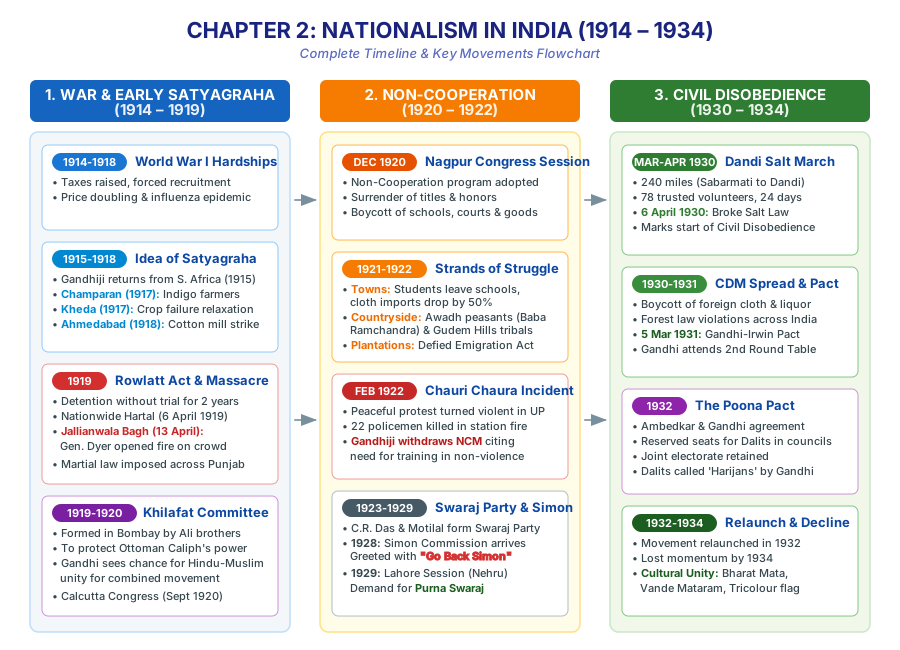
Mahatma Gandhi returned to India from South Africa in January 1915. He introduced Satyagraha ("Truth Force").

Philosophy: If the cause is true and the struggle is against injustice, then physical force is not necessary. A Satyagrahi appeals to the conscience of the oppressor.

GANDHI'S EARLY EXPERIMENTS

3. The Rowlatt Act (1919)

Passed hurriedly by Imperial Legislative Council. It gave government enormous powers to repress political activities and detain political prisoners without trial for 2 years.

Jallianwala Bagh Massacre (13 April 1919)

On Baisakhi day, a crowd gathered at Jallianwala Bagh (Amritsar). General Dyer entered, blocked exits, and opened fire. Hundreds died.

Impact: Strikes, clashes, attacks on govt buildings. Gandhi called off the movement as it turned violent.

4. Non-Cooperation Movement (1920-1922)

Khilafat Issue

Ottoman Emperor (Khalifa) was defeated in WW1. Harsh treaty expected. To defend Khalifa's powers, a Khilafat Committee was formed in Bombay (March 1919) by Ali Brothers (Muhammad Ali and Shaukat Ali). Gandhi saw this as an opportunity to unite Hindus and Muslims.

Nagpur Session (Dec 1920): NCM program adopted.

Differing Strands within the Movement

  1. Towns: Middle class participation. Students left schools, lawyers gave up practice, foreign cloth burnt (picketed). Import of foreign cloth halved.
  2. Countryside (Awadh): Led by Baba Ramchandra (sanyasi). Against Talukdars/Landlords demanding high rents. Demanded 'Nai-Dhobi bandhs'.
  3. Tribals (Gudem Hills, AP): Led by Alluri Sitaram Raju. A militant guerrilla movement against forest laws preventing access to grazing. Raju claimed special powers but admired Gandhi. (Raju captured/executed in 1924).
  4. Plantations (Assam): Workers demanded right to move freely (against Inland Emigration Act of 1859). They headed home but were caught and beaten.
CHAURI CHAURA (FEB 1922) At Chauri Chaura (Gorakhpur), a peaceful demo turned violent. Police station burnt, 22 policemen died. Gandhi called off NCM immediately.

5. Civil Disobedience Movement (CDM)

Simon Commission (1928): Statutory commission under Sir John Simon arrived. No Indian member. Greeted with "Go Back Simon".

Lahore Congress (1929): Under Nehru, demand for 'Purna Swaraj' (Complete Independence) formalized. 26 Jan 1930 declared Independence Day.

The Salt March (Dandi March)

Gandhi found Salt a powerful symbol unifying the nation (Rich/Poor both use it). sent 11 demands to Irwin.