1. (c) Excretion
2. (b) Insulin
3. (b) Synapse
4. (a) Carnivores (T1: Producers, T2: Herbivores, T3: Carnivores)
5. (c) They convert carbon dioxide
and water into carbohydrates in the absence of sunlight. (Incorrect
statement; photosynthesis requires sunlight)
6. (d) Pollen grains
7. (b) Mitochondria
8. (c) Medulla
9. (a) Transport of water
10. (b) Girl (XX results in female, XY results in male)
11. (d) Phototropism
12. (c) Biomagnification
13. (c) Crop field (Artificial ecosystem)
14. (d) All of these (Stomata are primary, but lenticels and cuticle also allow exchange)
15. (b) Fragmentation
16. (d) Fallopian tube
17. (a) Round and yellow
(Dominant traits appear in F1)
18. (b) Mucus
19. (c) Platelets
20. (a) CFCs
(Chlorofluorocarbons)
21.
Role of Saliva: It moistens the food making it easy to swallow and digest. It contains
the enzyme Salivary Amylase (Ptyalin).
Function: Breaks down starch (complex carbohydrate) into sugar (Maltose).
22.
Iodine is essential for the Thyroid gland to synthesize Thyroxin
hormone. Thyroxin regulates carbohydrate, protein, and fat metabolism for balanced growth.
Deficiency leads to Goitre (swollen neck).
23.
| Aerobic Respiration |
Anaerobic Respiration |
| Takes place in presence of Oxygen. |
Takes place in absence of Oxygen. |
| End products: CO2, H2O, Energy. |
End products: Ethanol/Lactic acid, CO2, Energy. |
| High energy released (38 ATP). |
Low energy released (2 ATP). |
24.
Functions of Testis:
1. To produce male gametes i.e., Sperms.
2. To secrete the male sex hormone Testosterone, which regulates secondary sexual
characters in boys.
25.
1. To preserve biodiversity (range of different life forms) to maintain ecological
balance.
2. To prevent soil erosion and floods, and ensure sustainable supply of useful products like timber,
medicines, etc.
26.
Diagram Requirement: Human Excretory System.
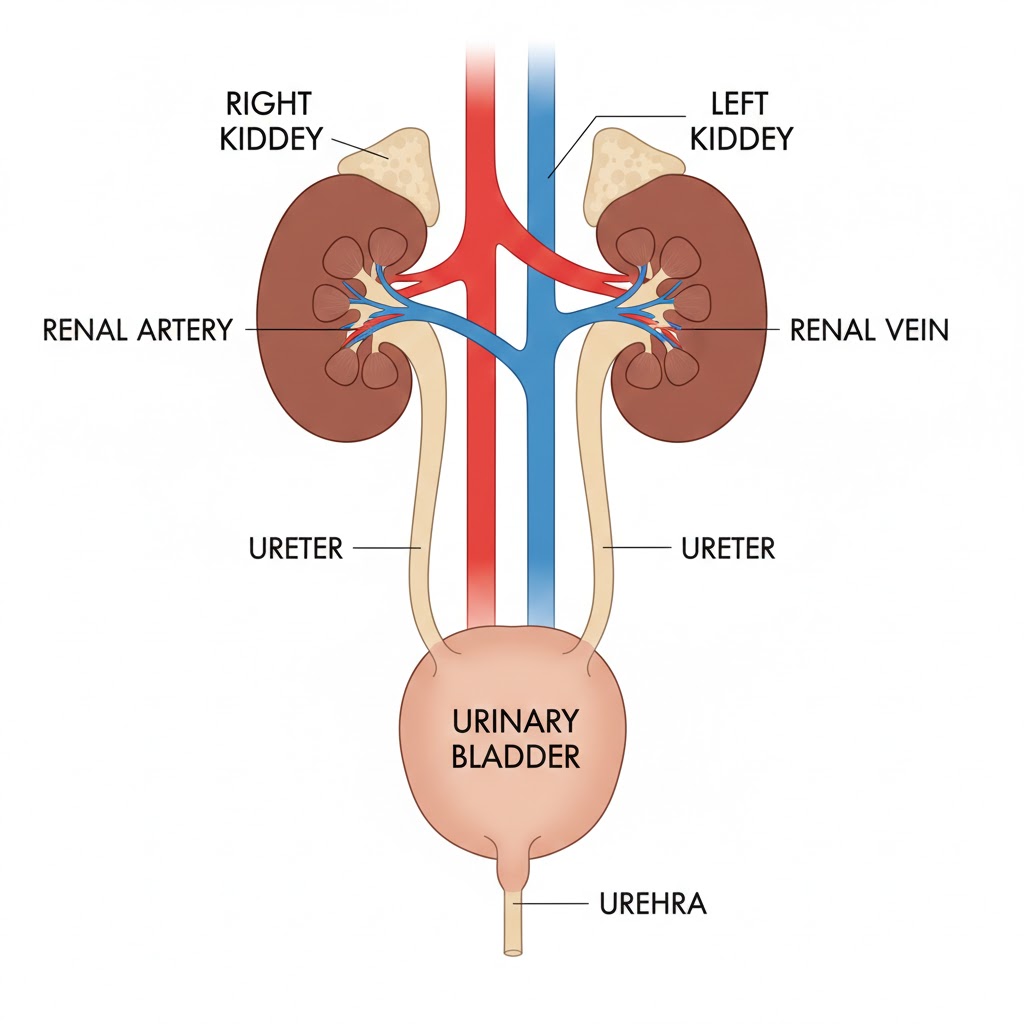 Key Labels to check:
- Kidney: Bean-shaped organs on either side of the backbone.
- Ureter: Tube connecting kidney to bladder.
- Urinary Bladder: Muscular bag storing urine.
27.
(a) Acquired: Dendrite tip.
(b) Travels: Axon (travels as an electrical impulse from cell body to nerve ending).
28.
Double Circulation: Blood passes through the heart twice during one complete cycle of
the body. It includes Pulmonary circulation (Heart to Lungs to Heart) and Systemic circulation (Heart to
Body to Heart).
Necessity: To strictly separate oxygenated and deoxygenated blood. This ensures a
highly efficient supply of oxygen to the body, which is useful for warm-blooded animals (birds and
mammals) to maintain constant body temperature.
29.
Placenta: A disc-embedded tissue in the uterine wall that connects the embryo to the
mother.
Function: It provides a large surface area for glucose and oxygen to pass from the
mother to the embryo. It also removes waste substances generated by the embryo into the mother's blood.
30.
Sex Determination:
- Females have perfect pair of sex chromosomes (XX). Males have mismatched pair (XY).
- All eggs produced by females have X chromosome.
- Sperms produced by males can be X (50%) or Y (50%).
- If X-sperm fertilizes egg -> XX (Girl). If Y-sperm fertilizes egg -> XY (Boy).
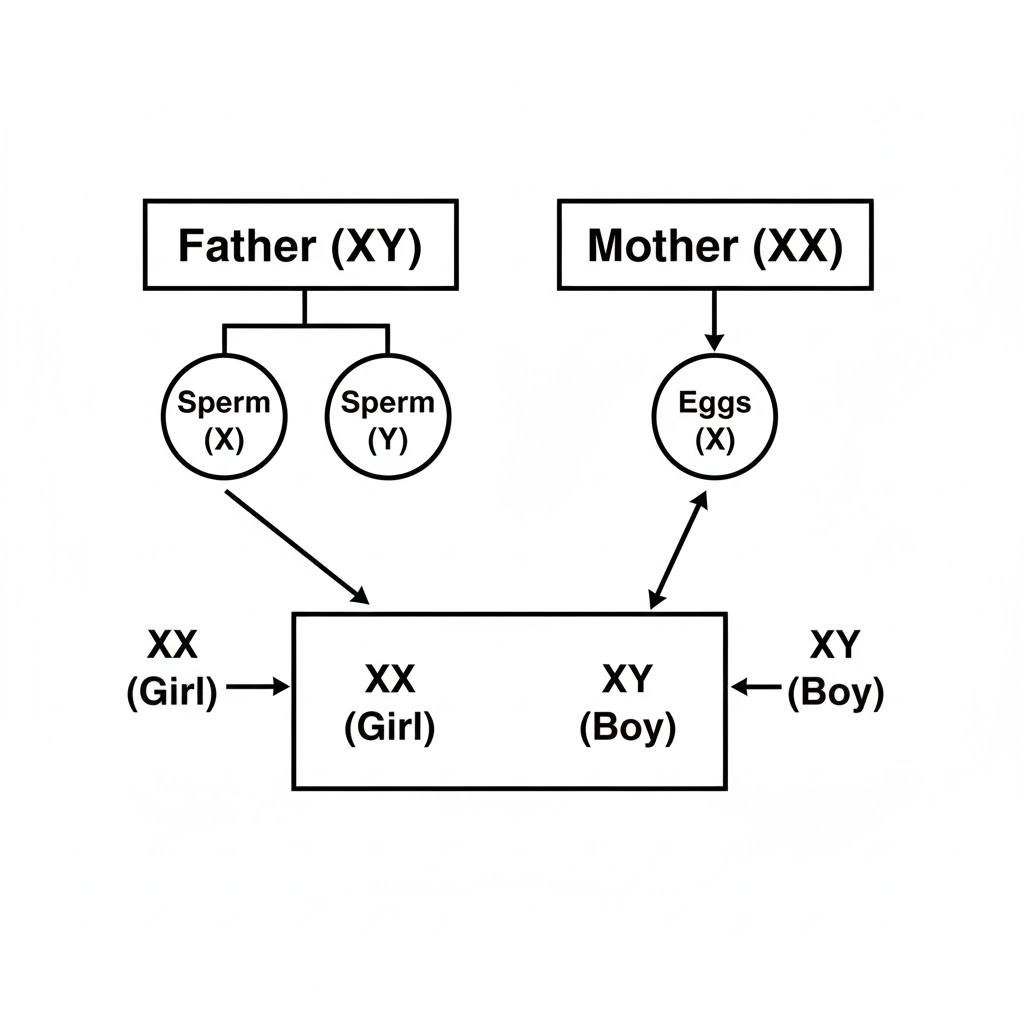
Flow chart should show: Father(XY) x Mother(XX) -> Gametes -> Offspring (XX,
XY).
31.
Trophic Levels: The various steps in a food chain at which the transfer of food (or
energy) takes place.
Example: Grass (Producer) → Insect (Primary Consumer) → Frog (Secondary
Consumer) → Snake (Tertiary Consumer).
32.
(a) Diagram: Human Alimentary Canal. Check labels: Oesophagus (food pipe), Stomach
(J-shape), Liver, Pancreas.
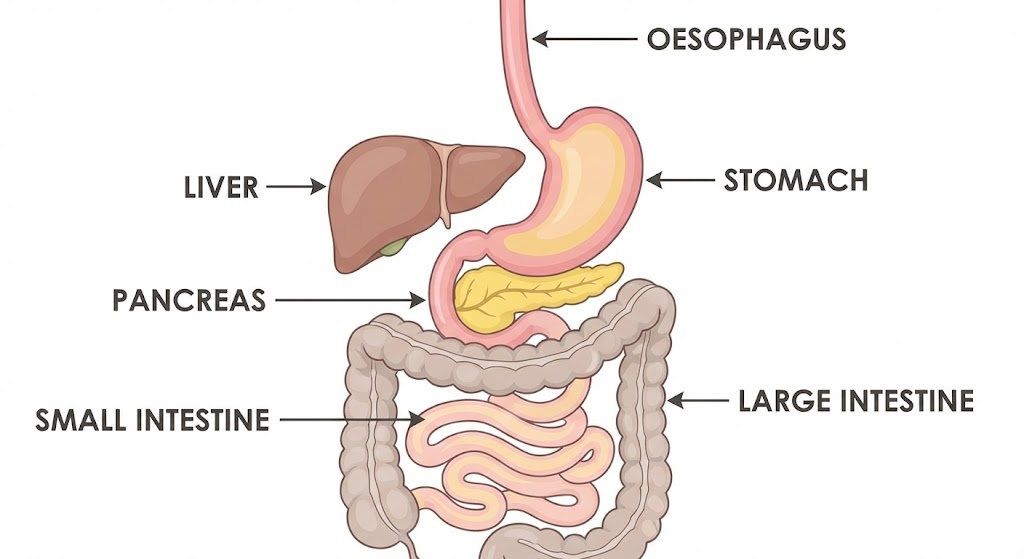 (b) Digestion Process:
- Carbohydrates: Digestion starts in mouth (salivary amylase). Completed in small
intestine (intestinal juice) converting them into Glucose.
- Proteins: Starts in stomach (Pepsin). Pancreatic juice (Trypsin) acts in small
intestine. Finally converted to Amino Acids.
- Fats: Bile from liver emulsifies fats (large globules to small globules).
Lipase breaks them down into Fatty Acids and Glycerol.
33.
(a) Diagram: Nephron Structure. Check labels: Glomerulus (capillary knot), Bowman’s
Capsule (cup shape), Collecting Duct.
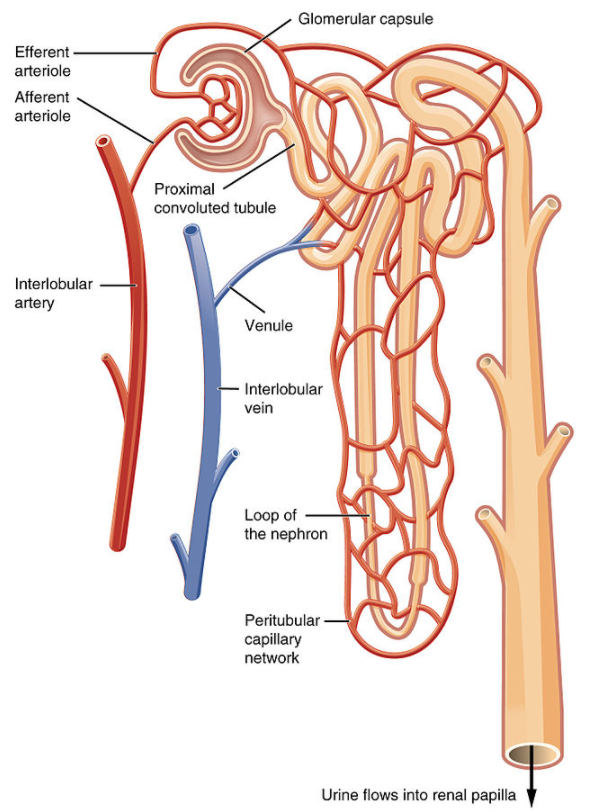 (b) Urine Formation:
- Filtration: Blood is filtered in the Glomerulus under pressure; nitrogenous
wastes, glucose, water pass into Bowman’s capsule.
- Reabsorption: As filtrate flows through the tubular part, useful substances
like glucose, amino acids, and major amount of water are selectively reabsorbed into blood
capillaries.
- Secretion: Excess water and wastes (urea, uric acid) remain in the tubule,
forming urine, which enters the collecting duct.
34.
(a) Pollination: Transfer of pollen grains from anther to stigma.
Self-pollination: Within same flower or same plant. Cross-pollination: Between
different plants.
(b) Diagram: L.S. of Flower showing Ovary, Style, Stigma, Anther, Filament.
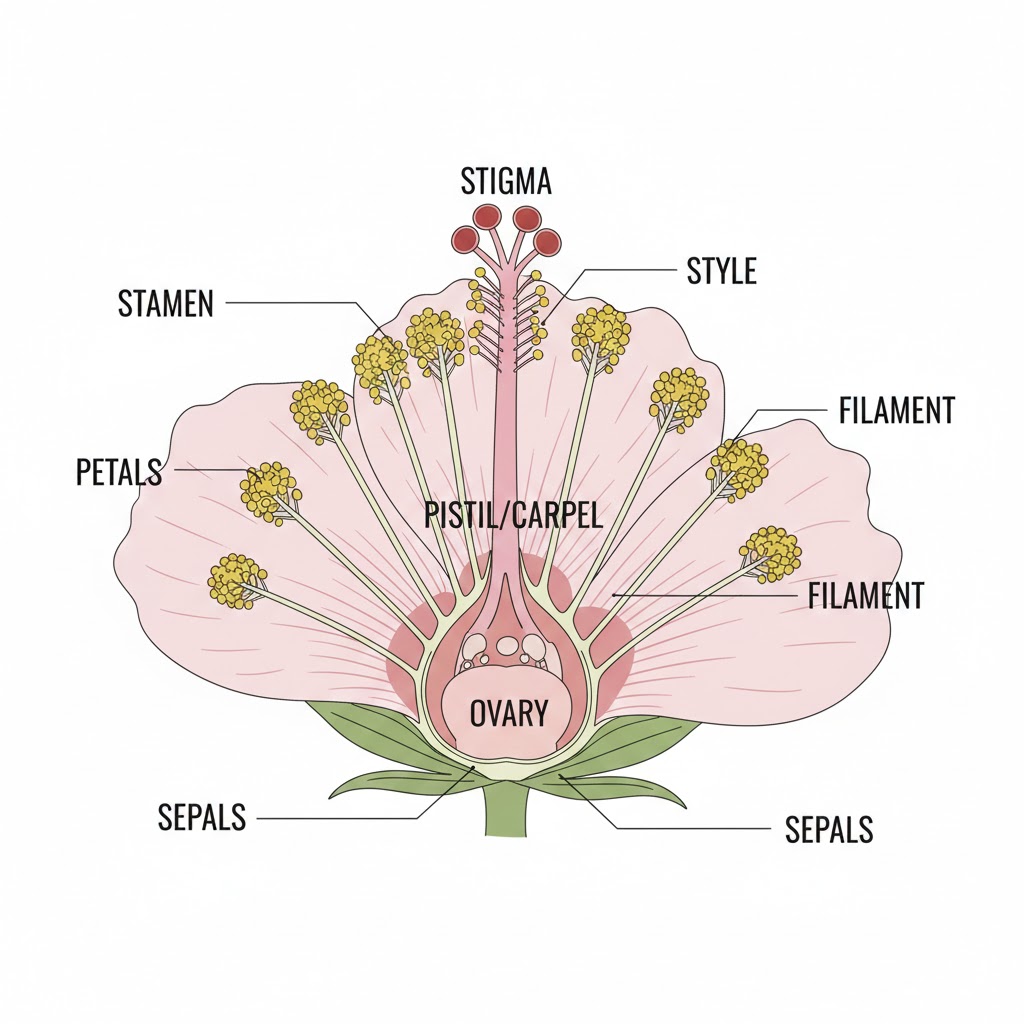 (c) Fertilization: After pollination, a pollen tube grows out of the pollen grain,
travels through the style, and reaches the ovary. It enters the ovule where the male germ cell fuses
with the female germ cell (egg) to form a Zygote.
(c) Fertilization: After pollination, a pollen tube grows out of the pollen grain,
travels through the style, and reaches the ovary. It enters the ovule where the male germ cell fuses
with the female germ cell (egg) to form a Zygote.
35.
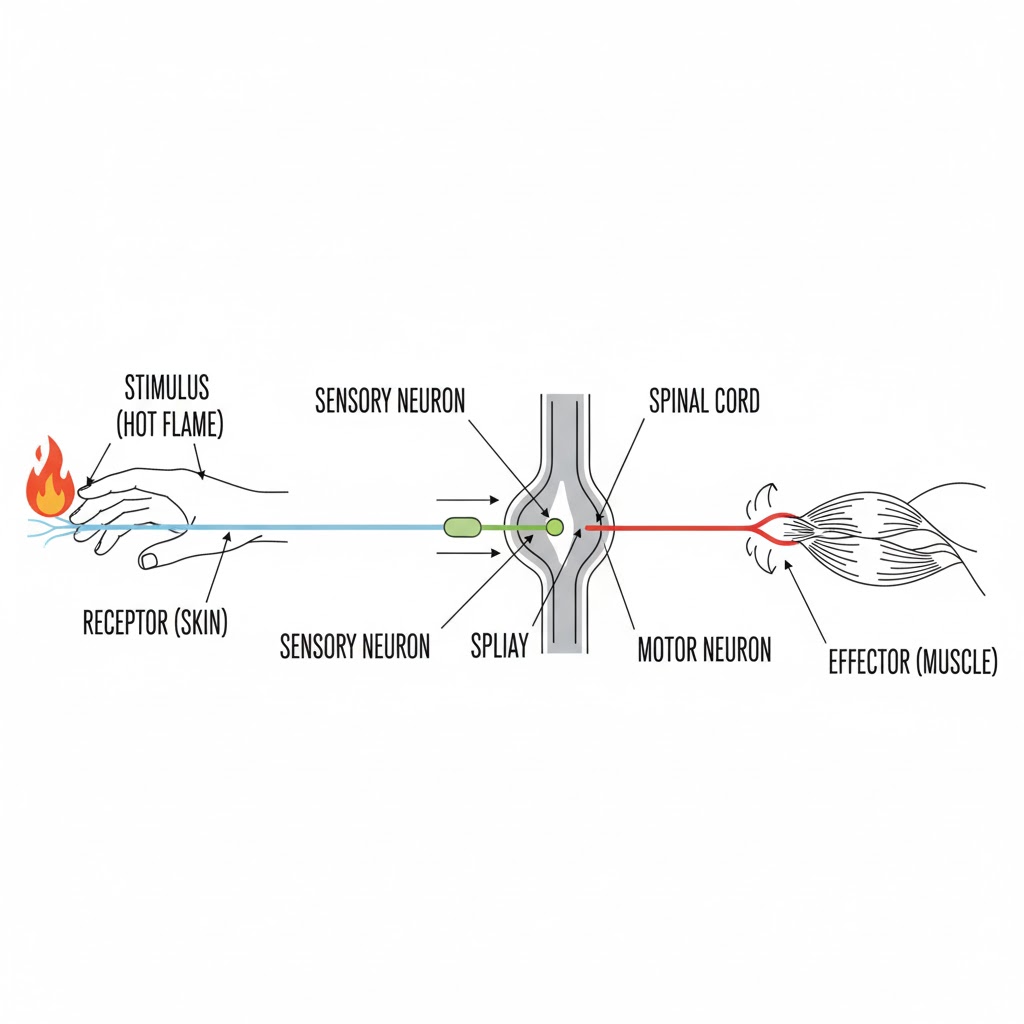
(a) Reflex Action: A sudden, involuntary, and automatic response to a stimulus (like
touching a hot object) which is not under the control of the will.
(b) Sequence (Bright Light): Light (Stimulus) → Eye (Receptor) → Sensory
Neuron → Brain/Spinal Cord → Motor Neuron → Iris Muscles (Effector) → Pupil
contracts (Response).
(c) Diagram: Reflex Arc showing Receptor → Sensory Neuron → Spinal Cord
(Relay Neuron) → Motor Neuron → Effector.
36.
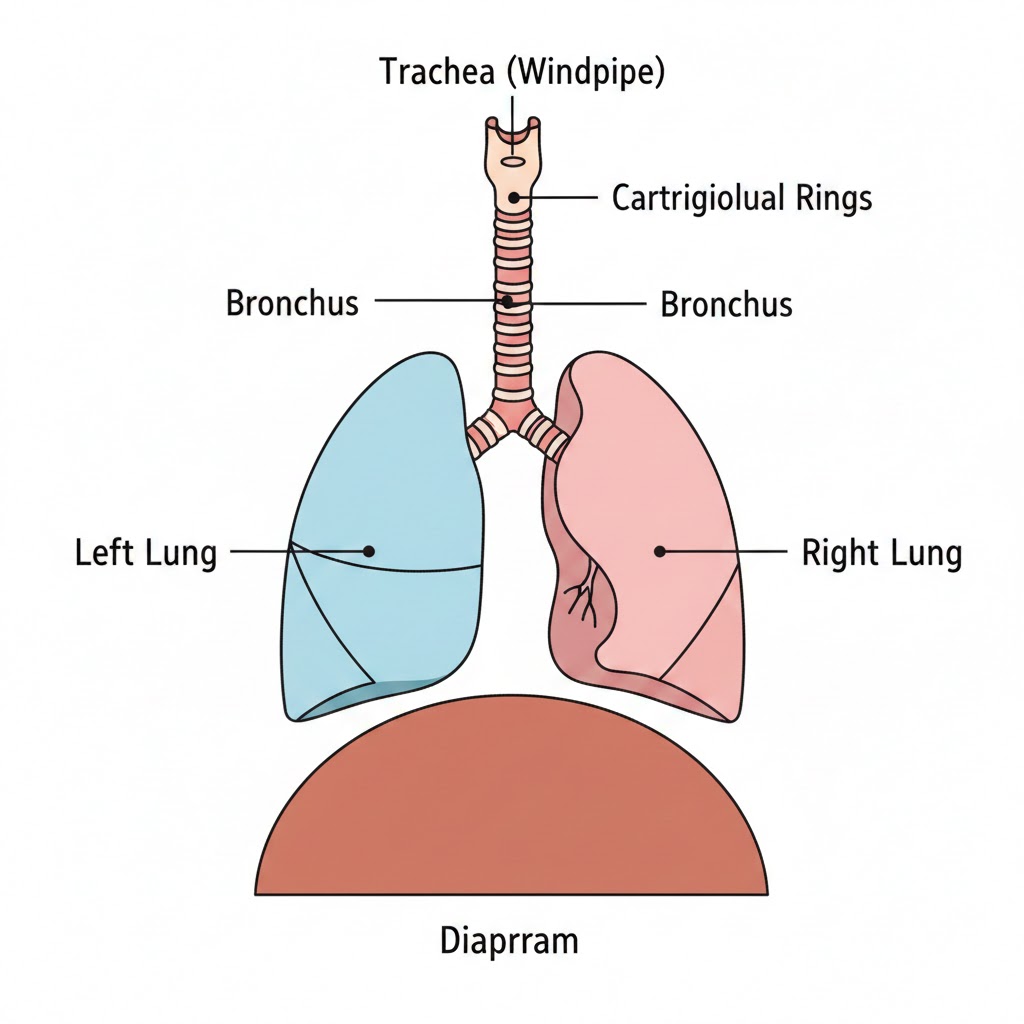
(a) Diagram: Respiratory System showing Trachea, Bronchi, Lungs, Diaphragm.
 (b) Experiment: Take lime water in a test tube. Blow air into it through a straw. The
lime water turns milky. This proves exhaled air contains Carbon Dioxide.
(b) Experiment: Take lime water in a test tube. Blow air into it through a straw. The
lime water turns milky. This proves exhaled air contains Carbon Dioxide.
(c) Alveoli Design: They are balloon-like structures that provide a maximum
surface area for gas exchange. They have very thin walls and contain an extensive network
of blood vessels to facilitate rapid diffusion of O2 and CO2.
37.
(i) Translocation.
(ii) Xylem.
(iii) Evaporation of water molecules from the cells of a leaf creates a suction
(transpiration pull) which pulls water from the xylem cells of roots. It acts as a major driving force
for movement of water and dissolved minerals during the day.
38.
(i) Because of the Law of Dominance. The Tall trait (T) is dominant
over the Dwarf trait (t), so only the dominant trait is expressed in F1.
(ii) The dwarf trait remains hidden (recessive) in the F1 generation but is not lost;
it reappears in the F2 generation.
(iii) Law of Dominance: Usually one factor in a pair dominates the
other. Law of Segregation: The two factors of a character separate during gamete
formation so that a gamete receives only one factor.
39.
(i) 10% Law: Only 10% of energy entering a particular trophic level of organisms is
available for transfer to the next higher trophic level.
(ii) Because energy loss at each step is so great (90% lost as heat/metabolism) that
very little usable energy remains after 4 trophic levels.
(iii) Grass (Producer) → Grasshopper (Primary Consumer) → Frog (Secondary
Consumer) → Snake (Tertiary Consumer).
