Vardaan Watermark
Vardaan Learning Institute
Class 10 Civics (Democratic Politics - II) • Chapter Notes
🌐 vardaanlearning.com 📞 9508841336 Team Vardaan ❤️

CHAPTER 2: FEDERALISM

This chapter explains what federalism is, how power is shared between the Central and State governments in India, how India's federal structure was formed and has evolved, and how decentralisation brought power even closer to the people through Panchayats and Municipalities. This is one of the highest-scoring chapters in Civics.

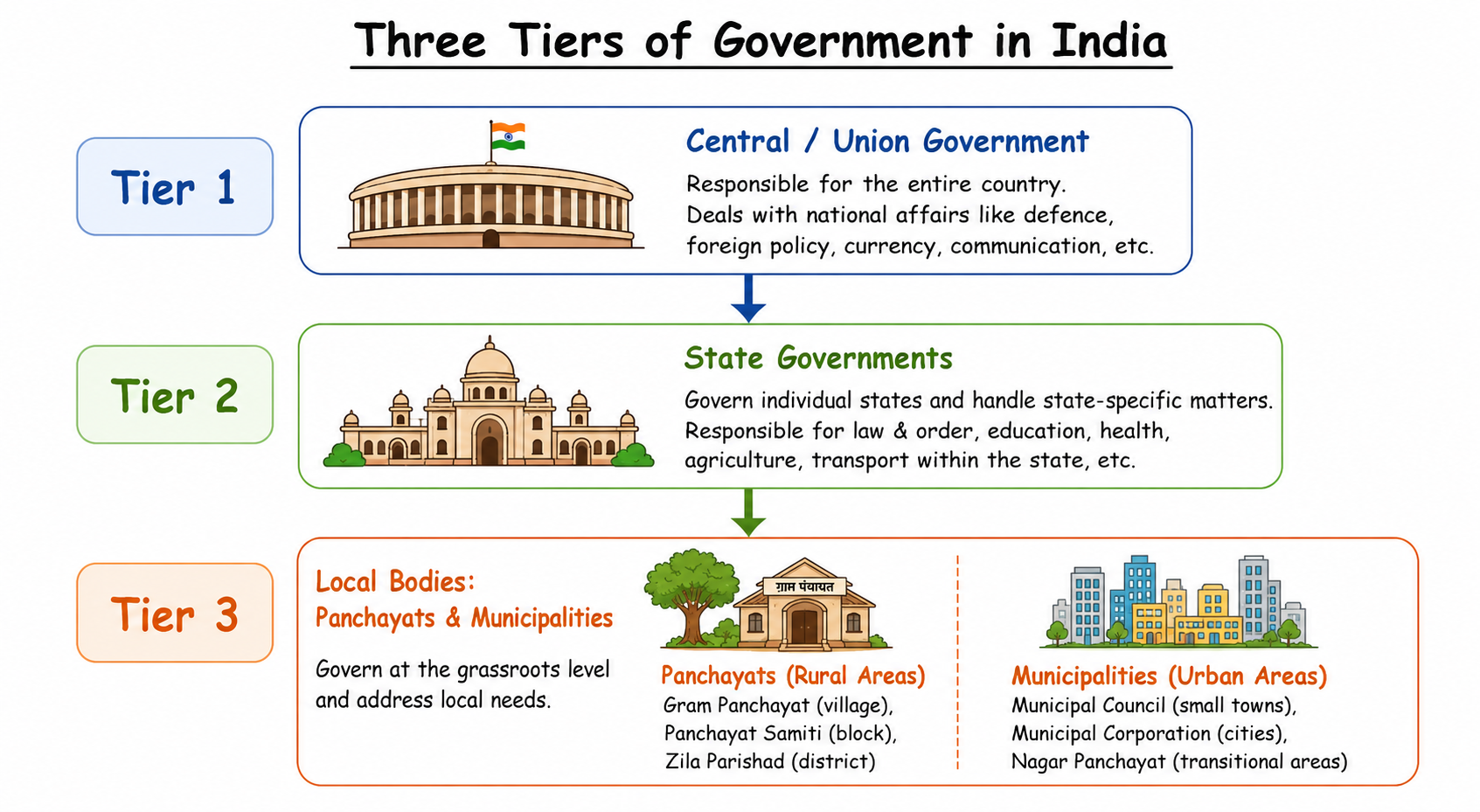
The Big Picture This chapter covers three levels of power-sharing:
🏛️ TIER 1 — Central (Union) Government
National subjects — Defence, Currency, Foreign Affairs
🏢 TIER 2 — State Governments
Local subjects — Police, Agriculture, Trade
🏘️ TIER 3 — Local Bodies (Panchayats & Municipalities)
Village/city level — roads, water, sanitation

1. What is Federalism?

Definition — Board Exam Must Know Federalism is a system of government in which power is divided between a central authority and various constituent units (states or provinces) of the country.

Both the central and state governments operate on the same set of citizens, but each has different powers in different areas. Their powers are defined and guaranteed by the Constitution.

1.1 Federalism vs. Unitary System

Feature Federal System Unitary System
Levels of Government Two or more tiers — Central + State (+ Local) Only one level of government (Central)
Power of States States have independent powers guaranteed by the Constitution Sub-units are subordinate to the central government; can be overruled
Constitutional Protection Powers of each level constitutionally protected; cannot be changed by Centre alone Centre can change powers of sub-units any time
Examples India, USA, Australia, Belgium, Switzerland Sri Lanka, United Kingdom (broadly), China

2. Key Features of Federalism

For a system to truly be called federal, it must have these essential characteristics. These are also directly asked in board exams as "features of federalism."

6 Key Features — Must Memorise
  1. Multiple Tiers of Government: There are two or more levels of government. Each tier has its own powers and areas of governance — they do not simply follow orders from above.
  2. Distinct Jurisdictions: Each tier governs the same citizens but has clearly defined and separate authority — in making laws, collecting taxes, and administering its area — as specified by the Constitution.
  3. Constitutional Guarantee: The existence and powers of each tier of government are written into and protected by the Constitution. Neither level can simply eliminate the other.
  4. Amendment Requires Consent of Both Levels: The fundamental provisions of the Constitution — especially those relating to the sharing of powers — cannot be changed by one level alone. Changes must be approved by both Central and State governments.
  5. Independent Judiciary: Courts have the power to interpret the Constitution and settle disputes between different levels of government. The Supreme Court of India acts as the guardian of the Constitution.
  6. Financial Autonomy: Sources of revenue (taxes, duties) for each level of government are clearly specified in the Constitution, giving each tier financial independence to function.

3. Two Routes to Federalism — "Coming Together" vs. "Holding Together"

Federations around the world came into existence in two very different ways. Understanding this distinction is important for board exams.

Feature "Coming Together" Federation "Holding Together" Federation
How Formed Previously independent states voluntarily come together and form a bigger, united nation A large country with diverse regions divides its power between the national government and constituent states
Who is Stronger The constituent units (states) tend to be more powerful and equal to the Centre The Central government tends to be more powerful than the states
Purpose To increase collective security and benefit from unity while retaining individual state sovereignty To hold a large, diverse nation together by giving regions autonomy while keeping national unity
Examples USA, Australia, Switzerland India, Spain, Belgium
India's Case India is a "Holding Together" Federation. After Independence in 1947, India was a single nation but had enormous regional, linguistic, and cultural diversity. The framers of the Constitution divided power between the Central government and the States to accommodate this diversity while keeping India united.

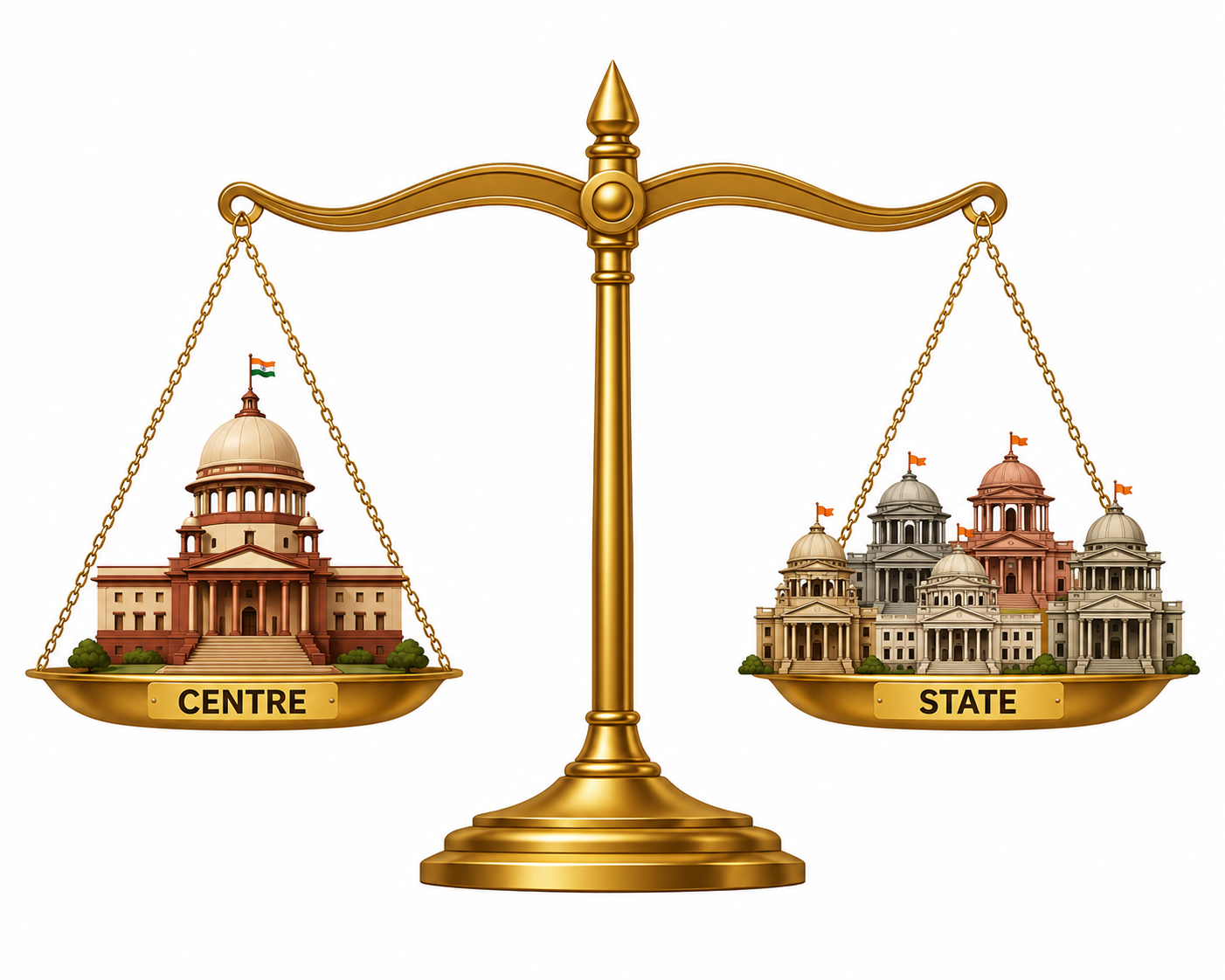
In India, the Central government is more powerful than the states — it handles issues of national importance and can override states in emergencies.

4. Federalism in India — How Power is Divided

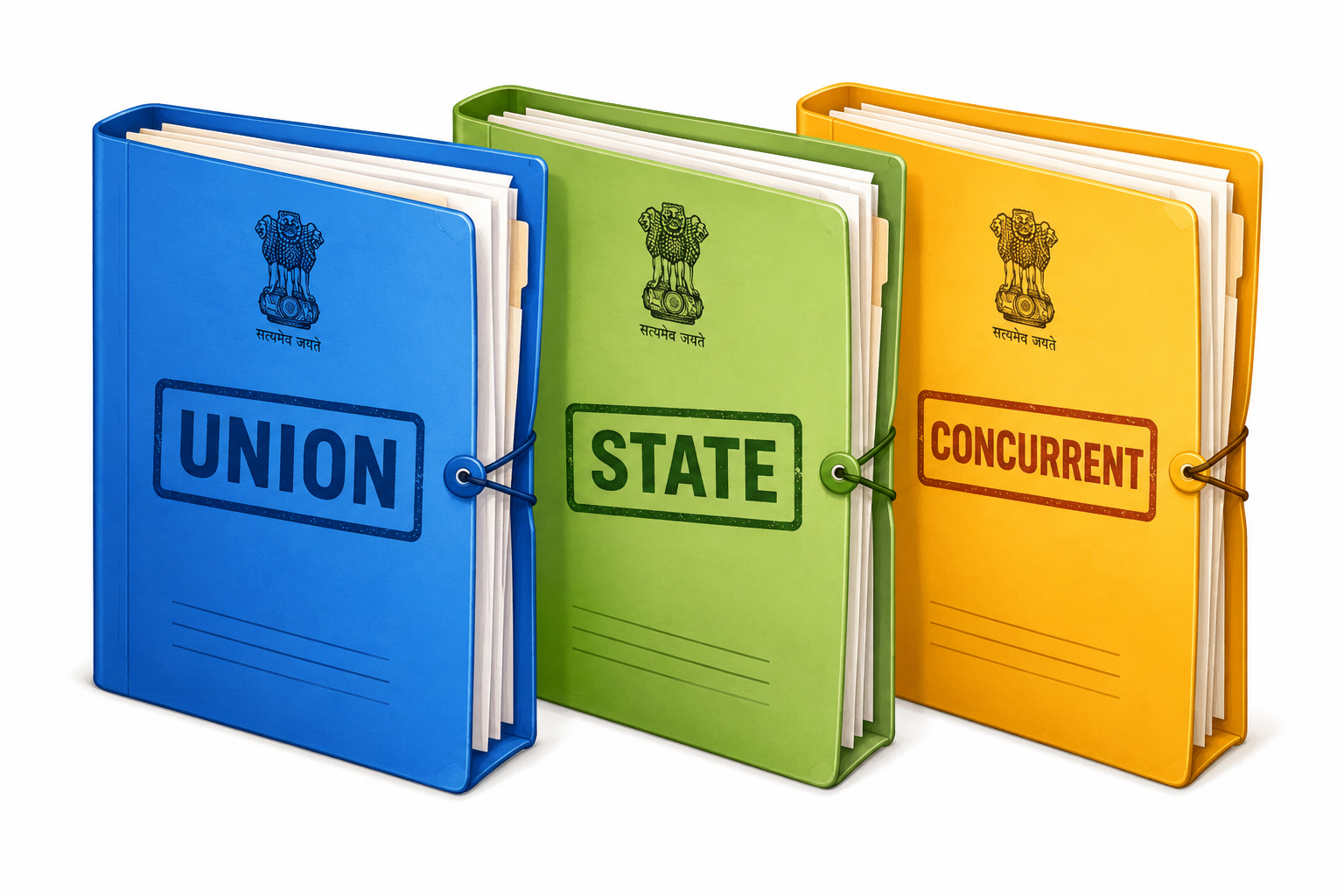
The Indian Constitution carefully divides legislative (law-making) power between the Union and State governments through three lists.

4.1 The Three Lists — Division of Powers

List Who Makes Laws Number of Subjects Examples of Subjects
Union List Only the Central (Union) Government can make laws 100 subjects Defence, Foreign Affairs, Banking, Currency (Money), Communication (Post & Telegraph), Citizenship, Atomic Energy, Railways, Airways
State List Only the State Government can make laws 61 subjects Police, Trade and Commerce within state, Agriculture, Irrigation, Land, Prisons, Local Government
Concurrent List Both Central AND State governments can make laws; if they conflict, the Central law prevails 52 subjects Education, Forests, Trade Unions, Marriage and Divorce, Adoption, Succession
Residual Powers — Important Residual Subjects / Residual Powers: Some subjects were not included in any of the three lists when the Constitution was made — because they did not exist yet (like the internet, software, space technology).

In India, the power to make laws on such residual subjects belongs to the Central (Union) Government.

Example: Computer software and the internet were not in any list when the Constitution was written. The Central Government makes laws on these.

4.2 Apply the Lists — Quick Test

Classify These Subjects
SubjectListWho Decides?
Building roads within a cityState ListState Government
Declaring war on another countryUnion ListCentral Government
Syllabus of school educationConcurrent ListBoth (Central law wins if conflict)
Currency and coinsUnion ListCentral Government
Regulating forest cuttingConcurrent ListBoth (Central law wins if conflict)
Setting up local police stationsState ListState Government
Internet regulationResidualCentral Government

5. How Has Federalism Been Practised in India?

Writing federal principles in the Constitution is one thing — actually making them work is another. India has faced several tests in putting federalism into practice. Three key areas are: linguistic states, language policy, and Centre-State relations.

5.1 Reorganisation of States on Linguistic Basis

Major Event — States Reorganisation Act 1956 After Independence, India's states were drawn based on the old British provinces — not on language or culture. Many people who spoke the same language found themselves in different states.

Demand for Linguistic States: People began demanding that states be created on the basis of language. There were fears among national leaders like Nehru and Patel that this could break India apart — just as religion-based division had led to Partition.

The Potti Sriramulu Incident: In 1952, Potti Sriramulu, a Congress leader, went on a hunger strike demanding a separate Andhra state for Telugu speakers. He died after 56 days of fasting. This created massive unrest, and the government was forced to create Andhra Pradesh — the first state formed on a linguistic basis in 1953.

The States Reorganisation Act, 1956 then formally redrew state boundaries across India, mainly on the basis of language. The result: 14 states and 6 Union Territories were created.
Was This a Good or Bad Decision? Initial Fear: Leaders worried that creating states on language lines would weaken national unity and lead to India's disintegration — like what happened in other countries where ethnic divisions tore nations apart.

What Actually Happened: Experience proved the fears wrong! The creation of linguistic states actually made India more united by: Conclusion: "The creation of linguistic states was the first and a major test for democratic politics in India — and it passed." — NCERT

States have also been created on the basis of culture, ethnicity, and geography — not just language. Examples:

5.2 Language Policy — How India Handled the Language Problem

With hundreds of languages, India had to decide what language(s) would be used for official purposes. This was highly sensitive.

India's Language Policy Key Lesson: Unlike Sri Lanka where Sinhala was made the only official language (leading to Tamil alienation and civil war), India's policy of accommodating multiple languages has been far more successful in keeping the country together.

5.3 Centre-State Relations — How Has the Balance Changed?

Political Shift — Important Context For a long time after Independence (1947–1989), the Congress Party ruled both at the Centre and in most states. There was not much tension between Centre and State because the same party was in power at both levels — states basically followed the Centre's lead.

After 1989: No single party got a clear majority at the Centre. Coalition governments became the norm — the Central Government was formed by alliances of multiple parties, many of which were regional parties that also ruled their home states. This changed the dynamic:
This is called the era of Coalition Politics and has actually strengthened Indian federalism in practice.

6. Decentralisation — The Third Tier of Government

Even after dividing power between the Centre and States, India is a huge country. State governments still govern very large areas with millions of people. To bring government closer to the common person, a third tier — local government — was created and strengthened.

Why Decentralise? Decentralisation means transferring power from the Central and State governments to local-level governments at the village and city level. The key reason is:

"Local people know local problems best."

A government in Delhi cannot understand the specific needs of a village in Assam or a slum in Mumbai as well as the people who actually live there. Decentralisation allows:

6.1 The Constitutional Amendment of 1992 — A Landmark

73rd and 74th Constitutional Amendments, 1992 — Most Important Event in This Section In 1992, the Indian Parliament passed two historic constitutional amendments to make the third tier of democracy strong and effective:

Steps taken by these amendments: Significance: These amendments made the third tier of government a constitutional reality — not just a political convenience that states could ignore. Local self-government became a fundamental part of India's democratic structure.

6.2 Rural Local Government — Panchayati Raj

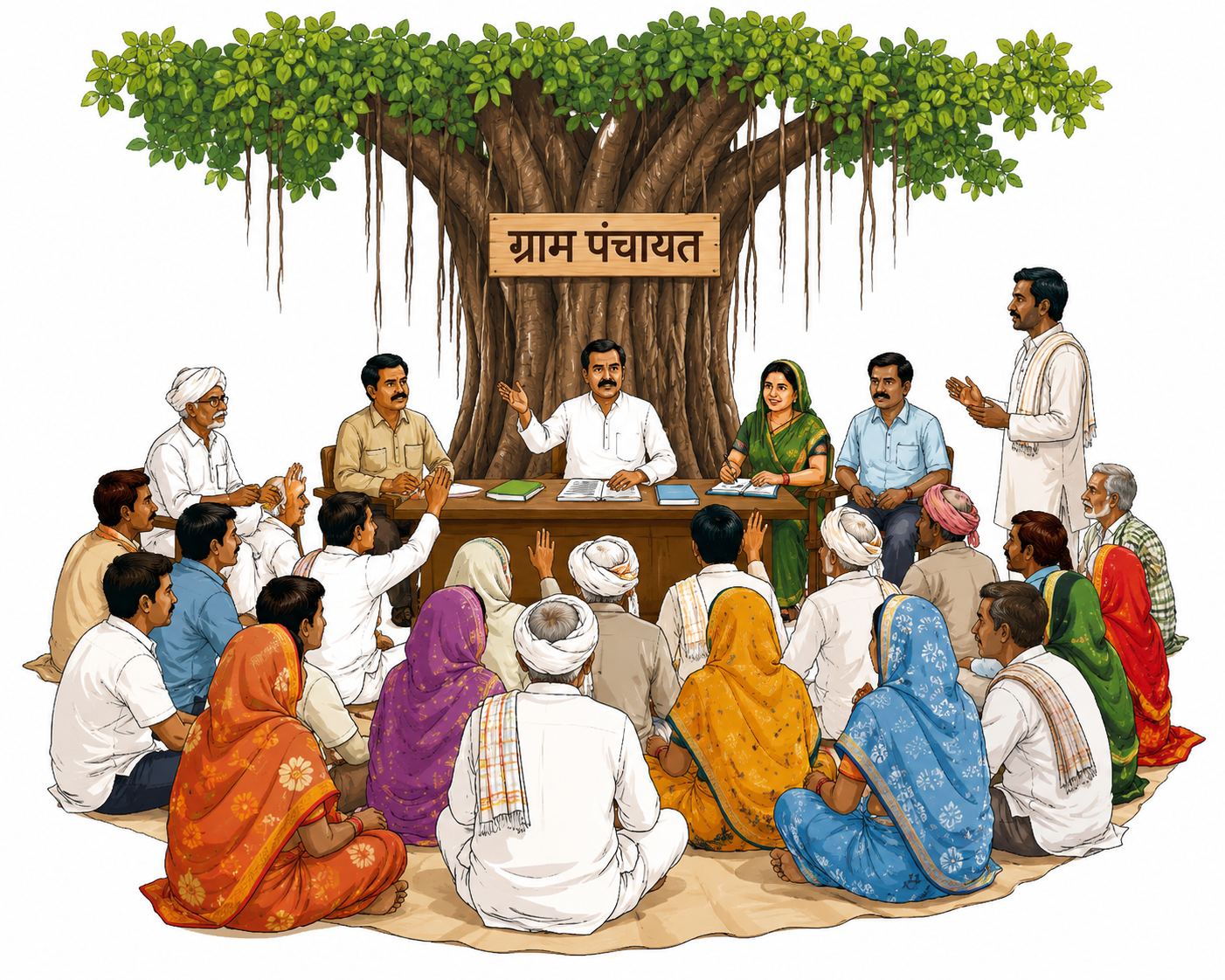
Panchayati Raj System Gram Panchayat: The basic unit of rural local government. Each village (or a cluster of small villages) has a Gram Sabha — an assembly of all adult voters in the village — and a Gram Panchayat — an elected body that manages the village's affairs.

Panchayat Samiti (Block/Mandal level): A few Gram Panchayats together form a Block/Mandal-level body — the intermediate tier of rural government.

Zila Parishad (District level): At the top of rural local government is the District-level body (Zila Parishad), which coordinates all Panchayat Samitis in a district.

Key fact: India has about 3.6 million elected representatives in local bodies — one of the largest exercises in grassroots democracy in the world.

6.3 Urban Local Government — Municipalities

7. India — Is It Federal or Not?

Some people argue India is not truly federal because the Centre is too powerful. The NCERT acknowledges that India's Constitution has features of both a federal and a unitary system.

7.1 Federal Features of India's Constitution

7.2 Unitary / Centralising Features of India's Constitution

Conclusion India is federal in spirit but with a strong centre. It is a unique model — described as a "quasi-federal" or "cooperative federal" system — where the Centre is powerful enough to keep the country united, but states have enough autonomy to govern their local affairs effectively. The increasing role of regional parties since 1989 has made the practice of Indian federalism more genuine and balanced.

8. Key Terms and Definitions (Glossary)

TermSimple Definition
FederalismA system where power is divided between a central authority and constituent state units — both having constitutionally guaranteed powers.
Unitary SystemA system where only one (central) government has real power; sub-units are subordinate and can be overruled.
Coming Together FederationIndependent states voluntarily unite to form a bigger nation — states tend to be more powerful. Example: USA, Australia.
Holding Together FederationA large nation divides its power to accommodate diversity — Centre tends to be stronger. Example: India, Spain, Belgium.
Union List100 subjects on which only the Central Government can make laws (Defence, Currency, Foreign Affairs).
State List61 subjects on which only State governments can make laws (Police, Agriculture, Trade within state).
Concurrent List52 subjects on which both Central and State governments can make laws; Central law prevails in conflicts (Education, Forests).
Residual PowersPower to make laws on subjects not in any list — belongs to the Central Government in India (e.g., internet, software).
DecentralisationTransferring power from Central/State governments to local-level governments (Panchayats and Municipalities).
Gram SabhaAn assembly of all adult voters registered in the ward of a Gram Panchayat — the primary democratic body at village level.
Gram PanchayatThe elected local governing body at the village level — handles local development, sanitation, water, roads.
Zila ParishadDistrict-level body coordinating all Panchayat Samitis in a district.
Municipal CorporationUrban local body governing large cities — handles roads, water, sanitation, parks, local taxes.
State Election CommissionAn independent body in each state that conducts elections to Panchayats and Municipalities.
Coalition GovernmentA government formed by an alliance of two or more political parties — became common in India after 1989.
Linguistic StatesStates created on the basis of language — e.g., Andhra Pradesh (Telugu), Karnataka (Kannada).

9. Quick Revision — Chapter Summary

Chapter at a Glance

10. Important Previous Year Questions (PYQs)

1-Mark Questions

Q & A Q1. Define Federalism.
Ans: Federalism is a system of government in which power is divided between a central authority and various constituent units (states) of the country, with each level having constitutionally guaranteed, independent powers.
Q & A Q2. Give one example each of a "Coming Together" and a "Holding Together" federation.
Ans: Coming Together — USA. Holding Together — India.
Q & A Q3. Under which list does the subject of "Education" fall in India?
Ans: Education falls under the Concurrent List — both the Central and State governments can make laws on it. If they conflict, the Central law prevails.
Q & A Q4. When were the 73rd and 74th Constitutional Amendments passed? What was their purpose?
Ans: These amendments were passed in 1992. Their purpose was to give constitutional status and power to local governments (Panchayats in rural areas and Municipalities in urban areas), making the third tier of democracy effective and mandatory.
Q & A Q5. Who was Potti Sriramulu and what is his significance?
Ans: Potti Sriramulu was a Congress leader from Andhra who went on a hunger strike demanding a separate state for Telugu speakers. He died after 56 days (1952). This triggered massive protests that forced the government to create Andhra Pradesh — the first linguistic state in India.
Q & A Q6. What is meant by "Residual Powers"? Who holds them in India?
Ans: Residual powers are the authority to make laws on subjects NOT mentioned in any of the three lists. In India, residual powers belong to the Central (Union) Government.

3-Mark Questions

Q & A Q7. State any three features of Federalism. [3 marks] (PYQ — Very Frequently Asked)
Ans:
Q & A Q8. Distinguish between "Coming Together" and "Holding Together" federations with examples. [3 marks] (PYQ)
Ans:
Q & A Q9. What measures were taken to make local self-government more effective after the 1992 Constitutional Amendments? [3 marks] (PYQ — Most Asked)
Ans:
Q & A Q10. How has the practice of federalism evolved in India after 1990? [3 marks]
Ans:
Q & A Q11. "The creation of linguistic states was the first and a major test for democratic politics in India." Justify. [3 marks] (PYQ)
Ans:

5-Mark Questions (Long Answer)

Q & A Q12. Describe the three-fold distribution of legislative powers between the Central and State governments in India. [5 marks] (PYQ — Classic Board Question)
Ans: The Indian Constitution divides law-making power through three lists:

1. Union List (100 subjects): Only the Central (Union) Government can make laws on these subjects — matters of national importance where uniformity is essential. Examples: Defence, foreign affairs, banking, currency, citizenship, railways, post and telegraph, atomic energy. The rationale: these subjects cannot vary from state to state — a country needs one army, one currency, one foreign policy.

2. State List (61 subjects): Only State governments can make laws on these subjects — matters of local importance where states need flexibility. Examples: Police, agriculture, trade within the state, irrigation, land, local government, prisons. The rationale: local needs vary — Punjab's agricultural laws will differ from Kerala's, and states understand their local conditions best.

3. Concurrent List (52 subjects): Both the Central and State governments can make laws on these subjects — matters of common interest. Examples: Education, forests, trade unions, marriage, adoption, succession. If the laws of the Centre and a State conflict on a concurrent subject, the Central law prevails.

Residual Powers: Matters not in any list (like internet, software — subjects that didn't exist when the Constitution was written) are governed by the Central Government.

Significance: This three-fold distribution ensures that national matters are handled uniformly by the Centre, local matters are managed by states with local knowledge, and matters of common concern have shared responsibility — creating a balanced federal structure.
Q & A Q13. What is decentralisation? What steps were taken in India to decentralise power after 1992? [5 marks] (PYQ — Highly Frequent)
Ans: Decentralisation refers to the transfer of power and responsibility from Central and State governments to local-level governments at the village (Panchayat) and city (Municipality) level. The basic idea is that local people know local problems better and can manage resources and governance more effectively.

Steps taken after the 1992 Constitutional Amendments (73rd and 74th):
  1. Constitutional Status: Local government bodies (Panchayats and Municipalities) were given constitutional status for the first time — making them a permanent part of India's democratic structure that cannot be abolished.
  2. Mandatory Regular Elections: It is now legally compulsory to hold elections to local bodies regularly — elections cannot be postponed at the convenience of state governments.
  3. Reservation: Seats are reserved for Scheduled Castes, Scheduled Tribes, and Other Backward Classes in proportion to their population in local bodies. This ensures marginalized communities have a voice in local decisions.
  4. Women's Representation: At least one-third of all seats and positions in local bodies must be reserved for women. Many states have now extended this to 50%. This has brought millions of women into political decision-making for the first time.
  5. State Election Commission: Every state must have an independent State Election Commission to conduct elections to local bodies — ensuring free, fair, and timely elections.
  6. Revenue Sharing: State governments are constitutionally required to share powers and financial resources with local bodies — giving Panchayats and Municipalities the funds to actually execute development work.
Result: India today has approximately 3.6 million elected representatives in local bodies — making it one of the largest experiments in grassroots democracy anywhere in the world.

Assertion-Reasoning Questions (New Pattern)

A-R Type Q14. Assertion (A): India is described as a federation, even though the word "federation" is not used in the Constitution.
Reason (R): India has a three-fold distribution of powers between the Centre and States, an independent judiciary, and constitutionally guaranteed powers for each tier of government.

Ans: (a) — Both A and R are true, and R is the correct explanation. Though the Constitution calls India a "Union of States," it has all the essential features of a federal system — including divided powers, constitutional guarantees, and judicial oversight — which is why it is rightly called a federation in practice.
A-R Type Q15. Assertion (A): The creation of linguistic states strengthened Indian democracy rather than weakening it.
Reason (R): It gave people pride in their language, improved administrative efficiency, and reduced resentment among linguistic minorities.

Ans: (a) — Both A and R are true, and R correctly explains A. Despite initial fears, experience showed that recognising linguistic identities within a democratic framework actually reduced separatist tendencies and made people feel part of the Indian nation.
A-R Type Q16. Assertion (A): The 1992 Constitutional Amendments were a landmark in Indian federalism.
Reason (R): They made local self-government a constitutional requirement and introduced mandatory reservations for women and marginalised groups.

Ans: (a) — Both A and R are true, and R correctly explains the landmark nature of the amendments. Before 1992, local government existed but was not constitutionally protected — states could ignore it. After 1992, local democracy became mandatory, elections became compulsory, and previously excluded groups gained a guaranteed political voice.

Source-Based / Case Study Question

Case Study "The state of X wants to make a law about regulating its forests. The Central Government has already made a law on the same subject. The state argues it has the right to make its own law for its local conditions."

Q(i): Under which list does "Forests" fall? [1 mark]
Ans: Forests fall under the Concurrent List — both the Central and State governments can make laws on it.

Q(ii): If both the Central and State laws conflict, which law will be applied? [1 mark]
Ans: The Central Government's law will prevail over the State law in case of conflict on a Concurrent List subject.

Q(iii): Does this mean states have no power? Explain the concept of the three lists in the context of federalism. [3 marks]
Ans: No, states are not powerless. The three-list division gives states significant independent authority:

11. Common Mistakes to Avoid in Board Exams

Exam Tips
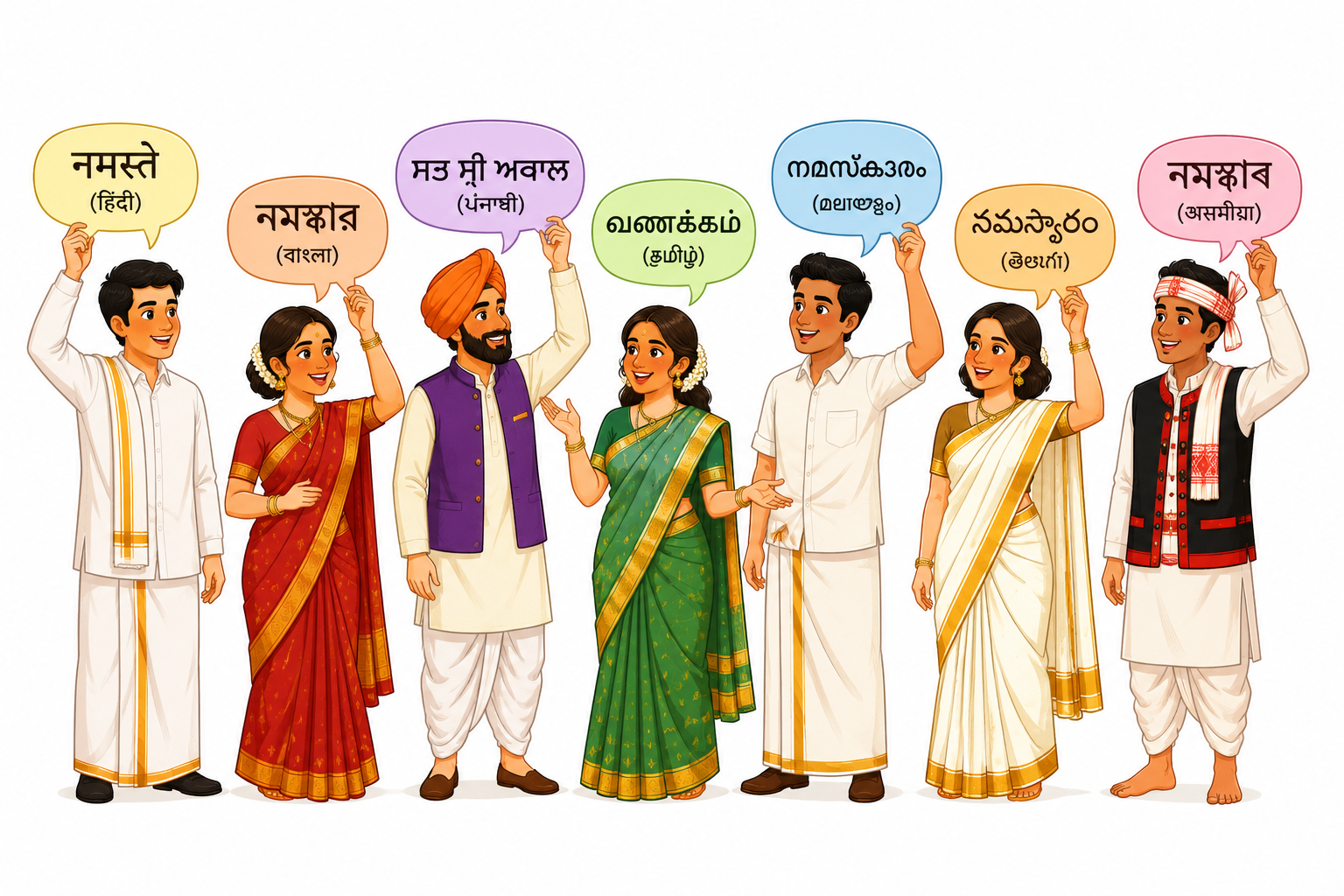
  1. Do NOT say Hindi is the "national language" of India. India has NO official national language. Hindi is the official language of the Union Government. The Constitution recognises 22 scheduled languages.
  2. Do NOT confuse Union List and State List subjects. Practice the classification table — "Defence" is Union List, "Police" is State List, "Education" is Concurrent List. This is often tested directly.
  3. Residual Powers in India belong to the CENTRE — unlike the USA where residual powers are with the states. This is a crucial difference.
  4. The 1992 amendments were the 73rd and 74th — not 71st or 75th. Remember both numbers.
  5. One-third reservation for women in local bodies — not half (unless specified by a particular state). Know this number precisely.

  6. Potti Sriramulu died after 56 days of fasting in 1952 — NOT in 1956 (which is when the States Reorganisation Act was passed). Don't mix up the dates.
  7. In "Coming Together" federations, states are more powerful. In "Holding Together" federations, the Centre is more powerful. Many students get this backwards.