
Elections are the core process for exercising democratic rights. They ensure that a government does not continue beyond its prescribed term without a fresh mandate from the people.
Derived from the Greek words psephos (meaning 'pebble') and logy (meaning 'systematic study'). In ancient Greece, pebbles were used for voting. Today, it refers to the scientific study of elections.
The first step in conducting elections is deciding how votes are converted into seats. In India, we use two main systems:
Also known as the plurality system. Used for electing members to the Lok Sabha and the Vidhan Sabha. The candidate who receives the most votes in a constituency wins, even if they secure less than 50% of the total votes.
Used for elections to the Rajya Sabha, the President, and the Vice President. Seats are allotted in proportion to the total votes received.
Six states in India (Andhra Pradesh, Bihar, Karnataka, Maharashtra, Telangana, Uttar Pradesh) have a bicameral legislature with an Upper House (Vidhan Parishad or Legislative Council). Elections to the Vidhan Parishad are held using the PR system by means of a Single Transferable Vote.
| Feature | First Past The Post (FPTP) | Majority System | Proportional Representation (PR) |
|---|---|---|---|
| How Voting Works? | Candidate with the most votes wins, even if less than 50%. | Candidate must receive more than 50% votes to win. If not, top two compete in Round 2. | Voters vote for a party. Seats are allotted in proportion to the total votes received by the party. |
For elections to be free and fair, a robust machinery and clear laws are required. The major legislations include:
The boundaries of parliamentary and assembly constituencies change over time depending on population shifts. Delimitation is the process of fixing the boundaries to ensure the ratio of seats to population is equal across constituencies. (Article 82 of the Constitution mandates this).
The ECI is an autonomous, permanent constitutional body established on 25 January 1950 (celebrated as National Voters' Day). Article 324 vests the superintendence, direction, and control of elections in the ECI.
At the state level, election work is supervised by the Chief Electoral Officer (CEO), and at the district level by District Magistrates acting as District Election Officers.
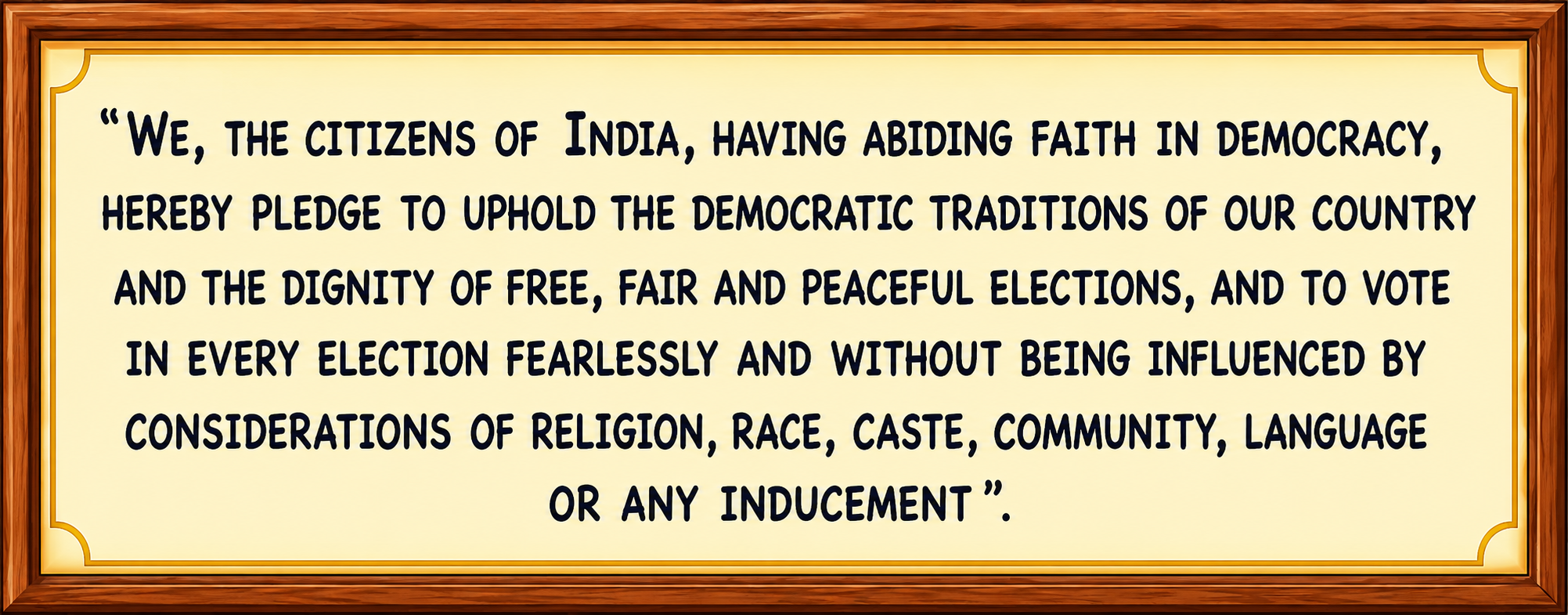
If fairness is compromised (e.g., by bribery or inaccurate counting), public confidence weakens. The ECI has introduced several digital initiatives to make elections transparent and inclusive:
.png)
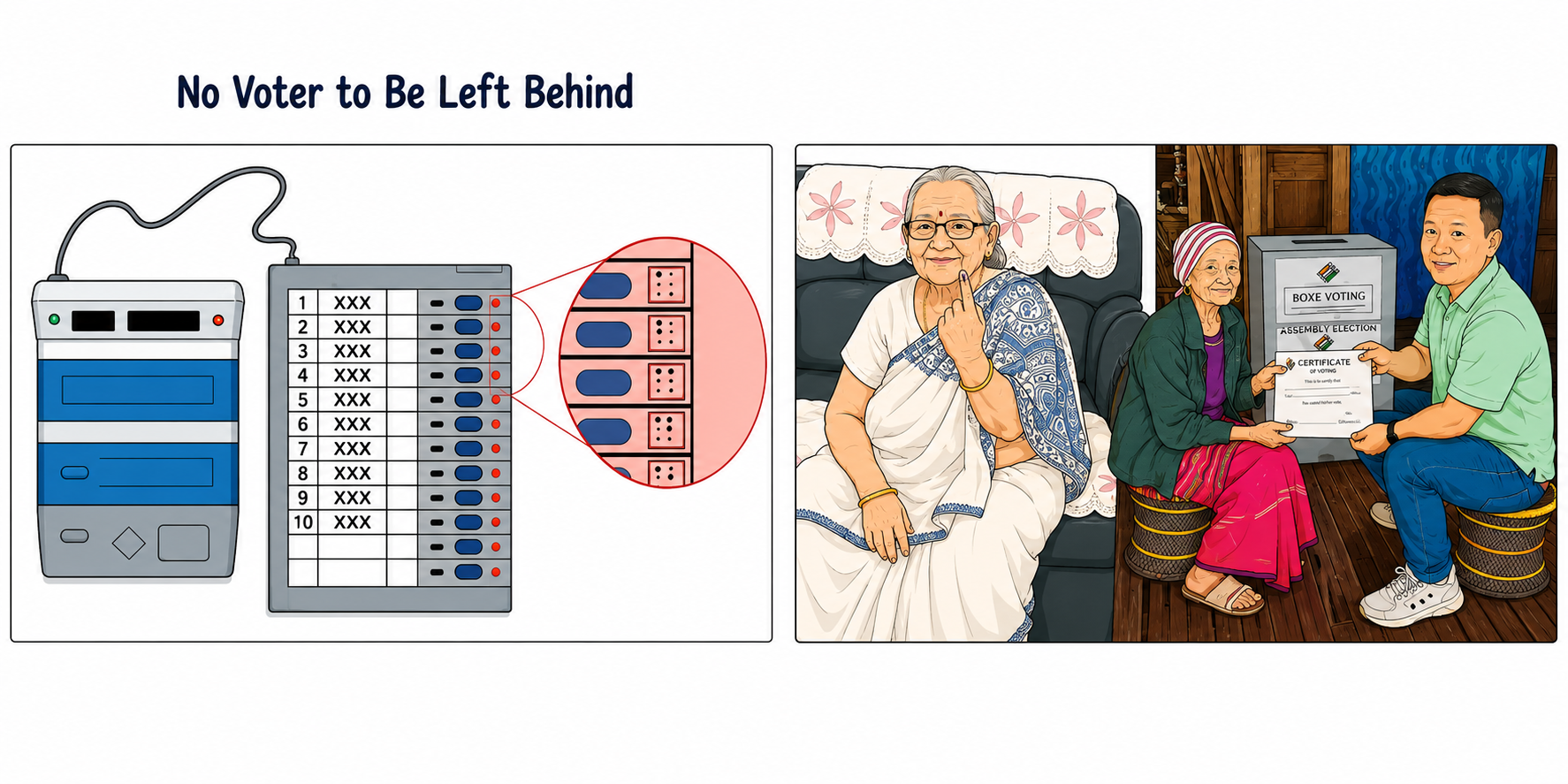
The International Election Visitors' Programme (IEVP) is a flagship programme of the ECI for international cooperation. The ECI has signed MoUs with 28 Election Management Bodies (EMBs) and international organisations like IFES, International IDEA, and the United Nations.
Political parties play a fundamental role by presenting diverse viewpoints through their programmes, policies, and manifestos. They help voters make informed choices and ensure that democracy functions effectively by providing governance, representation, and accountability.
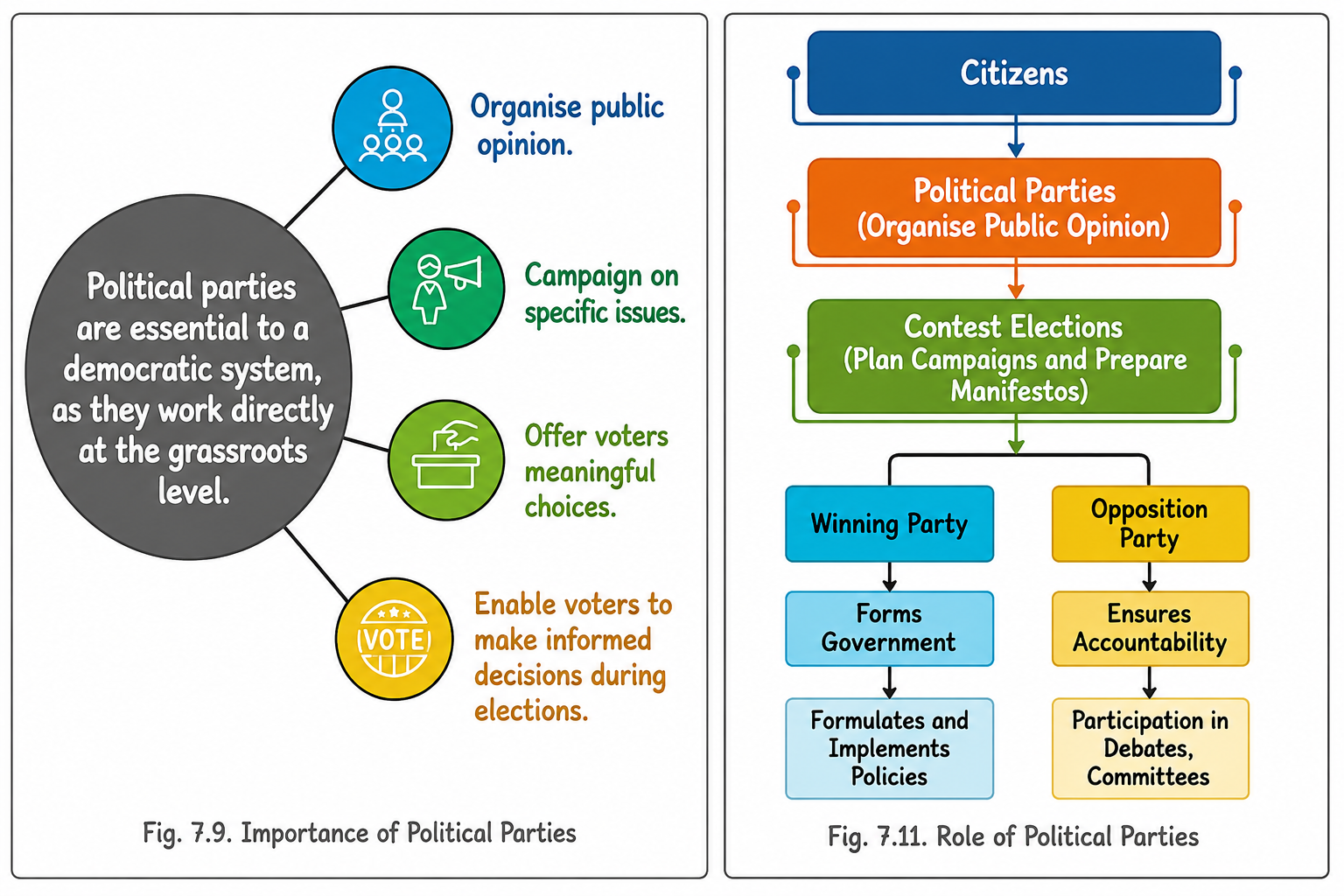
India has a multi-party system reflecting its rich diversity. However, sometimes elected representatives switch parties. Defection refers to abandoning or switching from the political party under whose banner a candidate was elected. It is often considered political opportunism.
Passed through the 52nd Constitutional Amendment Act, it aims to prevent defection and provide stability to the elected government. If a member voluntarily gives up party membership or votes against the party's whip, they can be disqualified by the Speaker/Chairman of the House.
The ECI registers and recognises political parties based on specific criteria:
Conducting elections for over 96.8 crore voters (as of 2024) across thousands of polling stations is a mammoth task. Elections face significant challenges such as:
.png)
The ECI addresses these challenges through the stringent Model Code of Conduct, using secure EVMs and VVPAT (Voter Verifiable Paper Audit Trail), conducting voter awareness campaigns, and encouraging active citizen participation.
 VARDAAN COMET