Vardaan Learning Institute
Atmosphere and Climate
The Big Questions
- What is the composition of the atmosphere?
- How do the different layers of the atmosphere affect the planet Earth?
- What is the mechanism of monsoon?
- How can we reduce our carbon footprint?
1. The Atmosphere
The atmosphere is a blanket of air surrounding the Earth. It is pulled down around the Earth by gravity (a fundamental physical force of attraction between objects that have mass/energy). The atmosphere is vital for survival as it shields us from harmful solar radiation (like UV rays), regulates the Earth's temperature by trapping the Sun's energy, and influences weather and climate systems.
2. Composition of the Atmosphere
The atmosphere is composed of a mixture of gases, water vapour, and dust particles. Its composition varies with altitude.
- Nitrogen (78%) and Oxygen (21%): The two primary and most abundant gases essential to life.
- Trace Gases: Carbon dioxide (0.04%), argon (0.93%), helium, neon, ozone, hydrogen, etc., are found in lesser quantities.
- Water Vapour: Varies from 0.1% to 0.4% and plays a significant role in cloud formation and precipitation.
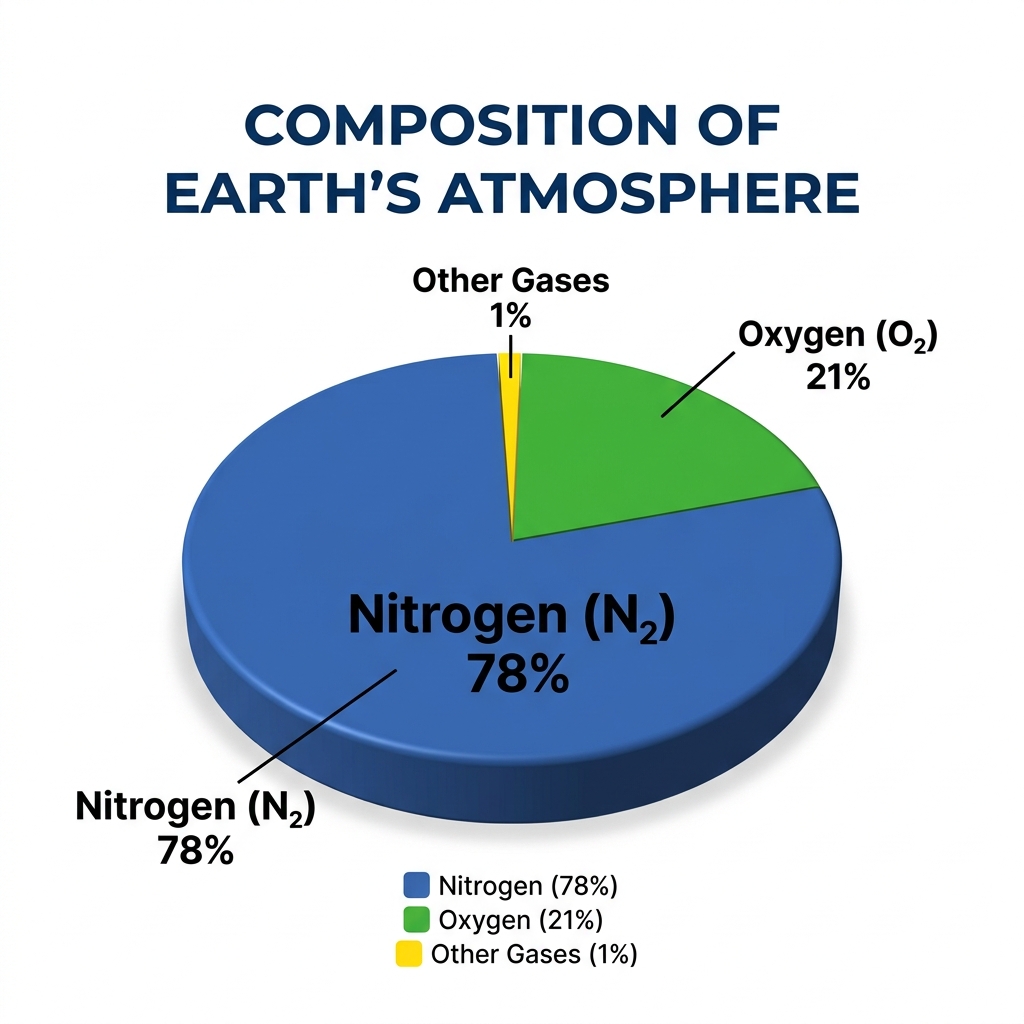
Figure 3.1 & 3.2: Composition of the Atmosphere
3. Structure of the Atmosphere
The atmosphere has a layered structure defined by changes in temperature and density with increasing altitude (height above mean sea level). Density is highest near the surface and decreases upwards.
Atmospheric Layers
- Troposphere: Average height of 12 km. Temperature decreases with altitude. Contains the air we breathe, water vapour, and is where nearly all weather phenomena occur. Separated from the next layer by the tropopause.
- Stratosphere: Extends up to 50 km. Ideal for flying aeroplanes as it is free of clouds/weather. Contains the ozone layer which filters harmful UV radiation. Separated by the stratopause.
- Mesosphere: Extends up to 80 km. Temperature decreases with altitude. Most meteorites burn up here.
- Thermosphere: Extends from 80 to 700 km. Temperature rises rapidly due to absorption of X-rays and UV rays. Contains the Ionosphere which helps reflect radio waves. Auroras (Northern/Southern lights) occur here.
- Exosphere: The uppermost layer with very thin air. Light gases like helium and hydrogen float into space from here.
Note: Temperature decreases with altitude only in the troposphere and mesosphere.
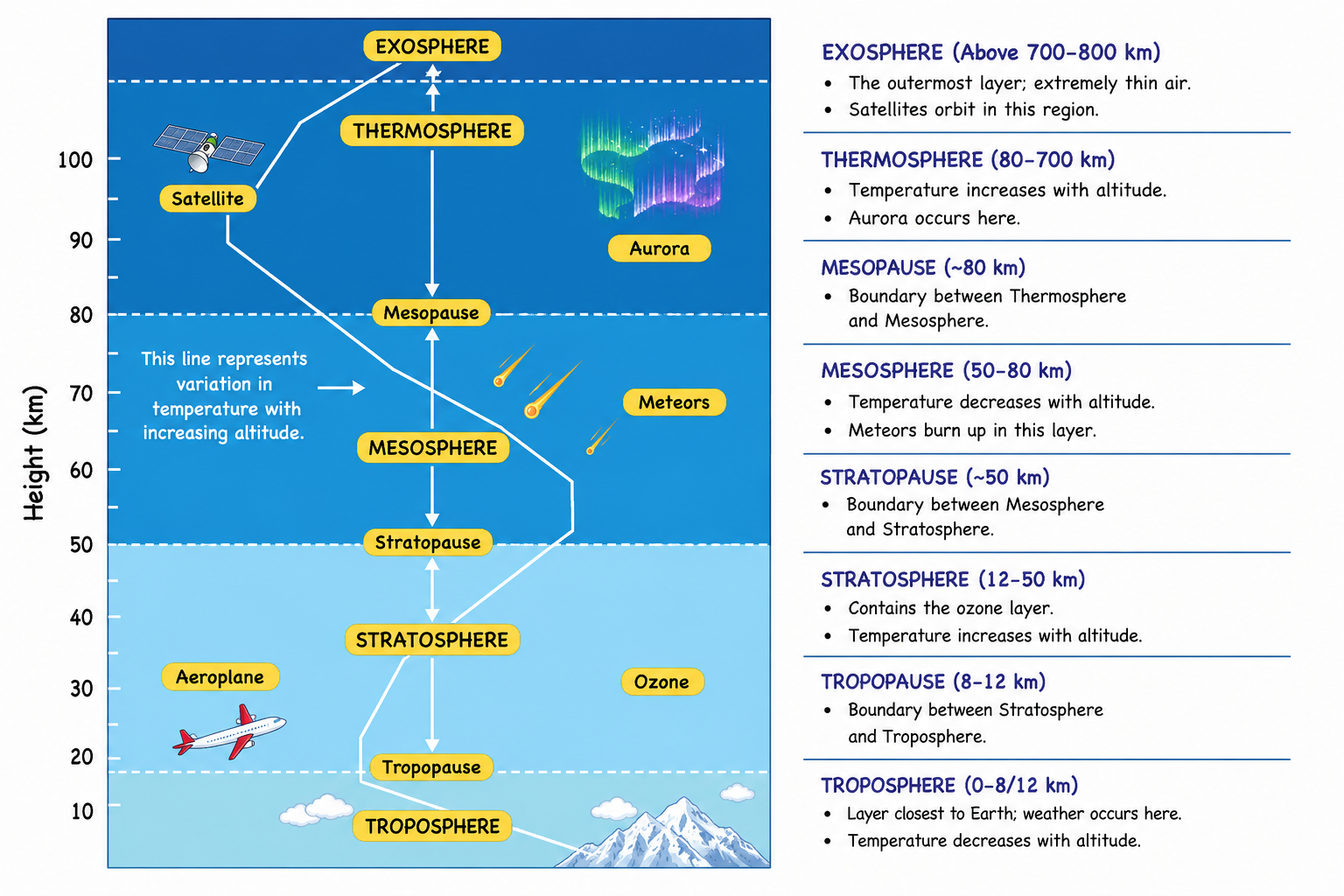
Figure 3.3: Layers of Atmosphere, Aurora Borealis, Air Pressure
4. Weather and Climate
Weather refers to the hour-to-hour and day-to-day conditions of the atmosphere. It can vary significantly from day to day.
Climate is the average weather conditions of a place over a longer period of time (usually thirty years or more).
Elements of Weather and Climate
- Temperature: Varies day/night and across seasons. Affected by insolation (incoming solar energy intercepted by Earth). Insolation and temperature decrease from the equator towards the poles.
- Humidity: The presence of water vapour in the air. Warm air holds more moisture. High humidity makes sweat evaporate slowly, causing discomfort.
- Precipitation: When air is saturated, water condenses and falls (rain, snow, hail). Rain is the most common form and most groundwater comes from it.
- Atmospheric Pressure: The pressure exerted by the weight of air. It is highest at sea level. High temperature causes air to rise (low pressure, cloudy/wet weather). Cold temperature causes air to sink (high pressure, clear skies).
- Wind: Movement of air from high-pressure to low-pressure areas.
Local Winds
Local winds affect coastal climates:
- Sea Breeze: Blows from sea to land during the day. Land heats faster, creating low pressure over land.
- Land Breeze: Blows from land to sea at night. Land cools faster, creating higher pressure over land relative to the sea.
5. Seasons in India
India's climate is broadly classified as a tropical monsoon climate. The Indian Meteorological Department (IMD) recognises four main seasons:
- Winter: December to early April. Northwest temperatures are 10–15°C, increasing towards the south-east (20–25°C).
- Summer (Pre-monsoon): April to June (or July in NW India). Average inland temperatures range from 32–40°C.
- Monsoon (Advancing monsoon): June to September. Dominated by humid south-west winds sweeping across the country.
- Post-monsoon (Retreating monsoon): October to December. Monsoon recedes from the north, and South India receives more rainfall during this time.
| Seasons (Rtu) |
Months (Indian Calendar) |
Months (Gregorian Calendar) |
| Vasanta (Spring) |
Chaitra–Vaishakha |
March–April |
| Grishma (Summer) |
Jyeshtha–Ashadha |
May–June |
| Varsha (Monsoon) |
Shravana–Bhadrapada |
July–August |
| Sharad (Autumn) |
Ashvina–Kartika |
September–October |
| Hemanta (Pre-winter) |
Margashirsha–Pausha |
November–December |
| Shishira (Winter) |
Magha–Phalguna |
January–February |
Note: Ancient texts like Kautilya's Arthaśhāstra recorded rainfall measurements to manage revenue and relief.
6. The Monsoon System
The word 'monsoon' is derived from the Arabic word mausim, meaning season. It refers to the seasonal reversal in the wind direction during a year.
Predicting the Monsoon
Ancient Indians predicted rainfall using texts like Krishiparashara (based on Sun/Moon positions) and Varahamihira's Brihatsamhita which used lunar mansions (nakshatras)—dividing the sky into 27 equal parts.
- South-West Monsoon (Summer): June to September. Land heats faster than oceans, creating low pressure over India. Moist winds blow from the Indian Ocean, Arabian Sea, and Bay of Bengal towards land, bringing most of the country's rainfall.
- North-East Monsoon (Winter): October to February. Land cools faster, creating high pressure over land. Cold, dry winds blow from land to sea. However, as they cross the Bay of Bengal, they pick up moisture and bring rainfall to the eastern coast (Tamil Nadu, Andhra Pradesh).
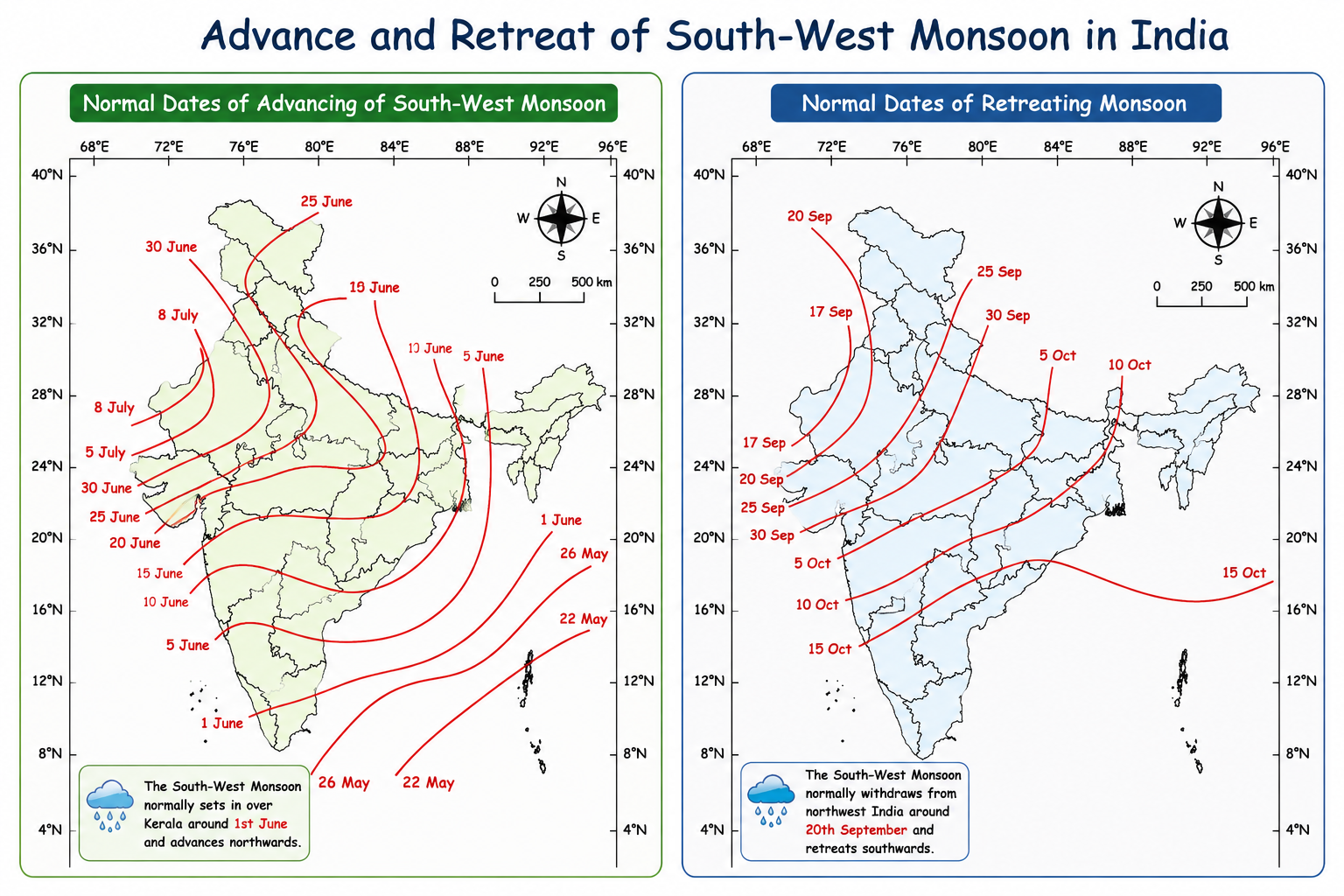
Figure 3.10 & 3.11: Maps of Advancing & Retreating Monsoon
Modern Prediction: The National Monsoon Mission (NMM) and 'Mission Mausam' aim to position India as a global leader in precise climate prediction.
7. Climate Change and Carbon Footprint
Climate change refers to long-term changes in weather patterns caused mainly by human activities (burning fossil fuels, deforestation) that release greenhouse gases (CO2, methane, nitrous oxide). This traps heat, causing global warming, extreme weather, melting glaciers, and rising sea levels.
A Carbon Footprint is the total amount of greenhouse gases released into the atmosphere as a result of human activities. We must reduce this footprint by using renewable energy, planting trees, and adopting sustainable lifestyles (e.g., using public transport, saving electricity/water, and recycling).

Ways to reduce one's carbon footprint
8. Punjab Floods 2025: A Case Study
In 2025, Punjab suffered devastating floods due to heavy monsoon rains swelling the Satluj, Beas, Ravi, and Ghaggar rivers.
- Natural Causes: Intense monsoon rains amplified by western disturbances across Punjab, Himachal Pradesh, and J&K.
- Human-made Causes: Weak and old river embankments (dhūssi bandh), encroaching construction near rivers, silt/mud accumulation reducing river capacity, and delayed flood warnings.
- Effects: Loss of lives, displacement of thousands to relief camps, massive agricultural damage (crops/livestock), destruction of infrastructure, and spread of waterborne diseases.
Conclusion: Before We Move On...
- The Earth's atmosphere supports life and is mainly nitrogen and oxygen.
- It has five layers: Troposphere, Stratosphere, Mesosphere, Thermosphere, and Exosphere.
- Weather is daily atmospheric conditions; Climate is the long-term average.
- India has a tropical monsoon climate with four main seasons (Winter, Summer, Monsoon, Post-monsoon).
- Climate change is a critical threat driven by human activities; reducing our carbon footprint is essential.

 VARDAAN COMET