Vardaan Learning Institute
Understanding Social Science
1. Introduction to Social Science
Definition & Purpose
Social Science is the systematic study of human society, its interconnected institutions, diverse cultures, and complex human interactions. It provides the tools to answer three fundamental questions about our world:
- What happened and Where are things located? (Understanding spatial and temporal facts)
- Why do events occur? (Analyzing cause and effect relationships)
- How do the past and present shape the world we live in? (Understanding the continuum of human development)
Even our simplest daily activities—such as the food we eat, the clothes we wear, or the infrastructure we use to travel—are deeply embedded in complex systems of governance, economic production, and social cooperation. The study of social science helps demystify these invisible threads.
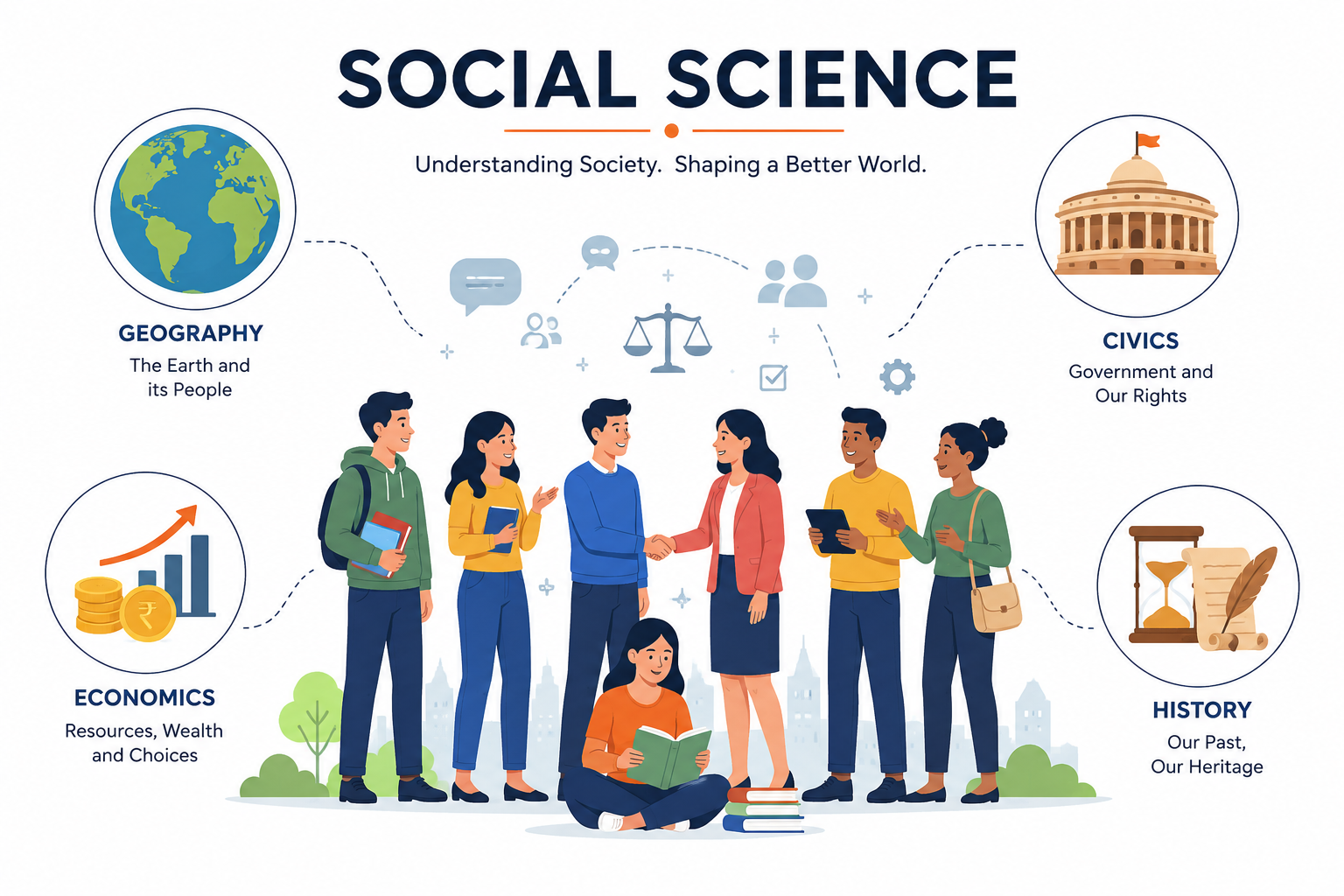
Figure 1.1: Concept of Social Science
2. The Core Disciplines of Social Science
Social Science is not a single subject but a collection of interconnected disciplines that provide a holistic picture of the world.
The Four Pillars
The four major branches of Social Science are:
- History: Explores how the past shapes the present. It helps us understand the timeline of events, the rise and fall of civilizations, and provides vital context for today's societal structures.
- Geography: Examines the Earth, its physical features, climate, and environments. It focuses on the spatial relationship between people and their surroundings.
- Political Science (Civics): Analyzes systems of governance, political behavior, public policies, and the administration of states and institutions.
- Economics: The study of how societies allocate scarce resources. It deals with the production, management, distribution, and consumption of goods and services.
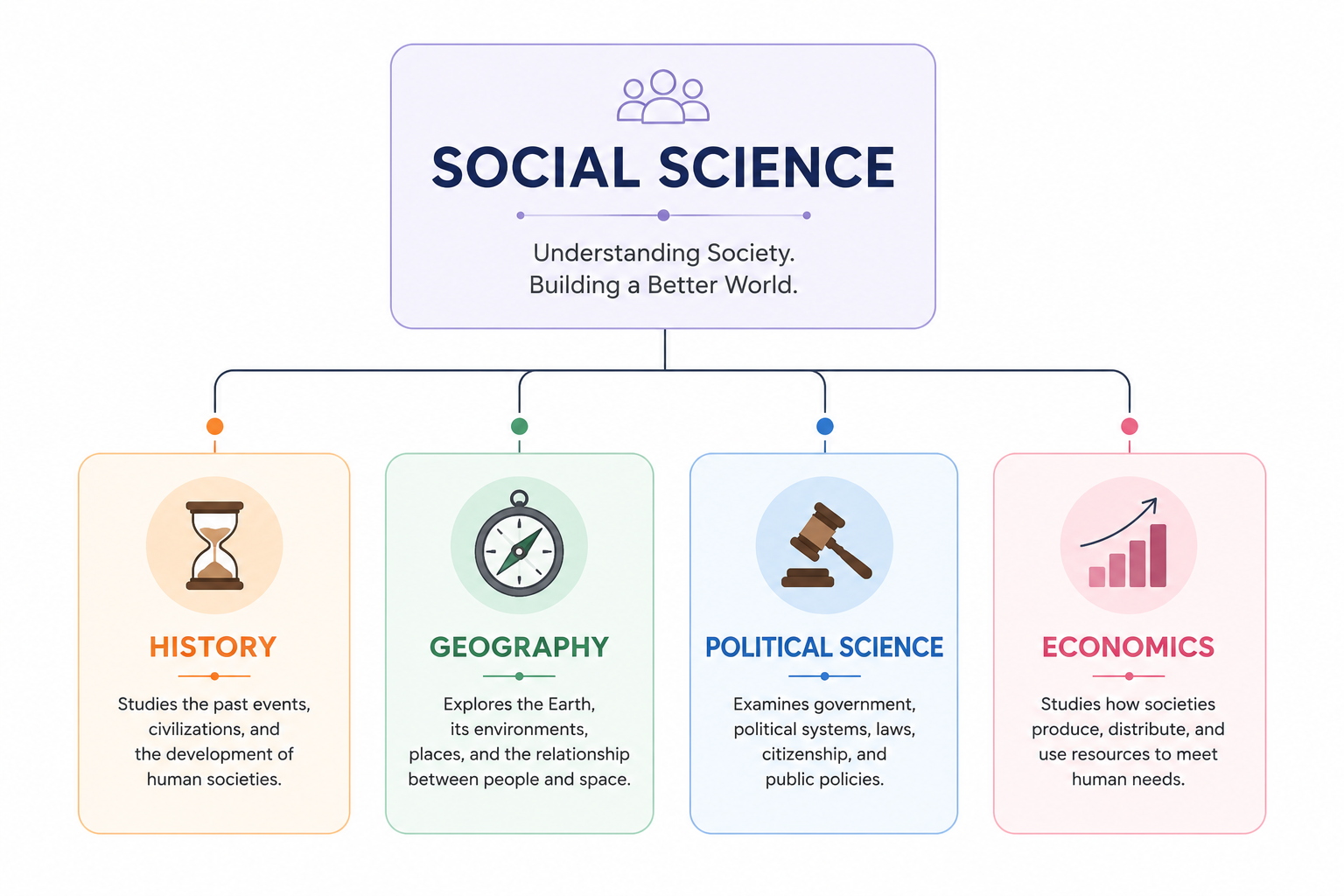
Figure 1.4: Branches of Social Science
The Spatial Perspective (Geography)
Understanding location and physical environment is crucial. For example, using modern mapping tools helps us visualize spatial data.
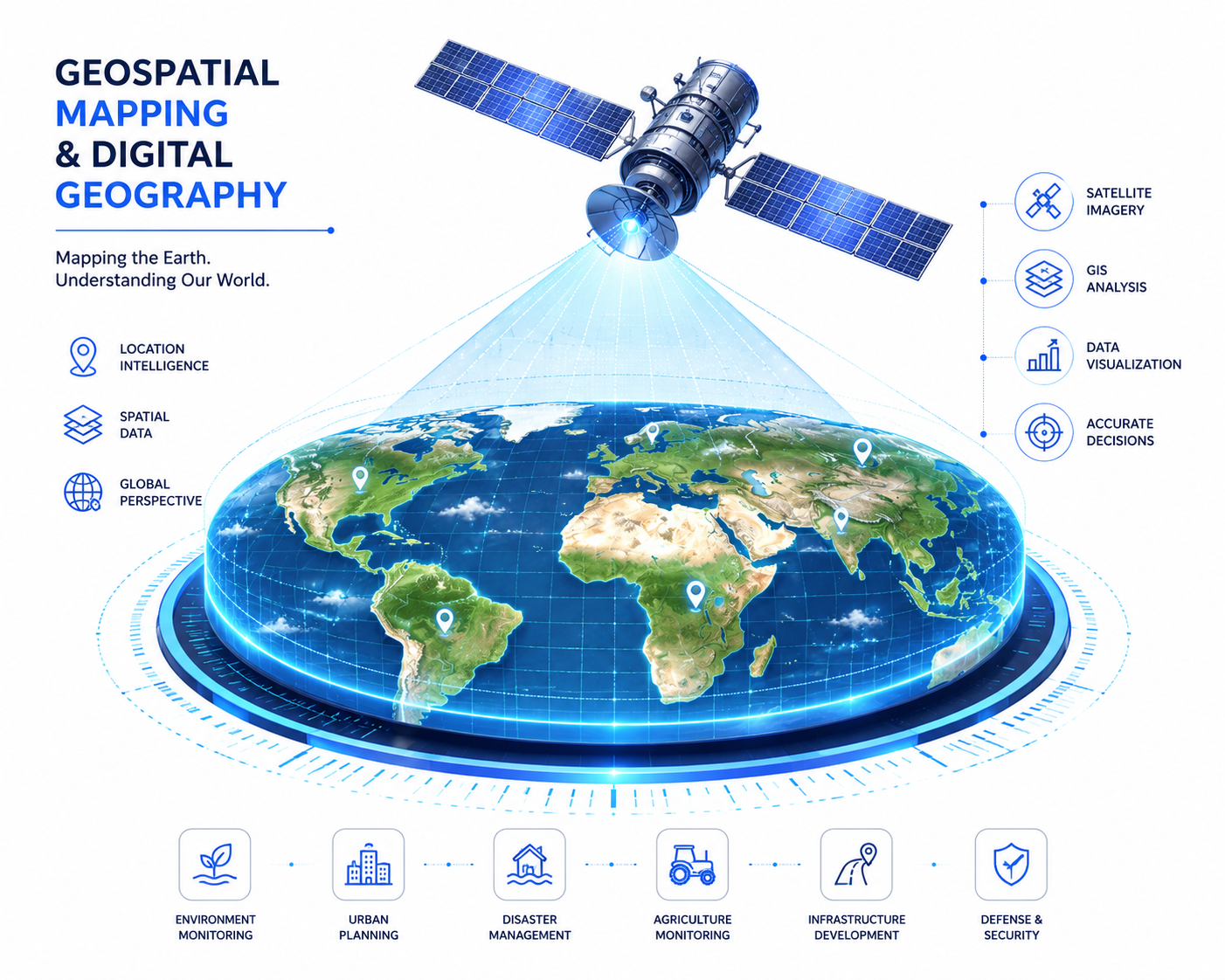
Figure 1.2: Geospatial Mapping and Digital Geography
3. India’s Knowledge Traditions
The study of social science in India is deeply enriched by traditional concepts which provide a local and historical grounding to universal ideas.
Cultural Context
- Panchamahābhūtas: The conceptualization of the five basic elements (Earth, Water, Fire, Air, Space) that constitute all life and the environment. This reflects early ecological and geographical thought.
- Vasudhaiva Kuṭumbakam: A profound philosophy found in ancient texts meaning "the world is one family", highlighting global interconnectedness, empathy, and social cooperation.
- Arthaśhāstra: Ancient Indian insights on statecraft, economic policy, and military strategy, representing early Political Science and Economics.
4. Sources of Historical Knowledge
History is reconstructed using various primary and secondary sources. These provide evidence of how people lived in the past.
Manuscripts
Manuscripts are hand-written records of the past, often written on palm leaves, birch bark, or paper. They contain valuable information about beliefs, practices, and sciences of the time.
 Ancient Manuscripts on palm leaves, 2) Historical Artifacts like pottery and sculptures, 3) Stone Inscriptions .png)
Figure 1.3: Sources of Historical Knowledge
Artifacts and Sculptures
Physical objects created by humans (artifacts) such as tools, pottery, and sculptures provide direct insight into the culture and technological advancement of a civilization.
Inscriptions
Inscriptions are writings engraved on relatively hard surfaces such as stone, metal, or baked clay. They are highly reliable sources of history as they are difficult to alter.
Numismatics (Study of Coins)
Coins are an essential source for understanding the economy, trade, and political history of an era. They often bear the names and titles of rulers, dates, and religious symbols.
5. Developing Skills and Methodology
Studying social science requires a shift from passive reading and rote memorization to active, critical engagement with the world.
Key Competencies
- Observation: Actively noticing changes in your surroundings, demographic shifts, and societal trends over time.
- Evidence-based Reasoning: Analyzing primary sources (like the inscriptions and coins shown above) and secondary sources to form informed, objective conclusions.
- Critical Thinking: Understanding the complex web of causes and effects behind societal shifts rather than just accepting surface-level facts.

 VARDAAN COMET