Vardaan Learning Institute
Reproduction: How Life Continues
Class 9 Science - Detailed NCERT Notes
1. Introduction to Reproduction
Before discussing the mechanisms by which organisms reproduce, let us ask a more basic question: why do organisms reproduce? Reproduction is not essential to maintain the life of an individual organism, unlike essential life processes such as nutrition, respiration, or excretion.
Definition
Reproduction: It is the biological process by which new individual organisms (offspring) are produced from their parents. It is the fundamental feature of all known life; each individual organism exists as the result of reproduction.
- Significance: It ensures the continuation of a similar kind of individuals, generation after generation. It creates variations which are essential for survival and evolution of species.
- Do Organisms Create Exact Copies of Themselves? Organisms look similar because their body designs are similar. The blueprints for these body designs are stored in the DNA (Deoxyribonucleic acid) in the chromosomes of the cell nucleus. A basic event in reproduction is the creation of a DNA copy. However, biochemical reactions are not absolutely reliable, so the copies are similar but not always perfectly identical. These slight inaccuracies result in variations.
2. Modes of Reproduction
Organisms reproduce primarily by two methods, depending on their body design and complexity:
- Asexual Reproduction: Reproduction in which a single parent is involved to produce offspring. No formation or fusion of gametes takes place. The offspring are exact copies (clones) of the parent.
- Sexual Reproduction: Reproduction involving the fusion of male and female gametes, usually from two different parents, to form a zygote that develops into a new individual.
3. Asexual Reproduction
This mode is primarily observed in single-celled organisms, simple plants, and certain simple animals. It is a fast process and does not require a mate.
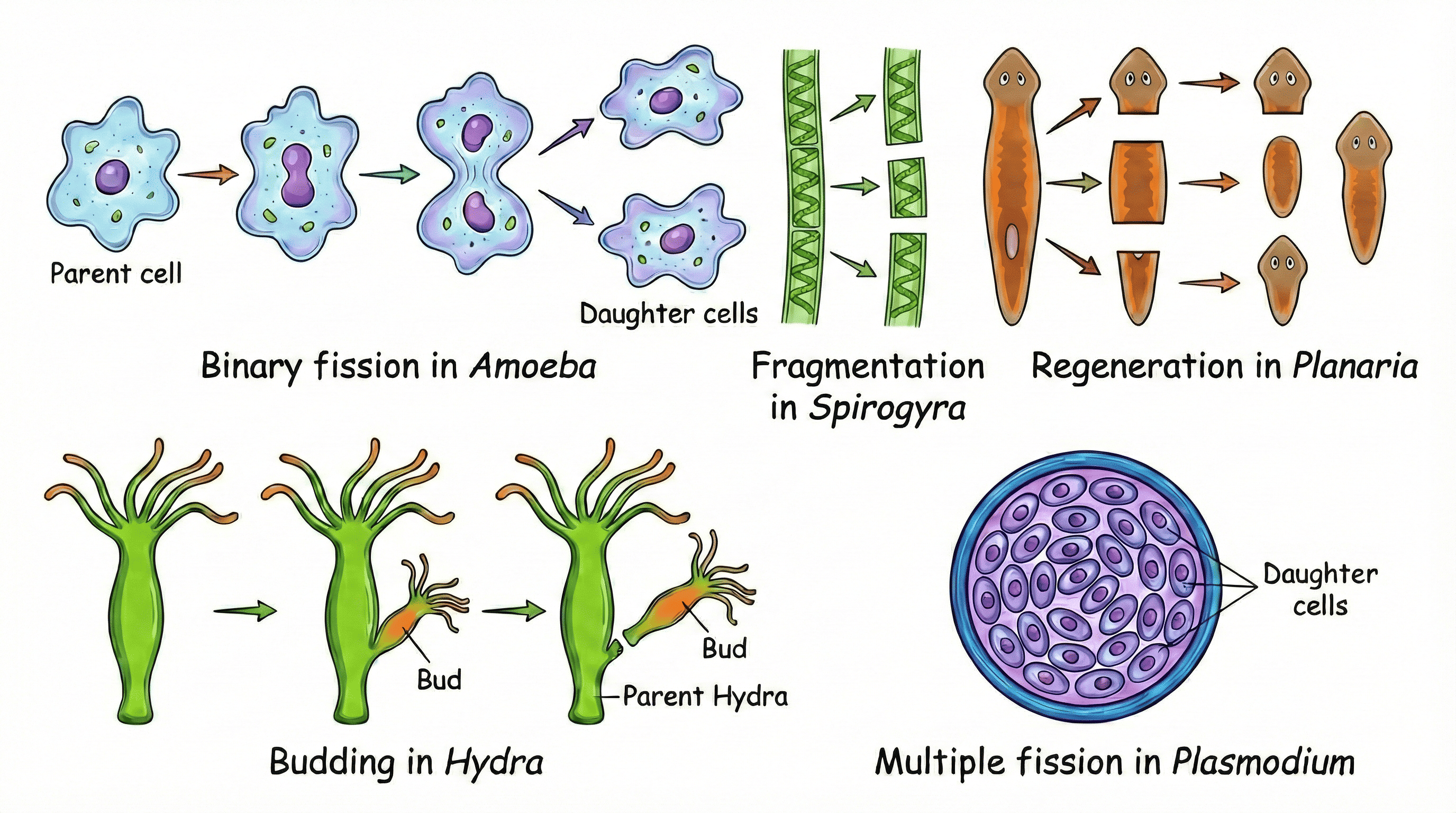
Figure 11.1: Common Modes of Asexual Reproduction (Fission, Budding, Fragmentation, Regeneration, Spore Formation)
3.1 Fission
For unicellular organisms, cell division, or fission, leads to the creation of new individuals.
- Binary Fission: The parent cell divides into two equal halves. Many bacteria and protozoa simply split into two equal halves during cell division. Example: Amoeba, Leishmania. In Amoeba, splitting of the two cells can take place in any plane. In Leishmania (which causes kala-azar), binary fission occurs in a definite orientation.
- Multiple Fission: The parent cell divides into many daughter cells simultaneously. Example: Plasmodium (the malarial parasite).
3.2 Fragmentation
In multi-cellular organisms with relatively simple body organization, simple reproductive methods can work. For example, Spirogyra simply breaks up into smaller pieces upon maturation. These pieces or fragments grow into new individuals.
3.3 Regeneration
If an organism is somehow cut or broken into many pieces, many of these pieces grow into separate individuals. This is known as regeneration.
- Regeneration is carried out by specialized cells that proliferate and make large numbers of cells.
- Examples: Hydra and Planaria can be cut into any number of pieces and each piece grows into a complete organism.
- Note: Regeneration is not the same as reproduction, since most organisms would not normally depend on being cut up to be able to reproduce.
Regeneration in Planaria
If a Planaria flatworm is horizontally sliced into head, middle, and tail fragments, each piece undergoes cell proliferation and differentiation, regenerating into three complete, viable flatworms.
3.4 Budding
Organisms such as Hydra use regenerative cells for reproduction in the process of budding. In Hydra, a bud develops as an outgrowth due to repeated cell division at one specific site. These buds develop into tiny individuals and, when fully mature, detach from the parent body and become new independent individuals.
Budding is also observed in single-celled fungi like Yeast.
3.5 Vegetative Propagation
There are many plants in which parts like the root, stem, and leaves develop into new plants under appropriate conditions. This property is used in methods such as layering or grafting.
- Natural Methods:
- Roots: Sweet potato, Dahlia
- Stems: Potato (tubers/eyes), Ginger, Onion
- Leaves: Bryophyllum (buds produced in the notches along the leaf margin fall on the soil and develop into new plants).
- Advantages: Plants raised by vegetative propagation can bear flowers and fruits earlier than those produced from seeds. It makes possible the propagation of plants like banana, orange, rose, and jasmine that have lost the capacity to produce seeds.
Tissue Culture
In tissue culture, new plants are grown by removing tissue or separating cells from the growing tip of a plant. The cells are placed in an artificial medium where they divide rapidly to form a small group of cells (callus). They are then transferred to another medium containing hormones for growth and differentiation. Using tissue culture, many plants can be grown from one parent in disease-free conditions. It is commonly used for ornamental plants.
3.6 Spore Formation
Even in many simple multi-cellular organisms, specific reproductive parts can be identified. In Rhizopus (bread mould), tiny blob-on-a-stick structures are involved in reproduction. The blobs are sporangia, which contain cells, or spores.
Spores are covered by thick walls that protect them until they come into contact with a moist surface and can begin to grow.
3.7 Life Cycles and Metamorphosis in Animals
In many sexually reproducing animals, development from the juvenile stage to adulthood occurs through radical physical transformations termed metamorphosis. For instance, in the life cycle of a butterfly, the organism passes through four distinct life stages ensuring the continuity of the species:
- Egg: Laid by the adult female on suitable host plants.
- Larva (Caterpillar): The feeding and growth stage that eats plant leaves voraciously.
- Pupa (Chrysalis): The transformation stage within a protective casing where tissue reorganization takes place.
- Adult Butterfly: The winged, reproductively mature stage capable of laying eggs to continue the cycle.
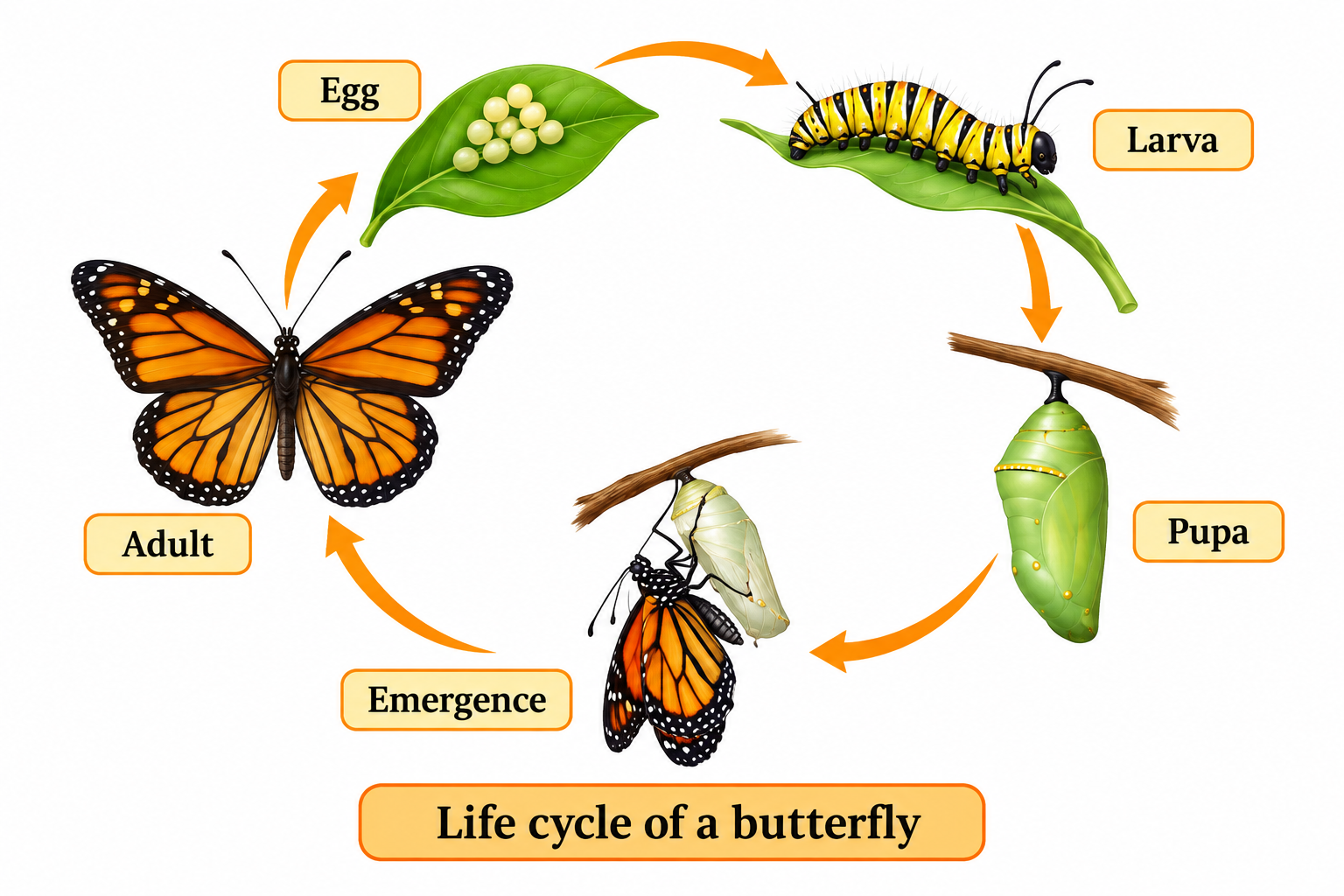
Figure 11.2: Complete Metamorphosis and Life Cycle of a Butterfly (Egg → Larva → Pupa → Adult)
4. Sexual Reproduction
Sexual reproduction relies on the creation of germ-cells (gametes) by two individuals. The fusion of these gametes forms a zygote. This mode incorporates variations from two different individuals, creating a unique combination of DNA that is vital for the survival and evolution of the species.
4.1 Sexual Reproduction in Flowering Plants
The reproductive parts of angiosperms are located in the flower. The different parts of a flower are sepals, petals, stamens, and carpels.
- Stamen (Male Reproductive Part): It produces pollen grains that are yellowish in colour. Each stamen consists of a stalk (filament) and a swollen top (anther) where pollen is formed.
- Carpel / Pistil (Female Reproductive Part): Present in the centre of a flower. It consists of three parts:
- Stigma: The sticky terminal part that receives pollen.
- Style: The elongated middle part.
- Ovary: The swollen bottom part containing ovules. Each ovule has an egg cell (female gamete).
Unisexual vs Bisexual Flowers: A flower may be unisexual (contains either stamens or carpel, e.g., papaya, watermelon) or bisexual (contains both, e.g., hibiscus, mustard).
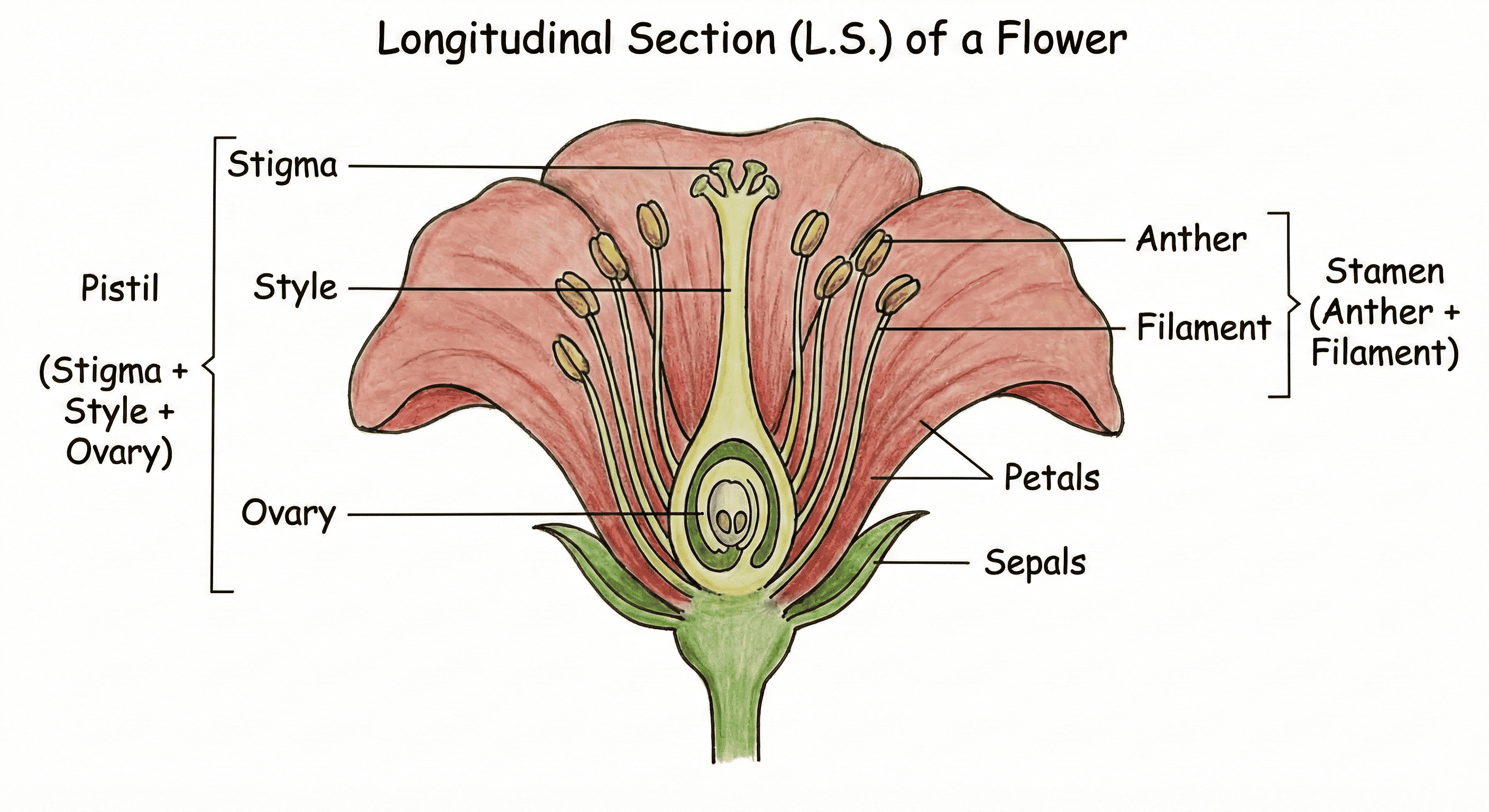
Figure 11.3: Longitudinal Section (L.S.) of a Flower showing Stamen (Male) and Carpel/Pistil (Female)
Pollination and Fertilization
- Pollination: The transfer of pollen grains from the anther to the stigma.
- Self-pollination: Transfer within the same flower.
- Cross-pollination: Transfer from one flower to another (aided by agents like wind, water, or animals/insects).
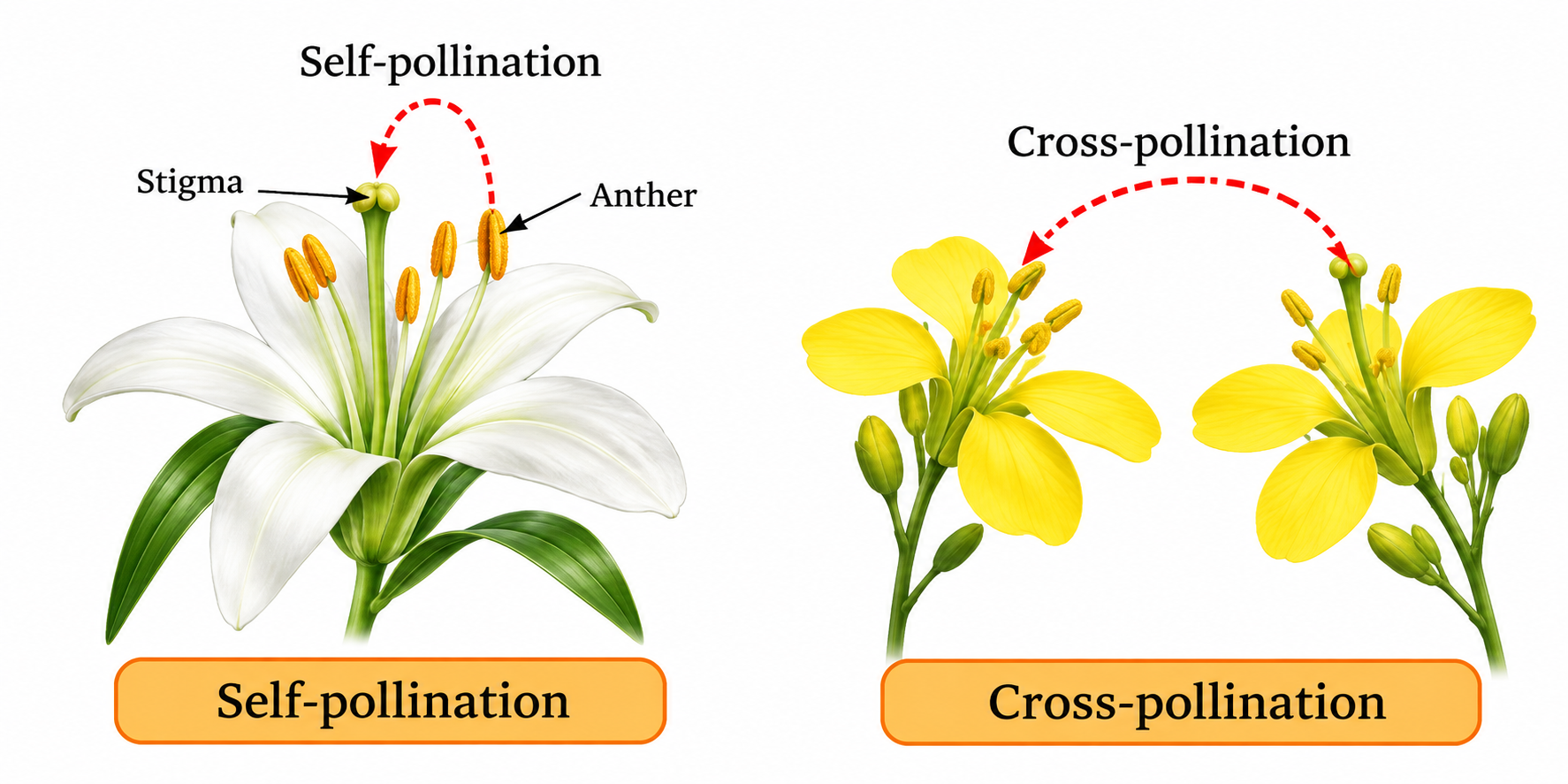
Figure 11.4: Types of Pollination — Self-Pollination vs. Cross-Pollination
- Fertilization: After a pollen grain falls on a suitable stigma, a pollen tube grows out of it and travels through the style to reach the ovary. The male germ-cell fuses with the female germ-cell (egg) in the ovule. This fusion is called fertilization, resulting in a zygote.
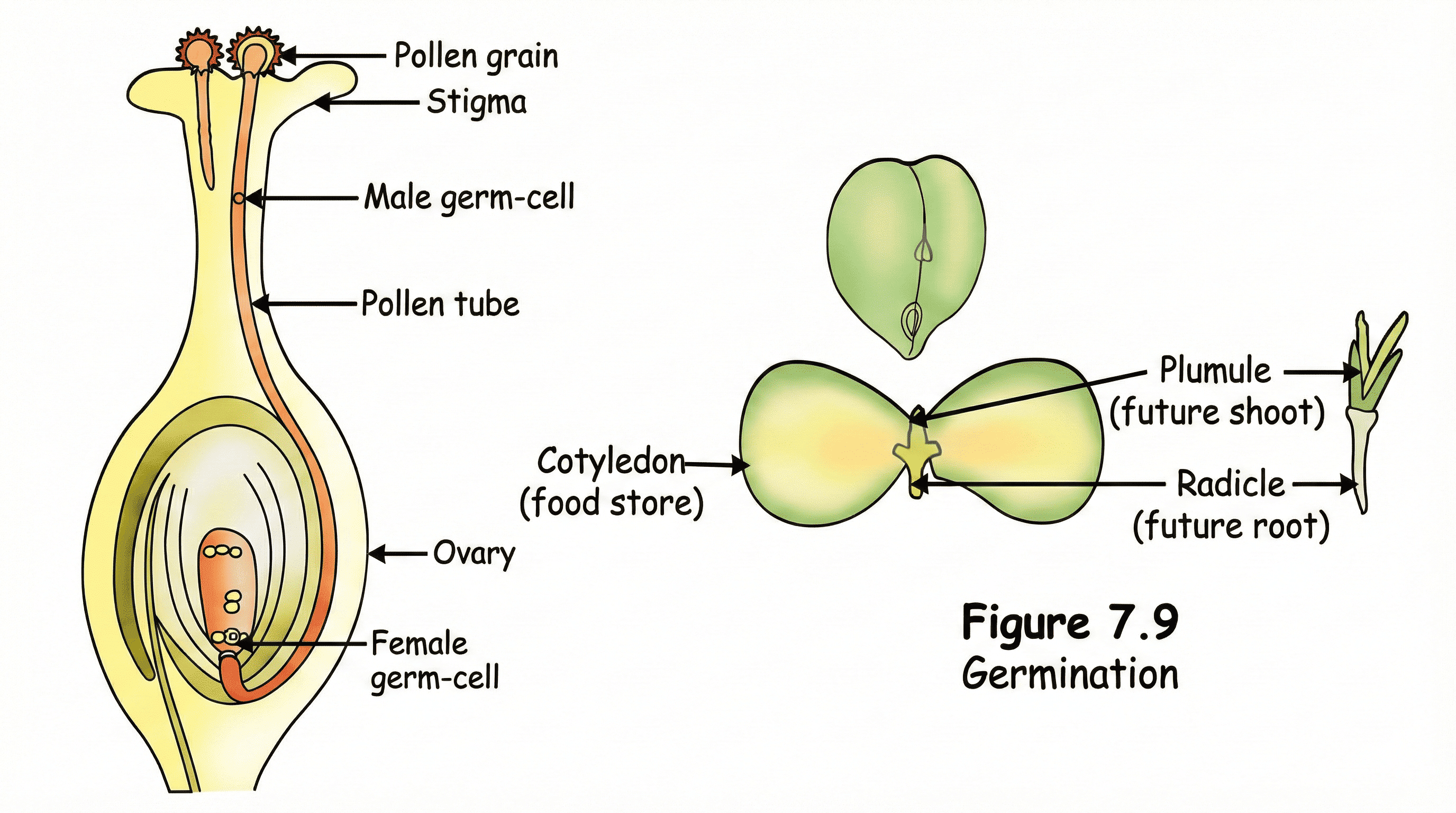
Figure 11.5: Germination of Pollen Grain on Stigma and Growth of Pollen Tube towards the Ovule
- Post-Fertilization: The zygote divides several times to form an embryo within the ovule. The ovule develops a tough coat and is gradually converted into a seed. The ovary grows rapidly and ripens to form a fruit. Meanwhile, petals, sepals, and stamens shrivel and fall off.
5. Reproduction in Human Beings
Humans undergo sexual reproduction. The period of life when the body undergoes changes leading to reproductive maturity is called puberty. During puberty, secondary sexual characteristics develop under the influence of hormones (testosterone in males, estrogen in females).
5.1 Male Reproductive System
The male reproductive system consists of portions which produce the germ-cells and other portions that deliver the germ-cells to the site of fertilization.
- Testes: Located outside the abdominal cavity in a pouch called the scrotum. Because sperm formation requires a lower temperature than the normal body temperature. Testes produce sperms and the hormone testosterone.
- Vas Deferens: A tube that carries sperms from the testes. It unites with a tube coming from the urinary bladder.
- Glands (Prostate and Seminal Vesicles): They add their secretions so that the sperms are now in a fluid (semen). This fluid provides nutrition and makes their transport easier.
- Urethra & Penis: The urethra forms a common passage for both sperm and urine, delivering it outside through the penis.
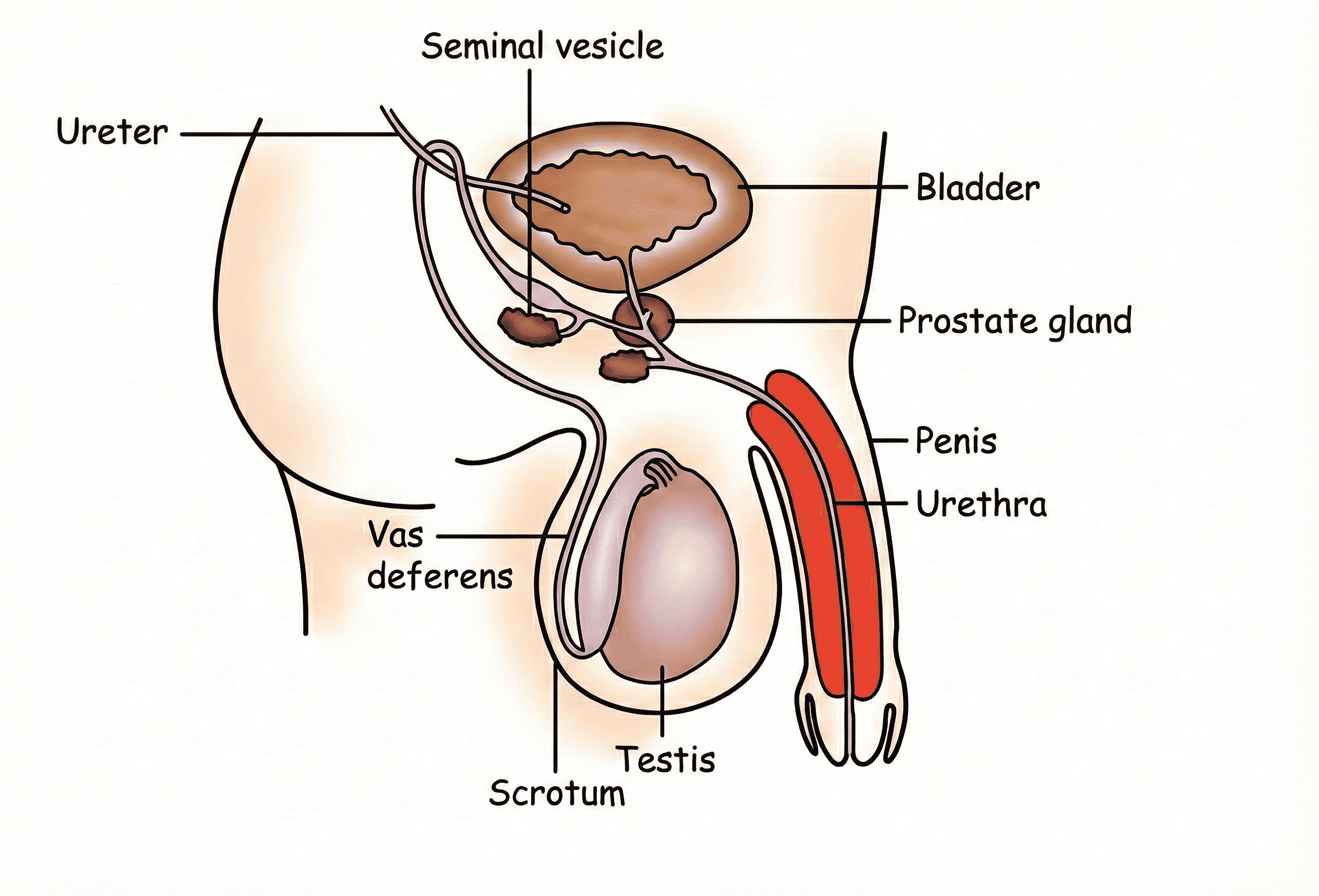
Figure 11.6: Schematic Diagram of the Human Male Reproductive System
5.2 Female Reproductive System
The female germ-cells or eggs are made in the ovaries. They are also responsible for the production of hormones like estrogen and progesterone.
- Ovaries: A pair of ovaries is located in the abdominal cavity. When a girl is born, the ovaries already contain thousands of immature eggs. On reaching puberty, one egg is produced every month by one of the ovaries.
- Fallopian Tube (Oviduct): The egg is carried from the ovary to the womb through this thin oviduct. The two oviducts unite into an elastic bag-like structure. Fertilization occurs in the Fallopian tube.
- Uterus (Womb): The uterus is where the development of the baby takes place. It prepares itself every month to receive and nurture the growing embryo. Its lining thickens and is richly supplied with blood.
- Cervix & Vagina: The uterus opens into the vagina through the cervix. The vagina serves as the birth canal and the receptacle for sperm.
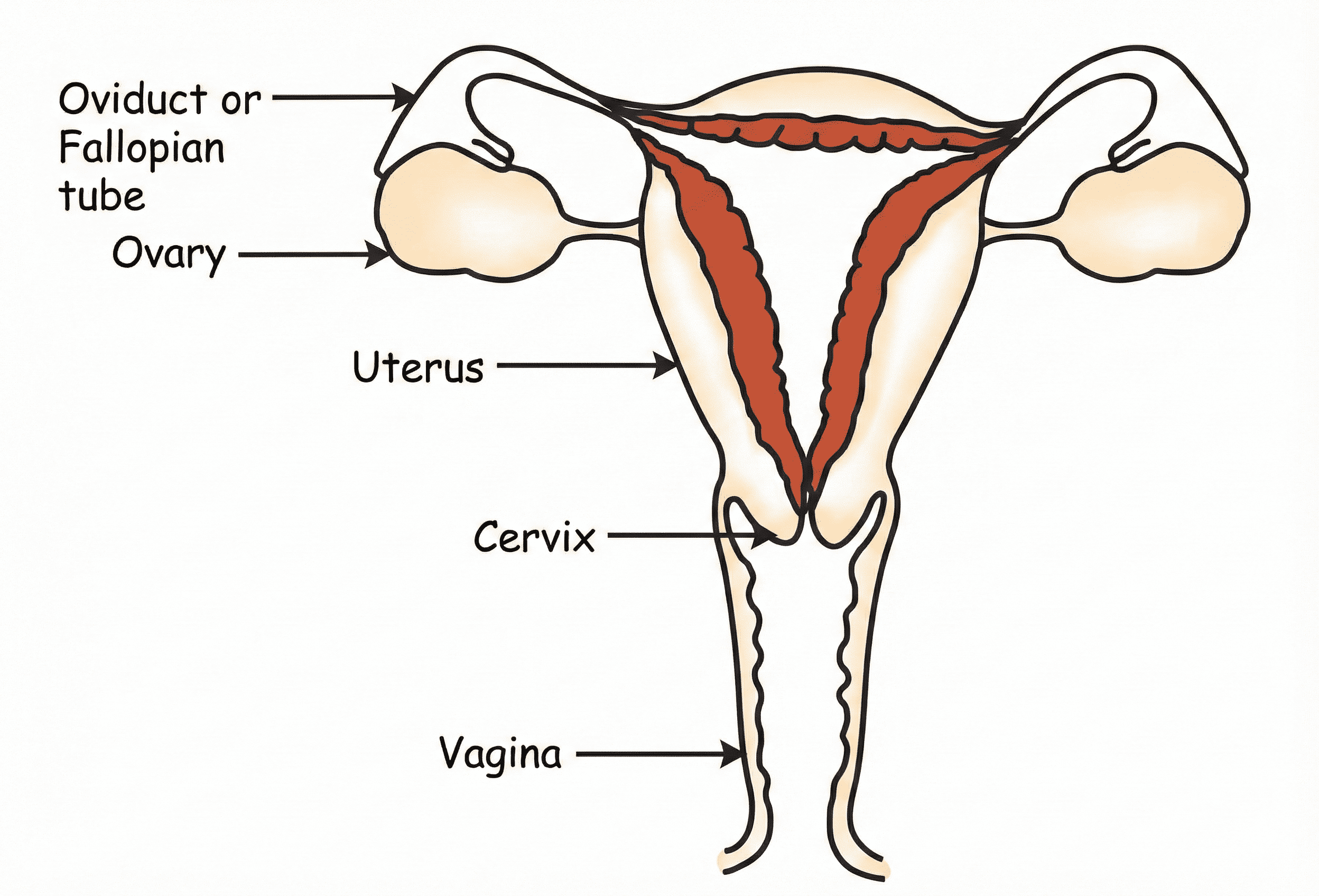
Figure 11.7: Schematic Diagram of the Human Female Reproductive System
5.3 Fertilization and Development
- The sperms enter through the vaginal passage during sexual intercourse. They travel upwards and reach the oviduct, where they may encounter the egg.
- If an egg is present, a single sperm fuses with it to form a zygote (Fertilization).
- The zygote starts dividing to form a ball of cells called an embryo.
- The embryo gets implanted in the lining of the uterus and continues to grow into a foetus.
- The embryo gets nutrition from the mother's blood with the help of a special disc-like tissue called placenta embedded in the uterine wall. It provides a large surface area for glucose and oxygen to pass from the mother to the embryo.
- The gestation period in humans is about 9 months, after which the child is born as a result of rhythmic contractions of the muscles in the uterus.
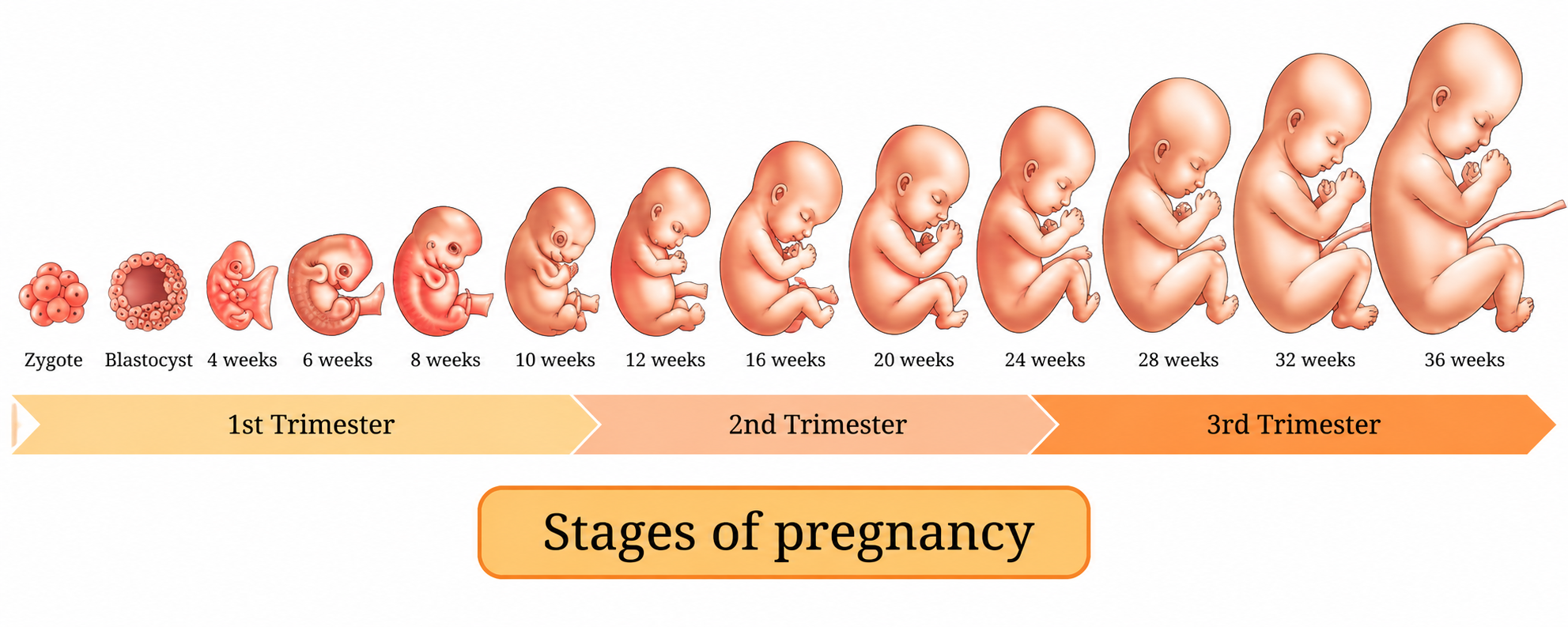
Figure 11.8: Stages of Human Fertilization, Cleavage, Implantation, and Embryonic Development
What happens when the Egg is not Fertilized?
If the egg is not fertilized, it lives for about one day. Since the ovary releases one egg every month, the uterus also prepares itself every month by making its inner lining thick and spongy for a fertilized egg. If fertilization does not occur, this lining is not needed. Therefore, the lining slowly breaks and comes out through the vagina as blood and mucous. This cycle takes place roughly every month and is known as menstruation.
6. Reproductive Health
Reproductive health means a total well-being in all aspects of reproduction, i.e., physical, emotional, behavioural and social.
- Sexually Transmitted Diseases (STDs): Diseases spread by sexual contact.
- Bacterial infections: Gonorrhoea and Syphilis.
- Viral infections: Warts and HIV-AIDS.
Using a condom helps prevent the transmission of many of these infections to some extent.
- Contraception (Birth Control): Methods to avoid unwanted pregnancies.
- Mechanical Barriers: Condoms, Cervical caps. They prevent sperm from reaching the egg.
- Chemical Methods: Oral pills. They change the hormonal balance of the body so that eggs are not released.
- Intra-Uterine Devices (IUD): Copper-T placed in the uterus to prevent pregnancy.
- Surgical Methods: Vasectomy in males (vas deferens is blocked) and Tubectomy in females (fallopian tube is blocked).
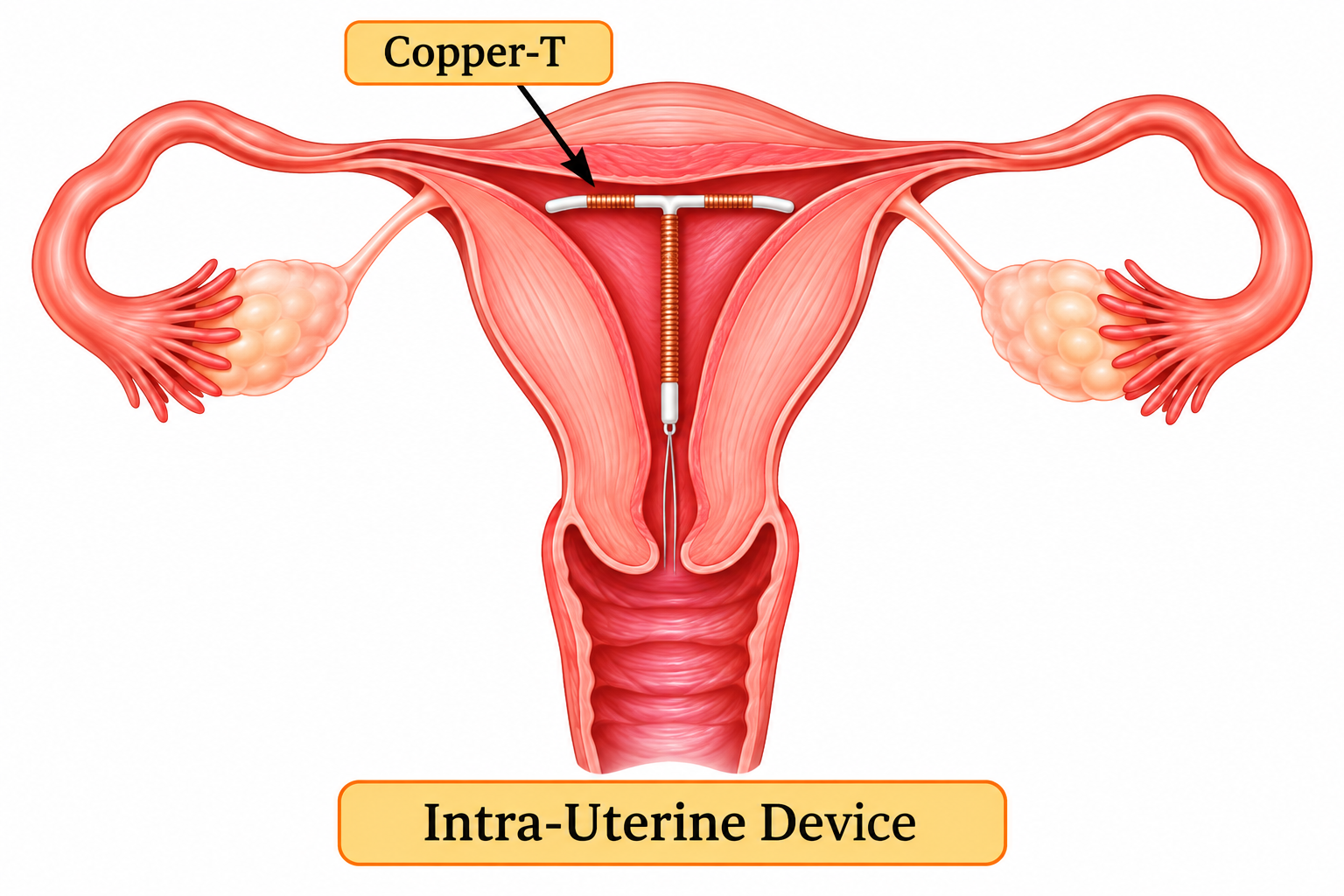
Figure 11.9: Intra-Uterine Device (IUD) — Placement and Action of Copper-T in the Uterus

 VARDAAN COMET