Vardaan Learning Institute
Class 11 Chemistry • 2-Page Formula & Cheat Sheet
🌐 vardaanlearning.com
📞 9508841336
STRUCTURE OF ATOM (QUICK REVISION)
1. Subatomic Particles & Atomic Species
| Particle |
Charge (C) |
Mass (kg) |
Mass (u) |
Key Exam Fact |
| Electron ($e^-$) |
$-1.602 \times 10^{-19}$ |
$9.1 \times 10^{-31}$ |
$0.00054$ |
Thomson ($e/m$ is constant for all gases) |
| Proton ($p$) |
$+1.602 \times 10^{-19}$ |
$1.672 \times 10^{-27}$ |
$1.00727$ |
Goldstein ($e/m$ depends on gas; max for $\text{H}_2$) |
| Neutron ($n$) |
$0$ |
$1.675 \times 10^{-27}$ |
$1.00867$ |
Chadwick ($^9_4\text{Be} + ^4_2\text{He} \rightarrow ^{12}_6\text{C} + ^1_0\text{n}$) |
Definitions
Isotopes: Same $Z$, diff $A$ ($^1_1\text{H}, ^2_1\text{H}$) • Isobars: Same $A$, diff $Z$ ($^{14}_6\text{C}, ^{14}_7\text{N}$) • Isotones: Same neutrons ($A-Z$) • Isoelectronic: Same $e^-$ ($\text{N}^{3-}, \text{O}^{2-}, \text{F}^-, \text{Na}^+, \text{Mg}^{2+} \implies 10e^-$).
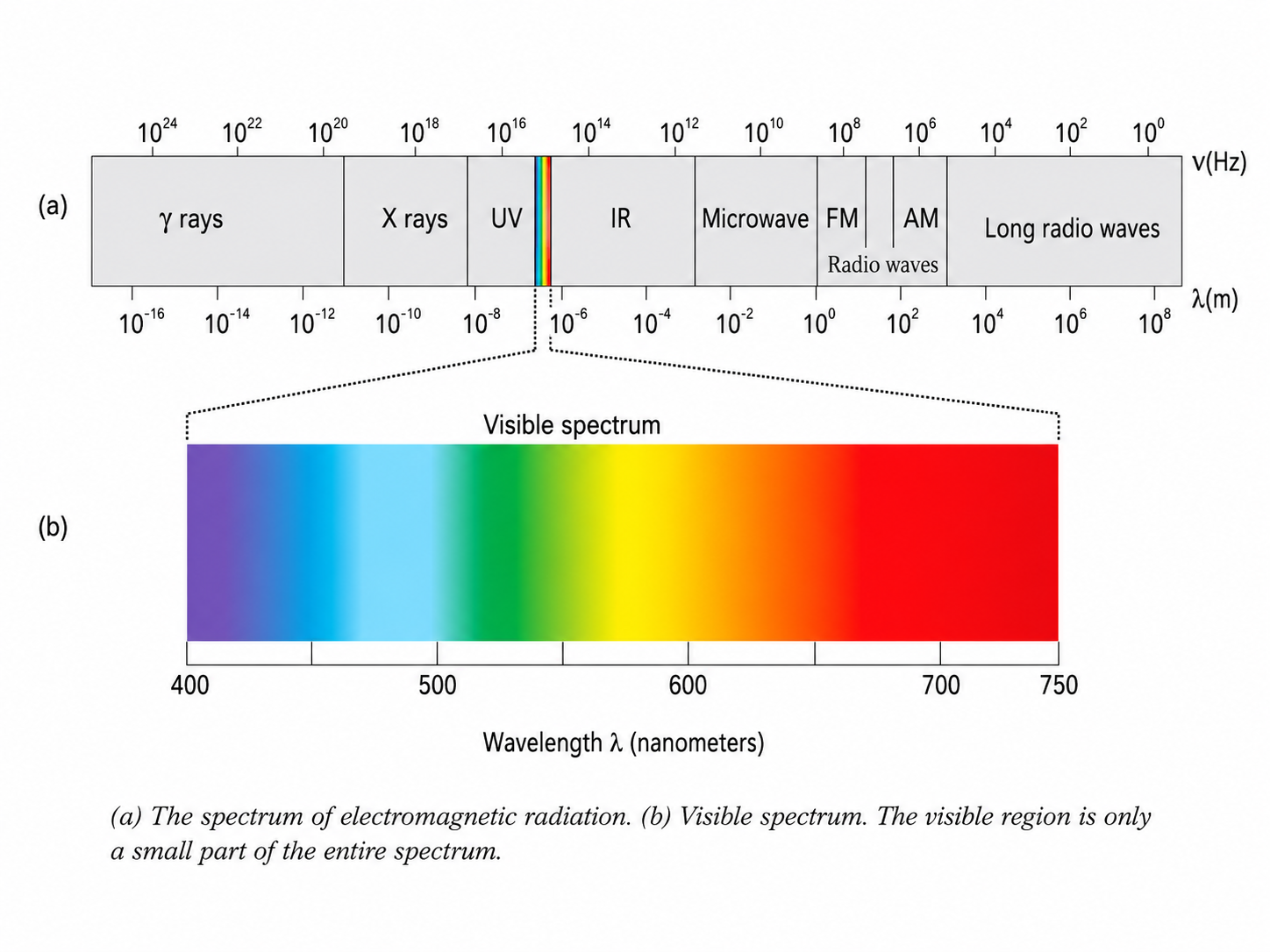
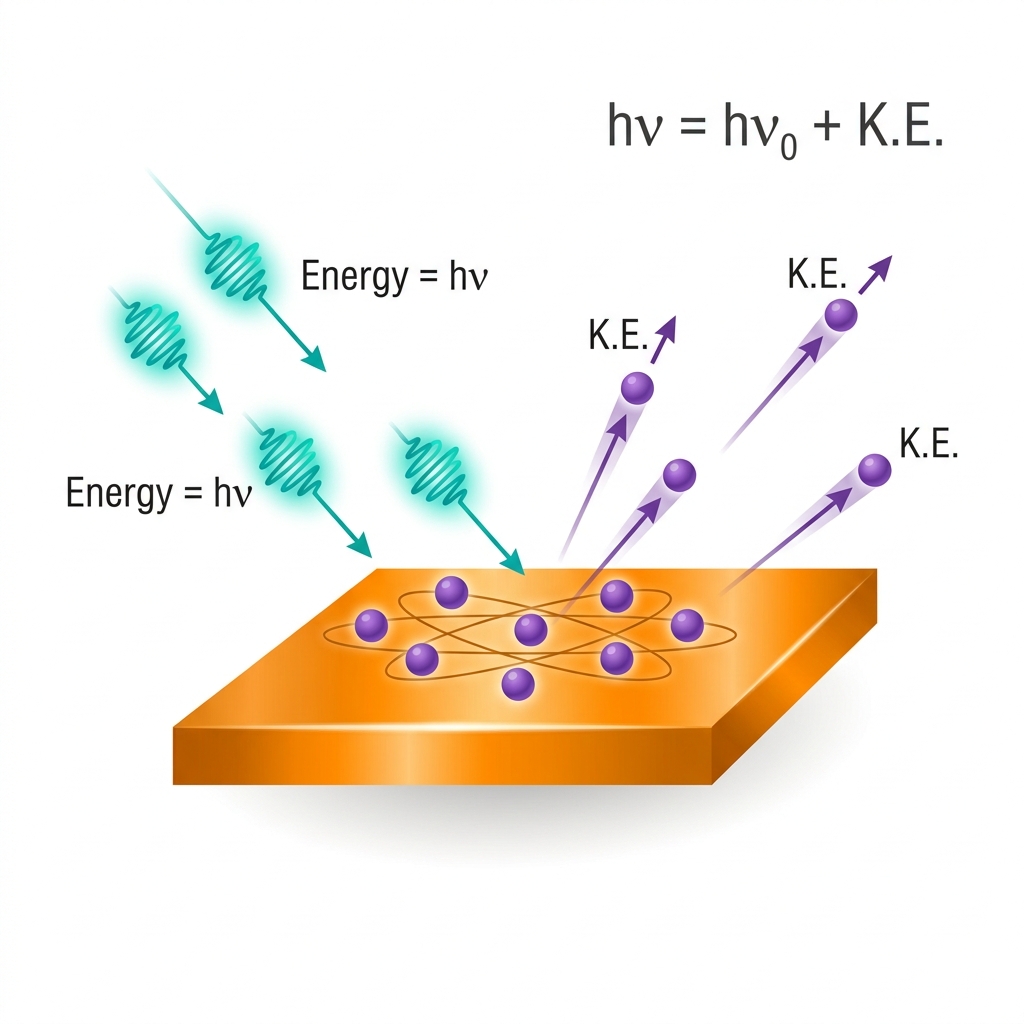
2. Electromagnetic Radiation & Photoelectric Effect
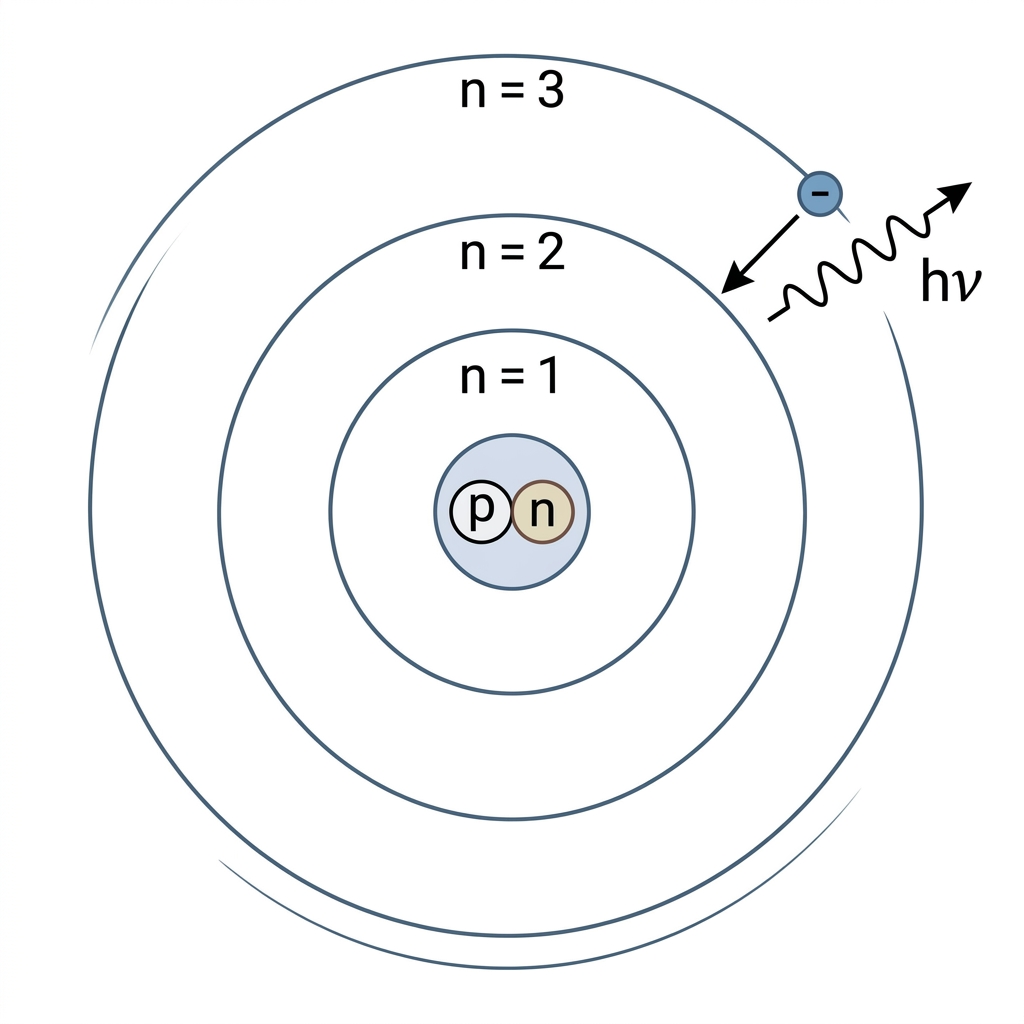
3. Bohr's Model & Hydrogen Spectrum
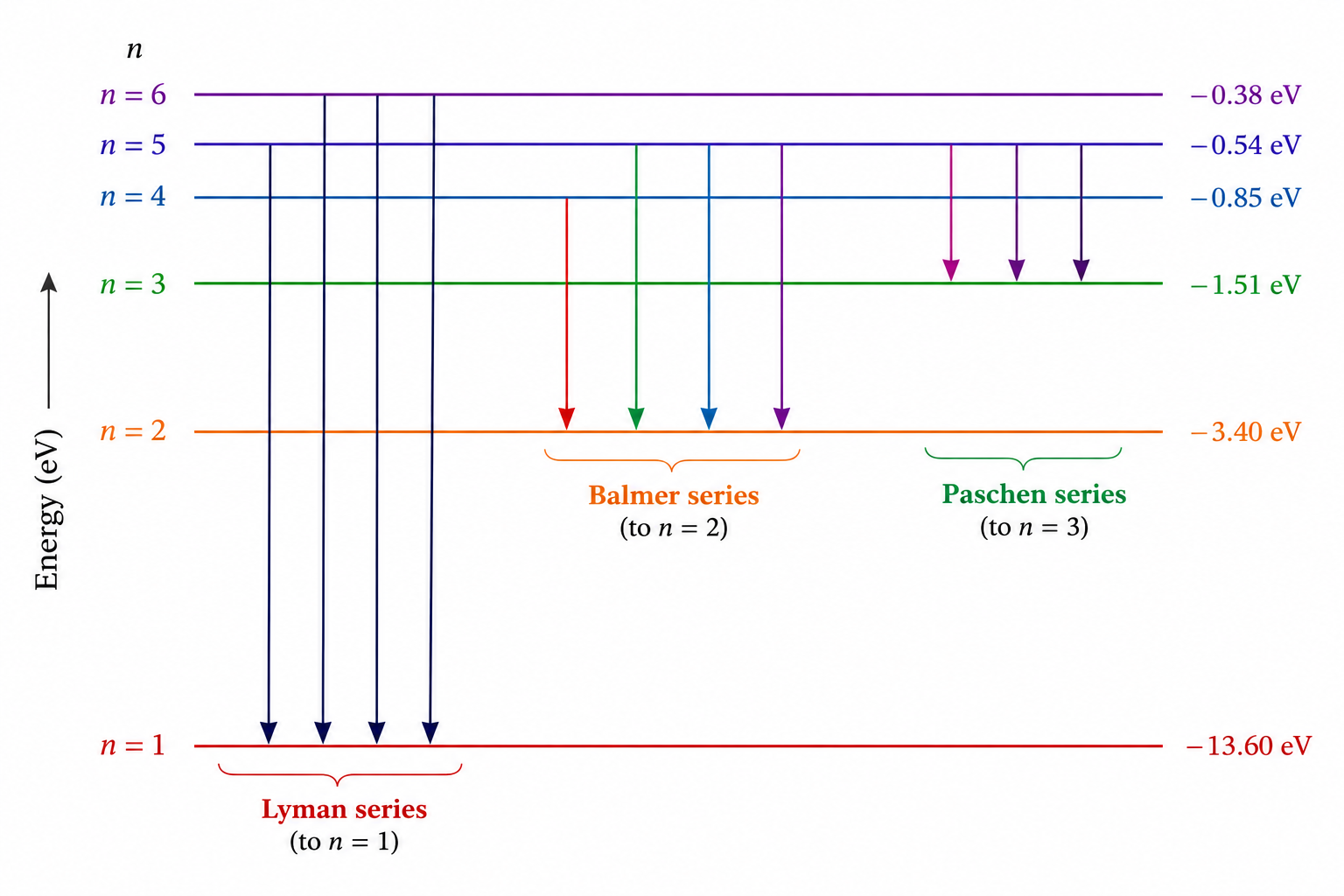
Rydberg Formula & Spectral Series
$$ \bar{\nu} = \frac{1}{\lambda} = R_H Z^2 \left( \frac{1}{n_1^2} - \frac{1}{n_2^2} \right) \quad (R_H = 109677 \text{ cm}^{-1}, \quad 1/R_H \approx 912 \text{ \AA}) $$
Lyman: $n_1=1$ (UV) • Balmer: $n_1=2$ (Visible) • Paschen: $n_1=3$ (IR) • Brackett: $n_1=4$ (IR) • Pfund: $n_1=5$ (IR)
Total Spectral Lines ($n_2 \rightarrow n_1$): $N = \frac{(n_2 - n_1)(n_2 - n_1 + 1)}{2}$. (Drop to ground state: $N = \frac{n(n-1)}{2}$).
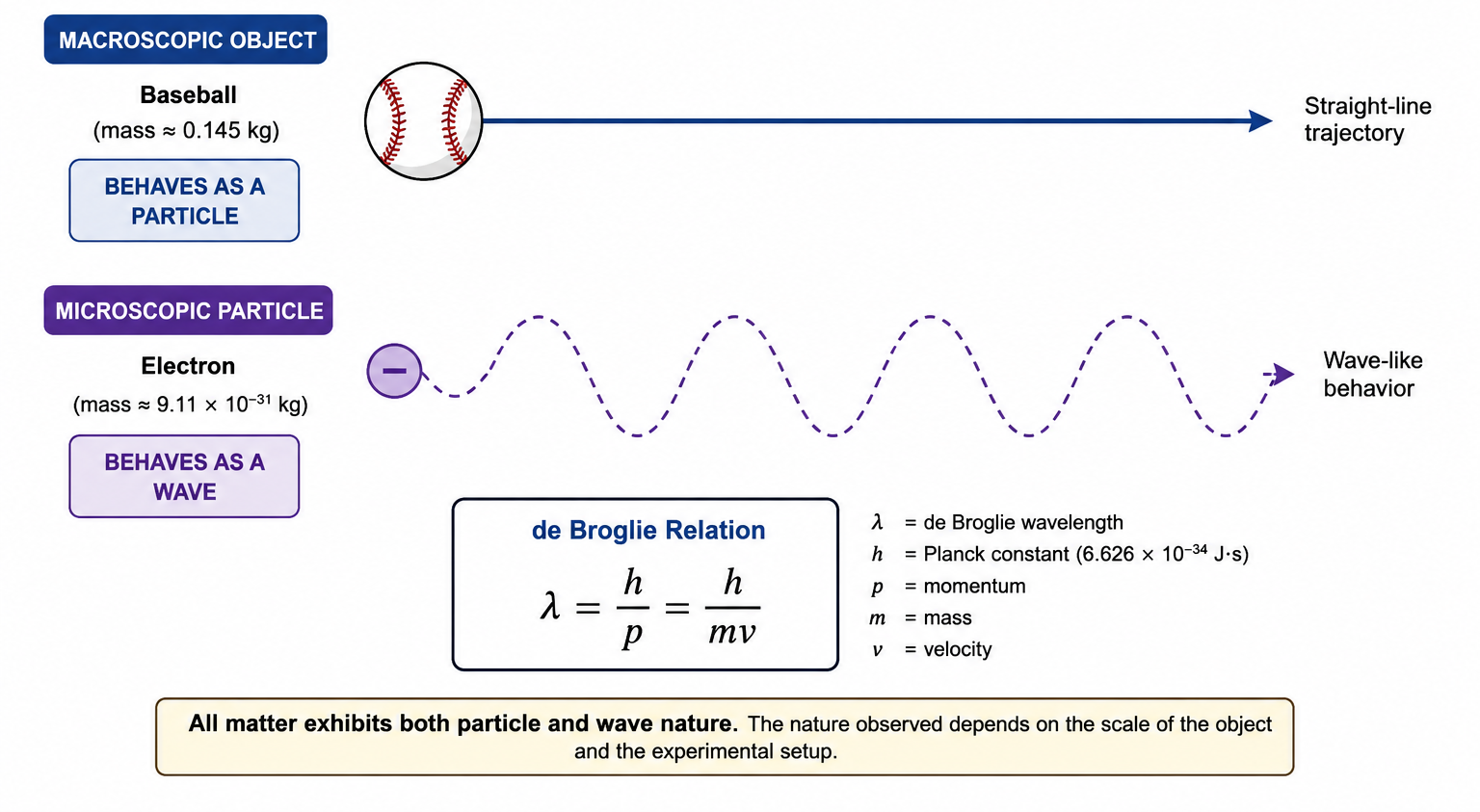
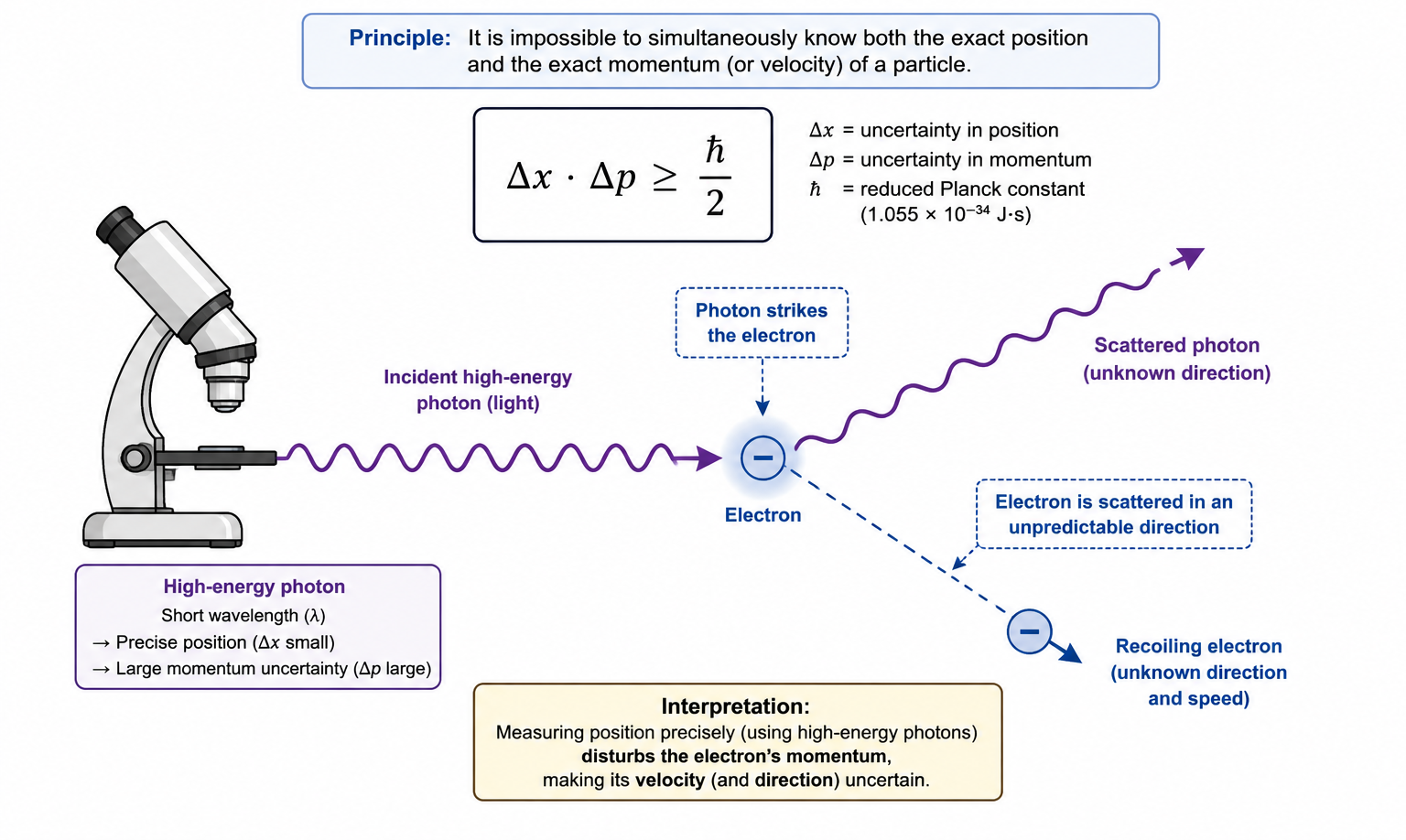
4. Dual Nature & Uncertainty Principle
5. Quantum Mechanical Model & Quantum Numbers
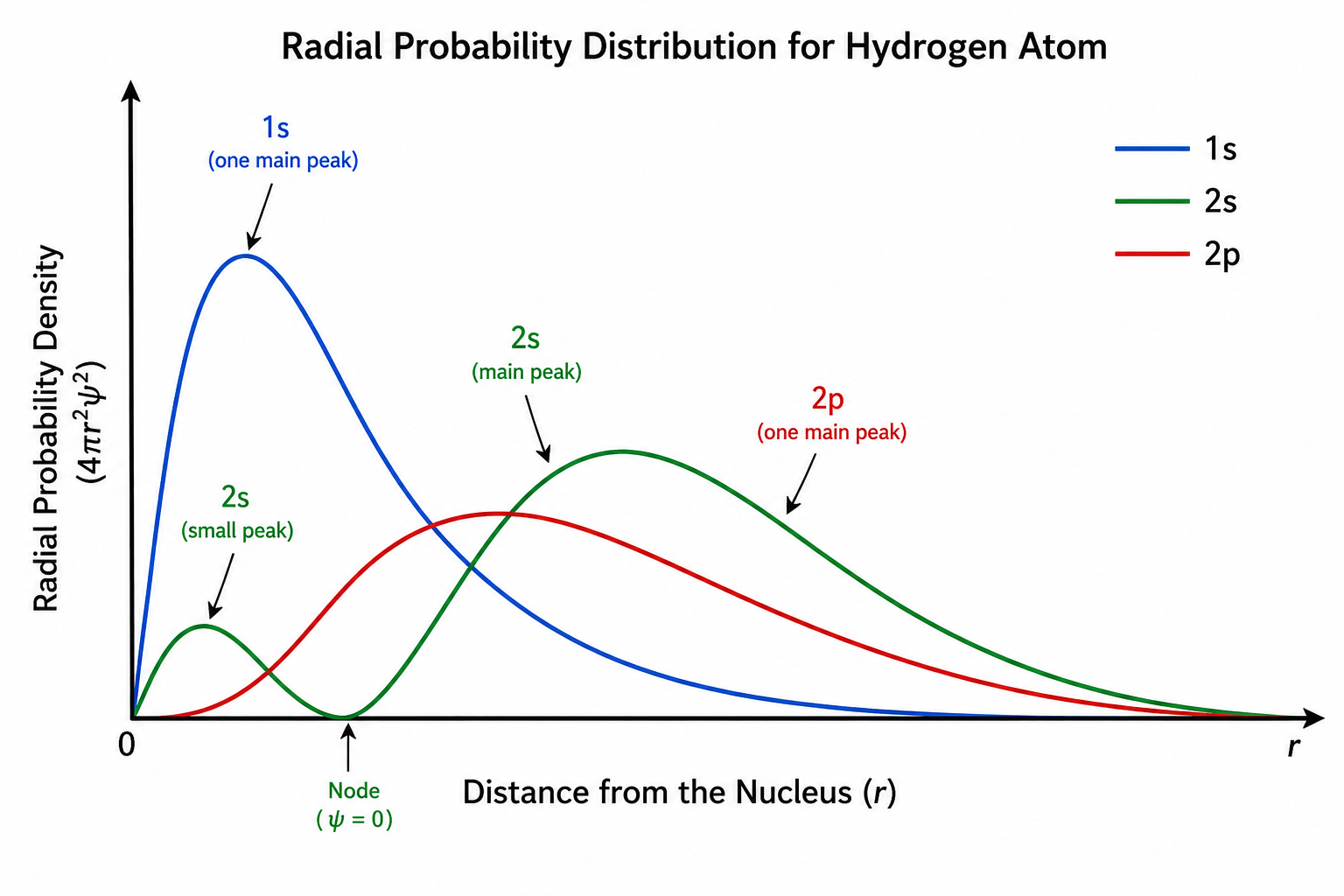
Schrödinger Equation: $\hat{H}\psi = E\psi$. ($\mathbf{\psi^2}$ = probability density of finding electron in orbital).
Node Formulas (100% Exam Favorite)
$$ \text{Radial Nodes (Spherical)} = n - l - 1 \quad \mid \quad \text{Angular Nodes (Nodal Planes)} = l \quad \mid \quad \text{Total Nodes} = n - 1 $$
| Quantum Number |
Symbol |
Allowed Values |
Physical Significance & Formulas |
| Principal |
$n$ |
$1, 2, 3...$ |
Shell, Size & Energy. Orbitals in shell $= n^2$, Max $e^- = 2n^2$. |
| Azimuthal |
$l$ |
$0 \dots (n-1)$ |
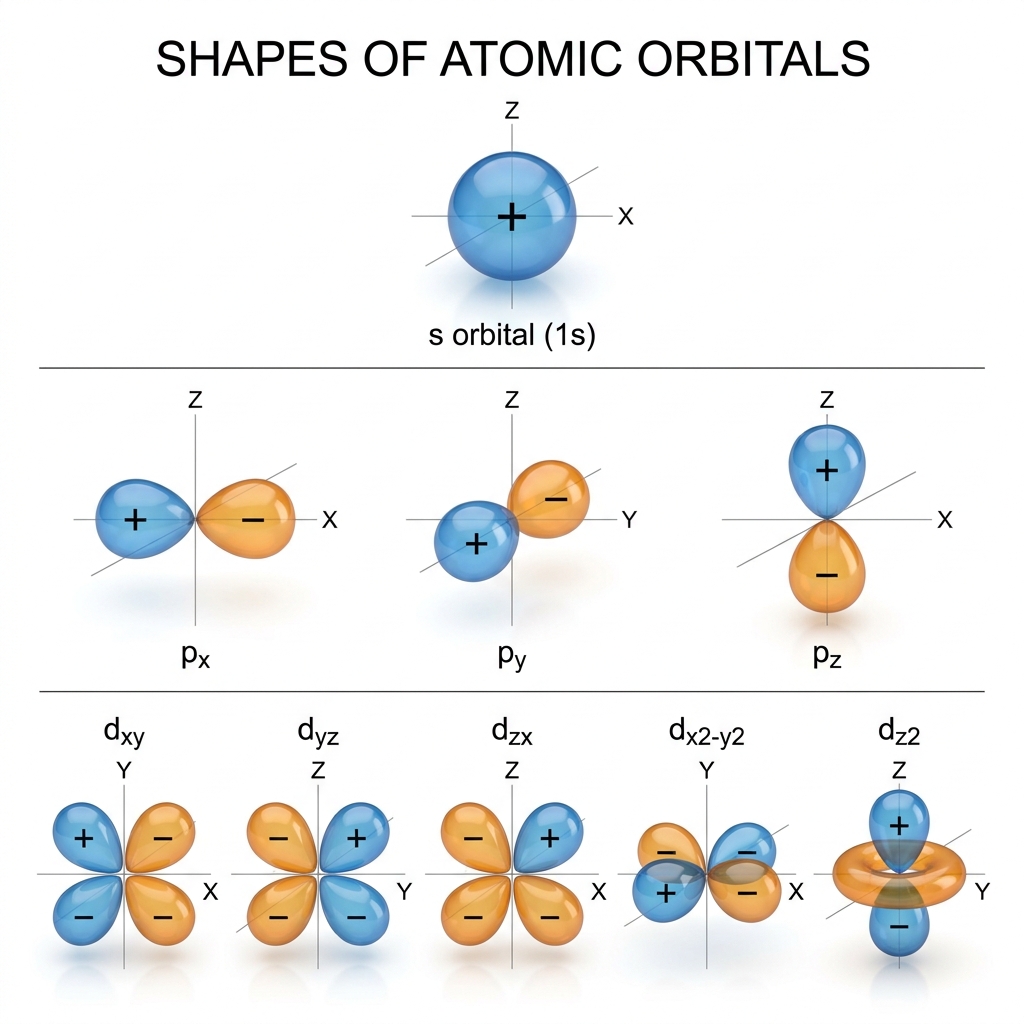
Subshell ($s=0, p=1, d=2, f=3$) & Shape.
Orbital Angular Momentum: $L = \sqrt{l(l+1)} \frac{h}{2\pi}$. |
| Magnetic |
$m_l$ |
$-l \dots +l$ |
Orbital orientation. Orbitals per subshell $= 2l+1$. Max $e^- = 2(2l+1)$. |
| Spin |
$m_s$ |
$+\frac{1}{2}, -\frac{1}{2}$ |
Electron spin direction.
Spin Magnetic Moment: $\mu = \sqrt{n(n+2)} \text{ BM}$ ($n$=unpaired $e^-$). |
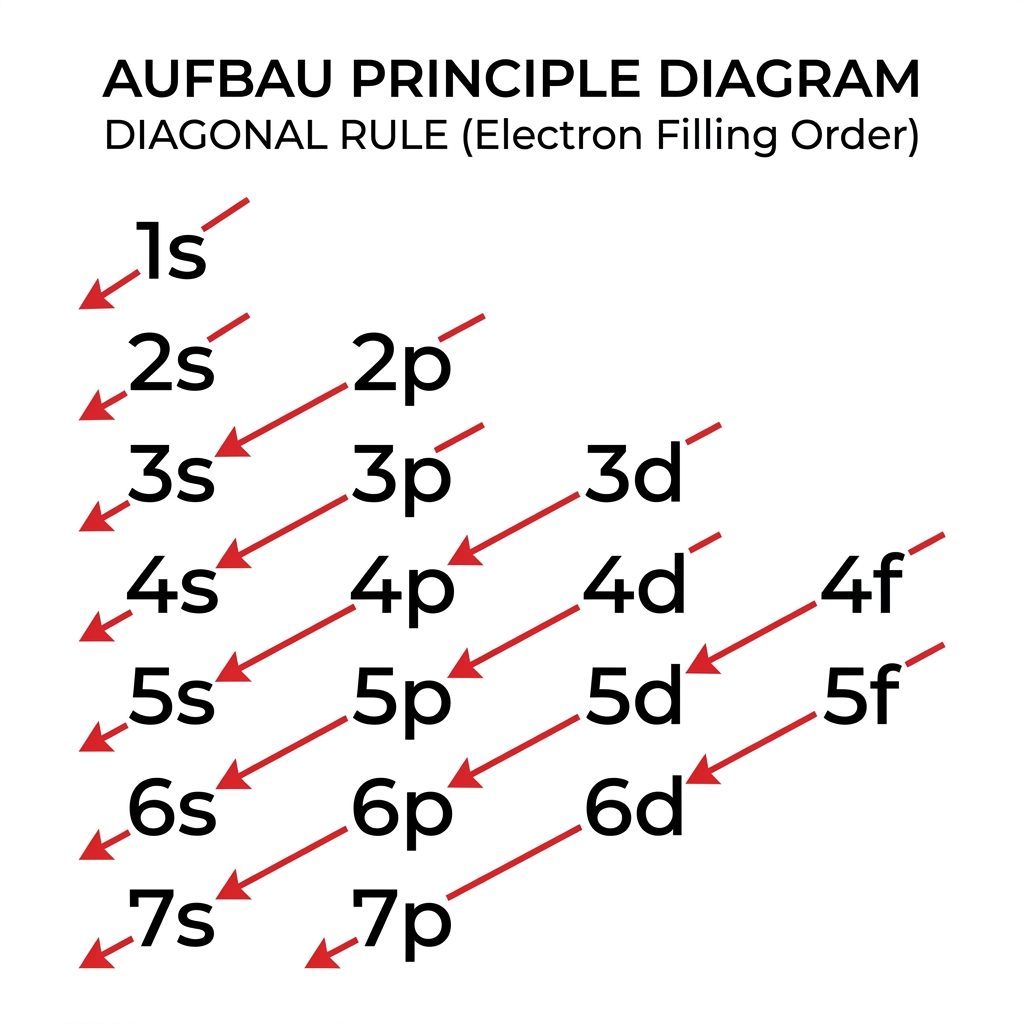
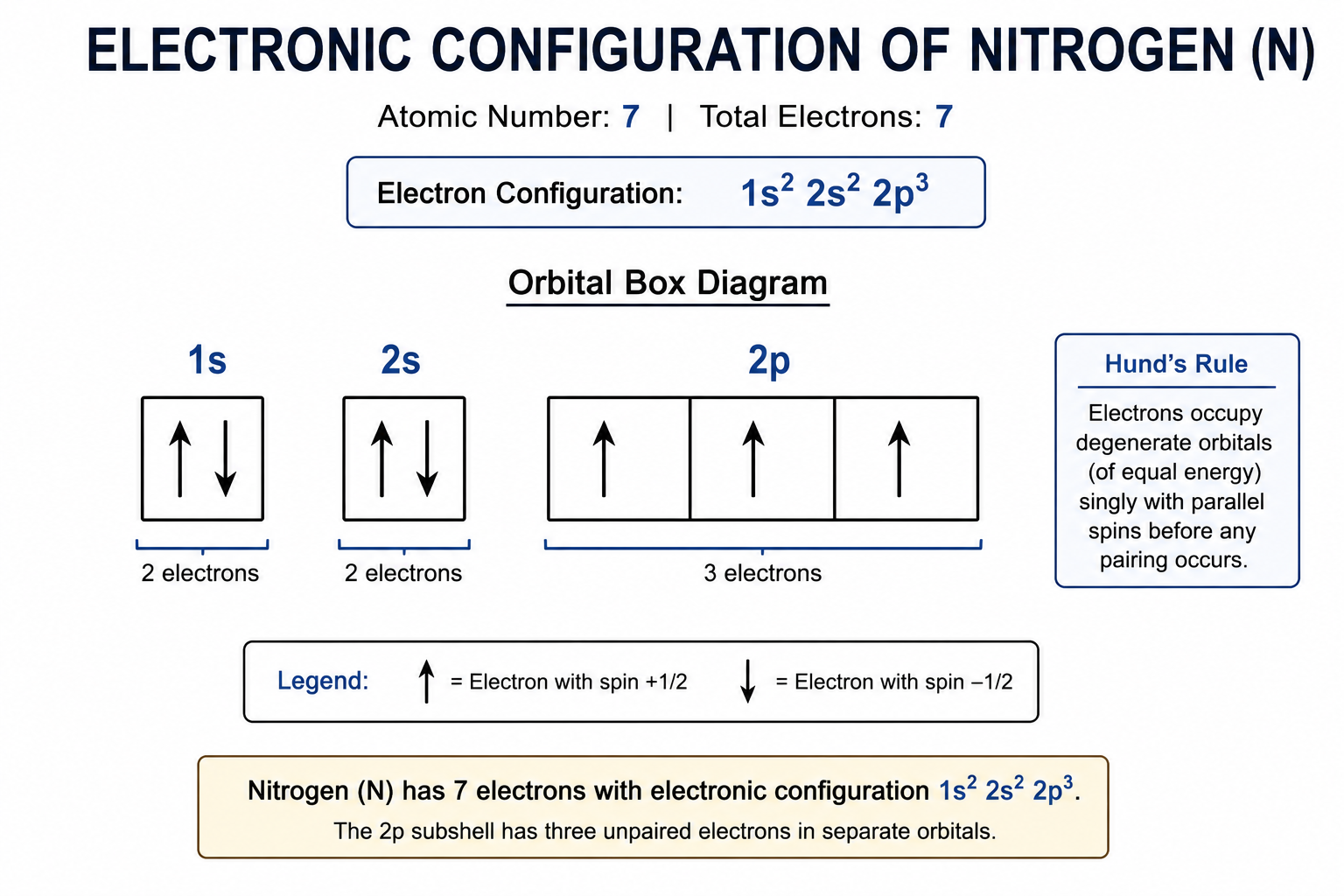
6. Electronic Configuration Rules & Must-Know Exceptions
High-Yield Exam Exceptions & Ion Formation
- Chromium ($\text{Cr}, Z=24$): Expected $[\text{Ar}] 4s^2 3d^4 \implies$ Actual: $[\text{Ar}] 4s^1 3d^5$ (Stable half-filled $d^5$).
- Copper ($\text{Cu}, Z=29$): Expected $[\text{Ar}] 4s^2 3d^9 \implies$ Actual: $[\text{Ar}] 4s^1 3d^{10}$ (Stable fully-filled $d^{10}$).
- Ion Formation Rule: Remove $e^-$ from outermost principal shell $n$ first! (e.g. $\text{Fe}^{3+} [Z=26] \implies [\text{Ar}] 3d^5$).
- Ion Stability: $\text{Mn}^{2+} (3d^5)$ is more stable than $\text{Fe}^{2+} (3d^6)$ due to half-filled $d$-subshell exchange energy.